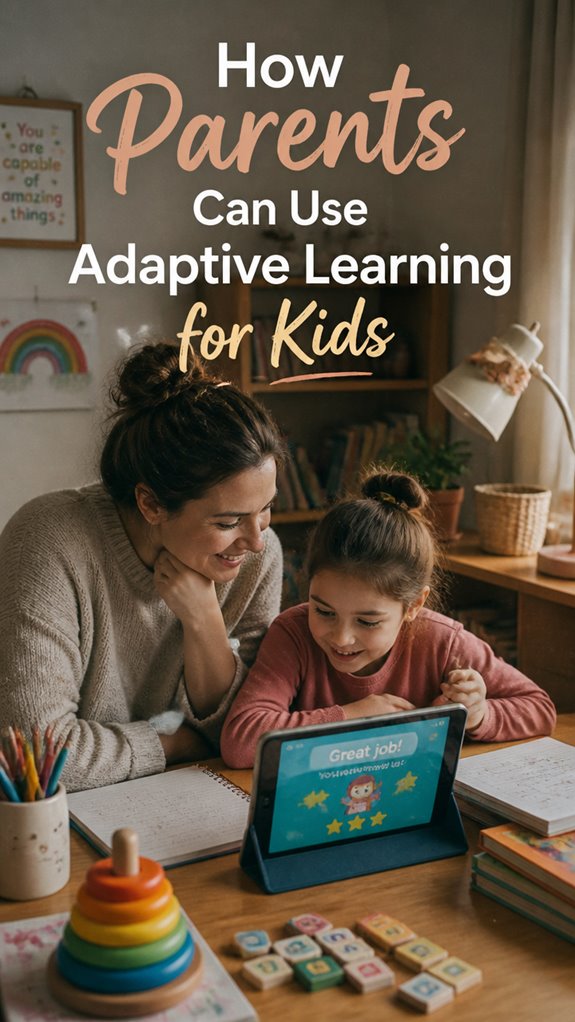
Wondering How Technology Can Actually Help Your Child Learn Better?
Adaptive learning platforms personalize education by adjusting to your child’s pace and style, building resilience and confidence through data-driven instruction. These tools transform how kids engage with material, meeting them exactly where they are.
Why We Built Adaptive Atlas
My daughter sat frustrated over math homework for two hours. Not because she couldn’t do it, but because the curriculum moved faster than her processing speed. That moment sparked our work on Adaptive Atlas. We wanted parents to access what researchers like Sugata Mitra discovered: personalized learning environments reduce struggle and boost achievement by up to 30%. The platform uses real-time feedback loops to adjust difficulty dynamically, eliminating that soul-crushing moment when a kid shuts down entirely.
A Breakthrough Moment
Last month, I watched my son choose the hard problem instead of skip it. He’d never done that before. The adaptive system had built his confidence incrementally, removing the shame spiral. That’s when I realized this wasn’t about flashy tech. It was about seeing your kid believe in themselves again.
Quick Takeaways
- Choose adaptive learning platforms that align with your child’s interests and developmental stage.
- Monitor progress and set personalized goals using data-driven insights to support growth.
- Support independence and resilience by encouraging self-directed exploration and reflection.
- Communicate with educators and use resources to address your child’s evolving needs and challenges.
- Balance screen time with hands-on activities to foster social skills, creativity, and overall development.
What Is Adaptive Learning and How Can It Help Your Child Succeed?
Adaptive learning is a way of understanding how children can learn more effectively in a world that’s constantly changing. It focuses on developing cognitive flexibility—the ability to adapt thinking in new situations—and supporting motivation through tailored strategies.
Instead of relying solely on memorization, adaptive learning helps children build the skills to navigate ambiguity, think critically, and respond confidently to uncertainty. These skills are essential for success in a future that’s unpredictable and fast-moving.
Adaptive learning fosters critical thinking, confidence, and resilience in children facing an unpredictable, fast-changing future.
When you prioritize a system that emphasizes flexibility and motivation, you’re fostering resilience and independence. This approach shifts the focus from narrow achievement to cultivating long-term capabilities. Building these capabilities requires intentional management of healthy screen habits, which can either support or undermine your child’s adaptive learning development.
It empowers your child to adapt, create value, and thrive amid ongoing change, giving them a meaningful advantage that lasts.
How to Choose the Right At-Home Adaptive Learning Platforms for Your Child
Choosing the right at-home learning platform might feel overwhelming, especially with so many options promising quick results. To build a strong foundation, look for platforms that support extracurricular integration—those that connect learning to your child’s real-world interests and activities. Research shows that skill specialization timing varies by child, so adaptive platforms should allow for gradual progression rather than forcing early specialization.
Parental involvement counts too; choose tools that allow you to monitor progress, set goals, and engage actively. Focus on systems that foster independence and adaptability, aligning with your child’s unique strengths.
Keep in mind, the goal isn’t just immediate achievement but long-term capability. Avoid distraction by flashy features; instead, prioritize platforms that encourage critical thinking and resilience.
Your role is essential: a thoughtful, engaged parent helps your child navigate these tools confidently, shaping skills needed for a future of continuous change.
Personalizing Learning: How to Tailor Adaptive Tools to Your Child’s Unique Needs
Every child learns differently, and in a world of rapid change, tailoring learning tools to your child’s unique needs can make all the difference.
Understanding your child’s learning preferences helps you choose the right adaptive tools that fit how they process information best.
Engagement strategies are essential—if your child thrives with visual cues or hands-on activities, select platforms that emphasize these methods.
Personalization isn’t just about content; it’s about creating an environment where your child feels confident and curious.
This targeted approach improves motivation and focus, which are key for long-term adaptability.
Building strong personal branding habits early helps your child develop confidence and a sense of identity as they grow through personalized learning experiences.
Keep in mind, your goal isn’t perfection but progress.
Resources and Strategies for Children With Special Needs and Disabilities
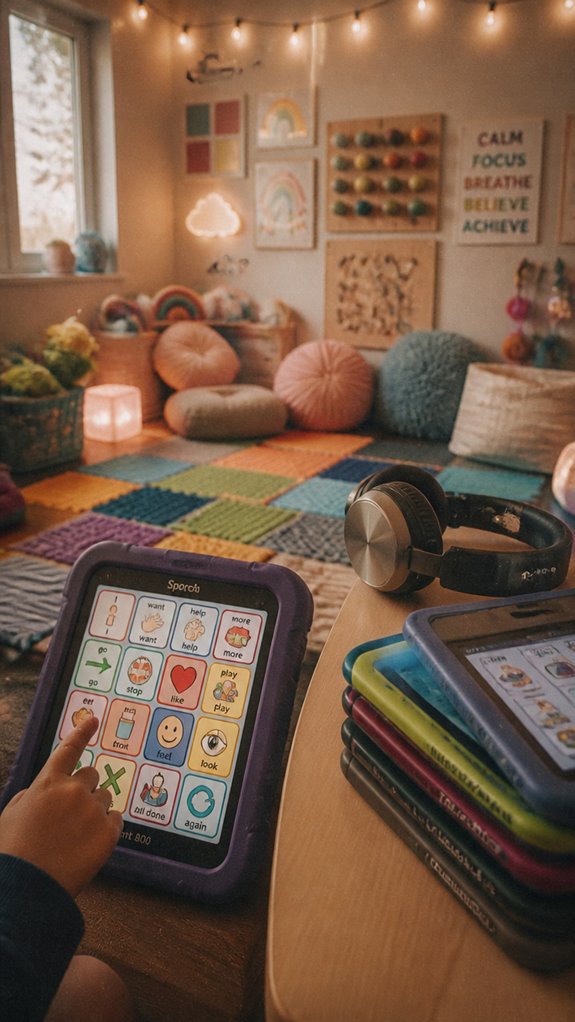
Supporting children with special needs and disabilities requires a tailored approach that recognizes each child’s unique strengths and challenges. You can incorporate assistive technologies, sensory integration strategies, and personalized learning tools to help them thrive.
- Use communication devices or apps to support speech and language development
- Adapt environments with sensory tools like noise-canceling headphones or textured sensory mats
- Leverage adaptive learning platforms designed for diverse needs that adjust difficulty and pace
These resources don’t just aid immediate learning — they build confidence and independence for the future. Fears about progress are natural, but by focusing on systems that respect your child’s individuality and fostering long-term skills, you create a foundation for ongoing growth. Building distraction control awareness helps children manage their learning environment and maintain focus on educational goals.
The goal is to enable your child to navigate challenges with resilience and adaptability.
Tracking Progress and Building Confidence With Data-Driven Insights
Tracking your child’s progress might initially feel overwhelming, especially in a world of rapid change. Yet, data-driven understanding can guide you with clarity and purpose. Focus on respecting data privacy—knowing how information is shared and stored builds trust and safeguards your child’s future. Parental involvement remains key; by understanding progress, you help shape tailored learning experiences aligned with your child’s unique strengths. Developing problem solving skills early empowers children to overcome obstacles and adapt to new challenges throughout their educational journey. Use simple tools like progress charts or dashboards to visualize growth over time, illustrated below:
| Child’s Strengths | Areas for Growth | Next Steps |
|---|---|---|
| Creativity | Focus | Practice daily challenges |
Percentage of Children Using Apps
Today, most children are engaging with digital apps more than ever before, which is both an opportunity and a challenge for parents. About 80% of children use tablets for learning and entertainment, making technology integration a key part of their development. According to recent data, children’s engagement with educational apps correlates with measurable skill gains, especially in math and literacy. However, managing screen time remains vital.
Consider these points:
- Children ages 7-9 and 10-12 show high app usage, reflecting age-specific preferences.
- Schools officially sanction 10-15 educational apps, yet usage varies widely due to infrastructure.
- Children’s engagement with educational apps correlates with measurable skill gains, especially in math and literacy.
Understanding these patterns helps you develop realistic screen time strategies. Pairing educational apps with intentional social awareness development ensures children build interpersonal competencies alongside academic skills.
Balancing active, purposeful app use with other activities ensures your child’s skills grow in a future-proof way—without fear, with clarity, and intentional control.
Lack of Personalized Learning Guidance

Many parents worry that the shift toward personalized learning might leave them without clear guidance on how to support their child’s education. This concern often stems from a lack of understanding about what personalized learning truly involves.
It’s common to fear that technology will replace teachers or reduce face-to-face interaction. However, this is a misconception. Personalized learning is about creating systems that help your child develop core skills—like critical thinking and adaptability—that prepare them for the future. Having calm discussions about AI can help address underlying anxieties about technology in education. Engaging with the community and attending school events can also help parents stay connected and informed about innovative approaches.
Your role is to stay engaged, ask questions, and guarantee that your child’s learning environment remains balanced and supportive. Clear communication from schools can help ease these concerns.
Keep in mind, consistent parent engagement turns uncertainty into confidence, guiding your child toward long-term success in an constantly changing world.
Adaptive Learning Toolkit for Parents
An adaptive learning toolkit for parents provides practical ways to support your child’s development in a world of constant change. To engage your child deeply, incorporate gamification techniques that make learning fun and meaningful. Parental engagement is essential—stay involved and foster a growth mindset. As personalized learning experiences become more prevalent, understanding how to tailor education to your child’s unique needs will be increasingly important.
Consider these strategies:
- Use game-based activities to motivate curiosity and perseverance
- Share memorable learning experiences that build confidence
- Encourage self-directed exploration with adjustable goals
These approaches help your child develop resilience and independence, preparing them for a future where adaptability is key.
Keep in mind, your active involvement creates a sense of stability amid uncertainty. Instead of feeling overwhelmed, focus on building systems that cultivate long-term capabilities. Your consistent support shapes a resilient mind ready to navigate continuous change.
The Adaptive Atlas Learning Stack Model
Understanding how children learn in a world of rapid change can feel overwhelming, but focusing on the Learning Stack Model offers a clear path forward. This model integrates neuroscience perspective, showing how our brains adapt, develop, and are shaped by experience. It emphasizes ethical considerations, ensuring children’s emotional and cognitive safety while fostering independence. As adaptive learning systems continue to evolve, they enable personalized educational pathways that respond to each child’s unique learning pace and style.
| Foundation | Core Engine | Future Skills |
|---|---|---|
| Resilience & Adaptability | Self-directed learning | Critical thinking & Creativity |
| Recovery from failure | Internal feedback loops | Problem framing & Decision-making |
| Handling uncertainty | AI as a partner | Long-term leverage & mastery |
The Adaptive Atlas Framework
Five connected systems designed to help parents raise adaptable, future-ready children in a world shaped by AI, automation, and constant change.
| 🛡️ |
Anti-Fragile Child SystemBuilds resilience, adaptability, and the ability to handle uncertainty without shutting down. |
| 📚 |
Learning Stack ModelDevelops self-directed learning habits and continuous skill acquisition beyond school systems. |
| 🚀 |
Future Skill Stack SystemFocuses on high-value human skills that remain relevant in an AI-driven economy. |
| 🤖 |
AI Learning SystemTeaches children how to use AI as a thinking partner instead of becoming dependent on it. |
| 🧭 |
Child Type Navigator SystemPersonalizes learning and development based on each child’s strengths and personality. |
FAQ
How Can I Ensure Adaptive Learning Remains Engaging for My Child Long-Term?
You can guarantee long-term engagement by providing personalized feedback and fostering learning motivation through aligning challenges with your child’s strengths. This encourages independence, curiosity, and a deep mastery mindset, keeping their adaptive learning journey both dynamic and rewarding.
What Are the Potential Challenges of Implementing Adaptive Learning at Home?
Ironically, advanced adaptive learning faces technological barriers and requires your deep parental involvement. Mastering this balance demands patience, technical savvy, and strategic engagement—hindering some parents but essential to cultivating future-ready capabilities in your child.
How Do Adaptive Platforms Support Social-Emotional Development?
Adaptive platforms foster emotional intelligence by encouraging self-awareness and regulation, while structuring peer interactions that enhance empathy, collaboration, and social skills, helping your child master social-emotional competencies essential for thriving in a dynamic world.
Can Adaptive Learning Help Children Develop Skills Beyond Academics?
Yes, adaptive learning fosters skill transfer and creativity enhancement by emphasizing adaptable capabilities like critical thinking and problem-solving. You guide your child to apply skills across environments, developing mastery in collaboration, innovation, and resilience beyond traditional academic boundaries.
How Do I Balance Screen Time With Hands-On, Offline Learning Activities?
You balance screen time by establishing clear digital boundaries, ensuring offline, hands-on activities like creative excursions foster lasting skills. This strategic mix nurtures adaptability and mastery, empowering your child to navigate continual change effectively.
References
- https://exceptionallives.org/blog/at-home-learning-resources/
- https://www.littlelit.ai
- https://www.time4learning.com/blogs/how-to/special-needs
- https://www.khanacademy.org/kids
- https://www.adaptedmind.com
- https://inclusionmatters.org/playathome/
- https://2hourlearning.com
- https://www.statista.com/statistics/1248737/us-time-spent-by-children-on-learning-apps/
- https://thejournal.com/articles/2025/04/01/survey-finds-majority-of-schools-using-10-to-15-educational-apps.aspx
- https://www.playpixo.com/blog/truth-about-educational-apps/