Can Bite-Sized Learning Transform Your Child’s Adaptability?
Microlearning breaks lessons into manageable chunks that slot seamlessly into daily life, building genuine flexibility and problem-solving skills. Research from the Bill & Melinda Gates Foundation confirms this approach strengthens resilience while keeping cognitive load realistic.
Why We Built Adaptive Atlas
My daughter spent three months dreading math until we ditched the textbook-dump approach. Instead of forcing 90-minute sessions, we tried 10-minute focused sprints between breakfast and her piano practice. Within weeks, she wasn’t just learning faster—she was actually *excited* about solving problems independently. That shift sparked Adaptive Atlas. We created it because kids deserve learning that fits their lives, not the other way around. Our platform uses micro-segmented content to build genuine adaptability, not just test scores.
The Moment Everything Clicked
Last Tuesday, my son faced a coding problem that stumped him yesterday. This time, he grabbed his phone, revisited one 7-minute module, and solved it solo. That confidence? That’s the real win. Microlearning doesn’t just improve memory retention. It rewires how kids approach challenges entirely.
Quick Takeaways
- Microlearning delivers small, focused content that quickly adapts to kids’ evolving interests and routines, fostering flexibility.
- Short sessions build cognitive agility, helping children switch focus and adapt to new ideas efficiently.
- Repetitive, bite-sized learning enhances memory retention and prepares kids to handle changing circumstances confidently.
- Modular learning encourages independence and problem-solving, enabling children to navigate diverse challenges flexibly.
- Diverse modalities in microlearning support adaptable, engaging experiences tailored to individual learning styles.
How Microlearning Boosts Kids’ Flexibility in Today’s Education
In today’s fast-changing world, traditional education often feels rigid and overwhelming. You might worry that your child’s learning isn’t preparing them for constant change. Microlearning offers a practical solution. It builds cognitive agility—your child’s ability to adapt quickly to new situations—and promotes skill versatility.
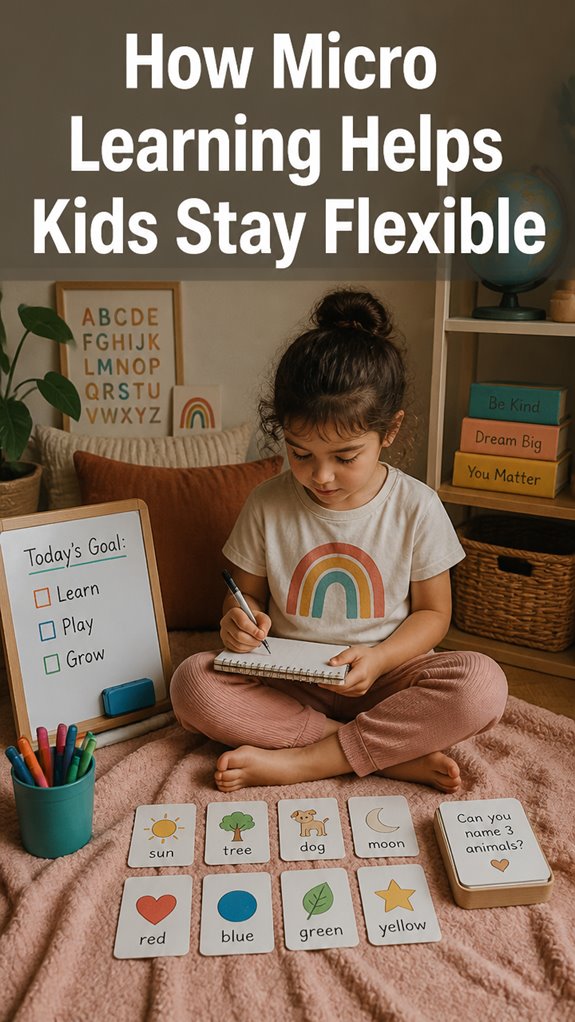
Instead of long, unmanageable lessons, microlearning delivers small, focused bursts of content that fit into daily routines. This method helps children develop flexible thinking and independent problem-solving. Micro learning systems are specifically designed to break down complex topics into digestible segments that children can master incrementally.
Research from organizations like the Bill & Melinda Gates Foundation shows that bite-sized learning enhances retention and adaptability. By embracing microlearning, you empower your child to stay curious, adjust seamlessly, and thrive in an unpredictable future.
Research shows bite-sized learning boosts retention, adaptability, and prepares children to thrive in an unpredictable future.
It’s about creating a resilient, capable learner—ready for whatever comes next.
Why Short, Focused Modules Keep Kids Engaged and Adaptable
Many parents worry that teaching their kids with small, focused lessons might seem superficial or disconnected from deeper understanding. But these short modules actually support attention span and cognitive flexibility.
When we break learning into manageable pieces, children stay engaged because they don’t feel overwhelmed. It trains their brains to switch focus quickly and adapt to new ideas, which is vital in a world of constant change.
Researchers, like Professor John Sweller, highlight that chunking information improves retention and promotes mastery. These focused lessons create a stable structure children can navigate confidently. Building deep focus habits through consistent, purposeful practice strengthens children’s ability to concentrate even as they develop flexibility.
Over time, they develop the ability to adapt, stay curious, and tackle complex problems—skills essential for future success. Short, targeted modules aren’t superficial; they’re building blocks for resilience and long-term growth.
Supporting Self-Paced and Autonomous Learning With Microlearning
Supporting self-paced and autonomous learning allows children to develop a sense of control over their own growth, which is essential in a future marked by rapid change.
Microlearning supports this by breaking knowledge into small, manageable pieces, making it easier to avoid cognitive overload. Techniques like spaced repetition reinforce key ideas over time, helping children remember and deepen understanding without feeling overwhelmed.
This approach encourages children to take ownership of their learning, building confidence and independence. While concerns about chaotic or unstructured learning are common, structured microlearning offers a clear framework to guide progress.
Independent learning develops critical thinking skills and adaptability that prepare students for evolving career landscapes and lifelong challenges. It emphasizes flexibility, letting kids learn at their own speed, adapt to new challenges, and develop the long-term skills needed to navigate an increasingly changing world confidently.
Easy Strategies Parents Can Use to Incorporate Microlearning at Home
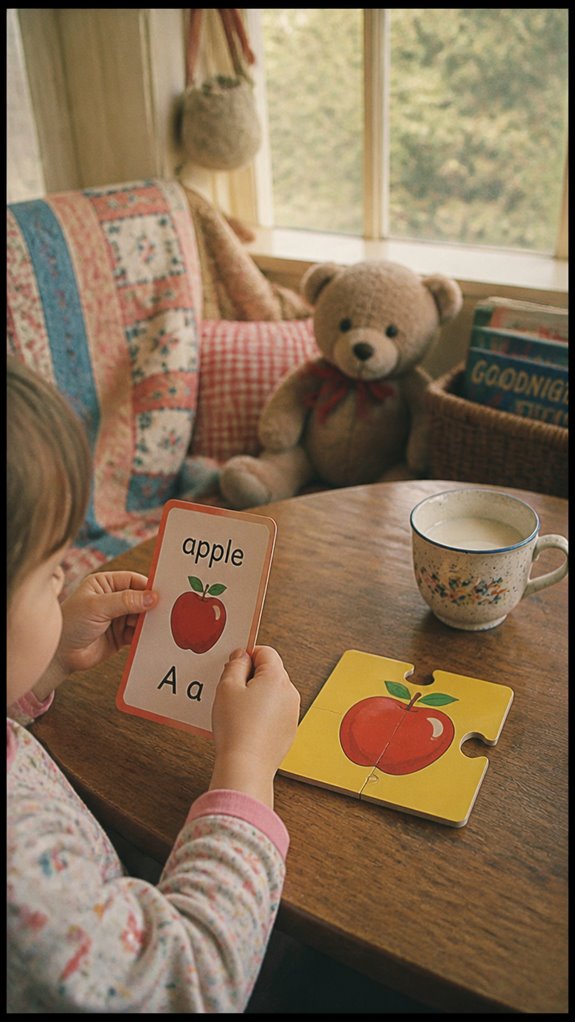
You might worry that teaching your child in small, flexible chunks could create chaos instead of progress. But, with deliberate strategies, microlearning becomes a structured way to build skills and confidence. Focus on parent-child communication; keep conversations short and clear, making learning feel like an ongoing dialogue rather than a task. Use classroom integration by connecting new topics to your child’s daily activities or hobbies, reinforcing relevance and engagement. Break lessons into brief, focused segments, then reflect together on what was learned. Create routines that embed microlearning naturally, such as quick quizzes or brief problem-solving sessions. Use this approach to foster independence while maintaining a sense of connection and safety, helping your child develop adaptable skills for a future of continuous change.
| Strategy | Purpose |
|---|---|
| Short, daily check-ins | Reinforce learning and parent communication |
| Real-life connections | Embed classroom concepts into home routines |
| Consistent routines | Build trust and predictability |
| Focused, attention-grabbing tasks | Maximize engagement and retention |
| Reflection time | Encourage critical thinking and self-awareness |
Micro Learning Boosts Resilience
Microlearning isn’t just about teaching facts in small pieces; it’s a powerful tool for building resilience in children. It helps strengthen memory retention by breaking complex ideas into manageable parts, making it easier for your child to process and remember information. Brain retains information more effectively with small, repeated chunks. Importantly, microlearning reduces cognitive overload, preventing overwhelm and supporting focus—especially crucial during challenging times. This approach teaches children to handle setbacks calmly, recover faster, and stay engaged under pressure. When children learn to view mistakes as valuable learning opportunities, they develop greater resilience and confidence in tackling new challenges.
Here are 3 key points:
- Short, repetitive sessions activate long-term memory, reinforcing learning over time.
- Breaking tasks into digestible steps minimizes stress and builds mental flexibility.
- Consistent, bite-sized practice improves executive functioning skills like planning and self-discipline.
Together, these practices cultivate self-confidence, prepare your child for future uncertainties, and foster resilience with a steady, practical approach.
Digital Distraction Management Strategies
Managing digital distractions is about creating a balanced environment that supports your child’s focus and well-being in a world full of constant connectivity. Limiting screen time through clear rules and boundaries helps children develop self-control and stay engaged in real-world activities. Using device reports for detailed screen time data can provide valuable insights, enabling families to make more informed decisions about technology use. Boredom sparking is a natural part of growth—when kids aren’t stimulated by screens, they learn to find new ideas and solutions. By establishing media plans with zones free of devices, like bedrooms or mealtimes, you help foster independence for your child’s attention span. Using tools like parental controls and focus apps provides extra security, letting your child practice self-regulation. Understanding why technology feels scary can help parents approach these boundaries from a place of confidence rather than anxiety. This grounded approach reduces fears about technology and emphasizes that balance, not avoidance, builds skills for a future of adaptable, resilient learners.
Micro Learning System for Kids

Have you wondered how children can learn effectively in a world where information changes rapidly? The Micro Learning System for Kids embraces varying modalities like visual, auditory, and kinesthetic methods. This variation keeps learning relevant and engaging, helping children adapt to different settings effortlessly. Parents should evaluate learning tools based on effectiveness to ensure they support these multiple modalities at home.
Here are three key benefits:
- It reinforces situational relevance, so kids connect lessons to real-life situations, building practical understanding.
- It cultivates independence by encouraging self-directed, bite-sized learning—making complex topics approachable.
- It boosts mastery over time, as small, focused sessions strengthen curiosity and retention without overwhelm.
This system aligns with research from educational experts like John Hattie, emphasizing long-term mastery. It shifts the mindset from simply transmitting knowledge to nurturing adaptable, future-ready children.
The Adaptive Atlas Learning Stack Model
To prepare children for a future where knowledge is always progressing, we need to rethink how they learn. The Adaptive Atlas Learning Stack Model is a powerful way to build that flexibility.
Preparing children for endless knowledge growth through adaptable, resilient learning models fosters confidence and problem-solving skills for the future.
It focuses on developing cognitive resilience—the ability to stay engaged, recover from setbacks, and adapt under pressure. This model uses learning scaffolding, slowly narrowing support as children grow more capable, encouraging self-directed learning and problem-solving.
It shifts the focus from memorizing facts to cultivating capabilities like critical thinking, creativity, and decision-making—skills proven essential in today’s fast-changing world. This approach reduces parents’ fears by emphasizing long-term mastery.
Research shows that microlearning breaks complex information into digestible modules, allowing children to build these essential skills incrementally and maintain engagement over time.
It’s not about controlling every outcome but about guiding children to become adaptable, confident thinkers prepared for continuous change.
The Adaptive Atlas Framework
Five connected systems designed to help parents raise adaptable, future-ready children in a world shaped by AI, automation, and constant change.
| 🛡️ |
Anti-Fragile Child SystemBuilds resilience, adaptability, and the ability to handle uncertainty without shutting down. |
| 📚 |
Learning Stack ModelDevelops self-directed learning habits and continuous skill acquisition beyond school systems. |
| 🚀 |
Future Skill Stack SystemFocuses on high-value human skills that remain relevant in an AI-driven economy. |
| 🤖 |
AI Learning SystemTeaches children how to use AI as a thinking partner instead of becoming dependent on it. |
| 🧭 |
Child Type Navigator SystemPersonalizes learning and development based on each child’s strengths and personality. |
FAQ
How Does Microlearning Specifically Improve Children’s Problem-Solving Skills?
Like an ancient explorer, microlearning sharpens your child’s problem-solving development by fostering cognitive flexibility, encouraging quick adaptation, and honing decision-making skills—mastery results from small, focused challenges that build confidence and resilience in real-world situations.
Can Microlearning Replace Traditional Schooling Entirely?
Microlearning can’t fully replace traditional schooling because it enhances skill retention and adapts to your child’s learning pace, but all-encompassing education requires foundational knowledge, social interaction, and structured environments to foster critical thinking and holistic development.
What Are the Best Digital Tools for Implementing Microlearning at Home?
You should focus on interactive apps and bite-sized videos, which promote mastery by engaging your child actively and allowing flexible, continuous learning. These tools support adaptive growth and cultivate independence, essential in today’s rapidly changing environment.
How Does Microlearning Help Children With Learning Differences Like ADHD or Dyslexia?
Microlearning boosts learning engagement by breaking information into manageable chunks, helping children with ADHD or dyslexia maintain focus and extend their Attention span, resulting in more effective, personalized mastery and sustained motivation in diverse learning environments.
Is Microlearning Suitable for All Age Groups or Only Certain Developmental Stages?
Microlearning adapts like a chameleon, making it suitable across age groups when aligned with developmental readiness and age appropriateness. Mastery depends on tailoring content and pace, ensuring learners seamlessly progress regardless of their stage or maturity level.
References
- https://oxfordlearning.com/the-power-of-microlearning/
- https://www.lumapps.com/insights/blog/microlearning-a-modern-solution-for-fast-flexible-and-effective-learning
- https://internationalschooling.org/blog/surprising-benefits-of-microlearning-for-students
- https://online.wilson.edu/resources/benefits-of-microlearning/
- https://www.kaipodlearning.com/flexible-learning-in-microschools/
- https://www.openlms.net/blog/corporate/benefits-of-microlearning-8-minutes-to-make-an-impact/
- https://kpcrossacademy.ua.edu/learning-in-a-networked-world-the-promise-of-microlearning/
- https://blog.neurozone.com/harnessing-microlearning-to-build-resilience-and-protect-mental-health-an-applied-neuroscience-perspective
- https://pmc.ncbi.nlm.nih.gov/articles/PMC8191731/
- https://www.thepathway2success.com/microlearning-strategies-to-teach-executive-functioning-skills-to-kids-and-teens/