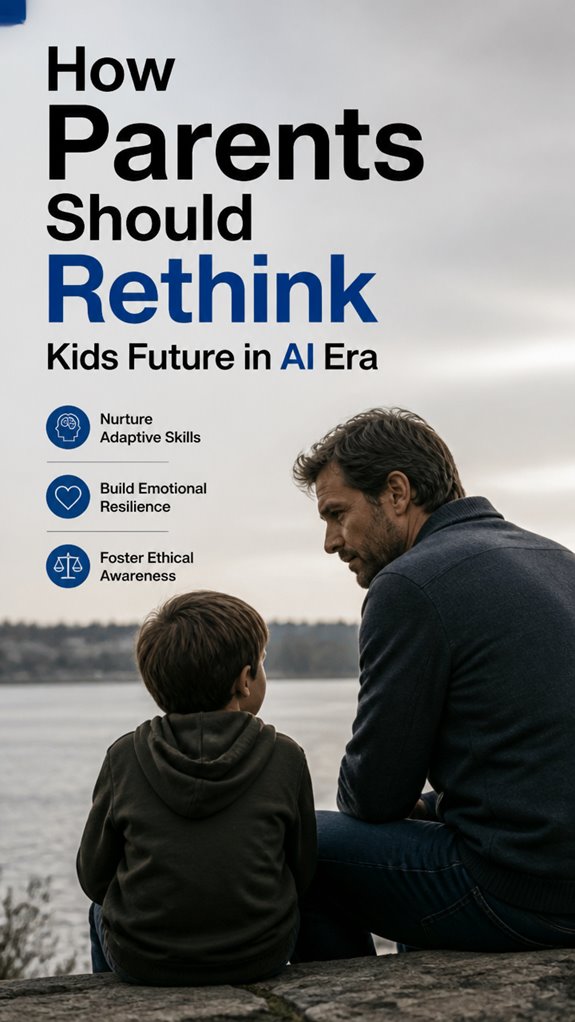
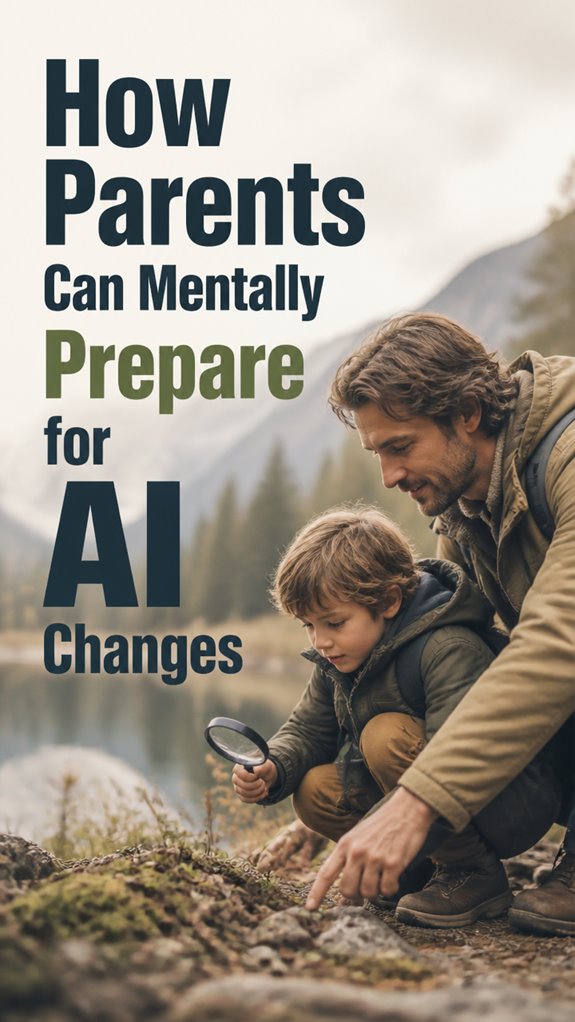
How Can Parents Actually Prepare Mentally for AI’s Disruption?
Forget the doom-scrolling. AI will rewire what matters—adaptability, critical thinking, resilience become non-negotiable. Yes, control anxiety is real. Reframe it as your edge to build a growth mindset instead.
—
My kid came home convinced robots would replace teachers. We sat down, and I shared how I’d watched three career pivots myself. That’s when Adaptive Atlas clicked for me—we built it because parents *need* concrete frameworks, not platitudes. We wanted a bridge between panic and possibility. Watching my child shift from “that’s scary” to “how do I get ahead of this?” That moment validated everything.
—
When Panic Becomes Preparation
Last month, I caught myself spiraling about job displacement. Then I realized I was modeling exactly what I tell my daughter *not* to do. That friction—that real, uncomfortable moment—became the pivot point. Suddenly, learning alongside her wasn’t anxiety. It was partnership.
Quick Takeaways
- Embrace a growth mindset and view AI as an opportunity for learning and adaptation, not just a threat.
- Stay informed about AI developments to better understand how they impact education and future careers.
- Foster open, calm discussions with children about AI to build trust and critical thinking skills.
- Focus on developing resilience and adaptability in children to prepare them for ongoing change.
- Support continuous learning and flexible thinking to help children navigate evolving technological landscapes.
How AI Is Changing Teen Learning and Development
As AI tools become more integrated into everyday life, they’re transforming how teenagers learn and develop. Instead of relying solely on traditional education, your child is now engaging with AI to deepen skills like critical thinking, problem-solving, and creativity.
This shift means that knowledge isn’t just memorized but applied through real-world exploration. Concerns about AI ethics are valid, but focus on fostering digital independence — teaching your child to use AI responsibly and understand its limitations. Just as children benefit from learning earning and spending habits early, they also need guidance in understanding how to make intentional decisions with AI tools.
It’s not about replacing human judgment, but amplifying their decision-making. You have the power to guide them toward adaptable skills that thrive in constant change.
Embrace this new setting as an opportunity to build resilience, independence, and long-term capability, preparing your child for a future where continuous learning is key.
How Parents Can Foster Trust and Curiosity About AI
Building trust and curiosity about AI starts with understanding these tools aren’t something to fear but to explore thoughtfully. You can foster trust cultivation by showing your child AI as an extension of their abilities—something that amplifies their creativity and decision-making. Curiosity stimulation happens when you encourage questions and exploration, framing AI as a partner for discovery rather than a threat. Engaging in calm discussions about AI fears with your family creates a foundation where children feel safe expressing concerns and asking questions without judgment.
| Trust Cultivation | Curiosity Stimulation | Practical Steps |
|---|---|---|
| Present AI as an aid | Ask open-ended questions | Model inquiry yourself |
| Share positive stories | Explore new AI tools together | Celebrate curiosity, not correctness |
| Reframe fears | Highlight AI as a growth partner | Maintain calm and clarity |
This approach redefines AI from something intimidating to a system for liberation and long-term growth.
Practical Ways to Set Boundaries and Promote Critical Thinking
While it’s natural to worry about how to protect your child from overexposure to technology or potential harm, setting clear boundaries doesn’t mean limiting their growth—it’s about creating a safe space for them to develop critical thinking.
Boundaries help children learn to evaluate information critically and avoid being overwhelmed by endless data. Developing future-ready skills early enables them to adapt as technology and workplace demands continue to evolve.
To do this effectively:
- Establish consistent limits on screen time, encouraging meaningful interactions outside devices
- Promote open conversations that challenge their assumptions and foster critical evaluation
- Model thoughtful decision-making, showing how to balance tech use with reflection and curiosity
These practices help your child develop independence and resilience, equipping them to navigate a fast-changing world confidently.
It’s about guiding, not restricting, their capacity to think deeply and adapt.
Building Teen Resilience in an AI-Driven World

In an AI-driven world, your teen faces challenges that can feel overwhelming or unfamiliar, but it’s important to acknowledge that resilience is something you can actively help build. Focus on nurturing their emotional independence—help them trust their judgment and handle setbacks confidently.
Peer influence is stronger than ever, but your child can learn to stay true to their values rather than just follow the crowd. Encourage long-term thinking and self-awareness, so they develop the capacity to adapt and grow despite uncertainty. Consider limiting screen time distractions to help your teen focus on meaningful activities that build confidence and self-reflection.
Keep in mind, setbacks aren’t failures but opportunities to learn. By fostering emotional independence and healthy peer relationships, you help your teen build core resilience—making them more prepared to navigate a future shaped by constant change, not fear or avoidance.
Neuroscience Insights on Adaptability
Understanding how the brain adapts can help you better support your child’s development in a fast-changing world. Neural plasticity and cognitive flexibility are at the core of this adaptability.
Supporting neural plasticity and cognitive flexibility helps children thrive in a rapidly changing world.
The brain’s ability to rewire itself, especially through neural plasticity, means children can learn new skills and think creatively throughout their lives. Developing entrepreneurial thinking encourages children to approach problems with innovation and resourcefulness as they encounter new challenges.
- Neurogenesis keeps developing the brain’s capacity for flexible thinking, even as we age.
- The frontoparietal cortex helps kids predict and adjust to new situations, boosting cognitive flexibility.
- Cross-network connectivity allows rapid learning, essential for adapting to AI tools and new environments.
Ongoing research shows that stimulation and enriching environments can enhance neurogenesis and support flexible thinking in children.
Fears about rigidity fade when you see how nurturing adaptability, rather than fixed knowledge, empowers children to thrive. Your role is to foster a learning system that evolves with your child’s needs.
Resilience Through Daily Challenges
Daily challenges are essential opportunities for your child to build resilience in a world that’s constantly changing. This daily perseverance helps develop mindful resilience—an awareness of how they respond to setbacks, friction, and frustration. Instead of shielding your child from difficulty, support them in embracing it. When they face obstacles, guide them to see the challenge as a chance to grow stronger and more adaptable. Research shows that failure builds competence by allowing children to develop critical problem-solving abilities through real-world experience.
| Challenge Type | Opportunity for Growth |
|---|---|
| Frustration | Develop emotional regulation |
| Failure | Build problem-solving skills |
| Uncertainty | Strengthen adaptability |
| Rejection | Cultivate confidence |
The Adaptive Atlas Anti-Fragile Child System

The foundation of a child’s ability to thrive amid constant change starts with developing resilience to adversity, but true resilience goes beyond bouncing back—it involves becoming antifragile.
Your child can develop antifragility through exposure to manageable stressors that strengthen their adaptive capacity. Your goal is to nurture emotional resilience and cognitive flexibility, so your child can adapt and grow in unpredictable environments. Instead of trying to shield them from difficulty, help them see challenges as opportunities to strengthen their skills.
- Encourage problem-solving that welcomes failure as part of learning.
- Foster a mindset where change is normal and manageable.
- Support exploration and experimentation without fear of mistakes.
This approach empowers your child to become adaptable, confident, and capable of shaping their future. It’s about equipping them with a system that turns uncertainty into opportunity for growth.
The Full Adaptive Atlas Framework
Parents often worry AI will upend every career path they envision for their kids, but Adaptive Atlas reframes that fear into a clear system you can build today. You’ve already started with the Anti-Fragile Child System; now integrate its four connected layers for total liberation from uncertainty.
| Layer | Core Power |
|---|---|
| Learning Stack | Self-directed skill loops |
| Future Skill Stack | AI-proof thinking |
| AI Learning | Cognitive amplification |
| Child Type Navigator | Personalized paths |
This full framework tackles future job implications head-on—roles evolve, but your child’s adaptability creates endless value. You address ethical considerations by teaching independent judgment, ensuring they wield AI responsibly, not dependently. Build this system now; watch them thrive amid change, fully in control.
The Adaptive Atlas Framework
Five connected systems designed to help parents raise adaptable, future-ready children in a world shaped by AI, automation, and constant change.
| 🛡️ |
Anti-Fragile Child SystemBuilds resilience, adaptability, and the ability to handle uncertainty without shutting down. |
| 📚 |
Learning Stack ModelDevelops self-directed learning habits and continuous skill acquisition beyond school systems. |
| 🚀 |
Future Skill Stack SystemFocuses on high-value human skills that remain relevant in an AI-driven economy. |
| 🤖 |
AI Learning SystemTeaches children how to use AI as a thinking partner instead of becoming dependent on it. |
| 🧭 |
Child Type Navigator SystemPersonalizes learning and development based on each child’s strengths and personality. |
FAQ
How Can Parents Accurately Assess Their Teen’s AI Skills and Understanding?
You evaluate your teen’s tech skills and AI awareness by observing their ability to adapt, problem-solve, and collaborate with AI tools, recognizing that mastery isn’t just knowledge but their capacity to innovate in ever-changing digital environments.
What Are Effective Ways to Discuss AI Ethics With Teenagers?
You can spark discussions on AI moralities and digital empathy by exploring real-world examples, encouraging open dialogue, and challenging your teen to contemplate ethical implications. Foster critical thinking that liberates them to shape responsible AI futures.
How Do I Stay Updated on Rapidly Evolving AI Technologies Relevant to My Child?
You stay updated on progressing AI by prioritizing AI privacy and tech literacy, follow leading AI research outlets and expert voices, engage with online communities, and embrace continuous learning to keep your child’s future liberated from stagnation.
What Emotional Skills Are Most Important for Teens in an Ai-Augmented World?
You should foster emotional resilience and empathy development in teens, empowering them to navigate AI–augmented interactions confidently and compassionately. Cultivating these skills unleashes their ability to connect deeply, adapt freely, and thrive amid constant technological change.
How Can Parents Balance Encouraging Independence With Guiding Responsible AI Use?
Balance encourages independence through digital literacy, guides responsible AI use with privacy protection, fosters trust by setting boundaries, cultivates curiosity by modeling responsible exploration, and empowers children to navigate AI confidently, safeguarding their freedom within structured, supportive guidance.
References
- https://www.apa.org/topics/artificial-intelligence-machine-learning/teens-chatbots-parents
- https://natesnewsletter.substack.com/p/raising-humans-in-the-age-of-ai-a
- https://oxfordlearning.com/future-ready-study-skills-how-to-prepare-your-child-for-the-ai-age/
- https://extension.psu.edu/navigating-ai-as-a-parent-how-to-support-your-childs-digital-well-being/
- https://news.stonybrookmedicine.edu/news/researchers-have-a-new-understanding-of-cognitive-adaptability/
- https://pmc.ncbi.nlm.nih.gov/articles/PMC10902878/
- https://www.annualreviews.org/content/journals/10.1146/annurev-devpsych-120621-042108?crawler=true
- https://bcs.mit.edu/news/finding-some-stability-adaptable-brains
- https://www.psychologytoday.com/us/blog/brain-reboot/202311/your-brain-is-incredibly-creative-and-adaptable
- https://www.aboutmybrain.com/blogs/institute/when-your-brain-sabotages-your-own-adaptability