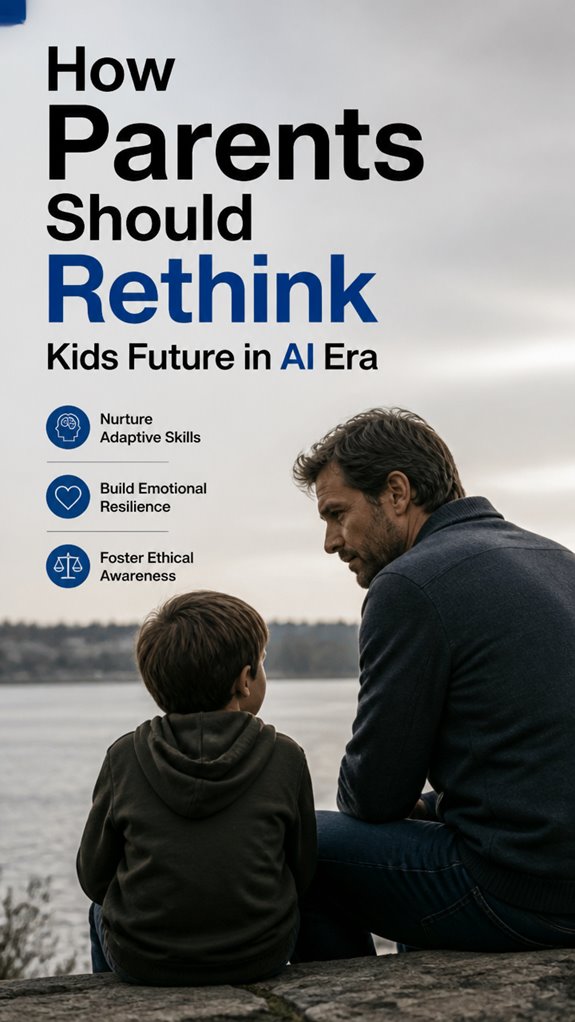
How Can Parents Help Kids Thrive When AI Feels Like a Moving Target?
The anxiety is real—but it’s not about predicting AI’s next move. It’s about building kids who adapt faster than the technology itself.
I watched my ten-year-old freeze during a coding workshop. Not because the AI tool intimidated her, but because she’d never failed publicly before. That moment crystallized why we created Adaptive Atlas. We realized parents don’t need another app or another prediction about the future. They need permission to build resilience *now*—messy, uncomfortable, real resilience. That’s what we write about. Not fear management. Capability building.
Last week, my daughter asked me point-blank: “Will robots take my job?” I didn’t dodge it. Instead, we listed five things *she* could do that machines couldn’t. Curiosity. Empathy. Making judgment calls. Her shoulders relaxed. Fear dissolves fast when kids see their own superpowers reflected back.
Quick Takeaways
- Parents fear AI may negatively influence children’s values, dependencies, and decision-making without proper oversight.
- Concerns about losing control over interactions with technology and ethical dilemmas associated with AI risks.
- Anxiety about children falling behind in mastery and competitiveness in an AI-driven future.
- Worries about job security, economic stability, and societal divides due to rapid technological changes.
- Fear of social pressures, FOMO, and the challenge of helping children adapt confidently to an unpredictable technological landscape.
Why Are Parents Anxious About AI’s Impact on Family and Future?
Many parents feel anxious about how AI might shape their children’s future, and it’s understandable to have concerns when facing rapid technological change. But instead of focusing on fears, try to see AI as a tool to build emotional resilience in your child.
Trust plays a key role here—you can foster confidence by engaging in open conversations about AI’s benefits and risks. When you approach this with calm assurance, you help your children develop critical thinking and adaptability, rather than anxiety. Research shows that overcoming anxiety requires actively reframing your mindset rather than passively hoping worries will fade.
Keep in mind, long-term success comes from nurturing their ability to navigate change, not avoiding it. By strengthening your parental trust and encouraging emotional resilience, you give your child the essential skills to thrive in a future driven by technology, reducing fear and empowering your family’s journey forward.
What Are the Top Fears Parents Have About AI and Their Kids?
Parents often worry that AI could negatively influence their children’s development or create new risks that are hard to control.
Concerns about AI ethical dilemmas arise, especially around how AI might shape children’s values or foster dependency. You might fear losing parental control over how your child interacts with technology, or worry about AI algorithms influencing choices and beliefs without clear oversight. Teaching children to use technology wisely can help mitigate these concerns and empower them to make better decisions online.
It’s important to recognize that these fears stem from the unknown. Instead of feeling overwhelmed, focus on creating boundaries and having open conversations about AI’s role in your child’s life.
How Do Age and Location Shape Parental Views on AI?
Your viewpoint on AI often depends on your age and where you live. Cultural perceptions shape how you see the technology’s role, including fears and hopes about its impact.
Your perspective on AI is influenced by age and culture, shaping your hopes, fears, and understanding of its role.
For example, parents in regions with strong tech hubs, like Silicon Valley, might feel more optimistic and see AI as a tool to empower children’s futures. In contrast, parents elsewhere might worry about unfamiliarity or regional disparities in access.
Younger parents tend to be more open to embracing AI’s potential, while older generations might focus on risks and uncertainties.
Understanding these patterns helps you see that beliefs about AI aren’t fixed—they reflect societal narratives and local experiences. Developing future-ready skills requires acknowledging these generational and geographic divides so all children can benefit from AI literacy regardless of their background.
Recognizing this gives you the power to challenge misconceptions, focus on adaptive strategies, and foster an environment where your child’s future is guided by informed choices, not fear.
Does Fear of Missing Out Make Parents Worry More About Their Kids Falling Behind?
The fear of missing out on technological advantages often fuels worries that children might fall behind their peers if they don’t keep up with AI tools and skills. You might feel pressure that your child needs to be advanced so they won’t experience peer pressure or fear of lag in social or academic settings.
But remember, these concerns often come from the idea that progress is a race. Instead, focus on fostering curiosity and resilience. Encouraging your child to learn at their own pace builds confidence, not anxiety.
Long-term success comes from adaptive skills and a love of learning, not just quick mastery of technology. Keep the bigger picture in mind—your child’s growth is about steady progress, not just keeping up with others.
What Science Tells Us About How Parents and Children Feel About AI Risks?

Research shows that both parents and children experience a mix of excitement and anxiety about AI’s risks. You might worry about how AI impacts neural development or alters risk perception in kids. Science suggests that children’s developing brains are sensitive to technology’s influence, shaping how they process information and gauge danger.
Yet, fears often overlook that knowledge and mindful guidance can foster healthy adaptation. Instead of seeing AI as an unstoppable threat, view it as part of system-wide change—an opportunity to build resilience and understanding.
Parents hold the power to guide children’s experiences, reducing fear by engaging in transparent conversations and setting boundaries.
Long-term thinking helps you see that fostering curiosity, critical thinking, and emotional strength today prepares your child for a future where AI is just one of many tools.
How Parents Can Build Confidence and Prepare Kids for an AI-Powered World?
Many parents feel unsure about how to help their children navigate an increasingly AI-driven world. Building confidence starts with fostering technological resilience and emotional preparedness.
Instead of fearing AI as a threat, see it as a tool for growth. Encourage your kids to develop a balanced mindset—question and analyze tech’s role in their lives, and learn alongside them.
Open honest conversations about AI’s benefits and risks create familiarity and reduce anxiety. Focus on helping your children understand patterns in technology—how it evolves and affects society—so they feel more in control.
You don’t need to be an expert; steady guidance and a calm, curious attitude build resilience. This approach prepares your kids to thrive, not just survive, in the future.
Foundational Research in Cognitive Resilience
Understanding how the brain resists the effects of Alzheimer’s disease can help you see that resilience is real and developable. Cognitive resilience and neural adaptability are at the heart of this resistance. Researchers use techniques like MRI and cognitive testing to understand why some people maintain sharp minds despite risks like amyloid build-up. They’ve developed measures like the Resilience Index, which shows how well the brain can adapt and stay functional. This innovative approach offers a new way to identify individuals who naturally cope better with pathology, regardless of age or genetic background. Factors like education, lifestyle, and even social support influence resilience, giving you tangible ways to help your child build a strong, adaptable brain. By focusing on nurturing these natural strengths—such as encouraging healthy habits, learning, and social bonds—you empower your child’s future. Resilience isn’t fixed; it’s a skill you can actively develop over time.
Uncertainty Management Strategies
Managing uncertainty about AI’s impact on your child’s future can feel overwhelming, but it’s empowering to develop strategies that help you stay grounded. Parental mindfulness is key — staying present and aware of your reactions helps you navigate fears and stay focused on your child’s growth. Embrace AI integration as a tool for learning and development, rather than a threat. Recognize patterns in how systems evolve, which offer long-term stability. Consider this table:
| Mindfulness Approach | System viewpoint | Actionable Focus |
|---|---|---|
| Stay aware of emotions | Understand AI cycles | Engage in open conversations |
| Observe reactions | Recognize adaptation patterns | Support curiosity & critical thinking |
| Practice patience | Embrace ongoing learning | Foster resilience & independence |
This grounded mindset gives you control, helping your child thrive confidently in a changing world.
The Adaptive Atlas Anti-Fragile Child System

The Adaptive Atlas Anti-Fragile Child System is designed to help your child grow stronger through change, not just survive it. It emphasizes technological resilience, teaching your child how to adapt emotionally to new challenges.
Instead of fearing rapid shifts, you foster a mindset that sees change as an opportunity, not a threat. This system encourages emotional adaptation, so your child develops confidence and flexibility in uncertain times.
It’s about creating a long-term pattern of strength, where resilience grows through consistent, intentional practice. You’re not trying to control the future but preparing your child to navigate it with calm assurance.
The Full Adaptive Atlas Framework
You build on the Adaptive Atlas Anti-Fragile Child System with the Full Adaptive Atlas Framework, a complete roadmap that integrates resilience, economic savvy, and social dynamics into daily family life.
You’ve felt the sting of economic insecurity fears—44% of parents like you expect AI to cut family security, per Capita/YouGov. Yet this framework bridges generational divides and regional viewpoints, freeing your child from FOMO traps and job loss anxieties.
- Map resilience: Train kids to thrive amid AI shifts, countering 72% parental concerns (Barna).
- Build economic savvy: Teach value creation beyond automation, easing 46% over-45s’ threats.
- Navigate social dynamics: Counter peer pressure, where 70% prioritize short-term edges.
- Unite family systems: Align daily habits for long-term independence, closing divides.
You reclaim control—your child’s future strengthens.
The Adaptive Atlas Framework
Five connected systems designed to help parents raise adaptable, future-ready children in a world shaped by AI, automation, and constant change.
| 🛡️ |
Anti-Fragile Child SystemBuilds resilience, adaptability, and the ability to handle uncertainty without shutting down. |
| 📚 |
Learning Stack ModelDevelops self-directed learning habits and continuous skill acquisition beyond school systems. |
| 🚀 |
Future Skill Stack SystemFocuses on high-value human skills that remain relevant in an AI-driven economy. |
| 🤖 |
AI Learning SystemTeaches children how to use AI as a thinking partner instead of becoming dependent on it. |
| 🧭 |
Child Type Navigator SystemPersonalizes learning and development based on each child’s strengths and personality. |
FAQ
How Do Parents’ Perceptions of Economic Risks Influence Their Attitude Towards AI?
Your perception of economic instability and generational divide shapes your view on AI—fearing job loss and financial threats, you hesitate to embrace AI, seeking to break free from these fears and secure a resilient future for your family.
What Role Does Social Media Play in Shaping Parental Fears About Ai’s Impact on Children?
Social media influences your fears, gently amplifying worries about digital privacy and emotional well-being, making you feel trapped. To find freedom, you must seek balanced information, trust your instincts, and prioritize genuine connection over digital fears.
Are There Effective Ways to Reduce Uncertainty and Anxiety Around AI for Parents?
You can reduce AI uncertainty by seeking emotional support, engaging with informed communities, and openly discussing benefits and risks with other parents, empowering yourself to make confident decisions and embrace a liberated, proactive approach to your child’s future.
How Does Parental Trust in Technology Affect Decisions About AI Use for Kids?
You forge digital boundaries like a lighthouse guiding trusted ships, boosting your confidence. When privacy concerns fade, your trust awakens, empowering you to make conscious AI choices for your kids, embracing freedom from fears and digital dominance.
What Long-Term Cognitive Effects of AI Are Most Concerning to Parents?
You’re worried that AI may hinder your child’s cognitive development by reducing their brain plasticity, possibly impairing independent thinking and problem-solving skills, which could limit their mental freedom and growth in an increasingly digital world.
References
- https://capita.org/parents-fear-ai-but-the-risk-to-families-is-not-evenly-distributed/
- https://www.chicagobooth.edu/review/parents-worry-about-their-kids-using-ai-worry-more-about-them-not-using-it
- https://www.digitaljournal.com/tech-science/anxious-parents-face-tough-choices-on-ai/article
- https://www.barna.com/research/parents-ai/
- https://www.washingtonexaminer.com/restoring-america/community-family/4533931/ai-anxiety-is-undermining-families-its-time-for-a-baby-bonus/
- https://pmc.ncbi.nlm.nih.gov/articles/PMC12231230/
- https://pmc.ncbi.nlm.nih.gov/articles/PMC10515194/
- https://brainresilience.stanford.edu/news/knight-symposium-highlights-advances-brain-resilience-research
- https://curealz.org/research/foundational/biomarkers-diagnostics-studies-of-risk-resilience/understanding-human-brain-resilience-to-alzheimers-pathology-year-1/
- https://www.cogneurosociety.org/modeling-brain-aging-and-resilience-over-the-lifespan-reveals-new-individual-factors/