How Can Kids Navigate AI While Building Genuine Connections?
AI floods our children’s worlds with noise. The answer: teach them to filter algorithms through emotional awareness and real human connection.
Real Connection Over Algorithm Noise
My daughter came home frustrated after an AI chatbot gave her contradictory homework advice. That night, we built what became our “Adaptive Atlas” together. We labeled her confusion, questioned the bot’s logic, and role-played how a real tutor might approach the same problem. She discovered something powerful: AI is a tool, not a teacher. Labeling feelings. Asking direct questions. Practicing empathy through conversation. These habits build resilience and sharpen her ability to spot when algorithms mislead.
When Technology Met Reality
Last month, my son used an AI writing assistant that suggested removing all dialogue from his story. He almost accepted it. Instead, he asked me to explain why conversations matter in narratives. We talked through character voice, reader connection, emotional stakes. He rejected the algorithm’s suggestion entirely. That moment showed me: kids don’t need less technology. They need guidance recognizing human connection always outlasts artificial shortcuts.
Quick Takeaways
- Encourage regular face‑to‑face playdates and group activities to develop empathy and social cues beyond screens.
- Use the Connection Building Toolkit: observe, label, and discuss feelings during interactions to strengthen emotional intelligence.
- Balance screen time with device‑free periods, prompting kids to practice active listening and collaborative problem‑solving in person.
- Teach children to recognize and question algorithmic bias, fostering critical thinking and authentic communication.
- Incorporate role‑play and Mirror‑Talk exercises to rewire neural pathways for empathy and improve peer relationships.
What Is Adaptive Atlas and Why It Matters?
Why does it matter that the world is changing faster than ever? You feel the pressure of constant shift, yet Adaptive Atlas offers a steady framework.
Adaptive Atlas steadies children amid rapid change, turning uncertainty into lasting resilience.
It replaces the myth of a fixed future with a system that builds generative creativity and ethical decision making in kids.
You notice the fear of AI replacing jobs, but the program reframes that into a partnership where children learn to amplify thinking, not surrender it.
By focusing on adaptability, the model teaches children to navigate ambiguity, create value across variables, and make responsible choices.
This long‑term thinking turns uncertainty into leverage, much like how anti-fragile systems gain strength from volatility rather than simply withstanding it. You’ll see your child develop resilience, curiosity, and a clear path to thrive, no matter how the environment evolves.
How the Anti‑Fragile Child System Builds Resilience
Ever wonder how a child can stay steady when the world feels like it’s constantly shifting? You’ll notice that the Anti‑Fragile Child System teaches Emotional agility by letting kids label feelings, pause, and choose a constructive response.
That habit builds Social resilience, because they learn to seek support, negotiate conflict, and bounce back together.
Parents often fear that volatility will overwhelm a child; instead, view each setback as a rehearsal for future adaptability. By framing challenges as data points, you give your child a reliable pattern for growth.
Building these foundational competencies helps children develop future-ready skills that extend beyond emotional regulation into problem-solving and adaptability across all life domains.
Over time, this systematic practice creates a sturdy inner compass, ensuring they remain capable and confident no matter how technology or society evolves.
The Learning Stack Model: Self‑Directed Skill Acquisition
When children learn to set their own learning loops, they stop relying on static curricula and start treating knowledge as a living resource. You guide them to build a Learning Stack that mixes curiosity, feedback, and iteration. Each layer—exploration, practice, reflection—feeds the next, turning skill acquisition into a self‑sustaining cycle.
Emphasize synthetic empathy: let them practice understanding AI‑generated emotions to sharpen human connection. Pair that with digital mindfulness, teaching them to pause, assess, and choose tools wisely. Explaining AI simply helps children grasp how these systems work before they learn to interact with them intentionally.
Parents often fear losing control, but the stack gives clear checkpoints and measurable progress. Over time, the child becomes a confident, adaptable thinker, ready to create value in any future scenario.
Future Skill Stack: High‑Leverage Capabilities for AI‑Era
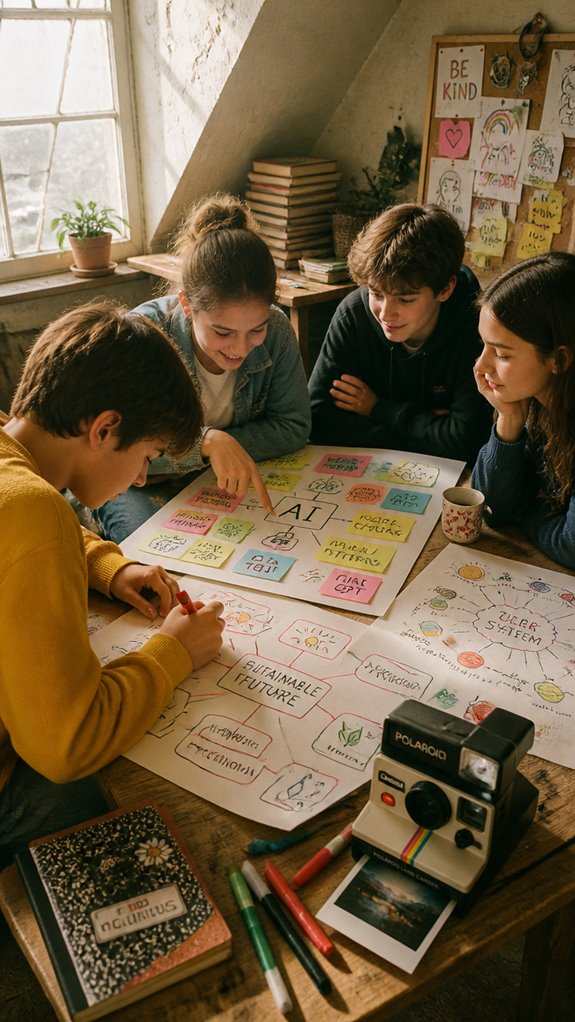
If you look past the headlines, the real advantage in the AI era comes from building a set of high‑leverage capabilities that stay valuable no matter how tools change. You’ll notice that emotional resilience lets your child stay steady when algorithms shift, while creative collaboration turns diverse ideas into lasting solutions.
Mastery means practicing doubt‑tolerant thinking, not memorizing static facts. Encourage them to ask “why” and to prototype with peers, using simple tools like Google Docs or Scratch to iterate quickly. The Digital Opportunity Explorer Toolkit provides a structured framework for kids to systematically experiment with new digital opportunities and discover their emerging interests.
Fear of obsolescence fades when you focus on patterns—critical framing, adaptive learning, and teamwork. Over time these habits compound, giving your child a reliable compass for any future terrain.
AI Learning System: Partnering With Intelligent Tools
How can a child turn a powerful AI tool into a reliable partner rather than a source of anxiety? First, you show them digital literacy basics: understanding interfaces, asking clear questions, and checking outputs.
Teach children to ask clear questions, verify AI answers, and view the tool as a collaborative partner.
Then you weave emotional intelligence, teaching them to notice frustration, pause, and ask why a result feels off. Explain that AI is a cognitive amplifier, not a replacement, and that mastery comes from guiding it, not being guided.
Point out that Google’s Gemini or Microsoft’s Copilot follow the same pattern—prompt, response, refinement. Remind parents that fear of loss of control is normal, but it dissolves when the child treats AI as a collaborative teammate.
Activities like creative writing prompts, coding challenges, and problem-solving exercises provide structured environments where kids can safely experiment with AI while building critical thinking skills. This system builds confidence, long‑term adaptability, and a future‑ready mindset.
Child Type Navigator: Personalizing the Adaptive Atlas Framework
After exploring how kids can partner with AI tools, we now turn to tailoring the whole Adaptive Atlas system to each child’s unique style. Your Child Type Navigator refines Child identity while building Emotional resilience, so the child can thrive amid constant change. By addressing AI fears and concerns early, you help children develop confidence in their interactions with technology. You’ll see how a simple, data‑driven profile shapes learning loops, decision filters, and AI interaction, turning uncertainty into a growth engine.
- Identify the child’s dominant thinking pattern and map it to adaptive learning pathways.
- Align feedback loops with emotional cues to boost resilience and self‑confidence.
- Adjust AI prompts and tool usage to match the personalized profile, ensuring consistent progress.
Neuroplasticity-Driven Peer Empathy

Why does peer empathy matter when a child’s brain is still wiring itself? As you guide your child, remember that neuroplasticity makes every social interaction a chance to sculpt neural pathways. When they practice emotional intelligence with friends, they strengthen circuits that later support problem-solving and resilience.
Cultural awareness adds another layer, teaching them to read diverse cues and adapt their responses. Parents often fear that digital distractions will erode these skills, but you can reframe that worry: set regular, device-free playtimes where children negotiate, share, and reflect. Balancing tech and creativity during these interactions helps children develop multifaceted problem-solving approaches.
This systematic practice builds a robust empathy network, preparing them for collaborative work and leadership in any future terrain. The result is a child who learns, adapts, and thrives through genuine connection.
Overwhelmed by AI Noise
Parents feel overwhelmed by AI noise when headlines scream about job losses and endless tech updates, but you don’t need to chase every trend. You tune into signals that build real capability in your child, cutting through the chaos.
Parents feel overwhelmed by AI noise from job loss headlines and tech updates, but skip the trends—tune into signals building real child capability amid chaos.
Fear of algorithm bias warping their worldview is valid, yet you reframe it: teach them to spot it early, fostering independent judgment for lifelong connections.
Building freelance skills early equips children with the self-sufficiency to navigate technological change while maintaining genuine human connections.
Here’s your mastery filter:
- Prioritize AI socialization: Guide real-world interactions over screens, so your child builds empathy that AI can’t replicate, securing future relationships.
- Decode algorithm bias: Train them to question curated feeds, like those from Meta or TikTok, sharpening critical thinking for authentic bonds.
- Focus on adaptive patterns: Ignore hype; instill neuroplasticity habits that compound, ensuring they thrive amid change.
You regain control, raising a connected, resilient child.
Connection Building Toolkit for Kids
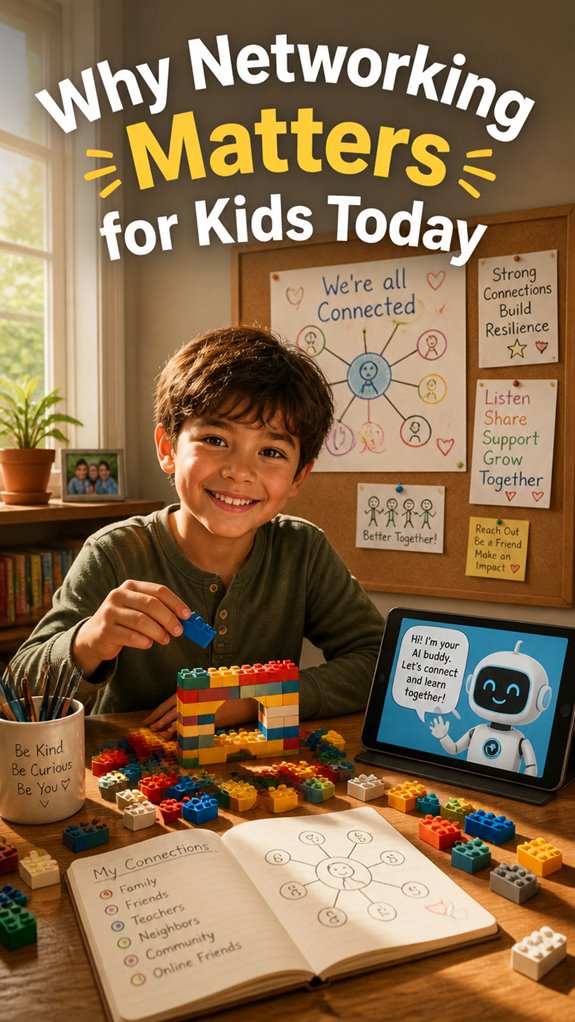
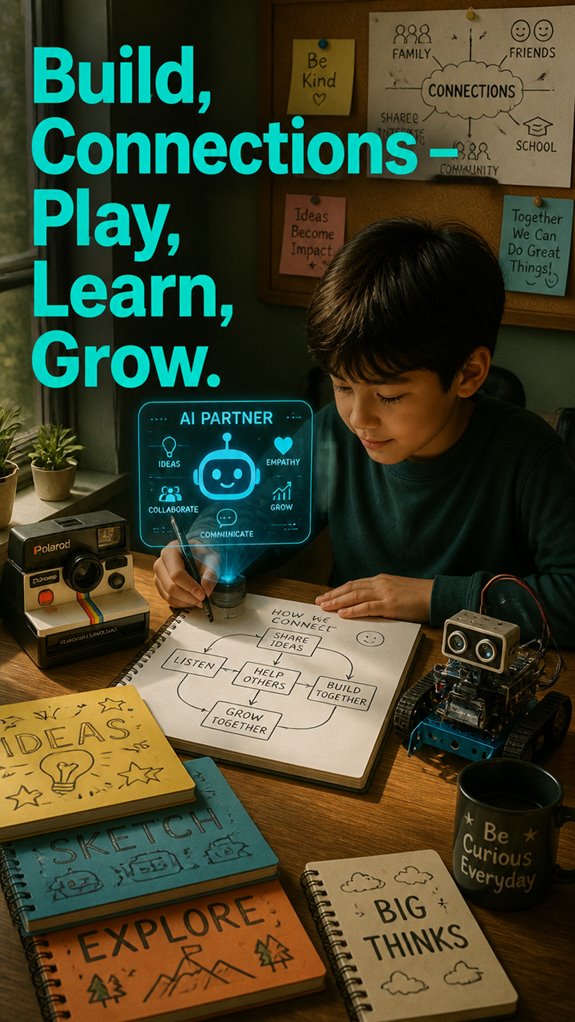
When the world feels noisy, you can still give your child a solid way to build real connections. Start with a simple framework: observe interpersonal dynamics, label feelings, then practice responses. Use role‑playing games to boost emotional intelligence, letting your child experiment with tone and body language.
Track progress in a notebook, noting patterns and adjustments. Encourage weekly reflection on how they handled conflict or collaboration, turning each episode into data for future growth. Remind them that mastery comes from repeated, mindful practice, not from one‑off lessons. Learning accelerates when children embrace calculated risk-taking in social situations, testing new approaches and recovering from missteps.
This system builds confidence, nurtures empathy, and prepares them to navigate any social terrain—online or offline—while staying grounded in real‑world relationships.
Neural Plasticity Empathy Exercises
If you notice your child hesitating to read another’s feelings, it’s a sign the brain’s neural pathways are still hard-wiring empathy, and that’s perfectly normal. You can guide brain rewiring with purposeful practice, turning uncertainty into mastery of emotion regulation. By treating each exercise as a system, you build lasting patterns that serve the child’s future adaptability. Understanding how kids recognize emotions creates a foundation for all the exercises that follow.
- Mirror‑Talk – Pause, name the observed emotion, then repeat it back in the child’s own words. This reinforces neural links and sharpens regulation.
- Perspective‑Shift Role‑Play – Swap roles, asking “How would you feel if…?” to stretch empathy circuits.
- Emotion‑Journal Challenge – Daily, list three feelings you noticed in others and the cues that signaled them, fostering reflective rewiring.
These steps demystify growth, replace fear with clear action, and equip your child with a resilient, adaptable mind.
The Adaptive Atlas Future Skill Stack System
One of the most useful ways to think about the Future Skill Stack is to picture it as a toolbox that grows with your child. You’ll notice that each tool—critical thinking, problem framing, creativity—gets sharper as the child practices digital resilience and ethical collaboration.
Parents often fear that AI will replace human skill; instead, view AI as a partner that amplifies judgment, not a substitute. Build a habit of self‑directed learning loops so the child can adapt when knowledge shifts.
Encourage them to test ideas, reflect on failures, and iterate quickly. This system‑wide approach creates lasting capability, turning uncertainty into opportunity and ensuring the child thrives in any future environment. The anti-fragile child system strengthens children by exposing them to managed challenges that build confidence and adaptability beyond what comfort alone could provide.
The Adaptive Atlas Framework
Five connected systems designed to help parents raise adaptable, future-ready children in a world shaped by AI, automation, and constant change.
| 🛡️ |
Anti-Fragile Child SystemBuilds resilience, adaptability, and the ability to handle uncertainty without shutting down. |
| 📚 |
Learning Stack ModelDevelops self-directed learning habits and continuous skill acquisition beyond school systems. |
| 🚀 |
Future Skill Stack SystemFocuses on high-value human skills that remain relevant in an AI-driven economy. |
| 🤖 |
AI Learning SystemTeaches children how to use AI as a thinking partner instead of becoming dependent on it. |
| 🧭 |
Child Type Navigator SystemPersonalizes learning and development based on each child’s strengths and personality. |
FAQ
How Can Kids Balance Screen Time With Real‑World Social Interactions?
Set clear digital boundaries, then schedule offline activities—like sports, board games, or neighborhood walks—to practice face‑to‑face communication, ensuring you develop social mastery while still enjoying tech responsibly.
What Role Does Play Have in Developing Ai‑Era Adaptability?
Play boosts adaptability; a 2023 study shows kids who role 30 minutes daily improve AI problem‑solving by 18 %. Embrace spontaneous games to deepen algorithm literacy, sharpening mastery‑ready thinking.
How Do Parents Model Healthy AI Usage for Their Children?
You model healthy AI usage by setting clear limits, reviewing digital footprints together, and guiding ethical decision‑making, so kids learn responsible interaction, privacy awareness, and value‑driven choices while using intelligent tools.
Can Empathy Be Taught Through Virtual Reality Experiences?
You might think VR’s gimmick, but virtual empathy actually deepens emotional learning. By immersing kids in realistic scenarios, you teach them subtle feelings, sharpening mastery of human connection faster than any textbook.
What Are Age‑Appropriate Ways to Discuss AI Ethics With Kids?
You discuss AI ethics by presenting age‑appropriate ethical dilemmas, prompting moral reasoning, encouraging questions, using relatable stories, and guiding kids to evaluate consequences, fostering mastery of responsible technology use.