How Do Kids Balance Screens With Real Creativity?
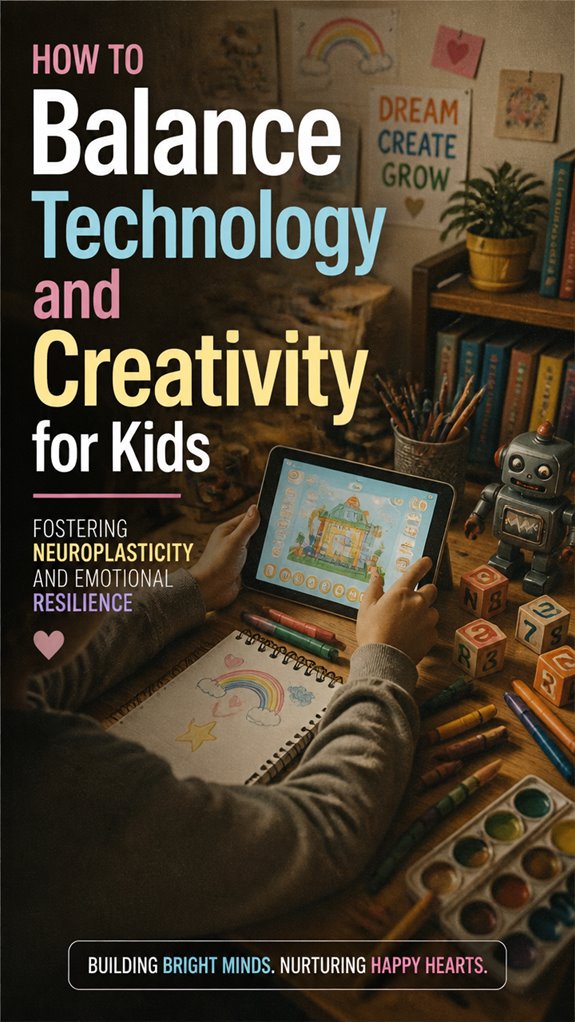
Digital tools work best when they amplify imagination, not replace it. Platforms like Scratch and Tinkercad teach problem-solving while hands-on building keeps curiosity alive. Screen time boundaries protect the resilience kids need for actual innovation.
A Moment That Changed Everything
My son sat hunched over his tablet last summer, creating Scratch animations. But here’s what shifted things: I noticed him sketching the same characters in a notebook without prompting. That’s when I realized technology wasn’t the enemy. At Adaptive Atlas, we document these moments because we believe kids need both worlds. We write about this intersection precisely because it’s where real learning happens, not in either extreme.
When Screen Time Met Dirt Time
Last Tuesday, my daughter spent an hour coding a game, then spent three hours in the backyard building an actual obstacle course based on her digital creation. She moved between both worlds naturally, neither replacing the other. That fluidity taught me more than any parenting article ever could about what genuine balance looks like.
Quick Takeaways
- Integrate digital tools that promote experimentation and problem-solving, like Tinkercad or Scratch, alongside hands-on activities.
- Set clear boundaries for screen time to encourage offline play and real-world exploration.
- Use technology as a partner to amplify creative thinking without replacing traditional imaginative activities.
- Provide real-world challenges for applying digital skills, fostering confidence and resilience through meaningful experiences.
- Balance online exploration with physical activities to develop emotional resilience, curiosity, and adaptable skills.
How to Choose Digital Creativity Tools That Spark Kids’ Imagination?
Choosing digital creativity tools for kids might seem overwhelming amid a growing market of apps and platforms. It’s natural to worry about screen time or overly passive experiences.
Instead, focus on tools that foster augmented imagination and virtual experimentation. These tools encourage kids to explore ideas deeply, pushing their boundaries without limits.
For example, platforms like Tinkercad or Scratch allow children to build, experiment, and problem-solve creatively. Research shows that future-ready skills like digital literacy and creative problem-solving are increasingly essential for children to thrive in evolving career landscapes.
When selecting, prioritize those that build core skills like critical thinking and adaptability, aligning with the idea that future success depends on capability, not just knowledge.
Keep in mind, the goal isn’t perfection but creating environments where curiosity thrives and children learn to navigate ambiguity confidently.
These choices lay a foundation for long-term resilience and innovative thinking.
How to Balance Digital Creativity With Hands-On Offline Activities?
Balancing digital creativity with hands-on offline activities may seem challenging, but it’s essential for preparing your child for a future that values both technical fluency and real-world skills.
Physical play helps develop emotional resilience, enabling children to handle setbacks and frustrations calmly—qualities that underpin long-term adaptability.
Incorporating hands-on activities like building, crafting, or outdoor exploration provides opportunities for children to engage physically and emotionally.
These experiences foster a well-rounded skill set that complements digital creativity, preventing overreliance on screens.
Keep in mind, the goal isn’t to choose one over the other but to create a system where offline and online activities reinforce each other, building resilience and curiosity.
This balanced approach helps children grow confident, adaptable, and ready for continuous change.
How to Set Boundaries That Promote Skill Development and Healthy Tech Use?
Setting healthy boundaries around technology use supports your child’s ability to develop important skills while maintaining a sense of balance and focus.
Establishing clear parent-child boundaries isn’t about strict control but about guiding responsible tech habits that foster long-term growth.
Screen time moderation is key; rather than viewing devices as enemy or safe zones, see them as tools that, used intentionally, can amplify learning.
Limit screens during meaningful family moments and encourage offline activities that build creativity, resilience, and social skills—traits essential for the future.
Remember, children thrive when they understand limits and purpose behind tech use.
This approach helps them develop autonomy and adaptability, fundamental qualities in a rapidly changing world.
A child’s identity flourishes when they explore interests beyond any single role or skill, which tech boundaries actually support by creating space for diverse exploration and flexible identity development.
Consistent boundaries create a foundation for mindful tech engagement and skillful navigation of emerging tools.
Growth in Coding Skills

Learning to code offers more than just technical skills; it directly shapes your child’s ability to think critically, solve problems, and be creative. Through programming, your child develops algorithmic thinking—breaking down complex challenges into manageable steps—an essential skill for future success. Cognitive benefits of learning programming are enhanced through coding, as children exercise their critical thinking and inventive capacities. Collaborative coding teaches teamwork and communication, skills that are vital in today’s interconnected world. Engaging in coding activities builds resilience and confidence, showing children how failure is part of mastery rather than a setback. As organizations like Code.org and experts in cognitive development emphasize, early exposure enhances analytical and mathematical reasoning, preparing kids for the jobs of tomorrow. Instead of fearing rapid change, see coding as a platform to cultivate adaptable, capable learners who thrive in a changing environment.
Tech Overuse Reduces Creativity
Excessive screen time quietly erodes your child’s creativity by replacing active imagination with passive consumption. You see screen dependency take hold, leading to imaginative limitations as kids swap open-ended play for pre-programmed games.
Don’t fear the future—researchers like those at the American Academy of Pediatrics show each extra screen minute cuts verbal interactions, stunting language and creative expression essential for adaptive thinking. Increased screen time correlates with decreased creativity and imagination compared to previous generations. Understanding how to protect your child’s online reputation helps them navigate digital spaces responsibly while maintaining creative development.
Master this pattern: tech overuse displaces unstructured play, where kids invent worlds and solve problems hands-on.
- Passive videos limit fictional world-building, blocking experimentation.
- Sedentary apps reduce physical play crucial for brain development.
- Instant gratification undermines boredom’s role in deep imagination.
- Multitasking overloads attention, hindering sustained creative focus.
Reframe now: cut screens strategically to reclaim time for independent exploration, building lifelong creative leverage.
Balanced Creativity System for Kids
Balancing creativity means supporting your child as they develop both their imagination and their ability to think critically and flexibly. A well-designed system fosters emotional resilience and collaborative problem solving, preparing children for a world of constant change. These foundational abilities often prove more valuable than traditional academic knowledge, as life skills enable children to adapt and thrive in unpredictable circumstances. Here’s a simple approach:
| Focus Area | Purpose | Action |
|---|---|---|
| Emotional resilience | Helps children recover from setbacks | Encourage effort, celebrate progress, normalize failure |
| Collaborative problem solving | Builds teamwork and adaptability | Engage in joint projects, design open-ended challenges |
| Creative expression | Strengthens innovation and confidence | Provide diverse tools for art, storytelling, and play |
The Adaptive Atlas Learning Stack Model

The Adaptive Atlas Learning Stack Model offers a fresh approach to helping your child thrive in a world where knowledge is constantly changing. This model focuses on developing neuroplasticity exploration and emotional resilience, key skills in uncertain times.
Empowering children to adapt and grow through neuroplasticity and emotional resilience in a rapidly changing world
You’re encouraged to see learning as an ongoing process, not a fixed phase, so your child can adapt and grow.
You can think of it as a system with four core ideas:
- Building resilience to handle frustration and setbacks
- Cultivating curiosity to explore new skills independently
- Focusing on adaptable, future-proof capabilities
- Using AI as a partner to amplify thinking without dependency
This approach shifts your focus from fixed knowledge to flexible skills, preparing your child for a future of continuous change with confidence. By presenting real-world challenges, you give children the opportunity to apply these skills in meaningful contexts where they develop both competence and confidence.
The Adaptive Atlas Framework
Five connected systems designed to help parents raise adaptable, future-ready children in a world shaped by AI, automation, and constant change.
| 🛡️ |
Anti-Fragile Child SystemBuilds resilience, adaptability, and the ability to handle uncertainty without shutting down. |
| 📚 |
Learning Stack ModelDevelops self-directed learning habits and continuous skill acquisition beyond school systems. |
| 🚀 |
Future Skill Stack SystemFocuses on high-value human skills that remain relevant in an AI-driven economy. |
| 🤖 |
AI Learning SystemTeaches children how to use AI as a thinking partner instead of becoming dependent on it. |
| 🧭 |
Child Type Navigator SystemPersonalizes learning and development based on each child’s strengths and personality. |
FAQ
How Can Parents Encourage Intrinsic Motivation in Digital Creative Activities?
You can encourage intrinsic motivation in digital engagement by providing open-ended projects, emphasizing mastery over outcomes, and supporting exploration. Your child’s curiosity fuels their intrinsic motivation, making creative activities engaging and fostering deep, autonomous learning in technology.
What Are Effective Ways to Integrate Outdoor Exploration With Digital Learning?
You can merge outdoor exploration with digital learning through purposeful nature connection, engaging sensory play that stimulates curiosity, and using tech tools to enhance outdoor observations, transforming children into masters of steering both virtual worlds and nature’s complexity.
How to Identify When a Child’s Screen Time Impacts Their Emotional Well-Being?
Monitor your child’s screen time patterns for signs of emotional health impact, such as increased irritability, withdrawal, or mood swings. Address concerns promptly, encouraging balance and open dialogue to maintain their resilience and well-being in a tech-driven environment.
What Strategies Promote Creative Confidence Without Fear of Failure?
Encourage creative risk taking by celebrating effort and progress, not just results. Use confidence building activities that normalize failure, promote experimentation, and reinforce that setbacks are essential learning steps toward mastery, fostering resilient, innovative creators.
How Can Technology Enhance Interpersonal Skills Through Collaborative Projects?
Coincidences spark your mastery by leveraging digital collaboration and tech-driven communication, enhancing interpersonal skills naturally. As you integrate these tools, you foster deeper understanding, build trust, and develop subtle collaborative abilities essential for leadership in tomorrow’s connected environments.
References
- https://www.ndtv.com/education/how-to-balance-screen-time-with-creativity-and-nature-for-children-9667552
- https://collabforchildren.org/resources-for-families/resource-library/fostering-kids-creativity-with-technology/
- https://www.horizonhealthcare.org/limiting-screen-time-for-children/
- https://www.qustodio.com/en/blog/how-tech-affects-childs-imagination/
- https://www.pediatricassociatesvineland.com/blog/1157961-managing-screen-time-balancing-technology-use-for-children
- https://www.swgeneral.com/blog/2024/september/growing-up-digital-balancing-the-impact-of-techn/
- https://mytotalpediatriccare.com/uncategorized/healthy-screen-time-for-kids-balancing-technology-and-play/
- https://timbercreekped.com/managing-screen-time-balancing-technology-and-play/
- https://www.childcareed.com/a/balancing-screen-time-with-hands-on-learning.html
- https://www.itlearnner.com/blog-article/coding-is-the-new-literacy-kids