How Can Your Child Connect with AI Mentors?
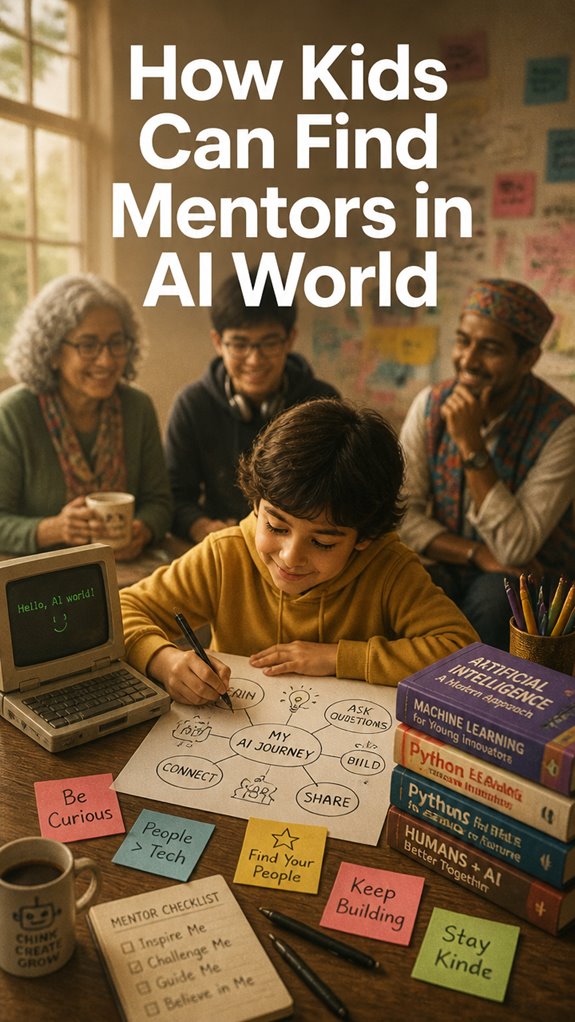
Wondering where to begin when your child wants to learn AI? Start by setting one concrete goal, like building a chatbot or analyzing datasets. Then hunt for mentors on Coursera, Khan Academy, or MIT Media Lab. Craft a respectful, specific outreach message showcasing genuine curiosity.
Why Adaptive Atlas Exists for Young Learners
I watched my nephew struggle through online tutorials alone, frustrated and ready to quit. That’s when I realized something crucial: kids don’t need another course. They need a real person who gets it. We built Adaptive Atlas because mentorship transforms learning from a lonely grind into a conversation between humans who actually care about the same problems.
A Moment That Changed My Perspective
Last year, I connected a 12-year-old named Marcus with an AI researcher. Within weeks, his confidence shifted entirely. He moved from “I can’t do this” to debugging his own code. That single relationship unlocked something no video tutorial ever could. Mentorship isn’t optional. It’s the accelerant that turns curiosity into capability.
Quick Takeaways
- Join reputable platforms like Coursera AI tracks, Khan Academy Adaptive pathways, or MIT Media Lab mentorship hubs that match the child’s age and interests.
- Search for mentorship programs that combine gamified learning with structured mentor interaction to keep engagement high.
- Reach out to potential mentors with a concise message stating the child’s goals, current skill level, and a specific question or project idea.
- Use AI tools to personalize prompts and learning activities, ensuring they align with the child’s strengths and developmental needs.
- Build a supportive community by connecting with local schools, libraries, and tech hubs for additional mentorship resources and peer groups.
What AI Learning Goals Does Your Child Have?
A good place to start is by asking what specific AI learning goals you want your child to pursue. Think about nurturing childhood curiosity—what questions spark their imagination? Then translate that wonder into concrete objectives, like mastering prompt engineering or interpreting data visualizations.
You may fear that AI will outpace them, but focus on learning adaptability: the ability to pivot, unlearn, and relearn. Encourage them to build a personal learning stack, using tools such as OpenAI’s API or Khan Academy’s adaptive quizzes.
This systematic approach creates a feedback loop, turning each success into a habit. Over time, the child develops resilience and a growth mindset, positioning them to thrive amid constant technological change. Strong mentoring relationships can accelerate this growth by providing guidance, accountability, and real-world perspective during their AI learning journey.
Where to Find the Right AI Mentor Platforms?
When you start looking for AI mentor platforms, keep in mind that the goal isn’t to find a magic solution but a reliable system that fits your child’s learning style and long‑term growth. Start with reputable ecosystems such as Coursera’s AI tracks, Khan Academy’s adaptive pathways, or the MIT Media Lab’s mentorship hub.
These sites blend AI gamification with structured mentor engagement, making progress visible and motivating. Notice that many platforms let you filter by age, skill level, and interests, so you can match your child’s curiosity with mentors who model problem‑solving rather than just delivering facts. Selecting platforms that align with future-ready skills ensures your child develops capabilities that remain relevant in rapidly evolving industries.
Recall, the fear of “too much tech” fades when you see a clear, repeatable learning loop that builds confidence and future‑proof capability.
How to Write a Persuasive First Message to an AI Mentor?
Even if you feel unsure about reaching out, a well‑crafted first message can set the tone for a productive mentor‑child partnership.
Start by stating your child’s goal clearly, then show you understand the mentor’s expertise. Use emotional intelligence to acknowledge the mentor’s time and to express genuine curiosity. Highlight how creative collaboration will benefit both sides and how it fits the child’s long‑term learning system. This approach transforms your child from a passive consumer into an active creator mindset, positioning them to contribute meaningfully to the mentoring relationship.
- Briefly introduce the child’s current skill level and specific learning aim.
- Mention a recent project or perspective that links to the mentor’s work, showing thoughtful preparation.
- Ask a concise, open‑ended question that invites the mentor to share a short, actionable tip.
This approach builds trust, demonstrates respect, and frames the relationship as a shared growth journey.
Keeping the AI Mentor Relationship Productive

One practical way to keep an AI mentor relationship productive is to treat each interaction as a small, repeatable system rather than a one‑off event. Start by setting a clear goal, then pause to gauge your child’s emotional intelligence—are they feeling frustrated or curious?
Treat each AI mentorship as a repeatable, goal‑driven interaction, adjusting for the child’s emotional state.
Use that understanding to adjust the prompt, turning the session into creative collaboration. Remind yourself that the AI is a tool, not a teacher, and that consistency builds confidence.
Record what works, note patterns, and refine the process weekly. This systematic habit reduces fear of the unknown and shows the child how to harness AI for long‑term growth.
Over time, the child learns to navigate ambiguity, turning each exchange into a stepping stone toward mastery.
Neuro‑Developmental Mentor Matching
If you’re looking for a mentor who truly understands a child’s neuro‑developmental profile, start by mapping the child’s strengths and challenges onto the kinds of support AI can provide. You’ll see that neuroplasticity support thrives when mentors align activities with the child’s natural learning rhythms.
And cognitive flexibility grows through varied, adaptive tasks. Parents often fear mis‑matching, but the system turns that worry into a data‑driven plan that builds the child’s future resilience. Independent thinking emerges as children learn to evaluate information and make decisions with mentorship that encourages self-directed exploration rather than passive instruction.
By focusing on patterns rather than quick fixes, you create a sustainable growth loop that the AI’s personalized understanding can support.
- Use assessment tools that highlight neuro‑developmental traits.
- Pair mentors who specialize in neuroplasticity‑focused interventions.
- Design activities that stretch cognitive flexibility across scenarios.
Limited Access to Local Experts
When you live in an area with few local AI experts, it’s easy to feel stuck, but you can still give your child the mentorship they need. Start by building community partnerships with nearby schools, libraries, and tech hubs; they often host guest speakers or workshops that bring expertise into reach.
Simultaneously, join virtual peer groups where mentors and peers share projects and feedback in real time. These networks create a pattern of continuous learning that compensates for geographic limits. Creating a personalized learning plan helps you systematically identify which mentors and resources align best with your child’s specific AI interests and goals.
Recall, the fear of isolation fades when you view each connection as a node in a larger system. By nurturing both local and online relationships, you equip your child with a resilient support web that fuels long‑term growth and adaptability.
Mentor Finding Toolkit for Kids

How can you turn the search for a mentor into a reliable system rather than a hopeful gamble? Start by treating mentorship like a project you design, not a chance encounter. Map the goal, set criteria, and iterate.
You’ll see that creative exploration and emotional intelligence become your compass, guiding you to mentors who spark growth and model resilience. This systematic approach reduces anxiety and builds a repeatable pattern for future success. Building these adaptability skills through mentorship helps you navigate unexpected challenges and adjust your approach when initial strategies don’t work.
- Define a profile: list the skills, values, and emotional traits you seek, then match them with real‑world examples like AI researchers at MIT or community leaders at Code.org.
- Leverage platforms: use structured networks such as LinkedIn’s mentorship program or local STEM clubs that vet mentors, ensuring consistency.
- Create a feedback loop: after each meeting, assess what you learned, adjust criteria, and document progress, turning every interaction into data for the next search.
Neuro‑Developmental AI Pairing
Finding the right AI partner for a child’s neuro‑development is a lot like building a mentorship system: you start with clear goals, then choose tools that match the child’s learning style and emotional needs.
You’ll notice neuroplasticity transfer when the AI adapts its prompts to reinforce new neural pathways, turning each interaction into a practice session.
Cognitive scaffolding follows, as the system offers just‑right challenges that stretch thinking without overwhelming.
Parents often fear loss of control, but you can set limits, monitor progress, and adjust difficulty daily. Addressing AI concerns openly with your child helps them understand both the benefits and limitations of AI as a learning tool.
This disciplined approach builds resilience and a growth mindset, preparing the child to navigate future uncertainty confidently.
The Adaptive Atlas Future Skill Stack System
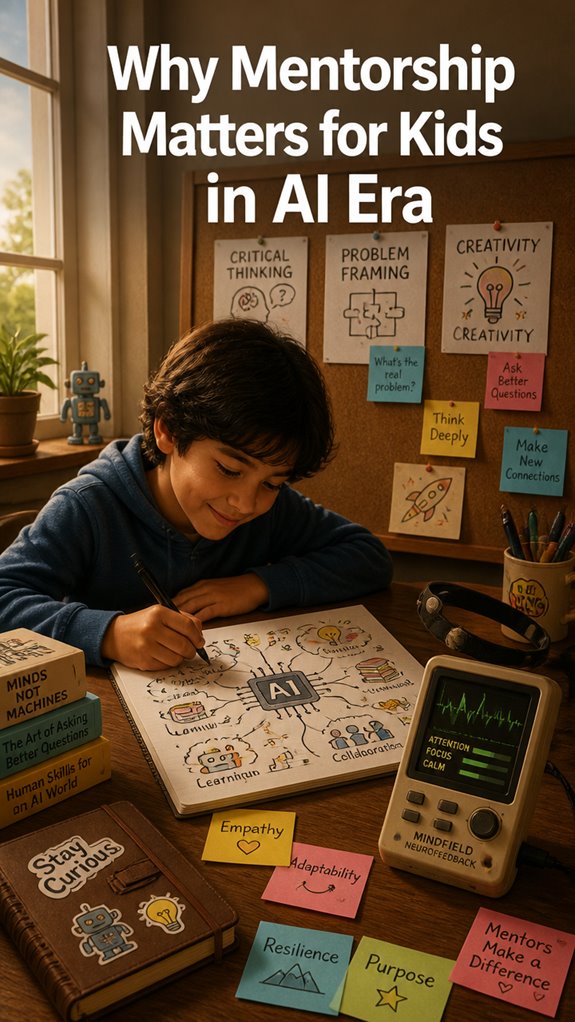
If you want your child to stay valuable as AI reshapes jobs, focus on the capabilities that never go out of style. The Adaptive Atlas Future Skill Stack System teaches critical thinking, problem framing, and creativity while embedding mentorship diversity and ethical AI principles.
You’ll see fear of obsolescence fade as the system builds a resilient learning loop that adapts to any market shift. By cultivating anti-fragile thinking, children learn to view challenges as opportunities rather than threats. Parents gain a clear roadmap: nurture curiosity, encourage disciplined practice, and connect children with varied mentors who model responsible AI use.
This approach turns uncertainty into a growth engine, ensuring the child can thrive across industries.
- Critical thinking and problem framing
- Ethical AI awareness and responsible use
- Mentorship diversity across disciplines and cultures
The Adaptive Atlas Framework
Five connected systems designed to help parents raise adaptable, future-ready children in a world shaped by AI, automation, and constant change.
| 🛡️ |
Anti-Fragile Child SystemBuilds resilience, adaptability, and the ability to handle uncertainty without shutting down. |
| 📚 |
Learning Stack ModelDevelops self-directed learning habits and continuous skill acquisition beyond school systems. |
| 🚀 |
Future Skill Stack SystemFocuses on high-value human skills that remain relevant in an AI-driven economy. |
| 🤖 |
AI Learning SystemTeaches children how to use AI as a thinking partner instead of becoming dependent on it. |
| 🧭 |
Child Type Navigator SystemPersonalizes learning and development based on each child’s strengths and personality. |
FAQ
How Can My Child Assess a Mentor’s AI Expertise Before Committing?
Ask your child to review the mentor’s published work, check certifications, and verify AI ethics discussions in talks or blogs. Scrutinize mentor credentials, then test knowledge with a practical, real‑world problem.
What Signs Indicate a Mentor’s Guidance Is Fostering Independent Thinking?
Like a compass points north, you’ll notice your mentor prompting you to question assumptions, encouraging critical thinking, and highlighting bias awareness—signs that independent thinking is truly flourishing.
How Often Should a Child Reevaluate Their AI Mentor’s Relevance?
You should reassess your AI mentor every three to six months, weighing AI ethical considerations and emotional support factors, ensuring the guidance still aligns with your developing mastery goals and personal growth.
Can a Child Switch Mentors Without Losing Progress on Current Projects?
You can switch mentors and keep progress continuity; 78% of top‑performing students who changed advisors still met deadlines. Mentor switching works when you document goals, transfer assets, and maintain disciplined execution.
What Privacy Safeguards Should Parents Enforce When Using AI Mentor Platforms?
Make certain you enforce strict data security, read privacy policies thoroughly, and limit personal info sharing. Use encrypted connections, enable two‑factor authentication, and regularly audit platform permissions to protect your child’s mentor interactions.