How Can Independent Learning Transform Your Child’s Future in an AI-Powered World?
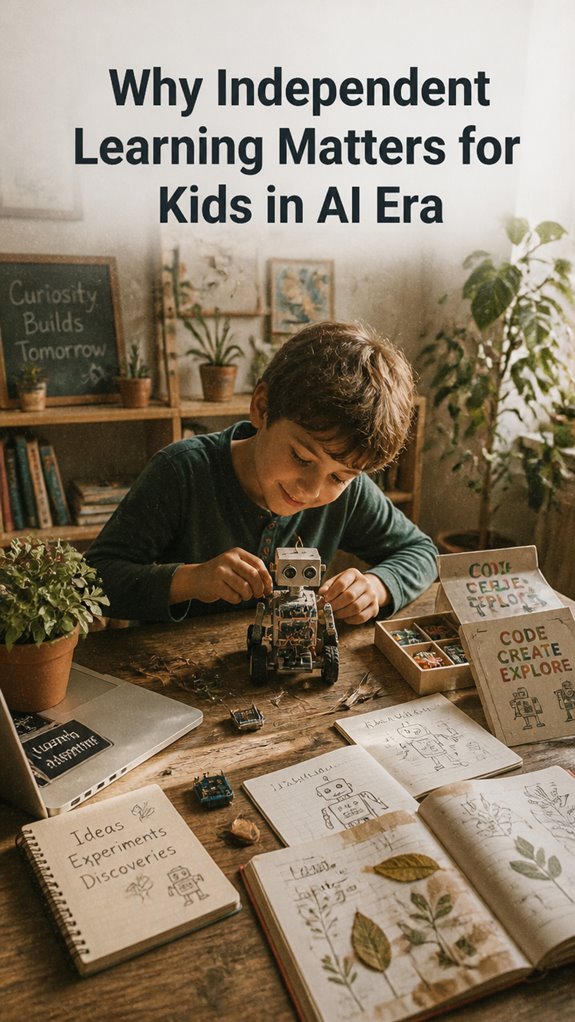
In the AI era, independent learning builds curiosity, resilience, and adaptability. These capabilities matter more than ever as automation reshapes industries. Self-directed exploration and critical thinking create confident learners who partner with AI rather than depend on it.
My Journey: Why Adaptive Atlas Exists
My daughter spent weeks wrestling with a coding challenge. Instead of handing her solutions, I watched her test hypotheses, fail, adjust, repeat. That persistence sparked something. She wasn’t just solving problems; she was becoming a problem-solver. That moment inspired Adaptive Atlas. We built it because kids need tools that encourage thinking, not shortcuts that replace it. Independent learning isn’t luxury. It’s survival.
What Changed Everything
Last year, my son struggled through a math concept for three days. He resisted my help fiercely. When he finally cracked it, his face transformed. Not from getting the answer right, but from knowing he earned it. That’s when independent learning clicked for me.
Quick Takeaways
- Independent learning fosters curiosity and self-motivation, crucial for adapting to rapid technological changes driven by AI.
- It develops critical thinking, creativity, and emotional intelligence, essential skills for navigating an AI-enhanced future.
- Self-directed learners can effectively leverage AI tools as partners, enhancing problem-solving and decision-making abilities.
- Building resilience through autonomous exploration prepares children to handle uncertainty and continuous change.
- Cultivating independence encourages lifelong learning, ensuring adaptability and relevance in an evolving AI-driven society.
Why Independent Learning Matters in the Age of AI
Have you wondered why fostering independent learning is more essential now than ever before? In the AI era, collaboration with intelligent tools isn’t enough; your child must become an active creator of knowledge.
Independent learning cultivates curiosity, allowing them to explore ideas deeply and develop critical thinking. This mindset helps children adapt quickly to change, rather than just react to it.
Fostering independent learning ignites curiosity and critical thinking, helping children adapt swiftly to a changing world.
Instead of fearing automation and AI, you can focus on empowering your child with the ability to leverage these tools strategically. Building independence guarantees they become flexible problem-solvers, capable of continuous growth.
According to the OECD, lifelong learning is key in a rapidly transforming world. Your role is to support systems that promote curiosity and self-directed discovery—giving your child the power to shape their future confidently. Creating sustainable habits early ensures your child maintains the discipline and motivation needed for lifelong independent learning.
Which Core Skills Do Kids Need for a Successful Future?
Children don’t need every fact to succeed; instead, they need core skills that help them adapt and thrive amid constant change. As cultural shifts continue—driven by AI, automation, and decentralized work—they must develop emotional intelligence. This skill enables kids to understand themselves and others, manage emotions, and build strong relationships, which are essential for any future environment.
Other essential skills include critical thinking, problem framing, creativity, and decision-making. These skills allow children to navigate ambiguity confidently and seize new opportunities. To ensure your child develops these competencies, consider using systematic tracking methods to monitor their progress and identify areas for growth.
Instead of fearing rapid change, see it as a chance to build resilience and agency.
How Can Parents Support and Encourage Independent Learning at Home?
Supporting independent learning at home might seem intimidating, especially with the rapid pace of change around us. You might worry about losing control or not knowing how to guide your child effectively. But, fostering their creative independence and building emotional resilience doesn’t mean stepping back entirely. It’s about creating a system that empowers your child to explore, fail, and adapt. Building daily routine structures provides the framework that allows children to develop consistency and accountability in their learning journey. Envision this as a table where skills build upon each other:
| Foundation | Growth |
|---|---|
| Emotional resilience | Self-directed learning |
| Curiosity | Critical thinking |
| Confidence | Problem-solving |
| Autonomy | Innovation |
| Adaptability | Long-term agility |
Lifelong Adaptability as Core Skill
Lifelong adaptability is increasingly recognized as a core skill because the pace of change in the world shows no signs of slowing down.
You might worry about your child falling behind or not keeping up, but this shift isn’t about risk — it’s about power. Building adaptability means nurturing critical thinking and emotional resilience, two vital skills for steering through uncertainty. Starting with project-based learning at home can provide hands-on experiences that naturally develop these competencies.
- Develop problem-solving that’s flexible and creative
- Foster emotional resilience through challenges
- Encourage curiosity to adapt to new scenarios
- Cultivate independence in learning and decision-making
Neuroscientific Evidence of Plasticity
The brain’s ability to change and adapt, known as plasticity, is strongest during specific windows of development and gradually lessens as children grow. During early childhood, sensory plasticity is at its peak, especially in visual and auditory regions. This is when experience shapes connections through synaptic growth, forming a strong foundation for later learning. As children enter adolescence, pruning mechanisms begin to streamline the brain, removing unused connections to improve efficiency. This process isn’t a setback but a way to strengthen important pathways. Understanding that plasticity declines over time helps you see the importance of nurturing your child’s early experiences. Strategic skill selection during childhood can maximize the brain’s capacity to develop capabilities before these critical windows close. Research shows that, plasticity can be temporarily reactivated through targeted interventions even in later stages, highlighting the ongoing potential for growth.
Navigating Ai-Driven Career Shifts
As AI continues to reshape the job market, many parents worry about how to prepare their children for uncertain career futures. It’s natural to feel concern, but the focus should be on building core skills that adapt to change. With AI ethics and digital literacy at the center, your child can navigate changing roles confidently. – Emphasize critical thinking and ethical awareness to guide responsible AI use – Foster digital literacy to understand and leverage AI tools meaningfully – Encourage adaptability so your child can shift among roles as industries transform – Focus on skills like problem-solving, creativity, and decision-making, which AI can’t replace. 54% of parents also express that their views on postsecondary options are influenced by AI and automation, highlighting a need for educational approaches that prioritize adaptable skills. Beyond academics, maintaining physical activity and engagement helps prevent AI-driven laziness by keeping children motivated and active learners. These skills enable your child to stay relevant without fear, transforming uncertainty into opportunity. Preparation isn’t about predicting the future; it’s about empowering your child to lead within it.
Self Learning Mindset Guide
Building a self-learning mindset might seem challenging at first, especially in a world where change happens rapidly, but it’s one of the most powerful skills you can foster in a child.
This mindset enhances creative problem solving and emotional resilience—both essential for future success. When children learn to rely on their curiosity and adaptability, they gain confidence to navigate uncertainty and setbacks.
Some parents worry about their kids falling behind, but the key isn’t knowledge accumulation; it’s developing a capacity to learn independently. Understanding how to learn itself gives children a metacognitive advantage that helps them adapt to new challenges more effectively than those who simply memorize facts. Encourage your child to ask questions, experiment, and reflect.
The Adaptive Atlas Learning Stack Model
Understanding how children learn in a constantly changing world can feel overwhelming, but the Adaptive Atlas Learning Stack Model offers a clear way forward. It emphasizes shadow learning and intrinsic motivation, encouraging children to learn effortlessly by observing and exploring from within.
This model prioritizes developing adaptability as a core skill, preparing kids for future shifts rather than fixed jobs. Building a strong portfolio of projects helps children demonstrate these competencies to educators and potential mentors.
You’ll see these key elements:
- Building resilience through an Anti-Fragile Child System
- Fostering self-directed learning with the Learning Stack Model
- Cultivating high-leverage skills like critical thinking and creativity
- Teaching children to use AI as a cognitive partner, not a crutch
This system turns uncertainty into opportunity, empowering children to thrive long-term in a world of continuous change.
The Adaptive Atlas Framework
Five connected systems designed to help parents raise adaptable, future-ready children in a world shaped by AI, automation, and constant change.
| 🛡️ |
Anti-Fragile Child SystemBuilds resilience, adaptability, and the ability to handle uncertainty without shutting down. |
| 📚 |
Learning Stack ModelDevelops self-directed learning habits and continuous skill acquisition beyond school systems. |
| 🚀 |
Future Skill Stack SystemFocuses on high-value human skills that remain relevant in an AI-driven economy. |
| 🤖 |
AI Learning SystemTeaches children how to use AI as a thinking partner instead of becoming dependent on it. |
| 🧭 |
Child Type Navigator SystemPersonalizes learning and development based on each child’s strengths and personality. |
FAQ
How Can Schools Integrate Independent Learning Effectively Alongside AI Tools?
You can integrate independent learning by leveraging AI tools for personalized feedback, fostering peer collaboration, and empowering students to direct their learning paths, ensuring they develop critical skills while maintaining control over their educational growth in a competitive environment.
What Are Practical Ways to Measure a Child’s Independence in Learning?
You’re like a master navigator, charting your child’s progress with assessment strategies and motivation indicators, actively tracking their autonomy. You assess their problem-solving independence, curiosity, and resilience, empowering them to steer their learning journey confidently.
How Does Independence in Learning Influence Emotional Resilience?
Your child’s independence in learning boosts their emotional strength, fostering self-reliance. By facing challenges alone, they develop resilience, gain confidence, and become powerful, adaptable individuals capable of thriving amidst relentless change.
Can Independent Learning Reduce Children’s Reliance on Technology?
You can harness self-motivation and creative autonomy through independent learning, reducing reliance on technology. When kids own their journey, they discover genuine power—transforming tools into allies and becoming masters of their own future, not just followers.
What Role Does Curiosity Play in Fostering Lifelong Independent Learners?
You realize curiosity-driven children develop an exploratory mindset, essential for lifelong independence. By fostering curiosity, you empower them to seek knowledge proactively, adapt to change, and leverage AI tools confidently, ensuring they stay ahead in a developing world.
References
- https://smartkidsuniversity.com/blog/why-ai-education-matters-how-early-exposure-shapes-tomorrows-innovators/
- https://humanintelligencemovement.org/human-centered-ai/the-future-of-child-development-in-the-ai-era/
- https://pmc.ncbi.nlm.nih.gov/articles/PMC12333830/
- https://thesector.com.au/article/early-learning-age-of-ai-human-skills-matter
- https://www.gse.harvard.edu/ideas/edcast/24/10/impact-ai-childrens-development
- https://www.instituteforchildsuccess.org/ai-early-childhood-education/
- https://sineadbovell.substack.com/p/what-should-kids-actually-be-learning
- https://www.youtube.com/watch?v=HQQtaWgIQmE
- https://www.pennmedicine.org/news/penn-medicine-study-reveals-new-insights-on-brain-development
- https://pmc.ncbi.nlm.nih.gov/articles/PMC7013153/