How Can Parents Decode Their Child’s Digital Learning Footprint?
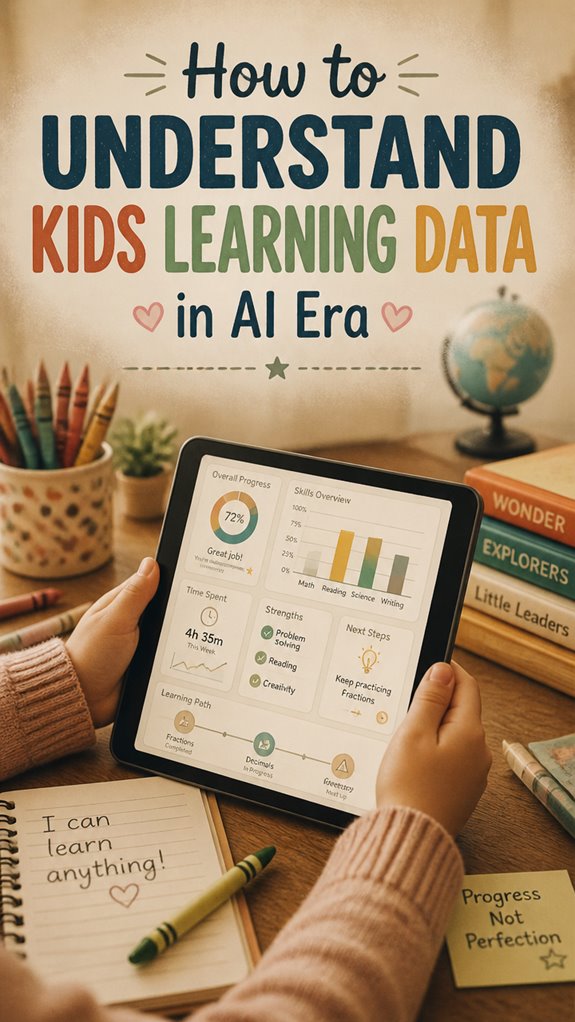
Understanding kids’ learning data reveals patterns in digital interactions that showcase genuine growth. Data transforms from surveillance concern into a personalized compass for your child’s educational trajectory.
Last year, I watched my daughter’s math confidence plummet through her app engagement metrics. Her session times dropped. Her retry rates vanished. Then we discovered Adaptive Atlas, a platform built specifically to translate raw data into meaningful insights. It showed us exactly where she stumbled, not to shame her, but to celebrate micro-victories we’d otherwise miss. That’s precisely why we created content unpacking this data literacy. Because numbers shouldn’t feel cold. They should feel like evidence of your kid becoming braver.
When I finally sat down with my son’s learning dashboard, I noticed something surprising. His lowest-scoring module? The one where he spent the most time. That contradiction sparked everything. It meant he wasn’t giving up. He was actually trying. That single realization shifted how I interpreted every metric afterward.
Quick Takeaways
- Recognize that kids’ data includes website, app, and behavioral interactions that reveal learning patterns and engagement levels.
- Use AI-driven insights to personalize instruction and respond to individual learning needs effectively.
- Ensure data privacy by understanding ownership rights, consent processes, and transparent privacy policies.
- Focus on data as a tool for fostering growth, resilience, and independence rather than surveillance or control.
- Leverage adaptive systems to support long-term skill development and prepare learners for future challenges.
What Types of Data Do Kids’ Devices Collect?
Many kids’ devices today collect a wide range of data, from the websites they visit to how they interact with apps and games. This data includes behavioral metrics that track their actions and choices, providing understanding into their habits.
Engagement indicators show how often, how long, and in what ways children participate in digital activities. As a parent, you might worry about privacy, but understanding what’s collected helps you manage growth.
These metrics reveal patterns that indicate curiosity, focus, and learning progress. They don’t capture everything but offer a practical view of a child’s digital interactions.
Recognizing this data isn’t about surveillance but about nurturing skills like self-regulation and adaptability—key capabilities for a future that values flexible, independent thinkers. By connecting these insights to effective learning plans, parents can better support their child’s development and academic success.
How Can We Tell If Kids’ Learning Data Is Useful and Relevant?
How can you tell if the learning data collected from your child’s devices truly helps build their future skills? Start by considering whether the data reflects skills like emotional resilience and cultural adaptability—traits essential in a changing world.
Useful data should show progress in children’s ability to handle uncertainty, bounce back from setbacks, and connect across different cultures.
Tracking growth in resilience, adaptability, and cultural connection reveals meaningful progress for your child’s future skills.
Avoid data that only measures rote memorization or test scores, as these miss the broader picture. Look for patterns indicating growth in self-directed learning and AI fluency—core capabilities for the future. Supporting deep focus habits helps children develop the sustained attention needed to meaningfully engage with complex material and develop genuine competency.
Keep in mind, meaningful learning data isn’t about perfection but about perceptive trends that guide more personalized, adaptable development. This focus helps your child thrive amid constant change, not just perform in the moment.
How Do We Use Kids’ Data Ethically to Support Development and Protect Privacy?
When using kids’ data to support their growth, it’s natural to feel some concern about privacy and ethical boundaries. Your focus should be on establishing clear data ownership, ensuring you hold rights over your child’s information.
Consent frameworks are essential; you should have control over when and how data is shared. In practice, this means parents need transparent, age-appropriate ways to approve data use.
Empower yourself with knowledge about privacy policies and always seek to protect your child’s future independence. Keep in mind, ethical data use isn’t just about avoiding harm—it’s about fostering trust and building systems that prioritize your child’s well-being. Understanding future-ready skills helps you evaluate which data collection practices genuinely support your child’s development and which are unnecessary.
Real-World Application Success Rates

Real-world application success rates of AI tools in education show promising trends that can help ease common fears about technology replacing teachers or diminishing learning quality. These tools are proving effective long-term, with studies showing students who engage with AI tutors achieve markedly higher test scores, sometimes with reduced time on tasks. AI adoption continues to grow rapidly, demonstrating widespread trust in its ability to enhance learning outcomes. Data visualization of these results reveals improvements across subjects, from math to language arts, highlighting consistent gains. Teachers report that AI enhances their ability to personalize instruction and save time for meaningful interactions.
These outcomes suggest that rather than replacing educators, AI amplifies teaching capacity, supporting children’s development of adaptable skills. By focusing on system-level patterns and consistency, you can confidently leverage AI to build building optimistic mindset in learners, fostering long-term impact and resilience.
Analyzing Inconsistent Data Patterns
Although inconsistent patterns in your child’s learning data might spark worry about gaps or setbacks, they actually reveal actionable signals you can use to guide growth. You spot these through inconsistency analysis, tracking scatter in responses that defies item difficulty—high on easy questions, low on hard, mixed in between. This isn’t random failure; it’s often guessing or disengagement, not deep gaps.
Apply pattern recognition: Reorganize data by skill or item type to uncover hidden anomalies, like clusters where 70%+ miss similar items, signaling shared misconceptions. Understanding how children process AI-generated information helps you distinguish between knowledge gaps and cognitive overwhelm in data-rich learning environments.
3- and 5-year-olds avoid learning from speakers with circular reasoning, generalizing across trials (*t*(23)=3.58, *p*<.002), per child cognition studies. Executive function predicts this skill.
Reframe fear into control: These patterns build your child’s adaptability, turning unstable data into targeted reteaching for long-term mastery in changing worlds.
Learning Data Interpretation Toolkit
Building an effective Learning Data Interpretation Toolkit means shifting your focus from reacting to isolated numbers to seeing the bigger picture of your child’s development.
This requires understanding how data reflects the ongoing growth of skills like adaptability and critical thinking, rather than just test scores.
It’s essential to prioritize data privacy and maintain vigilant parental oversight, ensuring data remains secure and used ethically.
Recognize that data shows patterns of progress, not fixed points, helping you support your child’s long-term capability.
Instead of fretting over every fluctuation, use data as a guide for personalized strategies that strengthen their innate resilience and adaptability.
Tracking your child’s learning metrics enables you to identify meaningful patterns that directly correlate with their skill development and readiness for future challenges.
This approach lifts the fear of losing control and turns data into a practical tool for guiding your child’s future readiness—confidently, calmly, and intentionally.
The Adaptive Atlas Learning Stack Model

The Adaptive Atlas Learning Stack Model provides a clear framework for understanding how children learn and adapt in a world of constant change. You may worry about keeping pace or understanding your child’s motivation, but this model offers reassurance.
It’s built around systems that develop resilience, self-directed learning, and skills relevant for the future. Data visualization plays a key role—by tracking progress within each layer, you see your child’s growth over time, not just isolated scores. Adaptive learning systems personalize educational experiences by adjusting content difficulty and pacing based on individual student performance and needs.
The model emphasizes long-term capability building over short-term achievement, helping you focus on supporting your child’s adaptability. Recall, this isn’t about control; it’s about guiding through systems that foster confidence and independence, preparing your child to thrive amidst continuous change.
The Adaptive Atlas Framework
Five connected systems designed to help parents raise adaptable, future-ready children in a world shaped by AI, automation, and constant change.
| 🛡️ |
Anti-Fragile Child SystemBuilds resilience, adaptability, and the ability to handle uncertainty without shutting down. |
| 📚 |
Learning Stack ModelDevelops self-directed learning habits and continuous skill acquisition beyond school systems. |
| 🚀 |
Future Skill Stack SystemFocuses on high-value human skills that remain relevant in an AI-driven economy. |
| 🤖 |
AI Learning SystemTeaches children how to use AI as a thinking partner instead of becoming dependent on it. |
| 🧭 |
Child Type Navigator SystemPersonalizes learning and development based on each child’s strengths and personality. |
FAQ
How Can Parents Actively Interpret Children’s AI Learning Progress at Home?
Think of yourself as a gardener tending a digital jungle. You actively interpret children’s AI learning progress by observing their engagement, nurturing curiosity, ensuring data privacy, and adapting your involvement—fostering growth while protecting their personal digital environment.
What Indicators Show When AI Data Reflects Genuine Developmental Milestones?
You’ll see cognitive milestones like problem-solving growth and emotional indicators such as increased resilience and curiosity, showing genuine development. These signs reflect meaningful progress, confirming that AI data accurately captures your child’s changing abilities and emotional maturity.
How Do We Ensure Children’s Data Isn’T Used for Unintended Commercial Purposes?
You make certain your children’s data isn’t exploited commercially by advocating for strict data privacy practices and demanding adherence to ethical guidelines from providers. Stay informed, question data use, and support transparent policies safeguarding their rights and future.
Can Data Reveal Children’s Hidden Strengths or Learning Preferences Over Time?
Data reveals children’s hidden strengths and learning preferences by tracking emotional understanding and creativity patterns over time. You can identify their unique growth areas, enabling you to tailor support and foster mastery in the most impactful, personalized ways.
How Do Cultural Differences Influence Interpretation of Kids’ Learning Data?
Envision a mirror reflecting different colors based on cultural bias; your child’s learning data reflects these nuances. Cultural differences shape interpretation, influenced by educational norms, requiring mastery to navigate biases, ensuring understanding truly reveal your child’s unique capabilities.
References
- https://www.gse.harvard.edu/ideas/edcast/24/10/impact-ai-childrens-development
- https://humanintelligencemovement.org/human-centered-ai/the-future-of-child-development-in-the-ai-era/
- https://www.brookings.edu/articles/generation-ai-starts-early-a-guide-to-technologies-already-shaping-young-childrens-lives/
- https://www.voicesforinnovation.org/preparing-our-kids-for-the-ai-era/
- https://sineadbovell.substack.com/p/what-should-kids-actually-be-learning
- https://www.instituteforchildsuccess.org/ai-early-childhood-education/
- https://bera-journals.onlinelibrary.wiley.com/doi/10.1111/bjet.70022
- https://www.youtube.com/watch?v=HQQtaWgIQmE
- https://www.engageli.com/blog/ai-in-education-statistics
- https://learningsciences.smu.edu/blog/artificial-intelligence-in-education