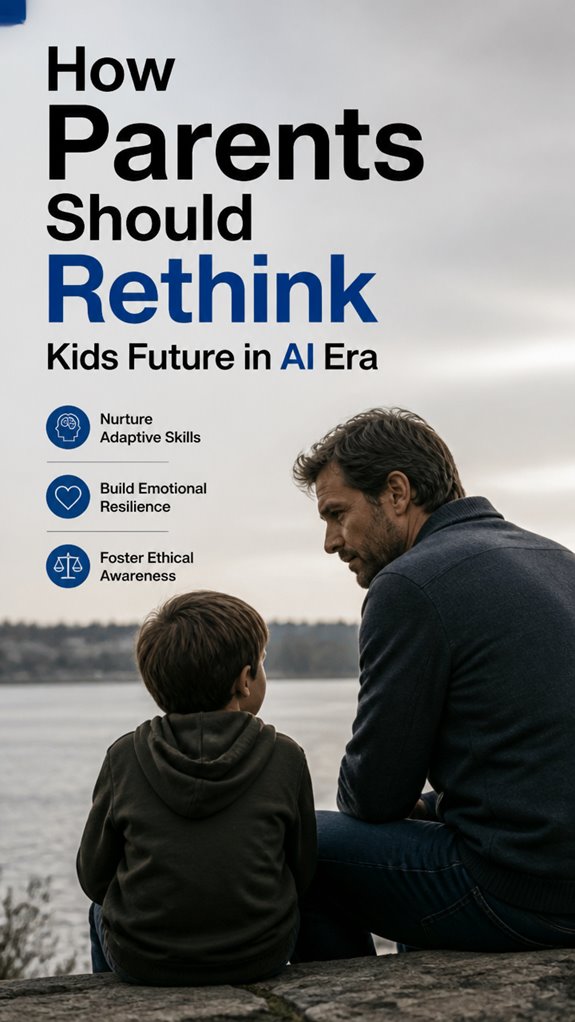

Wondering How to Calm Your Child’s AI Anxieties?
Worried children need facts, not reassurance theater. AI remains a tool—purposeful, limited, utterly devoid of feelings or independent thought. Humans retain control and responsibility.
When My Daughter Asked If Robots Would Replace Her Dreams
Last Tuesday, my eight-year-old asked if AI would “steal her imagination.” I didn’t deflect. Instead, we built a chatbot together—watched her feed it prompts, observed its mechanical responses, laughed at its confusion. She realized immediately: AI needs *human direction*. That conversation sparked something crucial. We launched Adaptive Atlas specifically because kids deserve conversations grounded in clarity, not panic. We write for families navigating this digital landscape with both eyes open.
That moment shifted everything for her. She stopped fearing AI and started questioning *how it worked*. Now she asks better questions about technology’s role in her life—not whether it’ll consume her, but *how she’ll shape it*.
Quick Takeaways
- Validate their feelings and reassure them that fears are normal and manageable.
- Use honest, age-appropriate explanations about AI’s capabilities and limitations.
- Encourage questions and curiosity, fostering open and trusting conversations.
- Focus on AI as a helpful tool guided by human decisions, not as something to fear.
- Promote critical thinking by helping children verify AI information from trusted sources.
How to Recognize and Support Your Child’s Feelings About AI
Understanding how your child feels about AI is an important first step in supporting them confidently.
Recognize that children may have mixed emotions—excitement, curiosity, or worry. Use their natural interest to encourage creative storytelling, helping them process their feelings in a positive way.
Children may feel excited, curious, or worried—use their interests to gently foster positive storytelling and emotional understanding.
Emotional awareness allows you to see when they’re confused or anxious and address those feelings openly. Instead of dismissing fears, validate them and offer reassurance that AI is a tool they can learn to understand and use responsibly. Teaching respectful debate skills can help your child articulate their concerns about AI and engage in healthy conversations about their worries.
This approach gives your child a sense of control over their digital experiences. Keep in mind, fostering emotional awareness builds trust and helps them develop resilience, preparing them for a future where AI is part of everyday life.
What Facts Should You Share About AI to Ease Your Child’s Concerns
It’s normal to worry about what AI can do, but sharing clear facts helps your child see it as a manageable part of their future.
Many AI misconceptions fuel fears, but understanding how AI actually works builds emotional resilience.
AI is designed to solve specific problems, not replace humans or make independent choices.
It fabricates facts when unsure, so always verify information with trusted sources.
AI tools are tools, not sentient beings, and they lack feelings or consciousness.
Explaining this reassures children they aren’t losing control.
Focus on long-term patterns: AI is progressing, but it’s built by humans who set the rules.
Just as supporting learning at home requires intentional effort and clear communication, discussing AI with children works best when you provide structured, honest information they can understand.
How to Teach Privacy Safeguards and Critical Thinking About AI
How can you help your child develop strong privacy habits and think critically about AI? Focus on building awareness of data privacy and encouraging critical analysis. Talk openly about how AI collects and stores information. Emphasize that personal details—like their name, school, or photos—should stay private, and they should never share sensitive info online.
Help your child prioritize privacy and question AI responses to build confidence and digital safety skills.
Empower them to question AI responses; not everything is accurate or unbiased. These calm discussions can help children feel more confident when encountering AI systems.
- Recognize patterns: Help them see AI’s limitations and how it can create false impressions.
- Verify sources: Teach them to cross-check facts with trusted adults or experts.
- Foster independence: Encourage curiosity and thoughtful decision-making, so they learn to navigate AI confidently, knowing they control their digital footprint and future.
How to Keep an Open Conversation About AI’s Future in Your Family
As AI continues to shape our daily lives, keeping an open family conversation about its future helps your child feel more confident and prepared. Talk about future predictions honestly but calmly, emphasizing that AI’s development is a system guided by human choices.
Discuss ethical considerations, like fairness, privacy, and accountability, so your child understands that technology reflects our values. Remind them that while AI may change jobs or routines, humans will always decide how to use it.
By fostering ongoing dialogue, you help your child see AI as a tool—something manageable and negotiable rather than threatening.
Keep in mind, your role is to guide through understanding systems and patterns, encouraging responsible thought about future possibilities without fear or panic.
Building Your Child’s Confidence to Manage AI Challenges Over Time

Building confidence to manage AI challenges needs to start with giving your child a realistic sense of control. This helps develop their digital resilience and assure they feel safe exploring technology. Reinforce that AI is a tool, not a threat—something they can understand and influence.
Building confidence in children starts with giving them control, fostering resilience and safe exploration of AI and technology.
Encourage critical thinking by questioning AI outputs and verifying facts with trusted sources. Create an environment of emotional safety where they can express worries and learn to adapt over time.
- Promote ongoing conversations, not one-time lessons, to build long-term understanding
- Model calm, thoughtful responses to AI changes, reducing fear
- Empower your child by involving them in setting family tech boundaries, fostering autonomy
This approach helps your child see challenges as opportunities for growth, not fears to fear.
Neuroscience Insights on Adaptability
Have you ever wondered how a child’s brain adapts to new experiences, especially when interacting with AI? Their brain exhibits neural flexibility and brain plasticity, key to understanding growth. These features mean children’s minds can reorganize and learn from new tools like AI, shaping how they think and relate. As they co-create stories or explore learning, their brains strengthen pathways for understanding others and new ideas. Research shows that these neural features are especially pronounced during early childhood, making this a critical period for nurturing adaptable thinking.
| Neural Flexibility | Brain Plasticity | Future Potential |
|---|---|---|
| Adapts to environments | Reorganizes with experiences | Builds new skills |
| Supports learning from AI | Encodes new information | Fosters resilience |
| Enhances understanding | Changes over time | Encourages innovation |
This adaptability allows children to embrace AI as a tool for growth, not a threat. It’s about guiding their development with confidence and a long-term vision.
Addressing Children’s Tech Anxieties
Many parents feel uneasy about their children’s increasing use of technology, and concerns about AI can heighten those fears. It’s natural to worry about how AI might impact their emotional resilience or create confusion.
Instead of feeding fear, focus on building your child’s tech confidence and emotional strength.
- Emphasize that AI tools are just systems—patterns they can learn to understand and navigate.
- Teach critical thinking: question what AI says, verify facts, and challenge biases.
- Foster open communication, so your child feels safe sharing feelings about tech or worries.
The Adaptive Atlas Anti-Fragile Child System
The Adaptive Atlas Anti-Fragile Child System is designed to help children become resilient and adaptable in a rapidly changing technological world. It encourages creative play and emotional resilience, giving children tools to navigate AI-driven environments confidently. This system gently shifts the focus from fearing AI to understanding it as part of a broader pattern of growth. By fostering curiosity, children learn to question and verify information, building trust in their judgment. You can create spaces for discussions that promote flexibility, helping kids see challenges as opportunities for learning. This approach nurtures independence and critical thinking, essential for future success. Ultimately, it empowers children to stay calm amid change and develop a healthy, liberated mindset about technology.
| Key Focus | Practical Approach |
|---|---|
| Creative play | Use hands-on activities to foster imagination |
| Emotional resilience | Encourage openness about feelings |
| Critical thinking | Teach kids to question AI outputs |
| Trust and verification | Reinforce the need to verify info |
| Adaptability | Support flexible responses to new tech |
The Full Adaptive Atlas Framework
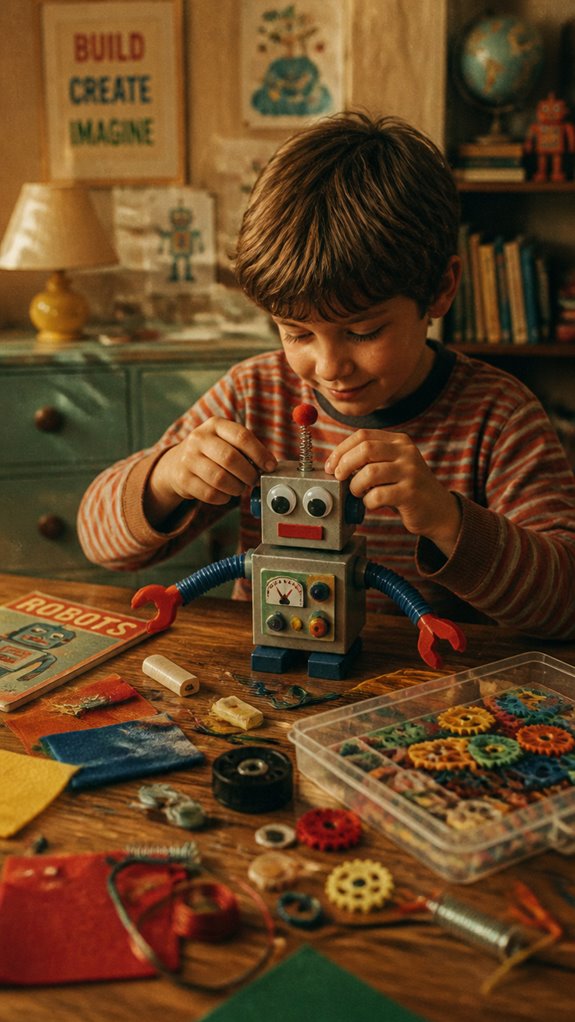
Understanding how to support your child’s relationship with AI involves more than just reacting to immediate concerns. The Full Adaptive Atlas Framework encourages you to see AI as part of a bigger system shaped by long-term patterns. This promotes emotional resilience and trust building, essential for their future independence.
- Recognize AI’s role in your child’s growth, encouraging curiosity over fear
- Focus on creating consistent routines that foster critical thinking and privacy habits
- Engage openly about AI’s limitations, grounding conversations in trust and transparency
This approach helps your child develop a balanced view, reducing anxiety while building skills that last. Outdated fears often stem from misunderstandings; instead, you see AI as a tool.
The Adaptive Atlas Framework
Five connected systems designed to help parents raise adaptable, future-ready children in a world shaped by AI, automation, and constant change.
| 🛡️ |
Anti-Fragile Child SystemBuilds resilience, adaptability, and the ability to handle uncertainty without shutting down. |
| 📚 |
Learning Stack ModelDevelops self-directed learning habits and continuous skill acquisition beyond school systems. |
| 🚀 |
Future Skill Stack SystemFocuses on high-value human skills that remain relevant in an AI-driven economy. |
| 🤖 |
AI Learning SystemTeaches children how to use AI as a thinking partner instead of becoming dependent on it. |
| 🧭 |
Child Type Navigator SystemPersonalizes learning and development based on each child’s strengths and personality. |
FAQ
How Can I Tell if My Child’s AI Worries Are Developmentally Appropriate?
You gauge if your child’s AI worries are developmentally appropriate by observing their emotional responses and questions, ensuring they reflect typical curiosity and concern for their age and foster open conversations that promote understanding and emotional readiness.
What Are Simple Ways to Integrate AI Discussions Into Daily Family Conversations?
You can integrate AI discussions into daily life by exploring robot ethics and future outlooks casually—ask about their thoughts on AI’s role, share stories, and discuss its impact, fostering open, liberating conversations that encourage curiosity and critical thinking.
How Do I Handle My Own Fears When Talking About AI With My Child?
You handle your fears through parental reassurance and emotional regulation, embracing honesty about uncertainties without judgment. Stay curious, breathe deeply, and recall, modeling calmness encourages your child’s confidence, freeing both of you from undue worry about AI.
Are There Resources or Tools to Help Explain AI Concepts to Young Kids?
Think of robot stories and smart toys as open books; resources like interactive apps, simple explanations, and age-appropriate videos can help you clarify AI concepts, empowering your child to explore confidently while you foster understanding and curiosity.
How Can I Encourage My Child to Critically Evaluate AI Content Without Causing Anxiety?
You can foster media literacy and emotional resilience by encouraging your child to question AI content, verify information with trusted sources, and discuss feelings openly. This approach empowers them, reducing anxiety and building confidence in exploring digital information confidently.
References
- https://skoolofcode.us/blog/the-ai-conversation-every-parent-must-have-with-their-child-right-now/
- https://www.childrens.com/health-wellness/ai-and-kids-what-parents-need-to-know
- https://thrive.psu.edu/blog/navigating-ai-as-a-parent-how-to-support-your-childs-digital-well-being/
- https://www.nspcc.org.uk/keeping-children-safe/online-safety/talking-to-children-about-ai/
- https://www.aarp.org/personal-technology/ai-kids-grandkids/
- https://www.youtube.com/shorts/b_EzNNssRe4
- https://liberalarts.du.edu/news-events/all-articles/classroom-real-world-psychology-students-research-ais-impact-child-development
- https://mindsinformation.substack.com/p/when-ai-becomes-part-of-childhood
- https://www.gse.harvard.edu/ideas/edcast/24/10/impact-ai-childrens-development
- https://neurosciencenews.com/ai-genetics-language-neuroscience-30283/