How Do We Actually Equip Kids for an AI-Saturated World?
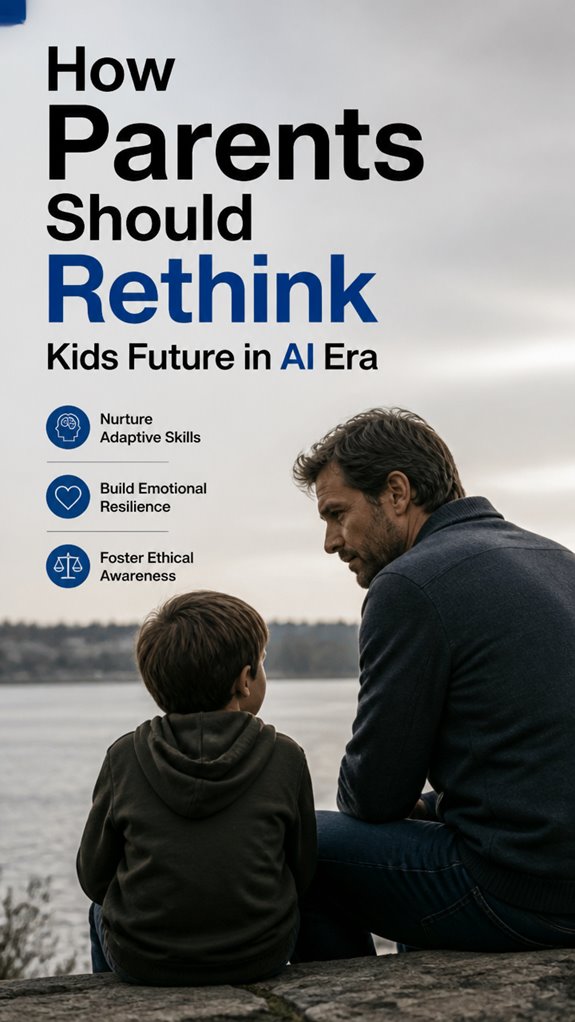
Forget cramming facts into their heads—that’s a losing game against ChatGPT. Instead, cultivate creativity, emotional intelligence, and critical thinking. These are the muscles AI flexes poorly. Shift from “knowing answers” to “asking better questions.” Build resilience. Foster ethical awareness. That’s the real competitive advantage.
Why We Built Adaptive Atlas
My daughter came home frustrated. She’d aced her math test but couldn’t solve a real problem: how to resolve a friendship conflict using logic. That’s when it clicked. Schools teach *what*; they rarely teach *how to think*. We created Adaptive Atlas because kids need a compass, not a map. A tool that teaches adaptability—the actual superpower of the AI era. We write it because we’ve watched too many brilliant kids freeze when facing uncertainty.
The Moment That Changed Everything
Last summer, my son faced a coding challenge with no “right answer” in sight. Instead of shutting down, he sketched, failed, iterated. He didn’t panic. He *adjusted*. Watching him embrace that discomfort—not despite the ambiguity, but *because* of it—that’s when I knew: resilience beats rigid expertise every single time.
Quick Takeaways
- Focus on developing uniquely human skills like creativity, emotional intelligence, and critical thinking that AI cannot easily replicate.
- Encourage a mindset of adaptability, resilience, curiosity, and lifelong learning to prepare children for rapidly changing job landscapes.
- Teach responsible AI use and ethics early to foster informed and ethical decision-making in the digital age.
- Emphasize confidence, control over technology, and trust in human judgment to navigate an increasingly complex world.
- Rethink education to prioritize innovative, project-based learning, digital literacy, and skills adaptable to future demands.
What Does the Future of Work Look Like for Kids?
The future of work for kids is changing in ways that may feel unfamiliar but are also full of opportunities. As AI reshapes industries, your child’s success depends on understanding AI ethics and developing career resilience.
Instead of fearing automation replacing jobs, see it as a chance to focus on skills AI can’t replicate—like creativity, emotional intelligence, and critical thinking. These human qualities will set your child apart and help them adapt.
It’s crucial to foster an entrepreneurial mindset and teach responsible AI use, empowering them to shape future tech rather than be shaped by it. Developing digital literacy will enable children to navigate and thrive in technology-driven workplaces.
Which Skills Will Help Kids Thrive in an AI World?
Preparing kids for an AI-driven future means focusing on skills that machines can’t easily replace. You might worry about robots taking over, but instead, see this as an opportunity. Developing AI empathy helps kids connect deeply with others, nurturing emotional intelligence that’s uniquely human.
Preparing kids for the future by fostering empathy and emotional intelligence creates resilient, human-centered innovators.
Coding creativity, on the other hand, boosts problem-solving and innovation—core long-term skills for thriving in complex systems. Instead of rote learning, encourage curiosity and resilience in messy, iterative projects. Understanding traditional job disappearance can help parents recognize why adaptability has become essential across all career paths.
Keep in mind, the future isn’t about avoiding AI but learning to work alongside it. Giving children these skills empowers them to shape their own paths and stay adaptable.
You’re not just preparing for jobs; you’re fostering lifelong capacities for growth, purpose, and authentic human connection.
How Should Parents Rethink Mindsets for Their Kids’ Future Success?
As artificial intelligence continues to shape our world, many parents feel overwhelmed about how to prepare their kids for the future. It’s natural to fear that changing skills and jobs make traditional advice feel less relevant.
The key is to embrace mindset shifts and parental adaptability. Instead of focusing solely on facts or specific careers, foster curiosity, resilience, and an entrepreneurial spirit. Teach your kids to approach learning as a lifelong process, valuing adaptability over static knowledge. Consider implementing project-based learning at home to develop these skills through real-world problem-solving experiences.
Rethink what advantages truly matter—internal motivation and emotional intelligence—skills AI can’t replicate. By shifting your mindset from fixed expectations to openness, you empower your children to navigate an unpredictable future confidently.
Shaping their success through human strengths that machines can’t replace.
Practical Steps Parents Can Take Today to Prepare Kids for an AI Age
It’s understandable to feel uncertain about how to help your kids thrive in an AI-driven world, but taking practical steps today can make a real difference. Focus on nurturing their emotional resilience, so they can adapt to change and face challenges confidently.
Teach them about the ethical implications of AI, encouraging values like responsibility and fairness, so they grow with a sense of global awareness. Involve them in activities that develop critical thinking and creativity—skills that AI can’t easily replicate.
Keep in mind, your role is to guide, not dictate. By fostering open conversations and emphasizing effort over quick success, you help your kids build a mindset of adaptability and purpose—ready to navigate and shape the AI age with confidence and integrity.
Neuroscience Insights Underpin This Approach

Understanding how a child’s brain develops helps us see why the experiences we create matter so much. Neural plasticity means the brain’s ability to adapt is strongest during early childhood and adolescence, shaped by what children encounter during these critical own times. developmental timing is key—experiences now influence future skills and behaviors, especially as AI becomes part of everyday life. Most children have some exposure to technology by 4 months of age. While it’s natural to worry about quick tech changes, normally these perspectives show that providing rich, real-world interactions is essential. It’s not about controlling everything but creating environments that support brain growth through meaningful experiences.
Bridging Skills Gap Efficiently
Many parents worry about how quickly skills can become outdated in an AI-driven world, but there’s good news: you can take practical steps to bridge the skills gap efficiently.
Focus on developing your child’s abilities in creative collaboration and emotional intelligence. These skills foster adaptability and relate directly to human connection, which AI can’t replicate.
Instead of stressing over what jobs might exist in the future, support activities that nurture these qualities through teamwork, storytelling, and empathy exercises.
Remember, your role isn’t just teaching facts but guiding your child to think critically and connect deeply with others.
The Adaptive Atlas Anti-Fragile Child System
Creating an anti-fragile child system means designing learning approaches that help kids thrive amid constant change and unpredictability. Instead of fearing AI’s influence, you can empower your child with resilience and ethical awareness. Focus on nurturing emotional resilience, which helps kids adapt and stay grounded. Teach them to question AI ethically and understand its limits. By fostering flexibility and curiosity, they’ll learn to navigate unforeseen challenges confidently. Here’s a simple framework to guide you:
| Core Focus | How to Support | Why It Matters |
|---|---|---|
| Emotional Resilience | Encourage reflection, effort & setbacks | Builds inner strength in face of change |
| AI Ethics | Discuss responsible use & fairness | Cultivates responsible thinkers |
| Adaptability | Promote curiosity & learning from mistakes | Prepares for unpredictable futures |
The goal isn’t control but liberation through adaptable skills and ethical awareness.
The Full Adaptive Atlas Framework
The Full Adaptive Atlas Framework offers a practical blueprint for guiding your child’s development in a changing AI-driven world. It encourages you to see technology as a tool for liberation, not fear.
Focus on nurturing skills that will endure, such as adaptability, creativity, and emotional intelligence. Understand that genetic engineering or quantum computing might shape future industries, but your child’s resilience and values define their success.
- Cultivate curiosity and open-mindedness
- Emphasize lifelong learning and unlearning
- Promote an entrepreneurial mindset amid rapid change
- Foster emotional intelligence and collaborative skills
- Integrate AI thoughtfully into everyday life
This framework shifts you from reacting to proactively shaping your child’s future, giving them confidence and control in a complex world.
The Adaptive Atlas Framework
Five connected systems designed to help parents raise adaptable, future-ready children in a world shaped by AI, automation, and constant change.
| 🛡️ |
Anti-Fragile Child SystemBuilds resilience, adaptability, and the ability to handle uncertainty without shutting down. |
| 📚 |
Learning Stack ModelDevelops self-directed learning habits and continuous skill acquisition beyond school systems. |
| 🚀 |
Future Skill Stack SystemFocuses on high-value human skills that remain relevant in an AI-driven economy. |
| 🤖 |
AI Learning SystemTeaches children how to use AI as a thinking partner instead of becoming dependent on it. |
| 🧭 |
Child Type Navigator SystemPersonalizes learning and development based on each child’s strengths and personality. |
FAQ
How Can Parents Motivate Kids to Develop Non-Technical Skills Effectively?
You can motivate your kids by encouraging creative play and social skills through collaborative activities. Show them these skills are essential for future success, fostering confidence, adaptability, and joy in human connection, independent of technology’s influence.
What Are the Best Ways to Integrate AI Literacy Into Daily Routines Without Formal Curriculum?
You can incorporate AI literacy by exploring interactive storytelling and creative coding together daily, turning learning into play, fostering curiosity, and empowering your kids to understand and shape AI’s role in their exciting future.
How Do Emotional Intelligence and Cultural Awareness Influence Future Career Resilience?
Think of emotional intelligence and cultural awareness as your child’s sturdy wings in a turbulent sky, empowering emotional resilience and cultural competence, freeing them to navigate future careers with confidence, adaptability, and authentic connection beyond AI’s reach.
What Role Should Parents Play in Shaping Ethical AI Understanding for Children?
You should actively foster ethical decision making and moral reasoning in your children by encouraging critical discussions, modeling integrity, and providing diverse viewpoints to empower them to navigate AI’s moral complexities confidently and independently, embracing their liberating moral agency.
How Can Parents Balance Digital Self-Defense With Fostering Creativity and Exploration?
You can balance digital self-defense and creativity by setting digital boundaries, encouraging exploration beyond screens, and fostering an environment where curiosity thrives—empowering your child to navigate AI tools confidently while nurturing their imaginative spirit.
References
- https://debliu.substack.com/p/what-every-parent-should-know-about
- https://www.youtube.com/watch?v=8MU0DzJrx8M&vl=en-US
- https://www.youtube.com/watch?v=EKQ0le-ABLY
- https://www.youtube.com/watch?v=hnV0PV1u_O4
- https://humanintelligencemovement.org/human-centered-ai/the-future-of-child-development-in-the-ai-era/
- https://arxiv.org/abs/2405.19275
- https://www.gse.harvard.edu/ideas/edcast/24/10/impact-ai-childrens-development
- https://everyone.ai/wp-content/uploads/2024/05/EveryoneAI.ResearchPaper.pdf