How Do You Prepare Kids for Success in an AI-Driven World?
Start by grounding learning in problems your child genuinely cares about. Real-world challenges spark curiosity far better than worksheets ever will. Blend AI tools strategically into their exploration, not as replacements for thinking, but as thinking accelerators.
A Moment That Changed How I Approach Learning
My daughter was stuck on a coding project. Instead of fixing it, I watched her wrestle with the problem for twenty minutes. Then she grabbed a whiteboard, sketched her logic, and cracked it herself. That’s when I realized: struggle builds capability. We created Adaptive Atlas to capture this philosophy. It guides project-based learning without hijacking the discovery process. Kids need the space to stumble, adjust, and own their breakthroughs.
What I Learned From My Son’s Climate Project
Last spring, my son wanted to tackle neighborhood pollution. We didn’t hand him solutions. We helped him ask sharper questions. He interviewed local officials, analyzed air quality data, designed a community awareness campaign. The collaboration, resilience, and real-world stakes transformed him. That’s project learning done right.
Quick Takeaways
- Select engaging, real-world projects that foster critical thinking, creativity, and practical skills relevant to the AI-driven future.
- Incorporate AI tools to support personalized exploration, problem-solving, and innovative learning experiences at home.
- Design a flexible, organized environment that encourages curiosity, decision-making, and resilience in children.
- Emphasize skill development over rote memorization through adaptive, portfolio-based assessments and long-term systems.
- Promote collaborative, ethical discussions about technology use to develop responsible digital citizenship and adaptable thinking skills.
Why PBL and AI Make a Difference in Homeschooling
Many parents worry about how to prepare their children for a future that’s changing faster than ever. They fear their kids won’t develop the skills needed in a world driven by AI and automation. But instead of stressing over predictions, focus on fostering personal growth and social skills.
Project-based learning (PBL) combined with AI offers a practical path forward. It encourages children to explore real problems, collaborate, and think critically—key abilities for long-term success. PBL nurtures social skills like teamwork and communication, essential in any future environment. Research shows that critical thinking and creativity are among the most valued competencies employers seek in the AI era.
This approach also builds confidence, adaptability, and resilience. It shifts the focus from memorization to skill development, guiding children to become proactive creators in an uncertain world.
You’re empowering them with tools for lasting capability.
How to Choose Engaging, Relevant PBL Projects for Your Child
Choosing the right PBL projects for your child begins with understanding what truly engages them and connects to their future skills. Focus on projects that promote creative collaboration, helping your child learn to work with others while harnessing their imagination.
Be mindful of ethical implications—discussions about responsible tech use and societal impact will prepare them for real-world challenges.
Many parents fear that choosing projects might limit their child’s options, but in reality, quality projects develop adaptable skills that last longer than specific knowledge.
Look for projects that stimulate independent thinking and problem framing, aligning with the idea that long-term capability outshines short-term achievement.
When you select relevant PBL projects, you empower your child to build resilience, innovation, and ethical awareness—keys to steering a rapidly changing world.
How to Use AI Tools to Support Your Child’s PBL Activities at Home
Using AI tools in your child’s PBL activities at home can seem intimidating at first, but it’s really about enhancing their natural curiosity and problem-solving skills. Confidence comes from understanding that AI collaboration isn’t about replacing their ideas but amplifying them.
These tools can turn everyday projects into opportunities for creative exploration—encouraging your child to experiment, iterate, and discover new solutions. By integrating AI, you help them develop adaptable thinking skills essential for the future, as experts like Stanford’s AI researchers highlight.
Keep in mind, you’re empowering your child to become a confident creator, not just a consumer of technology. Focusing on systems and long-term growth, you build skills that foster independence—preparing them for a world where continuous change is the norm.
How to Set Up Your Home Environment and Celebrate Achievements to Keep Kids Engaged
Creating a home environment that keeps your child engaged starts with setting up spaces that invite curiosity and independence. Environmental design is key—organize areas to encourage exploration, decision-making, and resilience.
Use natural materials, flexible furniture, and well-organized tools to foster motivation and focus. Incorporate celebration rituals to recognize progress.
Simple acts like sharing what your child learns or displaying their projects reinforce their confidence and make learning meaningful. Teaching children about digital footprint management helps them understand the importance of thoughtful online behavior from an early age.
Remember, it’s not about perfection but consistency. Children thrive when they see their efforts valued, especially in environments that promote stability amid change.
This approach not only supports their immediate engagement but also builds long-term resilience and adaptability—crucial skills for maneuvering the future’s continuous evolution confidently.
Incorporating AI Tools at Home

Integrating AI tools into your home learning environment might feel overwhelming at first, especially if you worry about losing control or making mistakes. But with a strategic approach, AI integration becomes a powerful tool for your child’s growth.
Focus on using AI as part of a system that provides creative scaffolding—support that guides without dictating. Start small: explore simple AI apps that encourage curiosity and problem-solving.
Keep in mind, the goal isn’t mastery of technology but fostering a mindset of adaptability. By framing AI as an amplifier for your child’s natural talents, you create a foundation for long-term capability building. Developing resilience and perseverance alongside technical skills ensures your child can navigate challenges and setbacks when working with new tools.
This approach shifts your focus from concern over automation toward empowering your child to think, create, and learn in a developing world.
Child Engagement Strategies Development
How can you design child engagement strategies that genuinely support your child’s curiosity and learning? Focus on creative scaffolding—building around their current strengths to gently challenge them.
Use peer collaboration to foster social skills and shared problem-solving, which deepens understanding and motivation. AI tools can facilitate this by prompting questions, encouraging discussions, and mimicking interactive experiences. Keep in mind, fear around technology’s role can be eased by seeing AI as a partner in learning, not a replacement.
Troubleshooting Tech Connectivity Issues
When tech glitches disrupt your child’s AI learning session, you’ll fix them quickly and confidently with a simple system that turns frustration into a teaching moment. Don’t fear downtime—it’s your chance to model resilience, building their anti-fragile mindset for an accelerating future. These moments also provide an opportunity to have calm discussions about AI fears that might surface during technical disruptions.
Master troubleshooting connectivity through network diagnostics, reframing glitches as skill-builders that empower independent problem-solving.
> Master troubleshooting connectivity through network diagnostics, reframing glitches as skill-builders that empower independent problem-solving.
- Check physical connections: Secure cables, power, and link lights to rule out basics.
- Restart equipment: Power cycle devices and routers to reset instantly.
- Test network status: Use Speedtest.net and chrome://network for quick diagnostics.
- Verify IP configuration: Run ipconfig and ping tests to pinpoint failures.
- Run advanced fixes: Flush DNS, check firewalls, ensuring lasting stability.
This system hands you control, turning obstacles into leverage for their adaptive edge. Use online tools like Downdetector to check if the website outage is widespread before deeper troubleshooting.
Project Learning Starter Pack
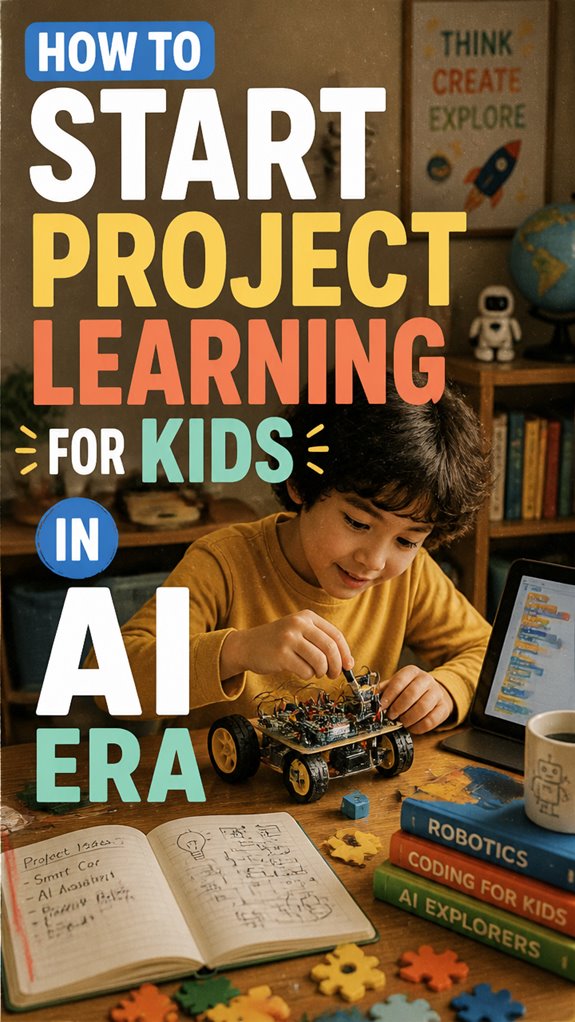
Getting started with a project learning pack can feel overwhelming at first, especially if you’re worried about fitting it into busy schedules or unsure where to begin. But keep in mind, the goal isn’t perfection; it’s about creating sustainable learning experiences.
Focus on fostering creative collaboration—encouraging your child to explore ideas with others—and building skills that adapt over time. This approach emphasizes steady progress, not immediate mastery, helping your child develop resilience and critical thinking. Unlike traditional grading systems, portfolio-based assessment allows you to document your child’s growth across diverse projects and real-world applications.
By grounding your efforts in practical systems, you empower your child to navigate uncertainty confidently. Think of this pack as a flexible framework that grows with your child, emphasizing long-term capability.
With calm, consistent support, you help your child build the skills that will prepare them for an unpredictable, AI-driven future.
The Adaptive Atlas Learning Stack Model

The Adaptive Atlas Learning Stack Model provides a clear framework for helping children develop in a world where knowledge is always changing. It centers on knowledge scaffolding and skill scaffolding, guiding children to adapt and grow despite constant change.
You can foster resilience by encouraging them to handle setbacks without losing confidence. Focus on building a self-directed learning mindset, helping them develop core future skills like critical thinking and creativity. Before specializing in any particular domain, children benefit from broad exploration across multiple fields to discover their genuine interests and strengths.
Use AI as a partner for amplification, not replacement, to enhance thinking and problem-solving. Personalize the approach by understanding each child’s strengths, ensuring growth stays relevant.
This model isn’t about quick fixes but creating a long-term system that empowers children to thrive amid uncertainty and leverage endless opportunities with confidence.
The Adaptive Atlas Framework
Five connected systems designed to help parents raise adaptable, future-ready children in a world shaped by AI, automation, and constant change.
| 🛡️ |
Anti-Fragile Child SystemBuilds resilience, adaptability, and the ability to handle uncertainty without shutting down. |
| 📚 |
Learning Stack ModelDevelops self-directed learning habits and continuous skill acquisition beyond school systems. |
| 🚀 |
Future Skill Stack SystemFocuses on high-value human skills that remain relevant in an AI-driven economy. |
| 🤖 |
AI Learning SystemTeaches children how to use AI as a thinking partner instead of becoming dependent on it. |
| 🧭 |
Child Type Navigator SystemPersonalizes learning and development based on each child’s strengths and personality. |
FAQ
How Can I Ensure My Child Develops Critical Thinking Alongside AI Use?
You must foster creative collaboration with AI, encouraging your child to challenge outputs and explore ideas independently. Simultaneously, cultivate ethical awareness, guiding them to use AI responsibly, ensuring critical thinking grows as they harness AI’s power confidently.
What Safety Considerations Should I Keep in Mind When Using AI Tools at Home?
You must prioritize AI safety through strict parental guidance, setting unbreakable boundaries, monitoring constantly, and fostering open conversations. Power lies in controlling AI’s influence, ensuring your child’s well-being amid the ever-evolving digital environment.
How Do I Balance AI Assistance With Fostering Independent Problem-Solving Skills?
You balance AI collaboration with skill development by encouraging your child to first attempt solutions independently, then use AI as a powerful tool to refine and expand their ideas, fostering critical thinking and autonomous problem-solving mastery.
What Are Effective Ways to Motivate My Child During Long-Term PBL Projects?
Think of your child’s motivation as fueling a high-performance engine; foster creative collaboration and emotional resilience by celebrating small victories, emphasizing purpose, and inspiring autonomy. Power lies in persistence and meaningful connection during long-term projects.
How Can I Tailor Ai-Supported Projects to My Child’s Unique Learning Style?
You can harness AI to develop personalized learning experiences that align with your child’s unique style, boosting creativity and problem-solving. By customizing projects, you empower them to excel, innovate, and confidently navigate the changing AI-driven world.
References
- https://www.edutopia.org/article/how-students-use-ai-pbl-units/
- https://edtechnologyspecialists.com/using-ai-tools-to-enhance-project-based-learning-in-k-12-classrooms/
- https://campustechnology.com/articles/2025/03/10/project-based-learning-in-an-ai-inspired-era.aspx
- https://practices.learningaccelerator.org/strategies/integrating-ai-into-project-based-learning
- https://www.aiforeducation.io/prompts/pbl-lesson-plan
- https://www.youtube.com/watch?v=Rw4pfMRIlPI
- https://www.trevormuir.com/blog/AI-project-based-learning
- https://www.youtube.com/shorts/pL0Rtb8slg4
- https://www.gse.harvard.edu/ideas/edcast/24/10/impact-ai-childrens-development
- https://everyone.ai/wp-content/uploads/2024/05/EveryoneAI.ResearchPaper.pdf