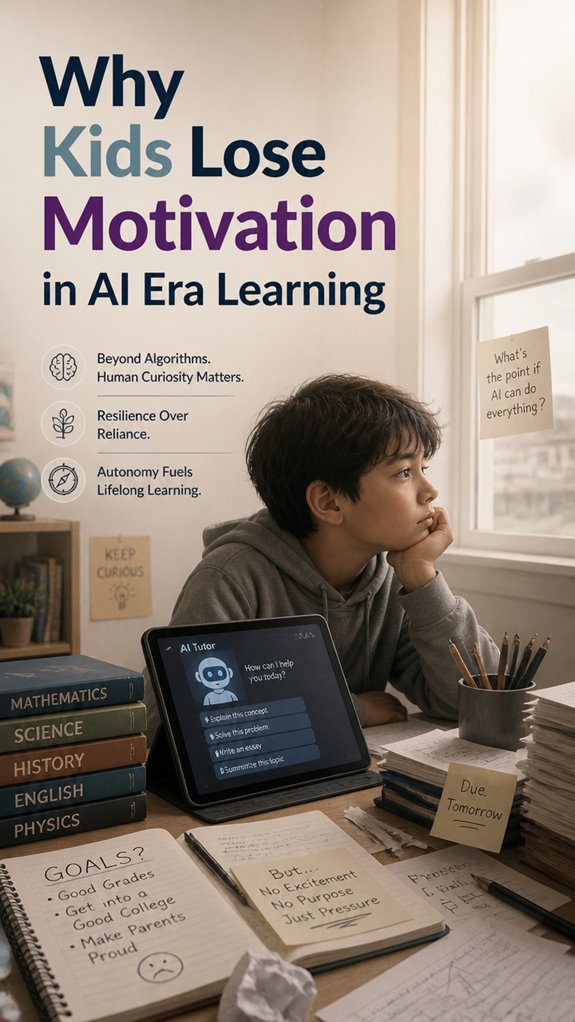

How Do You Actually Build Real Confidence in Your Child’s Ideas?
Create a supportive space where effort matters more than outcomes. Praise perseverance, encourage risk-taking, and let failure become their greatest teacher. Support their passions with flexible goals that stretch without breaking them.
Why We Started Adaptive Atlas
My daughter came home devastated after her science project placed third. She wanted to quit everything. Instead of fixing it, I asked her what she’d learned. Her face shifted. She realized the judges didn’t understand her approach, not that her thinking was wrong. That conversation sparked something. At Adaptive Atlas, we document these moments because parents need frameworks, not generic advice. We write to transform how families build resilience together.
A Moment That Changed Everything
Last week, my son attempted coding for the first time. His program crashed instantly. Instead of frustration, he laughed and debugged it himself. I watched him own the failure completely. No rescue needed. That’s when confidence actually happens, not through praise, but through earned experience and permission to stumble forward.
Quick Takeaways
- Praise effort and perseverance to boost self-esteem and reinforce the value of process over outcomes.
- Encourage risk-taking and view failures as learning opportunities to build resilience and confidence.
- Foster a growth mindset by focusing on progress, personal strengths, and embracing challenges.
- Support children in exploring passions and interests without pressure, nurturing creative risk-taking.
- Create a safe, supportive environment that celebrates ideas, experimentation, and adaptability to develop independence.
Why Your Child’s Independence Is More Important Than Ever in a Digital Age
In today’s digital age, your child needs independence more than ever. Digital independence isn’t about simply giving them devices; it’s about helping them develop tech literacy—an essential skill for the future. This means guiding your child to navigate online spaces confidently, make decisions about their digital footprint, and understand how technology shapes their world.
It’s natural to feel concerned about safety and overexposure, but focusing on building their ability to set boundaries and evaluate information empowers them. Rather than controlling every step, create systems that foster self-directed learning and adaptability. When children develop entrepreneurial thinking skills, they learn to identify opportunities, take calculated risks, and turn their ideas into action—capabilities that extend far beyond business ventures.
This approach equips your child to thrive amid constant change and prepares them for long-term success, not just survival. Independence today lays the foundation for resilience and capabilities tomorrow.
Building Self-Trust and Confidence Through Positive Reinforcement
Building self-trust and confidence in your child starts with how you respond to their efforts and challenges. When you praise their perseverance rather than just outcomes, you help boost their self-esteem and emotional resilience. Understanding modern motivation challenges helps parents recognize that consistent positive reinforcement counteracts the demotivating factors children face today. Visualize this:
| Effort Recognized | Result Celebrated |
|---|---|
| Trying a new thing despite fear | Steady progress, not perfection |
| Facing a setback with calm | Bouncing back stronger |
How to Encourage Risk-Taking and Resilience in Kids
Encouraging kids to take risks might feel uncomfortable at first, especially because no parent wants their child to face failure or setbacks. But overcoming fear is key to resilience and future confidence.
When children embrace failure as part of growth, they learn that setbacks are just stepping stones. Instead of shielding them from mistakes, guide them to see challenges as opportunities to learn.
Remind your child that every attempt, even if it doesn’t succeed, develops character and problem-solving skills. This mindset helps them see failure not as a threat, but as a natural part of progress.
Just as blending human skills with AI tools creates better outcomes in professional settings, encouraging children to combine their natural abilities with new learning approaches helps them adapt and thrive in an increasingly complex world.
Over time, they become more willing to try new things, shaping a resilient and adaptable mindset.
This approach lays a foundation for lifelong confidence, no matter what the future holds.
Practical Activities to Help Your Child Develop Problem-Solving Skills

Helping your child develop strong problem-solving skills is about creating opportunities for them to practice thinking critically and independently. Engage them in creative experimentation—encourage trial and error, let them explore different ways to solve a problem without fear of failure.
Use collaborative problem solving by working together on challenges, which builds their ability to see different viewpoints and develop teamwork skills. These activities help your child become comfortable with uncertainty, knowing they can navigate it step by step. Understanding how others feel during collaborative problem-solving moments allows children to develop emotional awareness that strengthens their interpersonal connections and communication abilities.
Recall, the goal isn’t perfect solutions but fostering resilience and adaptable thinking. When you model patience and curiosity, you teach your child to view challenges as opportunities, a foundation for long-term confidence.
This approach sets them up to thrive in a constantly changing world.
Supporting Passions and Setting Goals to Boost Confidence
While it’s natural to worry about pushing your child toward specific goals, supporting their passions builds a stronger confidence foundation.
Instead of pressuring for immediate achievement, encourage them to explore what excites and interests them.
This passion cultivation fosters creative risk-taking—children learn to experiment, tolerate failure, and grow through their pursuits.
Setting realistic, flexible goals aligned with their passions helps children see progress without fear of judgment or setbacks.
Focus on the process, not just the outcome, emphasizing that their journey is valuable regardless of results.
Following a step by step creation process gives children structured pathways to transform their ideas into tangible digital projects, reinforcing their confidence through hands-on learning.
This approach nurtures resilience and independence, key for steering a future shaped by constant change.
Confidence Builder Program for Kids
Building confidence in kids requires more than just encouraging their strengths; it involves creating a deliberate system that helps them develop resilience and independence.
That starts with fostering self-awareness—helping children understand their feelings, reactions, and thought patterns. When they recognize their emotions, they gain confidence in managing challenges.
Empathy development is equally vital, teaching kids to understand others’ viewpoints, which strengthens social bonds and boosts self-esteem.
A Confidence Builder Program guides parents to create regular routines that promote these skills. It focuses on turning setbacks into learning moments, encouraging children to reflect and adapt. Research shows that self-belief development through consistent practice strengthens a child’s ability to overcome obstacles.
This system reduces fears of an unpredictable future, emphasizing that continuous growth and emotional intelligence build long-term confidence.
With patience and clarity, you can help your child become adaptable and self-assured in a changing world.
Children’s Innovative Thinking Studies
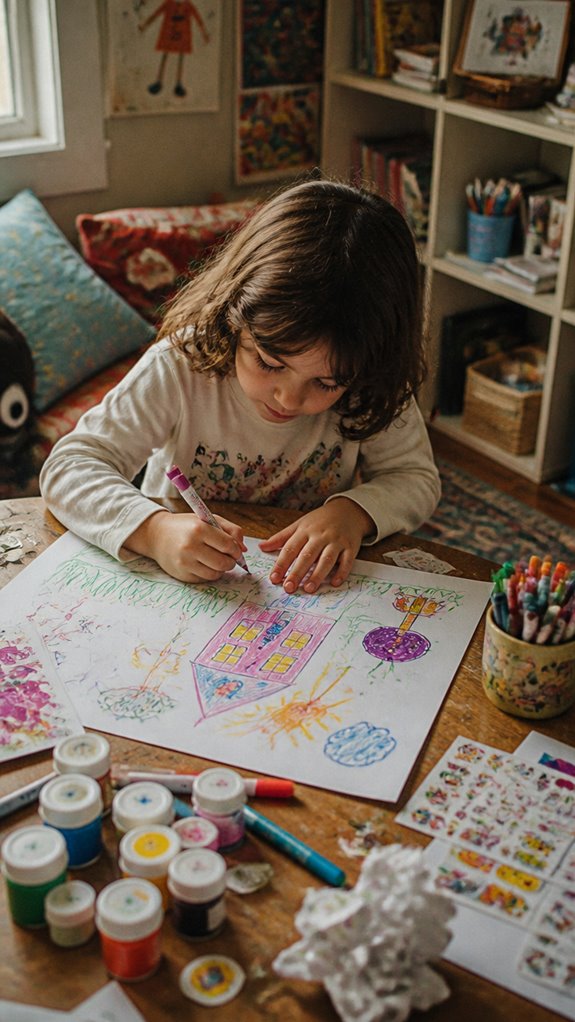
Children’s innovative thinking studies reveal that encouraging curiosity and experimentation is at the heart of developing creative minds. You want your child to thrive in an unpredictable future, and fostering creative exploration plays a key role.
An innovative environment supports that growth by allowing children to try new ideas, reflect, and learn from mistakes—all without fear of failure. This kind of atmosphere helps kids see challenges as opportunities, building resilience and confidence.
Creating a safe space for experimentation fosters resilience, confidence, and a love of learning through embracing mistakes and challenges.
Instead of focusing solely on right or wrong answers, it’s about nurturing a mindset open to discovery. As a parent or educator, you can create space for open-ended activities, like drawing or pretend play, that spark imagination. Developing future-ready skills early enables children to adapt to evolving job markets and technological changes throughout their lives.
Creating a supportive environment encourages children to take risks and develop confidence in their ideas, which is essential for fostering long-term creative thinking.
These everyday habits set the foundation for long-term adaptability and a sense of mastery in a progressively changing world.
Navigating Tech Burnout and Anxiety
As kids spend more time online and on screens, many parents worry about tech burnout and anxiety. It’s natural to fear overload or distractions disrupting your child’s well-being. But instead of reacting with worry, focus on building their digital resilience and emotional intelligence. By cultivating a value mindset rather than fixating on screen time metrics, you help children develop intrinsic motivation and purpose in their digital activities.
- Encourage regular screen breaks that reconnect children to nature, friends, or creative pursuits.
- Foster open conversations about feelings, helping kids recognize and manage their emotions.
- Teach them to set healthy boundaries in their online lives, so they feel in control, not overwhelmed.
This approach cultivates skills that prepare your child for the future—resilience, self-awareness, and adaptability—while giving you practical ways to support well-being. It’s not about banning screens but nurturing balanced, confident, and future-ready kids.
The Adaptive Atlas Anti-Fragile Child System
In today’s unpredictable world, helping your child develop resilience isn’t just helpful—it’s essential. The Adaptive Atlas Anti-Fragile Child System centers on building emotional resilience and a growth mindset that prepare them for constant change.
You might worry that setbacks will shake their confidence, but the system teaches children to see failure as a chance to learn and grow. Instead of avoiding difficulty, they learn to stay engaged and recover stronger. The anti-fragile mindset enables children to benefit from stress and volatility rather than simply endure them.
This isn’t about shielding them from challenges but equipping them with the mindset that they can adapt and thrive despite uncertainty. Over time, they gain confidence in their ability to face whatever the future holds, turning potential fears into powerful tools for lifelong growth.
The Full Adaptive Atlas Framework
The full Adaptive Atlas Framework acts as a practical map for raising future-ready children in a world that’s constantly changing. It’s built on neuroscience perspectives and current cultural trends, emphasizing adaptability over fixed skills. Envision your child developing resilience through understanding uncertainty, learning independently, and engaging with AI as a partner.
- Recognize that skills like critical thinking and creativity are more valuable than memorization.
- Use AI as a tool to amplify thinking, not replace it, fostering confidence in steering complex systems.
- Personalize learning and growth pathways, celebrating unique strengths and differential responses.
This framework helps you see chaos as an opportunity. It shifts fears about an unpredictable future into actionable patterns that empower your child’s long-term confidence and relevance.
The Adaptive Atlas Framework
Five connected systems designed to help parents raise adaptable, future-ready children in a world shaped by AI, automation, and constant change.
| 🛡️ |
Anti-Fragile Child SystemBuilds resilience, adaptability, and the ability to handle uncertainty without shutting down. |
| 📚 |
Learning Stack ModelDevelops self-directed learning habits and continuous skill acquisition beyond school systems. |
| 🚀 |
Future Skill Stack SystemFocuses on high-value human skills that remain relevant in an AI-driven economy. |
| 🤖 |
AI Learning SystemTeaches children how to use AI as a thinking partner instead of becoming dependent on it. |
| 🧭 |
Child Type Navigator SystemPersonalizes learning and development based on each child’s strengths and personality. |
FAQ
How Can I Balance Encouraging Independence Without Risking Safety?
You can balance encouraging independence with safety by guiding risk assessment, setting clear independence limits, and empowering your kids to evaluate challenges themselves. This approach fosters confidence, respects their growth, and guarantees safety remains a priority amid exploration.
What Role Does Emotional Regulation Play in Boosting Confidence?
Visualize emotional regulation as a steady lighthouse guiding your child through storms of uncertainty. By nurturing emotional awareness and self-control, you free them to confidently navigate challenges, transforming fear into resilience, and blossoming into autonomous, empowered thinkers.
How Do I Tailor Confidence-Building Activities for Different Ages?
You tailor confidence-building by involving yourself with age-appropriate activities, considering peer influence, and encouraging independence. You facilitate environments where kids feel supported, explore freely, and develop resilience, freeing them from limiting viewpoints and empowering their unique growth paths.
Can Confidence Be Nurtured in Children With Special Needs?
Isn’t it empowering to see children with special needs thrive? You can nurture confidence by fostering social skills and supporting sensory integration, creating inclusive environments where their unique strengths grow, and every child feels valued and capable.
How to Maintain Consistency in Confidence Strategies Over Time?
You maintain consistency by regularly practicing self-awareness development and applying positive reinforcement techniques, empowering your child to recognize progress and stay motivated, fostering a sense of autonomy and resilience that endures through ongoing challenges.
References
- https://handsonaswegrow.com/how-build-confidence-kids-activities/
- https://childmind.org/article/12-tips-raising-confident-kids/
- https://positivepsychology.com/self-esteem-for-children/
- https://elliementalhealth.com/cultivating-confidence-10-self-esteem-activities-for-children/
- https://www.mayoclinichealthsystem.org/hometown-health/speaking-of-health/practical-ways-to-raise-confident-kids
- https://www.youtube.com/watch?v=Zi9s0drG2II
- https://raisingchildren.net.au/toddlers/behaviour/understanding-behaviour/about-self-esteem
- https://www.eu-jer.com/developing-creative-thinking-in-preschool-children-a-comprehensive-review-of-innovative
- https://pmc.ncbi.nlm.nih.gov/articles/PMC4780532/
- https://digitalcommons.buffalostate.edu/cgi/viewcontent.cgi?article=1321&context=creativeprojects