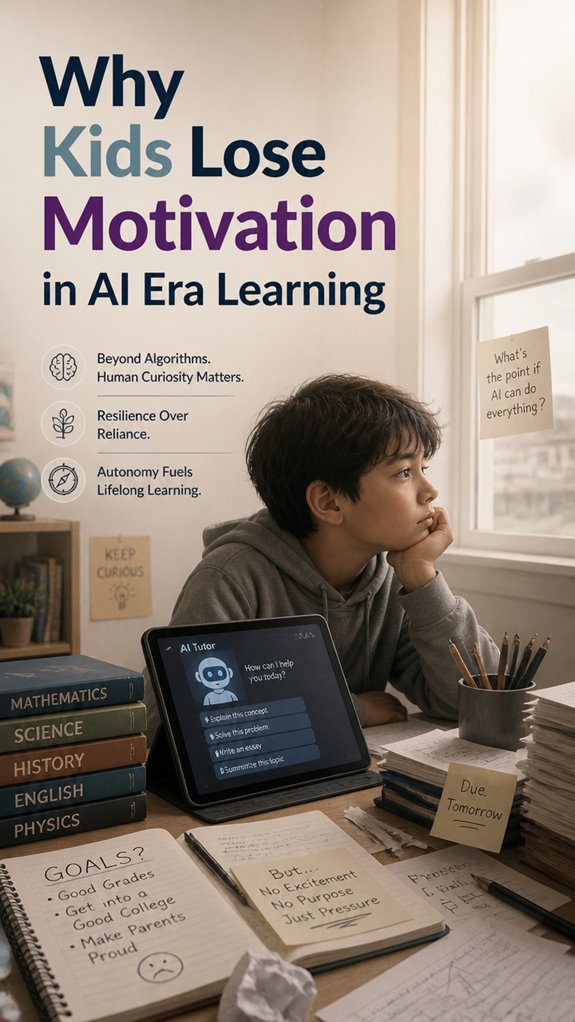

Why Does Your Child Crash During Homework?
Intelligence matters less than energy management. When you spot irritability, resistance, or scattered focus, your child’s nervous system is signaling fatigue, not laziness.
I watched my daughter Maya shut down at 3 PM every single day. Math became impossible. Reading felt torture-adjacent. One afternoon, I abandoned the workbooks and took her outside. Twenty minutes of running. Everything shifted. She returned focused, capable, different. That’s when I realized we were fighting biology, not motivation. At Adaptive Atlas, we document these patterns because parents deserve frameworks that actually work. We write about nervous system signals, energy rhythms, and sustainable learning because guessing games waste everyone’s time.
Years later, I remember Maya asking why mornings felt “easier to think.” That question sparked everything. Matching hard tasks to peak energy windows transformed her entire relationship with learning. She learned to advocate for herself. Independence arrived naturally.
Synchronize Tasks With Energy Peaks
Match challenging work to high-energy windows. Combine focused effort with movement breaks. Watch your child develop genuine resilience. These aren’t Band-Aids. They’re operating systems that rewire how kids handle pressure.
Quick Takeaways
- Recognize early dysregulation signs like irritability and focus loss to build self-awareness and develop self-regulation skills.
- Schedule demanding tasks during peak energy hours and save lighter activities for low-energy periods.
- Use five-minute movement breaks, breathing exercises, and sensory resets to shift from scattered to settled states.
- Align cognitive challenges with natural thinking windows—adolescents peak cognitively in evenings, not mornings.
- Practice small manageable challenges focusing on friction and recovery to build antifragility and emotional resilience.
Spot Regulation Warning Signs Before Your Child Crashes
When your child’s energy starts to fragment—when they’re irritable over small things, resistant to tasks they normally handle, or bouncing between focus and shutdown—you’re often seeing the early signs of dysregulation, not defiance or laziness. These warning signs matter because they’re your opportunity to intervene before the crash happens.
Look for environmental cues: Are they overstimulated? Hungry? Sleep-deprived? Their nervous system sends signals before it breaks down. This is where emotion coaching becomes practical—naming what you observe without judgment helps your child build self-awareness instead of shame. Understanding your child’s unique strengths can also help you frame these moments as opportunities for growth rather than failure.
Their nervous system sends signals before it breaks down. Name what you observe without judgment to build self-awareness instead of shame.
When you spot these patterns early, you’re teaching your child to recognize their own limits. This ability to self-monitor becomes foundational for managing complex work, learning continuously, and staying adaptive.
It’s not about preventing every difficult moment. It’s about building the awareness that lets them stay capable when pressure increases.
Match Activities to Your Child’s Energy Level
Once you’ve spotted the early warning signs of dysregulation, the next move is equally important: you’ve got to match what you’re asking your child to do with the energy they actually have available right now.
Energy optimization isn’t about pushing harder. It’s about alignment. When your child’s tank is depleted, asking them to tackle complex problem-solving or creative work backfires. Instead, offer tasks that require less cognitive load—organizing, reviewing, or physical movement.
Conversely, when they’re resourced and alert, that’s when you introduce challenging material. Developing future-ready skills requires strategic timing so your child can engage with learning when their capacity is greatest.
This activity alignment trains your child’s nervous system to work with reality instead of against it. They learn to recognize their own rhythms, make honest assessments, and make decisions accordingly.
That’s adaptability. That’s the foundation for thriving in a world that demands flexibility, not rigid performance.
Reset Focus Fast With Brain Breaks and Movement
A depleted nervous system can’t simply decide to focus—it needs a reset. Your child’s brain isn’t being lazy; it’s flooded. Movement and sensory integration breaks rewire how their nervous system handles demand, strengthening neuroplasticity training that builds genuine resilience.
Brain breaks aren’t interruptions to learning—they’re part of it. Five minutes of intentional movement shifts your child from scattered to settled. This isn’t about entertainment; it’s about giving their system what it needs to stay capable under pressure.
| Break Type | Duration | Benefit |
|---|---|---|
| Jumping jacks or dancing | 3-5 min | Releases tension, resets focus |
| Breathing or sensory walks | 5 min | Calms nervous system |
| Creative movement games | 5-10 min | Builds body awareness |
| Stretching or balance work | 3 min | Grounds attention |
Consistency builds the pattern. Regular resets train your child to self-regulate without external rescue, preparing them for a world that demands continuous adaptation.
Build a Daily Energy Rhythm Your Child Can Follow

Brain breaks reset your child’s nervous system in the moment, but what builds lasting capability is the rhythm that surrounds them. Energy calibration—understanding when your child peaks and when they decline—transforms how they learn and adapt. You’re not managing exhaustion; you’re building resilience training into their daily structure.
Create predictable patterns: focused work blocks followed by movement, creative time before analytical tasks, social interaction balanced with solo focus. This isn’t rigid scheduling. It’s designing an environment where your child learns to recognize their own energy signals and respond independently. AI-powered personalization tools can help identify these energy patterns by analyzing your child’s learning data and suggesting optimal timing for different types of tasks.
When your child understands their rhythm, they stop fighting fatigue and start working with it. They become capable of sustaining effort over time, which matters far more than any single performance.
This is how children develop the self-awareness needed to thrive in unpredictable futures.
Teach Your Child to Self-Regulate in Any Situation
Understanding your child’s energy rhythm is the first step, but knowing when to peak and when to rest means little if they can’t manage themselves when things fall apart. Self-regulation is the bridge between awareness and action.
Self-regulation bridges the gap between understanding your child’s energy and actually managing it when challenges emerge.
When your child develops emotional awareness, they can recognize frustration before it escalates into shutdown. This isn’t about staying calm constantly—it’s about recognizing their own signals and choosing a response.
Energy scalability matters here. Your child needs tools that work across scenarios: breathing techniques during a difficult lesson, movement breaks before social challenges, or strategic pauses when focus fades. These aren’t coping mechanisms; they’re operating systems. Building adaptability skills through consistent practice with these self-regulation tools strengthens your child’s capacity to navigate unexpected changes with confidence.
When children practice self-regulation in low-stakes moments, they build capability for high-pressure situations later. This skill compounds across every domain of their life, making adaptability sustainable rather than exhausting.
Energy Management Toolkit for Kids
Self-regulation skills only work if your child has concrete tools to reach for when energy dips or emotions spike. Think of energy sustainability like managing a battery—depleted systems can’t think clearly or adapt to challenges.
Build your child’s toolkit with three core practices: body awareness (noticing fatigue before it overwhelms), strategic breaks (movement, water, or quiet time), and emotional resilience through naming what they feel. Research shows that energy awareness develops earlier and more reliably than time management capabilities in children’s cognitive development.
These aren’t luxury skills; they’re foundational to learning, decision-making, and handling the constant shifts ahead.
When your child manages energy intentionally, they’re learning systems-level thinking. They’re not just getting through the day—they’re building the capacity to stay capable under pressure, adapt when conditions change, and maintain direction without burning out.
Circadian Rhythms Shape Cognitive Performance

Your child’s toolkit only works if it’s timed right. Their brain doesn’t perform the same way at 8 a.m. as it does at 3 p.m.—that’s circadian regulation at work.
Cognitive synchronization happens when you align demanding tasks with your child’s natural peak alertness. Adolescents typically hit cognitive peaks in the evening, not morning, which means scheduling math tests or complex problem-solving later optimizes performance.
Disrupted rhythms impair focus and memory formation through mechanisms like the BMAL1 protein, which regulates synaptic learning in the hippocampus. You can’t fight biology, but you can work with it. When circadian rhythms are disrupted by factors like artificial light exposure or irregular sleep schedules, neurogenesis and synaptic plasticity suffer, making it harder for your child to form new memories and learn effectively.
Observe when your child thinks clearest, then protect that window for challenging work. This simple shift removes friction and builds genuine capability over time.
Attention Span Collapse Prevention
Attention fragments fast today—social media algorithms and endless notifications train kids’ brains for quick hits, not deep focus. You fear this shrinks their future edge, but reframe it: build energy resilience now, and they thrive amid distractions.
Focus endurance isn’t innate—it’s a system you instill, turning scattered minds into sustained powerhouses.
- Set device curfews: Cut screens 90 minutes pre-bed; studies like those from the American Academy of Pediatrics show it boosts overnight brain reset.
- Micro-dose deep work: Start with 5-minute no-distraction bursts on one task—builds neural pathways for longer hauls.
- Nature breaks: 20 minutes outdoors daily rewires attention, per University of Michigan research.
- Breath anchors: Teach 4-7-8 breathing to reclaim focus instantly, forging resilience against collapse.
Children with social personality traits often learn best through collaborative focus sessions that combine deep work with peer accountability, amplifying their natural strengths while building sustained attention.
This equips your child for lifelong control.
The Adaptive Atlas Anti-Fragile Child System
When kids face setbacks—a failed test, a rejected idea, social friction—many shut down rather than push through. That’s not weakness. It’s a sign they haven’t yet built the capacity to regulate their emotional response and maintain energy flow under pressure.
The Anti-Fragile Child System changes this. Instead of protecting kids from difficulty, you teach them to stay engaged *within* it.
This means creating small, manageable challenges where they experience friction, recover, and recognize they’re still capable. Stressors that strengthen rather than overwhelm are the foundation of building antifragility in young learners.
When a child learns to navigate frustration without collapsing, their nervous system recalibrates. They develop resilience not as a personality trait, but as a practiced skill.
This foundation makes everything else possible—independent learning, skill-building, AI collaboration.
Without it, kids remain fragile, dependent on external validation and constant support.
The Full Adaptive Atlas Framework
Building an anti-fragile child is the foundation, but it’s only the beginning. You’re not just teaching your child to bounce back—you’re building an entire operating system for thriving in constant change.
Building resilience is just the start. You’re architecting an operating system for your child to thrive amid endless change.
Energy dynamics matter because sustained capability requires more than resilience training alone.
The full framework connects five interdependent systems:
- Anti-fragile foundations that help kids stay engaged under pressure
- Self-directed learning loops that turn curiosity into continuous skill-building
- Future-proof skill development focused on thinking, not memorization
- AI fluency that treats technology as cognitive leverage, not threat
When you integrate these layers, you’re not adding complexity—you’re simplifying how your child navigates uncertainty.
Energy naturally aligns with purpose. Your child stops wasting mental resources on outdated anxiety and directs that energy toward building capabilities that compound over time.
The Adaptive Atlas Framework
Five connected systems designed to help parents raise adaptable, future-ready children in a world shaped by AI, automation, and constant change.
| 🛡️ |
Anti-Fragile Child SystemBuilds resilience, adaptability, and the ability to handle uncertainty without shutting down. |
| 📚 |
Learning Stack ModelDevelops self-directed learning habits and continuous skill acquisition beyond school systems. |
| 🚀 |
Future Skill Stack SystemFocuses on high-value human skills that remain relevant in an AI-driven economy. |
| 🤖 |
AI Learning SystemTeaches children how to use AI as a thinking partner instead of becoming dependent on it. |
| 🧭 |
Child Type Navigator SystemPersonalizes learning and development based on each child’s strengths and personality. |
FAQ
How Does Managing Energy Now Build Capability to Adapt to Future Uncertainty and Change?
You’re not wasting time managing energy—you’re building adaptive resilience. When you learn to sustain focus through fatigue, you develop the proactive mindset that lets you stay capable when everything shifts. That’s your freedom.
Can AI Tools Help My Child Learn to Self-Regulate, or Do They Create Dependency?
AI assistance builds self-regulation when you treat it as a thinking mirror, not a crutch. You’re not creating dependency—you’re outsourcing execution so your child owns the decision-making. That’s where real autonomy lives.
Why Do Some Children Crash Harder Than Others After School Depletes Their Mental Energy?
Your child’s energy peaks and fatigue dips depend on how they’ve built their nervous system’s capacity. Kids who’ve learned to self-regulate through manageable challenge recover faster. Those who’ve avoided discomfort crash harder—their systems aren’t conditioned for resilience.
How Do I Know if My Child’s Energy Management Struggles Signal a Deeper Regulation Issue?
You’re witnessing a rhythm disruption when your child’s emotional awareness dims and sensory sensitivities spike consistently. Watch for patterns: does frustration intensify disproportionately? Does recovery stall? That’s your signal to explore regulation—not compliance—systems together.
What’s the Difference Between Matching Activities to Energy Levels Versus Avoiding Challenging Situations?
Matching activities to energy levels builds capacity—you’re strategically positioning your child for success. Avoiding challenges prevents growth entirely. You’re teaching resilience when you align difficulty with available energy, not when you sidestep it.
References
- https://www.centerforchildcounseling.org/wp-content/uploads/2021/07/WoB-Tip-Sheet-6-High-Energy-Children.pdf
- https://www.edutopia.org/blog/energy-calm-change-it-up-lori-desautels
- https://www.nchpad.org/resources/movement-for-moods-helping-kids-shift-energy-through-their-bodies/
- https://www.fuzzigram.com/behavior-and-discipline/helping-kids-regulate-their-energy-levels
- https://childmind.org/article/can-help-kids-self-regulation/
- https://www.maggiedent.com/blog/become-an-energy-detective-for-your-child/
- https://fit.sanfordhealth.org/units/u10-35-add-action-to-your-day/u10l1-35-ways-kids-can-move-to-increase-energy
- https://eduwik.com/how-to-manage-kids-energy-levels/
- https://academic.oup.com/sleep/article/44/Supplement_2/A245/6260626
- https://www.cambridge.org/core/books/biological-implications-of-circadian-disruption/circadian-rhythms-and-cognitive-functioning/F62A6B36156EE4A8049674E98BEC9DD0