How do we raise kids who think critically about AI instead of just mindlessly scrolling? Build their moral reasoning by establishing clear ethical guidelines for technology use, encouraging them to question biases and real-world impacts.
Teaching Kids AI Responsibility Through Real Experience
My daughter came home confused about an AI recommendation that suggested harmful content. Instead of lecturing, we unpacked how algorithms work, what data influenced the suggestion, and why her skepticism mattered. That conversation sparked something. She started asking better questions about every tool she used. That’s when my co-founder and I created Adaptive Atlas, a platform designed to help families navigate AI literacy together, transforming passive consumption into active learning.
A Moment That Changed Everything
Last month, my son caught an AI error in his homework app and reported it. Not because we forced him to, but because he understood accountability extends everywhere, including to the tech companies shaping his world. He saw himself as part of a larger system that values accuracy and honesty.
Quick Takeaways
- Incorporate discussions about AI’s limitations, biases, and ethical implications to foster critical thinking and responsible use.
- Establish clear guidelines and routines for mindful and respectful engagement with AI tools.
- Teach children to recognize their decision-making impact and develop long-term judgment and accountability.
- Promote resilience by helping kids manage digital distractions and view setbacks as growth opportunities.
- Encourage moral reasoning and empathy to navigate societal changes and adapt responsibly in an AI-driven world.
Why Responsibility Matters in the AI Age
Why does responsibility matter more than ever in the AI age? Because in this world, moral dilemmas and ethical decision making are constant.
As AI grows smarter, your child will face choices that aren’t clear-cut. Responsibility isn’t just about doing chores; it’s about making decisions with integrity, even when the outcome isn’t obvious.
Teaching responsibility gives kids the power to navigate ambiguous situations confidently, reducing fears about the unknown. It helps them develop judgment, recognize consequences, and prioritize long-term values over quick gains. By exploring diverse career paths, children learn how responsibility shapes their ability to adapt and make ethical choices across different professional landscapes.
Instead of resisting change, they learn to act thoughtfully within it. Responsibility becomes a tool for liberation, not a burden.
How to Teach Critical Thinking About AI Tools
Understanding how to think critically about AI tools might seem intimidating at first, but it’s really about helping your child develop a mindset that questions and evaluates technology thoughtfully.
Learning to think critically about AI empowers children to evaluate technology thoughtfully and confidently.
Focus on building algorithm awareness—help them see how AI makes decisions based on patterns—and bias recognition—spotting when data or assumptions skew outcomes.
Simply explaining that AI isn’t perfect helps demystify it.
Use real-world examples, like how recommendations on social media can be biased or manipulated.
Encourage your child to ask questions: Who benefits from this? What assumptions are baked in?
These practices nurture independence, long-term adaptability, and a confident view of technology. Teaching kids to adapt their thinking when encountering new AI tools prepares them to adjust to technological change throughout their lives.
It’s not about fear, but about empowering your child to navigate AI’s influence with clarity and control.
Setting Clear Rules for Responsible AI Use at Home and School
Setting clear rules for responsible AI use at home and school helps children develop healthy habits and understand their role in a technology-enabled world. These rules create a foundation for managing privacy boundaries and engaging in ethical debates about technology’s impact.
Remember, the goal isn’t to control every interaction but to guide children toward mindful, respectful use. By addressing concerns calmly—such as data privacy and AI’s influence—you help them see how responsible behavior shapes their future and society’s well-being.
These rules teach kids to ask questions, think critically, and navigate the terrain of AI thoughtfully. Over time, this not only fosters independence but builds adaptive skills vital for a world that’s constantly changing.
Encouraging Responsible Creativity With AI

While it’s natural to worry about how children might misuse AI tools, guiding them toward responsible creativity helps build their confidence and sense of agency.
Emphasize AI ethics by teaching kids to *think about* how their creations impact others and society.
Encourage creative empowerment by showing them AI as a partner that amplifies their ideas, not replaces their judgment.
Instead of fearing mistakes, frame them as part of learning and growth, fostering resilience.
Focus on systems that promote thoughtful exploration and ethical use of AI.
Help your children understand that responsible creativity involves balancing innovation with awareness of consequences.
Understanding future-ready skills will equip them to navigate an AI-driven world where adaptability and ethical reasoning are essential competencies.
This approach prepares them for a future where they can use AI confidently, ethically, and with a sense of responsibility that shapes their role as creators and problem-solvers.
How to Have Honest Conversations About AI and Accountability
Artificial intelligence is changing how we work, learn, and communicate, but it also raises important questions about accountability. When discussing AI, focus on transparency—making sure children understand how AI decisions are made, and that they see AI’s role as a tool, not a decision-maker.
Address ethical dilemmas calmly, showing them that responsible use means questioning algorithms and ensuring fairness. Don’t fear complexity; instead, see these conversations as opportunities to build critical thinking and moral awareness. Using calm discussion approaches can help ease children’s concerns while maintaining productive dialogue about AI’s role in society.
Explain that accountability isn’t about blame but about understanding how actions impact others. By framing AI as a partnership—one where humans remain responsible—you empower your child to navigate this new terrain confidently.
This approach helps them see responsibility not as a burden but as an essential part of shaping a fair, inclusive future.
Using Real-World Experiences to Reinforce Responsible AI Behavior
Using real-world experiences to teach responsible AI behavior helps children see how AI impacts daily life and the importance of making thoughtful choices. When kids encounter ethical dilemmas involving AI, such as biases influencing online content or decisions, they learn to recognize hidden influences.
Addressing AI bias gently shows them that technology isn’t perfect but can be improved through responsible use. These experiences empower children to think critically, question designs, and consider fairness.
It shifts the focus from fear to understanding, helping them see AI as a tool they can shape with their choices. By exploring everyday situations, you give children practical ways to navigate an AI-driven world, fostering long-term skills of responsibility, awareness, and independent judgment—key for their future agency and confidence. Building self-belief through these learning experiences ensures children develop the conviction that their choices matter in shaping technology responsibly.
Brain Development and Responsibility

Understanding how your child’s brain develops is key to nurturing responsibility. Early years shape neural pathways that support problem-solving, empathy, and self-control. These connections form from simple interactions and experiences, especially with responsive, loving adults. Brain development begins in utero, starting with the brainstem, which handles instinctual responses and vital functions. During sensitive periods, exposure to diverse stimuli strengthens these pathways, fostering resilience and intrinsic motivation. Guiding your child’s hands through hands-on activities and practical experience reinforces neural development and builds confidence in their abilities. Encouraging choices helps develop the frontal cortex, building decision-making and autonomy. Routines and stable relationships reinforce emotional regulation, allowing children to manage stress and impulses better. Their brain’s hierarchical growth means that nurturing foundational skills early on creates a solid base for future responsibility. Recognizing this process empowers you to foster long-term growth. By focusing on systems and consistent patterns, you set your child up for a future where responsibility becomes a natural, confident part of who they are.
Handling Digital Distraction Effectively
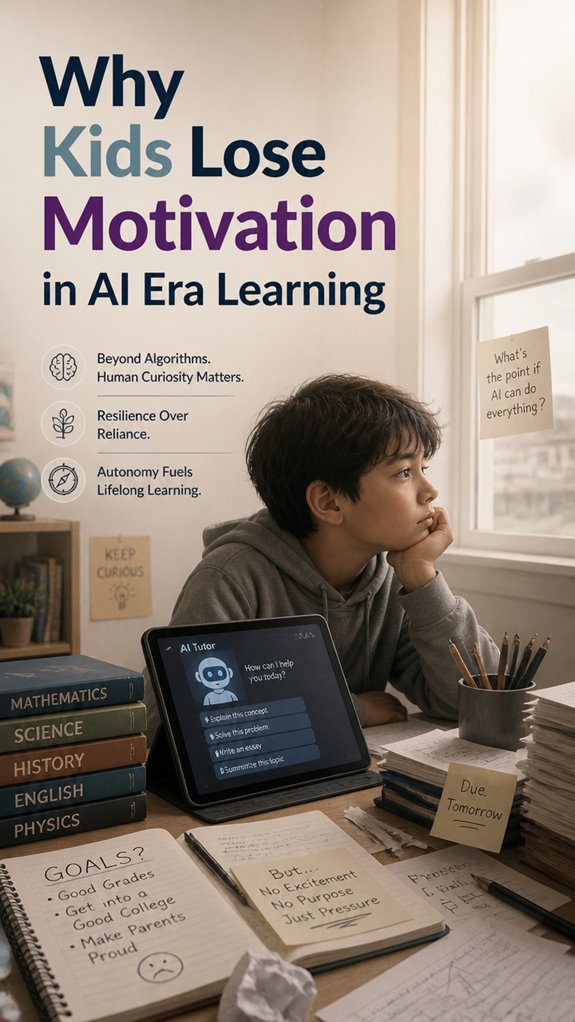
Many parents worry that digital devices will distract children from meaningful tasks or relationships, especially as screens become more integrated into daily life. The key is developing digital mindfulness—helping your child become aware of their screen habits and choosing how to engage intentionally.
Focus cultivation isn’t about restriction but creating routines that encourage attention and presence. Practice simple habits like designated “tech-free” times or mindful pauses during screen use. These patterns build a child’s ability to manage distraction, giving them skills relevant for the AI era where attention is a valuable resource.
When you foster these habits, you’re empowering your child to stay focused on what truly matters, helping them develop resilience and adaptability for the long term.
Responsibility Training Program for Kids
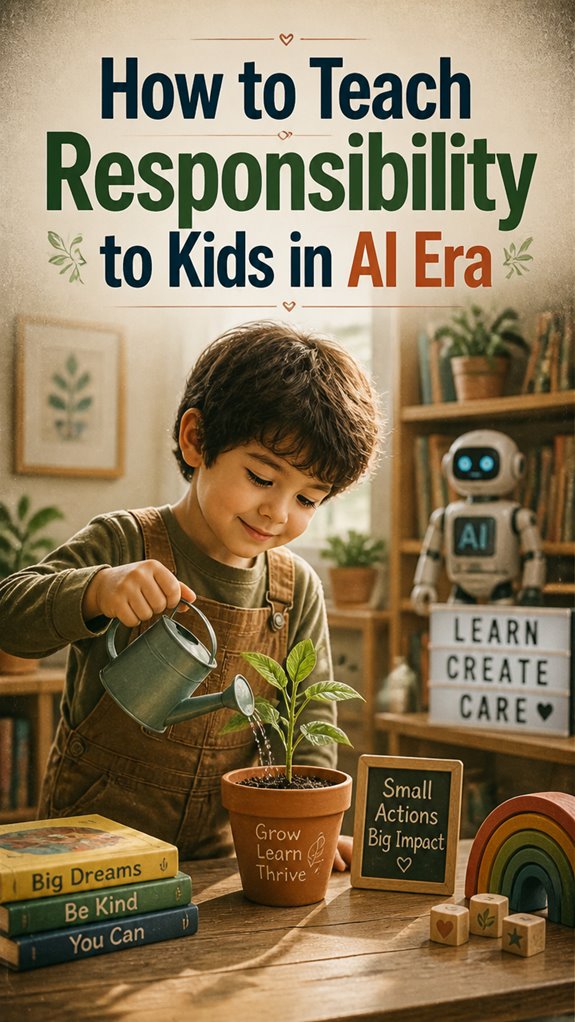
Building responsibility in kids today means moving beyond simple chores and expecting them to develop real accountability as a core skill. A Responsibility Training Program cultivates an ownership mindset, empowering children to see their actions as part of a bigger picture. It focuses on empathy development, helping kids understand others’ feelings and viewpoints, which builds social awareness and trust. When children embrace challenges as opportunities to develop competence, they strengthen their resilience and learn that growth mindset directly supports their ability to handle responsibility. Consider this approach:
| Ownership Mindset | Empathy Development | Long-term Growth |
|---|---|---|
| Encourage decision-making | Practice active listening | Foster reflective thinking |
| Celebrate accountability | Model compassion | Cultivate emotional resilience |
| Assign meaningful tasks | Discuss feelings openly | Build self-awareness |
This system creates a foundation for children to navigate changes confidently. It reduces fears about an uncertain future by instilling clear, adaptable patterns of responsibility that last.
Fostering Resilience in Uncertainty
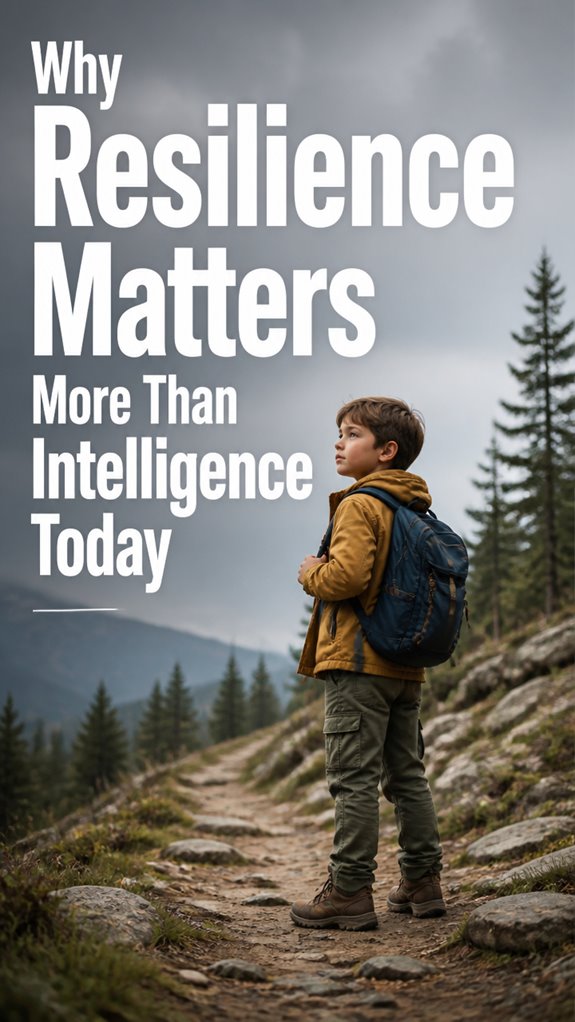
Have you noticed how today’s world is more unpredictable than ever? Children face constant change, requiring emotional intelligence to stay grounded.
Children thrive when they develop resilience and emotional intelligence amidst today’s unpredictable, ever-changing world.
To foster resilience, help them see uncertainty as growth. Envision them:
- Developing environmental awareness, understanding their place in a shifting world
- Recognizing setbacks as valuable lessons rather than failures
- Building emotional strength to navigate disappointments calmly
- Cultivating curiosity to explore new solutions and ideas
- Learning patience amid rapid change, fostering adaptability
A customizable learning plan can help you strategically guide your child through these challenges while building the resilience skills they need for an uncertain future.
The Adaptive Atlas Anti-Fragile Child System
In today’s world, uncertainty is no longer an exception—it’s the norm. The Adaptive Atlas Anti-Fragile Child System helps you prepare your child for this reality.
It focuses on building moral reasoning, so they learn to act with integrity even when things shift. Empathy cultivation becomes essential, helping them understand others’ viewpoints amid chaos.
Instead of fearing the unpredictable, you can see it as an opportunity for growth. This system encourages children to handle frustration, recover from failure, and stay committed to learning. Anti-fragility means your child doesn’t just survive challenges—they grow stronger through them.
It’s about nurturing resilience and adaptability—core qualities for the future. By emphasizing long-term capabilities over fixed skills, you enable your child to navigate change confidently.
Creating a foundation where responsibility, moral reasoning, and empathy thrive in an ever-evolving world.
The Adaptive Atlas Framework
Five connected systems designed to help parents raise adaptable, future-ready children in a world shaped by AI, automation, and constant change.
| 🛡️ |
Anti-Fragile Child SystemBuilds resilience, adaptability, and the ability to handle uncertainty without shutting down. |
| 📚 |
Learning Stack ModelDevelops self-directed learning habits and continuous skill acquisition beyond school systems. |
| 🚀 |
Future Skill Stack SystemFocuses on high-value human skills that remain relevant in an AI-driven economy. |
| 🤖 |
AI Learning SystemTeaches children how to use AI as a thinking partner instead of becoming dependent on it. |
| 🧭 |
Child Type Navigator SystemPersonalizes learning and development based on each child’s strengths and personality. |
FAQ
How Can Parents Model Responsible AI Use Effectively?
Master responsible AI use by modeling mindful digital ethics, melding curiosity with caution, and fostering AI literacy. Lead by example, leveraging deliberate decisions to demonstrate integrity, responsibility, and thoughtful engagement, inspiring children to navigate digital worlds ethically and independently.
What Are the Signs of Irresponsible AI Behavior in Children?
You’ll notice irresponsible AI behavior when children ignore ethical considerations, show a lack of accountability strategies, or misuse AI tools for harm or dishonesty. Recognize these signs to foster independence and guide them toward responsible, future-ready actions.
How Can Schools Integrate AI Responsibility Into Daily Lessons?
You can integrate AI ethics and digital accountability into lessons by encouraging kids to question AI impact, practice responsible usage, and explore ethical dilemmas, empowering them to navigate AI’s role confidently, fostering liberation through proactive responsibility.
How Do We Handle Peer Pressure Related to AI Misuse?
You can leverage peer influence by fostering a culture of digital accountability, inspiring kids to see responsible AI use as a badge of honor. When they lead by example, peer pressure shifts into empowerment and authentic self-expression.
What Tools Can Verify the Accuracy of Ai-Generated Information?
You can use fact-checking tools and credibility assessment platforms to verify AI-generated information quickly. These tools empower you, helping you critically evaluate sources and maintain confidence, freeing yourself from misinformation’s grasp and fostering independent, informed decision-making.
References
- https://www.voicesforinnovation.org/preparing-our-kids-for-the-ai-era/
- https://www.understood.org/en/articles/ai-responsible-use-students
- https://csteachers.org/teaching-in-the-age-of-ai-what-responsible-use-really-means/
- https://smartclassroommanagement.com/2025/05/15/how-to-teach-ai-era/
- https://katielmartin.com/2023/06/20/the-evolving-role-of-educators-in-the-age-of-ai/
- https://teaching.charlotte.edu/teaching-support/teaching-guides/general-principles-teaching-age-ai/
- https://betterfamilytherapy.com/blog/child-development-neuroscience-parenting
- https://www.aacap.org/AACAP/Families_and_Youth/Facts_for_Families/FFF-Guide/The-Teen-Brain-Behavior-Problem-Solving-and-Decision-Making-095.aspx
- https://pmc.ncbi.nlm.nih.gov/articles/PMC3722610/
- https://www.firstthingsfirst.org/early-childhood-matters/brain-development/