How Can Kids Actually Learn When AI Does Everything?
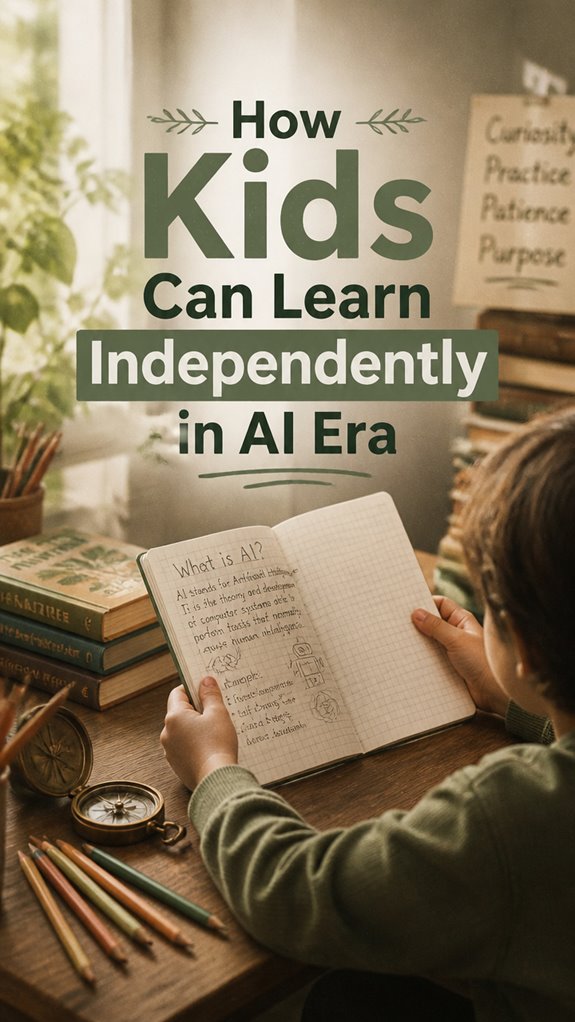
Independent learning happens when struggle comes before shortcuts. Your child needs to wrestle with problems, sit with confusion, ask their own questions. This activates cognitive plasticity and genuine motivation. AI then functions as a thinking partner, not a quick fix. Real learning lives in metacognition, self-reflection, and emotional resilience through cycles of trying, observing, adjusting, repeating.
A Moment That Changed How I See Learning
My son sat stuck on a math problem for twenty minutes. I watched him squirm, nearly offered solutions three times. Then something clicked. He tried a different angle, found the answer himself, and his face lit up differently than when I’d explained things before. That’s when I understood why we built Adaptive Atlas. We wanted a tool that delays rescue, that scaffolds thinking without erasing the productive struggle.
The Real Breakthrough
Last week, I watched my daughter teach herself a coding concept using only questions she generated herself. No prompts, no AI shortcuts. She failed repeatedly, adjusted her approach, and solved it. That resilience cannot be downloaded. It’s forged through attempting, observing feedback without internalizing failure as identity, and trying again.
Quick Takeaways
- AI enhances self-directed learning by encouraging questions, providing immediate feedback, and activating problem-solving through conversation rather than passive study.
- Build foundational skills like questioning and tolerating confusion before introducing AI tools to prevent dependency and foster genuine autonomy.
- Match AI learning modalities—visual diagrams, audio content, written explanations—to individual learning styles for sustained engagement and independence.
- Develop metacognition through reflective exercises and daily check-ins to strengthen self-awareness, adaptability, and emotional regulation during learning challenges.
- Create feedback systems emphasizing understanding over grades, enabling children to identify gaps, adjust strategies, and build resilience independently.
Why AI-Powered Learning Works Better Than Passive Study
There’s a fundamental difference between how your child’s brain works and how traditional study methods assume it works.
Passive study—reading, highlighting, memorizing—depletes intrinsic motivation because it offers no real problem to solve.
Passive study depletes motivation because it demands nothing of the mind—no problem to solve, no thinking required.
AI-powered learning flips this. Your child asks questions, explores answers, and receives immediate feedback. This activates the brain’s natural learning system.
When your child uses AI as a thinking partner, they’re building emotional resilience too.
They encounter difficulty, adjust their approach, and try again—all within minutes. This cycle strengthens their ability to handle frustration without shutting down.
The system works because it mirrors how humans actually think: through conversation, iteration, and real stakes.
Developing these value skills for AI ensures your child isn’t just absorbing information—they’re building independence that compounds over time.
Start Here: Build Self-Directed Skills Before Choosing Tools
AI tools can amplify your child’s thinking, but only if they’ve built the foundation first. Child autonomy develops through struggle, not convenience. Before introducing any tool, your child needs self-directed learning skills—the ability to ask questions, tolerate confusion, and pursue answers independently.
This matters because tool mastery without foundational capability creates dependency. Your child becomes a user rather than a thinker. They’ll follow prompts instead of framing problems.
Start by building these core capacities: curiosity without answers handed over, persistence through difficulty, and the confidence to learn without instruction. These aren’t personality traits—they’re practiced skills. When children develop emotion understanding and self-awareness, they’re better equipped to recognize frustration during struggle and persist through challenging learning moments.
Once your child can direct their own learning, AI becomes genuine leverage, not a shortcut that bypasses thinking. The sequence matters more than the tool.
Match AI Tools to Visual, Auditory, and Reading-Based Learners
Once your child has built self-directed learning skills, the next move isn’t to hand them every tool available—it’s to match the right tool to how their brain actually works.
Kids aren’t interchangeable. Some think in images, others in sounds, and still others through text. Varying modalities matter because sensory integration—how your child’s brain processes information—determines what sticks.
A visual learner thrives with ChatGPT generating mind maps or Midjourney creating concept diagrams.
An auditory learner benefits from tools that produce podcasts or text-to-speech.
A reader absorbs through written explanations and structured documents.
This isn’t about limiting your child. It’s about removing friction. Establishing a dedicated learning space at home with appropriate materials for each learning style reinforces the connection between their preferred modality and academic success.
When tools align with how they naturally learn, effort becomes sustainable, not forced.
That’s when independence takes root and compounds.
Set Up Your AI Tutor: Scaffolding, Spacing, and Gradual Independence
Your role shifts from instructor to architect. Set up structured prompts that require thinking, not just answers.
When your child tackles a problem with AI support, they’re building decision-making muscle. Autonomy cultivation happens when they learn to evaluate AI responses critically rather than accepting them blindly.
This isn’t about removing yourself from the process—it’s about changing your presence from directive to consultative. Over weeks, your child discovers they can navigate complexity alone. Like project-based learning, this approach emphasizes real problem-solving over passive information consumption, encouraging students to take ownership of their educational journey.
When AI Corrects Your Kid: Framing Feedback for Growth Mindset
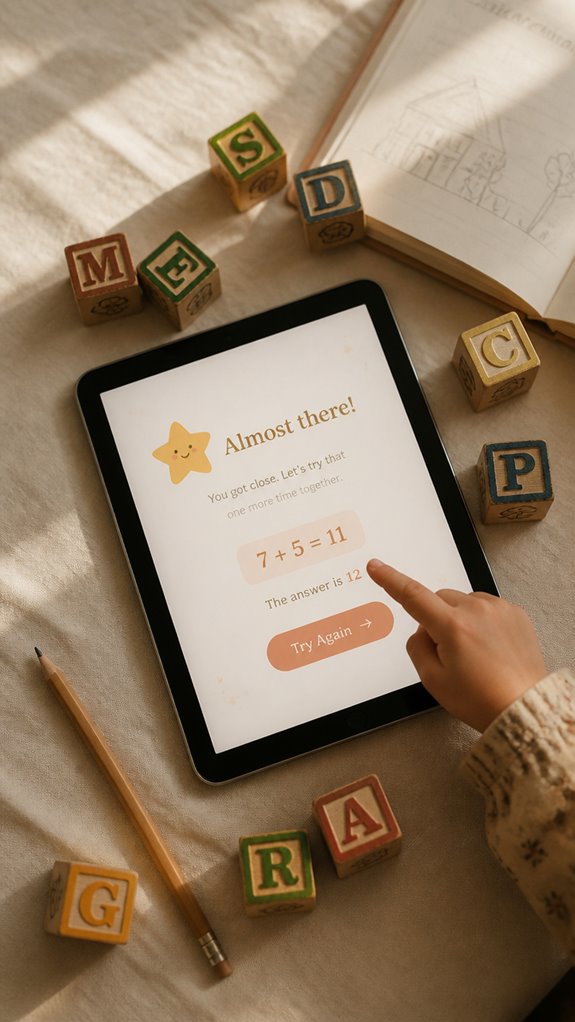
When your child receives a correction from an AI tutor, something important shifts—and it’s not what most parents fear. The feedback isn’t personal rejection; it’s data for improvement.
Your role is reframing how your child interprets it:
Your role is reframing how your child interprets feedback—separating error from identity, naming growth, and connecting correction to capability building.
- Separate the error from the child. “The AI found a mistake in the approach, not a flaw in you.”
- Name what was learned. “You now know what doesn’t work—that’s progress.”
- Connect to growth mindset. “Corrections are how capability builds.”
This feedback framing transforms AI corrections into fuel for independence. Research shows that parent-child conversations about how to interpret feedback help children internalize these lessons more deeply. Your child learns that intelligent systems provide mirrors, not judgments.
Over time, they’ll seek feedback actively rather than avoid it. That resilience compounds. Children who metabolize correction become adults who adapt without hesitation.
Monitor Progress Without Privacy Invasion: Data Limits and Dashboards
As your child learns independently with AI tools, the temptation to track every interaction is real—and so is the anxiety that you’re missing something important. You’re not.
Privacy boundaries actually strengthen independent learning. Set clear data limits: focus on outcome metrics—skills gained, problems solved, projects completed—rather than screen time or keystroke logs.
Use simple data visualization dashboards that show progress patterns, not surveillance. This approach respects your child’s autonomy while giving you clarity.
You’ll see what matters: whether they’re learning, adapting, and building capability. The shift from monitoring everything to measuring what counts teaches your child that you trust their process. When children develop systems thinking skills, they become better at recognizing patterns in their own learning and understanding how their progress connects to their efforts.
That trust compounds into confidence and genuine independence.
Red Flags: When AI Tutoring Isn’t Enough (or Going Wrong)
AI tutoring works best as a tool for exploration and skill-building, not as a replacement for the judgment calls only you can make. Watch for these red flags:
AI tutoring thrives as an exploration tool, never as a replacement for the judgment calls only you can make.
1. Your child becomes passive.
If they’re waiting for AI to tell them what to do next rather than asking questions, the tool’s creating dependency instead of independence.
2. AI transparency breaks down.
You can’t explain why the system suggested something, or the reasoning feels circular—that’s a sign the tool isn’t supporting real understanding.
3. Ethical dilemmas go unaddressed.
The AI generates solutions without considering values, consequences, or alternative viewpoints your child should be weighing.
When selecting which capabilities to develop through AI tools, consider aligning them with your child’s learning goals rather than letting the technology dictate the path forward.
Your role isn’t to monitor every interaction.
It’s to stay curious about *how* your child’s thinking is changing. That ongoing awareness keeps you in control.
Neuroscience of Self-Directed Learning
Your child’s brain is fundamentally rewired by how they learn, not just what they learn. When kids direct their own learning, they activate what neuroscientists call cognitive plasticity—the brain’s ability to reorganize and strengthen neural pathways based on active engagement.
This isn’t passive absorption; it’s construction.
Self-directed learning triggers the release of dopamine during problem-solving, which deepens memory formation and motivation.
Neuroscience development accelerates when children own their learning choices because they’re building intrinsic drive, not external compliance.
This matters for your child’s future because brains shaped by independence adapt faster to change.
They don’t freeze when facing uncertainty; they explore.
They don’t wait for answers; they build them.
That neural foundation becomes their greatest advantage in an unpredictable world.
When children learn to blend human skills with AI tools, they develop metacognitive awareness alongside technological literacy, creating a more resilient learning framework.
Metacognition Develops Through Self-Reflection

When children pause to think about how they think, they’re building the mental architecture that separates learners who adapt from those who get stuck. Self-awareness exercises transform learning from passive absorption into active ownership.
Here’s how reflection rewires their capacity:
- Reflective questioning after tasks—”What was hard? What worked?”—activates metacognition naturally, helping kids recognize their own strategies.
- Morning and evening check-ins anchor thinking into daily rhythm, turning reflection into habit rather than afterthought. This gradual process of consistent reinforcement builds sustainable metacognitive awareness that extends beyond structured learning moments.
- Play-based reflection lets children experiment with failure safely, building resilience without external judgment. When kids engage in curious exploration during play, they naturally develop the curiosity that drives them to ask questions and seek deeper understanding of the world around them.
Distraction Derails Focus Sessions
Distractions fracture a child’s focus sessions, pulling them from deep learning into scattered attention that stalls skill-building for an unpredictable future. You spot signs like irritability or procrastination—not flaws, but signals for support.
Triggers hit hard: phones steal 25% of class time, per studies, while social drama or anxiety scatters focus. Refocusing takes 20 minutes, conditioning brains for quick hits over deep work. Frequent task-switching undermines sustained attention during study sessions.
Build emotional awareness to name frustrations early, freeing your child from internal chaos. Parents can address AI-related anxieties through calm family conversations that normalize concerns about technology’s role in learning. Master distraction management through systems: carve quiet study zones away from windows, set homework routines with timed bursts, and cap entertainment screens.
Fuel with sleep, activity, and balanced eats. These patterns reclaim control, forging resilient focus that thrives amid change, not despite it.
Independent Learning System for Kids
Once you’ve cleared the noise and built focus, you’ve created the conditions for something bigger: a child who can learn without waiting for someone to teach them.
Child autonomy isn’t about abandonment. It’s about building the internal compass that drives curiosity forward. Here’s how it works:
- Self-directed loops — Your child identifies what they need to know, seeks answers, and evaluates what they’ve learned.
- Feedback systems — They notice what’s working, adjust their approach, and improve without external validation.
- Learning resilience — They persist through confusion because they’ve already proven they can solve problems.
This shift moves learning from passive consumption to active creation. Your child stops waiting for permission and starts claiming ownership. By developing a customizable planning system, you provide the structure that transforms self-directed learning from trial-and-error into purposeful progression.
That’s the foundation of adaptability. They’re not dependent on a curriculum or a teacher. They’re dependent on themselves—which is exactly what the future demands.
The Adaptive Atlas Learning Stack Model
Your child now has the foundation—they’ve learned to sit with discomfort, stay focused, and move through confusion without shutting down.
Now comes the engine: the Learning Stack Model.
This isn’t about absorbing more information. It’s about building autonomous motivation—the internal drive to ask questions, explore answers, and recognize patterns without waiting for permission or instruction.
Your child learns through cycles: attempt, observe, adjust, repeat.
Internal feedback becomes their compass. Instead of depending on grades or external validation, they develop the ability to sense when they understand something deeply versus when they’re just memorizing.
This distinction matters enormously in an AI-driven world where information is instantly available but wisdom remains rare.
Parents can support this process by implementing adaptive learning strategies that personalize the pace and content to match their child’s evolving needs and strengths.
The system trains them to learn continuously, independently, and with intention.
That’s leverage.
The Adaptive Atlas Framework
Five connected systems designed to help parents raise adaptable, future-ready children in a world shaped by AI, automation, and constant change.
| 🛡️ |
Anti-Fragile Child SystemBuilds resilience, adaptability, and the ability to handle uncertainty without shutting down. |
| 📚 |
Learning Stack ModelDevelops self-directed learning habits and continuous skill acquisition beyond school systems. |
| 🚀 |
Future Skill Stack SystemFocuses on high-value human skills that remain relevant in an AI-driven economy. |
| 🤖 |
AI Learning SystemTeaches children how to use AI as a thinking partner instead of becoming dependent on it. |
| 🧭 |
Child Type Navigator SystemPersonalizes learning and development based on each child’s strengths and personality. |
FAQ
How Do I Know if My Child Is Naturally Suited for Independent Learning or Needs Human Guidance?
Watch your child’s motivation assessment during self-directed tasks: do they pursue questions independently, recover from confusion, and sustain effort? These independence indicators reveal whether they’re wired for self-directed learning or need scaffolded guidance first.
What Should I Do if My Child Becomes Emotionally Dependent on AI Feedback Instead of Building Intrinsic Motivation?
You’re watching a compass needle spin toward external validation instead of true north. Deliberately alternate AI feedback with human reflection—journal, discuss, fail privately—so your child rebuilds emotional intelligence and motivation balance from within, not from screens.
How Can Independent Learning Prepare My Child for Collaborative Work and Teamwork in Future Careers?
You’ll build teams that actually function when your child develops creative independence first. They’ll contribute original thinking to artificial collaboration, refuse groupthink, and lead instead of follow.
At What Age Should Children Begin Self-Directed Learning, and What’s Appropriate for Toddlers Versus Teenagers?
You’ll start building self-directed foundations in early childhood through play and curiosity. Toddlers explore freely; teenagers develop technological literacy and choose their own learning paths, gradually shifting from guided discovery to independent agency.
How Do I Balance Encouraging Independence With Stepping in When My Child Is Genuinely Stuck or Struggling?
You’ll distinguish between struggle that builds emotional resilience and genuine stuck-ness by observing effort duration. Step in when frustration peaks, then co-solve briefly—balancing support with maintaining their ownership and independence.
Summary
You’ve built something that’ll stick. Your child now owns their learning—they’re not waiting for answers; they’re hunting them. That confidence? It compounds. Years from now, when they face skills that don’t exist yet, they won’t panic. They’ll know how to learn. That’s the real superpower. You’ve given them the tools. Now watch what they build.
References
- https://www.theschoolhouse.org/post/ai-learning-teach-itself
- https://www.gse.harvard.edu/ideas/edcast/24/10/impact-ai-childrens-development
- https://humanintelligencemovement.org/human-centered-ai/the-future-of-child-development-in-the-ai-era/
- https://www.youtube.com/watch?v=HQQtaWgIQmE
- https://www.brookings.edu/articles/generation-ai-starts-early-a-guide-to-technologies-already-shaping-young-childrens-lives/
- https://www.apa.org/ed/precollege/psychology-teacher-network/introductory-psychology/learning-artificial-intelligence
- https://ai.gopubby.com/ai-proof-kids-what-skills-your-child-needs-to-thrive-tomorrow-b341956328e2
- https://icaresoftware.com/develop-metacognition-children
- https://www.edutopia.org/article/helping-young-students-think-about-thinking/
- https://www.kangarookids.in/blog/metacognition-early-childhood-thinking-about-thinking/