How Do You Know If Your Child Actually Learns Future Skills?
Here’s the truth: report cards won’t tell you. Look for resilience, adaptability, and emotional regulation instead. These behaviors reveal how your child handles real-world curveballs that tests never measure.
Why We Built Adaptive Atlas
Last spring, my daughter froze during a group presentation. Not from lacking knowledge, but from fear. I watched her struggle and realized I’d been tracking all the wrong metrics. That moment sparked why we created Adaptive Atlas. We needed a tool that captures what actually matters: how kids bounce back, adjust when plans crumble, and regulate emotions under pressure. Standard dashboards miss this entirely. Our platform highlights these invisible competencies parents and educators desperately need to see.
The Checklist That Changed Everything
I started with index cards. Literally. Each one tracked a different skill. Over three months, patterns emerged. My son’s frustration tolerance improved dramatically after we stopped praising perfection. That simple observation, captured on paper, guided everything we changed at home.
Quick Takeaways
- Use digital tools with gamification and AI features for personalized, ongoing progress tracking across core future skills.
- Visualize development with charts, dashboards, and reflection prompts to identify growth patterns and set benchmarks.
- Focus assessments on behavioral responses, resilience, adaptability, and independence rather than just test scores.
- Encourage children’s ownership by involving them in goal setting and celebrating small achievements.
- Regularly review and update progress through data-driven insights to refine learning approaches and skill development.
Why Tracking Future Skills Development Is Essential
Tracking your child’s future skills development is more important than ever because the world is changing faster than most of us realize. It’s not just about knowledge anymore; it’s about building emotional resilience and creative expression.
These skills are the foundation for adapting to constant change and turning challenges into opportunities. You might worry about whether your child is keeping up, but remember, progress isn’t linear. When you cultivate positive thinking habits in your child, you equip them with the mental framework to navigate uncertainty and view setbacks as learning opportunities.
Instead, focus on tracking growth in key areas like problem-solving, resilience, and innovation. This gives you a clear view of how they’re developing essential capabilities, not just completing tasks.
How to Choose the Right Digital Tools for Monitoring Progress
Choosing the right digital tools might seem overwhelming at first, especially with so many options claiming to monitor progress. But focusing on effectiveness and your child’s future makes it manageable.
Look for tools that incorporate gamification strategies—these make learning engaging and motivate ongoing growth.
Parental involvement is vital, so choose apps that allow you to track, provide feedback, and stay connected without overwhelming your child.
Prioritize systems that foster independence, like self-assessment features, and those that adapt to your child’s unique profile.
Keep in mind, the goal isn’t perfection but long-term capability.
To gain control, compare tools based on their ability to reinforce adaptability and skills relevant to a rapidly changing world.
The right choice empowers you to be an active partner in your child’s future readiness.
Many of these tools also leverage AI-powered learning to personalize the educational experience and provide real-time insights into your child’s development across different competency areas.
Implementing Effective Strategies for Visual and Behavioral Assessment
Understanding a child’s behavior and development can seem intimidating, especially amid the many ways to interpret observable actions. Yet, with a mindset shift towards seeing assessment as a tool for growth, you gain power and clarity.
Use clear assessment criteria focused on long-term skills like resilience, adaptability, and independence—core elements of future readiness. Instead of fixating solely on test scores or single moments, look for patterns in behavior over time.
New strategies involve observing how your child responds to challenges, frustration, or uncertainty. These observation techniques align with nurturing communication strengths that prepare children for an AI-driven world. Bear in mind, your goal isn’t perfection but consistency.
This empowers you to track genuine progress, identify areas for growth, and support your child’s development with confidence. These practical, system-driven approaches turn assessment into a meaningful guide for building future skills.
Building Student Ownership and Communicating Progress With Parents
Building student ownership begins with a mindset shift—you want your child to see themselves as an active participant in their growth, not just a recipient of instruction. To do this, foster parent-child collaboration that encourages shared responsibility.
Communicate progress with clarity and confidence, emphasizing strengths and areas for growth. Focus on nurturing emotional resilience, helping your child face challenges with a positive mindset. Understanding the broader landscape of future-ready skills helps parents contextualize their child’s development within emerging workforce demands.
Consider these actions:
- Regularly set joint goals that empower your child’s decision-making
- Use open conversations to reflect on progress, not just grades
- Celebrate small wins to build confidence and ownership
- Align feedback with future skills, reinforcing their importance for long-term adaptability
This approach shifts control, making your child more engaged and resilient in their journey.
Future Skill Development Benchmarks

As we prepare children for a future that’s constantly shifting, it’s helpful to establish clear benchmarks for their skills development—ones focused on adaptability and long-term relevance. Think of these as milestones that emphasize mindset shifts and the growth mindset.
Instead of measuring fixed knowledge, you prioritize how children approach challenges, remain open to learning, and adapt to new situations. This creates a practical framework that fosters resilience and independence. Adaptability is critical for children to navigate unpredictable environments and build the confidence needed to thrive in careers and situations that don’t yet exist.
Tracking Cognitive Flexibility in Children
How can you tell if your child is developing the cognitive flexibility they’ll need to navigate a changing world? You look for steady growth in their ability to adapt their routines and interests, manage change, and handle social shifts. Research shows that tools like the Flexibility Scale can effectively measure these skills. You can assess these skills through simple, intentional activities that encourage flexibility—like interactive games that require rule shifts, movement-shift games, or story-based stories that foster different viewpoints. Exploring alternative career paths can also demonstrate how children apply flexible thinking to diverse professional possibilities. Tracking progress involves observing how your child responds to challenges, their frustration tolerance, and how they approach problem-solving with varied strategies. Parent involvement is key: model flexible thinking, label rigid versus adaptable patterns, and celebrate improvement. Regular use of tools like the Flexibility Scale and feedback from training exercises will help you guide their growth, building a future-ready mindset.
Inconsistent Child Engagement Patterns
Children don’t always stay consistently engaged—patterns of high involvement in first grade often dip by third, leading to slower academic growth over years, as studies from the school engagement hypothesis show with correlations up to .67 in achievement stability.
You spot these inconsistent child engagement patterns early to seize control over their trajectory.
Track engagement consistency: High explorers persist through curiosity, while resisters withdraw, risking stalled future skills like adaptability. Developing critical thinking skills helps children analyze their own engagement patterns and make intentional choices about participation.
Don’t fear the dip—it’s common in rigid classrooms with whole-group passive time dominating 64% of days.
Master social dynamics: PreK kids get just 6% conversations, fueling resistance.
You intervene with playdates, emotion talks, and modeled patience, building self-regulation.
Behavioral engagement forms predict academic achievement gains, so monitor cooperation and effort to counter dips early.
This system counters discontinuity, ensuring steady growth toward AI-amplified capabilities that compound lifelong leverage.
Skill Progress Tracker for Kids
Tracking your child’s skill progress may seem overwhelming at first, but establishing a clear, adaptable system helps you stay confident and connected to their growth. A good skill progress tracker allows you to conduct ongoing skill assessment and visualize growth over time.
This isn’t about perfection; it’s about clarity. By focusing on patterns rather than isolated achievements, you can see how your child is developing vital future skills like critical thinking and adaptability. Data-driven learning provides concrete evidence of your child’s capabilities and helps you make informed decisions about their development.
Consider these elements:
- Regular check-ins to update skill levels and understanding
- Visual tools like charts or dashboards for progress visualization
- Personalized benchmarks aligned with their unique strengths
- Reflection prompts for meaningful conversations and goal setting
This approach helps you foster resilience and long-term capability, ensuring your child is prepared for a constantly changing future.
The Adaptive Atlas Learning Stack Model
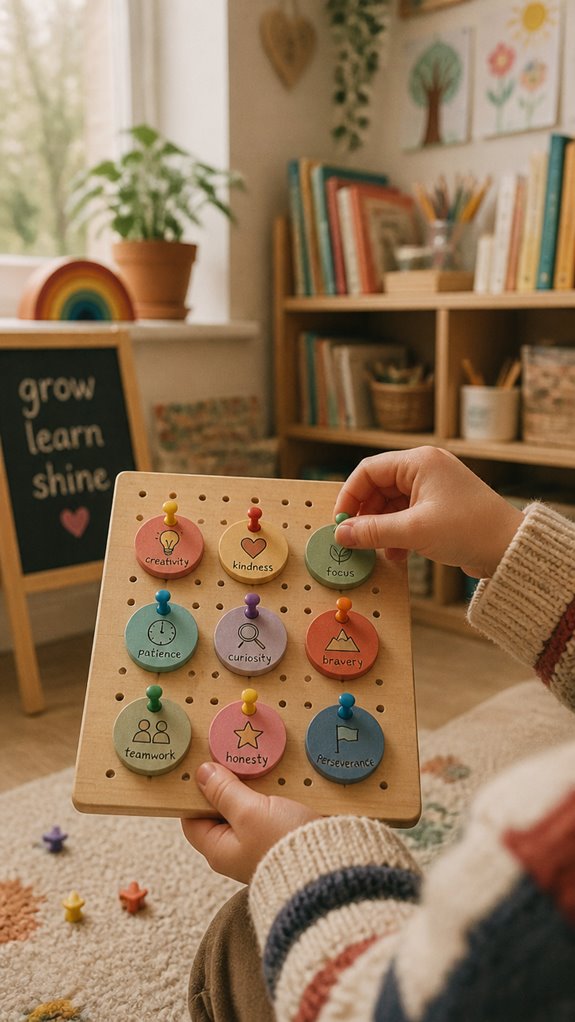
The Adaptive Atlas Learning Stack Model provides a clear framework for helping your child develop the skills needed for a rapidly changing future. It emphasizes evaluating neuroplasticity to understand how adaptable your child’s brain is and building emotional resilience to handle uncertainty and setbacks confidently.
This model shifts the focus from rote learning to capacity development—encouraging self-directed learning and continuous growth. Allowing children to explore different paths before specializing helps them discover their strengths and interests while building adaptability. You can measure progress through observing how well your child adapts to change, persists through challenges, and applies skills flexibly.
Understanding these core abilities ensures you’re guiding them toward long-term capability, not just short-term achievement. This approach helps you feel empowered, knowing you’re supporting a resilient, adaptable mind that’s prepared for whatever the future holds.
The Adaptive Atlas Framework
Five connected systems designed to help parents raise adaptable, future-ready children in a world shaped by AI, automation, and constant change.
| 🛡️ |
Anti-Fragile Child SystemBuilds resilience, adaptability, and the ability to handle uncertainty without shutting down. |
| 📚 |
Learning Stack ModelDevelops self-directed learning habits and continuous skill acquisition beyond school systems. |
| 🚀 |
Future Skill Stack SystemFocuses on high-value human skills that remain relevant in an AI-driven economy. |
| 🤖 |
AI Learning SystemTeaches children how to use AI as a thinking partner instead of becoming dependent on it. |
| 🧭 |
Child Type Navigator SystemPersonalizes learning and development based on each child’s strengths and personality. |
FAQ
How Can Tracking Support Long-Term Adaptability in Children?
You can support long-term adaptability by using personalized assessments to identify strengths and gaps, then setting adaptive goals that challenge your child, fostering continuous growth, resilience, and the ability to navigate change confidently in an ever-evolving world.
What Role Does Emotional Resilience Play in Future Skills Development?
Envision your child faces failure and demonstrates resilience, improving through resilience-building and emotional intelligence. This emotional resilience fuels future skills development, empowering them to navigate ambiguity confidently, adapt swiftly, and seize opportunities in a constantly progressing world.
How Can Parents Motivate Children to Pursue Continuous Skill Growth?
You can motivate your child through skill encouragement and strategic goal setting, empowering them to take ownership of their growth. Clearly define ambitious targets, celebrate progress, and reinforce their ability to master future-relevant capabilities, fueling their confidence and drive.
What Challenges Might Arise When Integrating AI Tools Into Progress Tracking?
Coincidences reveal that AI tools can empower your child’s growth, but beware of data privacy concerns and growing tech dependency. You must actively safeguard their autonomy, ensuring these tools augment rather than control their developmental journey for true power.
How to Tailor Tracking Methods for Children With Diverse Learning Needs?
You should implement inclusive assessments with sensory accommodations, customizing tracking methods to each child’s unique learning needs. This proactive approach empowers you to accurately evaluate progress, ensuring every child’s capabilities are recognized and fostered effectively.
References
- https://blog.ixl.com/2023/07/17/how-to-track-your-childs-progress-on-ixl/
- https://support.aofl.com/hc/en-us/articles/22105542868877-How-can-I-track-the-progress-of-student-skills-and-skills-by-standards
- https://www.curiousjr.com/blogs/best-ways-to-track-your-child-learning-progress-in-online-classes
- https://www.98thpercentile.com/blog/how-to-track-your-childs-academic-progress-online/
- https://tutoring.k12.com/resources/skills/goal-setting/tracking-academic-progress/when-kids-struggle-to-track-their-own-progress/
- https://undivided.io/resources/how-to-track-your-childs-progress-when-learning-from-home-71
- https://www.littlelit.ai/post/is-your-child-future-ready-a-parent-s-guide-to-the-new-essential-life-skills
- https://internationalschooling.org/blog/tracking-your-childs-progress-in-an-online-school
- https://www.childrensnational.org/about-us/newsroom/2017/first-single-assessment-to-capture-childrens-cognitive-and-social-flexibility
- https://familyfirstva.com/three-ways-to-foster-cognitive-flexibility-in-children/