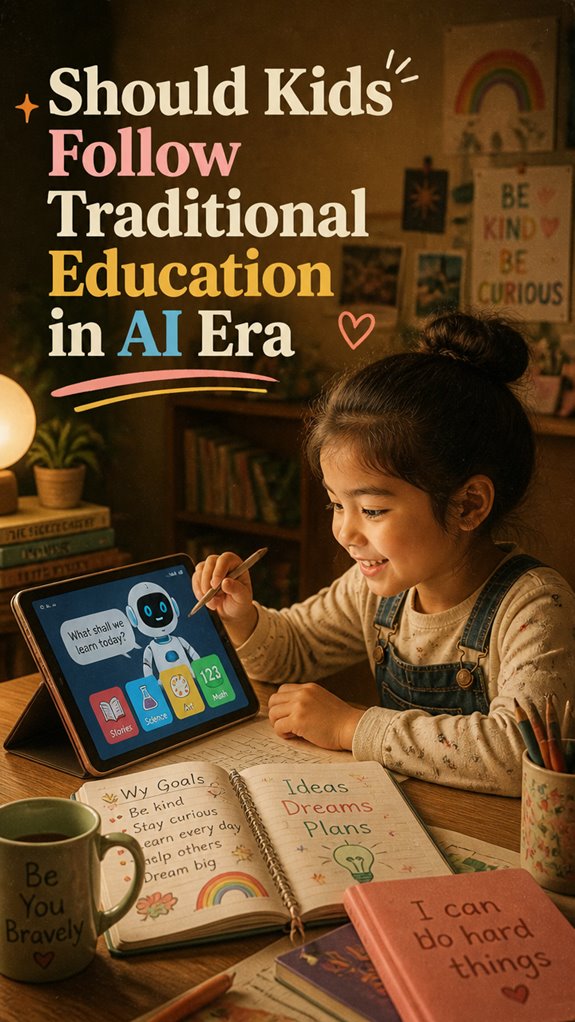
Should Your Child Abandon Traditional Education for the AI Age?
Not quite. Traditional education builds critical thinking, discipline, and collaboration that tech alone cannot replicate. These foundational skills make kids adaptable when industries shift. Balance matters more than choosing sides.
Why We Created Adaptive Atlas
My daughter came home frustrated last year. Her school eliminated group projects for more screen time. I watched her struggle with basic teamwork despite impressive coding skills. That gap sparked something: we needed a resource bridging traditional learning and AI preparation. Adaptive Atlas exists because kids deserve both the resilience old methods teach and the innovation new tools offer. Real preparation isn’t choosing one path.
The Moment That Changed Everything
Last month, my teenager led a community project combining research, negotiation, and creative problem-solving. No AI could’ve handled those human elements. She learned more from that week than from any algorithm. That’s when I realized: the future needs both thinking skills and technological fluency working together.
Quick Takeaways
- Traditional education provides foundational skills like critical thinking and discipline but may lack focus on future-ready skills such as resilience and adaptability.
- Over-reliance on traditional methods can hinder development of essential emotional intelligence and social skills needed in an AI-driven world.
- Integrating AI with hands-on, experiential learning fosters creativity, problem-solving, and self-directed growth beyond static curricula.
- Personalized, holistic approaches that emphasize emotional resilience and adaptability better prepare kids for uncertain, rapidly changing futures.
- Balancing traditional routines with innovative, flexible educational strategies is crucial for equipping children to thrive in the AI era.
Why Traditional Education Matters in Preparing Kids for an AI-Driven Future
Traditional education still plays an essential role in shaping your child’s future, even in an age dominated by AI. Its core value lies in instilling traditional values and educational fundamentals that form a strong foundation. Some fear AI will make these basics obsolete, but that’s a misunderstanding.
These fundamentals develop critical thinking, discipline, and a resilient mindset—traits that AI can’t replace. While technology shifts, the ability to understand complex ideas and solve problems remains crucial.
Schools also teach children how to collaborate and communicate effectively, skills critical in any future terrain.
You can guide your child by prioritizing these timeless principles, ensuring they’re equipped to adapt and thrive in a rapidly changing world. It’s about building a sturdy base on which they can grow unstoppable.
How to Balance Hands-On Learning and AI Tools in Early Childhood Education
Balancing hands-on learning with AI tools in early childhood education can seem intimidating, especially when many fear that technology might replace traditional methods. But you hold the power to create a strong, future-ready foundation.
Focus on tangible experimentation—children should explore physical objects, build things, and discover through direct interaction. This cultivates curiosity and deep understanding, which digital tools can complement.
Creative exploration is also essential; encourage children to envision, invent, and express without relying solely on screens. Use AI tools as partners to enhance these activities, not substitute them, fostering independence and critical thinking.
Recall, the key is a blend that reinforces core skills through real-world experiences while leveraging AI’s potential to expand learning horizons. This approach builds resilience and adaptability for your child’s future.
How AI Is Changing Skill Development and Teaching Approaches in High School and Beyond
As AI becomes more integrated into education, it’s reshaping how students develop critical skills and how teachers approach instruction. Rather than replacing learning, AI integration enhances students’ ability to think independently and adapt.
It bolsters cognitive resilience, helping kids handle uncertainty and setbacks confidently. This shift means your child won’t just memorize facts but will learn to problem-solve, collaborate with AI tools, and develop self-directed learning habits.
Some fear that AI may diminish value in traditional skills—yet, the key is focusing on systems that prioritize flexibility, creativity, and judgment. As research from organizations like the World Economic Forum shows, long-term success depends on building capacity for continuous learning and adaptability.
This approach empowers your child to thrive in a changing world, not just survive it.
When to Limit or Embrace AI Use to Support Your Child’s Brain Development
Many parents worry that using AI tools too much might diminish their child’s natural thinking and problem-solving abilities. However, understanding when to set AI boundaries is key. By overcoming anxiety about change, parents can make informed decisions about integrating AI thoughtfully into their child’s learning journey.
- Use AI to enhance cognitive development—let AI support complex thinking, not replace it.
- Limit AI during foundational skill-building periods—like early childhood—so skills stay robust.
- Embrace AI when it helps your child explore new ideas or develop higher-order skills, keeping control over the process.
Practical Tips for Parents to Make Informed Education Choices in the AI Era
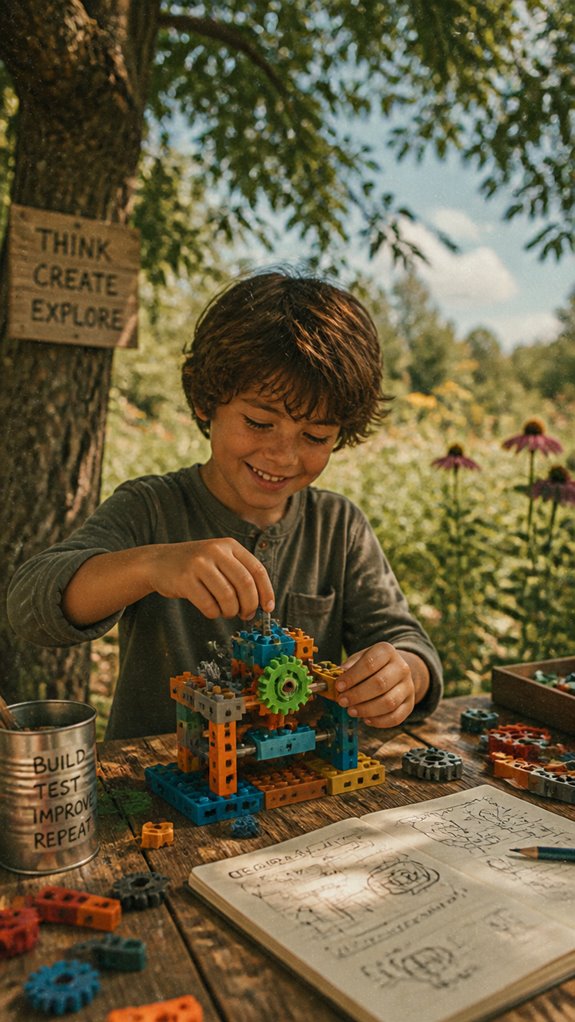
Making informed education choices in the AI era can feel overwhelming, but it doesn’t have to be complicated. Focus on what builds your child’s long-term resilience and adaptability.
Encourage participation in extracurricular activities that develop soft skills like teamwork, creativity, and problem-solving. These skills are essential as traditional testing no longer capture a child’s full potential in a rapidly changing world. Consider engaging your child in project-based learning experiences that combine hands-on exploration with real-world applications.
Instead of pushing for perfect test scores, prioritize diverse learning experiences that promote critical thinking and curiosity.
Keep in mind, technology isn’t the enemy—use AI tools to amplify learning, but keep the focus on systems that foster independence and continuous growth.
Future Skills for Adaptable Learners
The world is changing quickly, and many skills that once guaranteed success are becoming less relevant. Instead, focus on building future skills that make your child adaptable and resilient. These include:
- Emotional Resilience: The ability to handle setbacks and stay engaged amid uncertainty. It’s the foundation for growth in a volatile world.
- Social Intelligence: Understanding and steering relationships to collaborate effectively. This skill fosters leadership and empathy, essential in decentralized work. Developing digital empathy skills helps children navigate online interactions with the same emotional awareness they apply offline.
- Critical Thinking & Problem Framing: Seeing opportunities in complexity and designing solutions, not just following instructions.
Parents often worry about their children falling behind. Reframe this: by prioritizing these skills, you’re preparing kids to thrive, not just survive, in an unpredictable future.
Empirical Studies on Alternative Education
Empirical studies on alternative education show promising signs that these models can support children’s growth in meaningful ways, even in complex, real-world environments. They often emphasize cultural preservation and uphold traditional values, providing a foundation rooted in community and identity. Approximately 10,900 public alternative schools and programs existed in the U.S. during 2000-2001, highlighting their widespread presence and the potential reach of such systems. These schools tend to feature small class sizes, personal attention, and flexible approaches, which help at-risk students succeed—reducing absences, suspensions, and dropout rates. While some worry about academic rigor, research from organizations like the National Center for Alternative Education shows that well-designed programs improve engagement and social-emotional skills. This isn’t about replacing traditional schooling but offering a system that nurtures resilience, critical thinking, and long-term adaptability—skills essential for steering through the unpredictable AI-driven future, all while respecting core cultural and traditional principles.
Resistance to Curricular Change
Why do schools often resist changes to their curriculum, especially when new ideas can better prepare children for the future? It’s mainly due to Curriculum Resistance and Policy Challenges. These barriers come from long-standing systems, tradition, and complex politics.
- They fear losing control or authority over the classroom.
- They face pushback from stakeholders who prefer familiar ways.
- They encounter systemic inertia, making change slow and difficult.
This resistance isn’t laziness; it’s about maintaining a balance of power and stability. Teachers and administrators often rely on established routines because long-standing traditions provide a sense of familiarity and security that is hard to relinquish.
As a parent, understanding these barriers helps you see that change is often about steering through structural limits, not about neglecting your child’s potential. Parents who actively engage with schools can help bridge the gap between traditional curricula and the future-ready skills that students need to thrive in an evolving world.
You can advocate for reforms that focus on long-term capability, building resilience, and adaptability—key skills your child needs in an uncertain future.
Education Path Decision Guide for Parents

Deciding how to support your child’s education in an era of rapid change can feel overwhelming, but it doesn’t have to be complicated. Focus on developing a holistic assessment of their strengths, emotional resilience, and adaptability. This means looking beyond grades—consider how they handle setbacks, manage stress, and demonstrate curiosity. Incorporating self-directed learning techniques can help children develop the independence and critical thinking skills necessary to thrive in an unpredictable future.
| Traditional Path | Future-Ready Path |
|---|---|
| Standard curricula | Skills for uncertainty |
| Fixed assessments | Continuous learning |
| Static goals | Flexibility & resilience |
The Adaptive Atlas Learning Stack Model
The Adaptive Atlas Learning Stack Model offers a clear way to understand how children can thrive in a world where knowledge constantly shifts. It emphasizes personalized learning and emotional resilience as core pillars. You don’t need to fear rapid change; instead, focus on how your child develops these key capabilities:
- Cultivate emotional resilience by teaching children to handle uncertainty, setbacks, and pressure without losing confidence.
- Foster personalized learning that adapts to each child’s strengths and tendencies, ensuring they stay motivated and engaged. Alternative education approaches demonstrate how customized learning paths can significantly improve student outcomes compared to one-size-fits-all models.
- Incorporate AI tools as partners to amplify thinking, helping your child build independence and critical judgment.
This approach presents a practical, long-term view. It empowers your child to navigate complexity confidently and stay relevant in the evolving future—building skills that last beyond traditional schooling’s limits.
The Adaptive Atlas Framework
Five connected systems designed to help parents raise adaptable, future-ready children in a world shaped by AI, automation, and constant change.
| 🛡️ |
Anti-Fragile Child SystemBuilds resilience, adaptability, and the ability to handle uncertainty without shutting down. |
| 📚 |
Learning Stack ModelDevelops self-directed learning habits and continuous skill acquisition beyond school systems. |
| 🚀 |
Future Skill Stack SystemFocuses on high-value human skills that remain relevant in an AI-driven economy. |
| 🤖 |
AI Learning SystemTeaches children how to use AI as a thinking partner instead of becoming dependent on it. |
| 🧭 |
Child Type Navigator SystemPersonalizes learning and development based on each child’s strengths and personality. |
FAQ
How Can Parents Foster Resilience in Children Amidst Rapid Technological Changes?
You foster resilience by embracing parenting strategies that promote adaptability and confidence, encouraging your child to navigate technological shifts smoothly. Cultivate independence, problem-solving, and curiosity, making them empowered to master continuous technological adaptation with strength and agility.
What Role Do Social-Emotional Skills Play in an Ai-Centric Education System?
You recognize that emotional intelligence fuels empathetic learning, empowering children to navigate AI-driven environments with resilience and adaptability. Developing social-emotional skills guarantees they lead with confidence, foster collaboration, and leverage AI as a powerful tool for long-term success.
How Do Cultural Differences Influence AI Integration in Global Education?
You leverage cultural adaptability to seamlessly integrate AI, transforming education while preserving tradition’s core, empowering your system to harness global diversity’s strengths. This strategic balance positions you as a powerful innovator shaping future-ready, culturally-resilient learners.
What Are the Ethical Considerations of AI Personalization in Learning?
You must confront AI personalization’s colossal power, balancing epic privacy concerns and ruthless algorithm bias. Your child’s future depends on safeguarding autonomy, ensuring that technological control doesn’t amplify inequality, and securing their right to develop free, unbiased, and truly personalized learning experiences.
How Can Schools Measure the Long-Term Impact of Ai-Enabled Education?
You can measure AI-enabled education’s long-term impact through assessment strategies focused on adaptability and critical thinking, rather than just standardized testing. This approach captures how effectively students develop future-ready skills essential for sustained success in a dynamic world.
References
- https://pexelle.com/the-impact-of-ai-on-traditional-education-a-new-era-of-learning/
- https://pmc.ncbi.nlm.nih.gov/articles/PMC12333830/
- https://learningsciences.smu.edu/blog/artificial-intelligence-in-education
- https://www.discoveryeducation.com/blog/educational-leadership/ai-in-education/
- https://www.gse.harvard.edu/ideas/news/25/04/ai-can-add-not-just-subtract-learning
- https://www.brookings.edu/articles/ai-has-rendered-traditional-writing-skills-obsolete-education-needs-to-adapt/
- https://www.ed.gov/sites/ed/files/documents/ai-report/ai-report.pdf
- https://dl.icdst.org/pdfs/files/67211e0aae0bec1b2191885ab836f154.pdf
- https://ici.umn.edu/products/prb/141/
- https://scholarscompass.vcu.edu/cgi/viewcontent.cgi?article=3958&context=etd