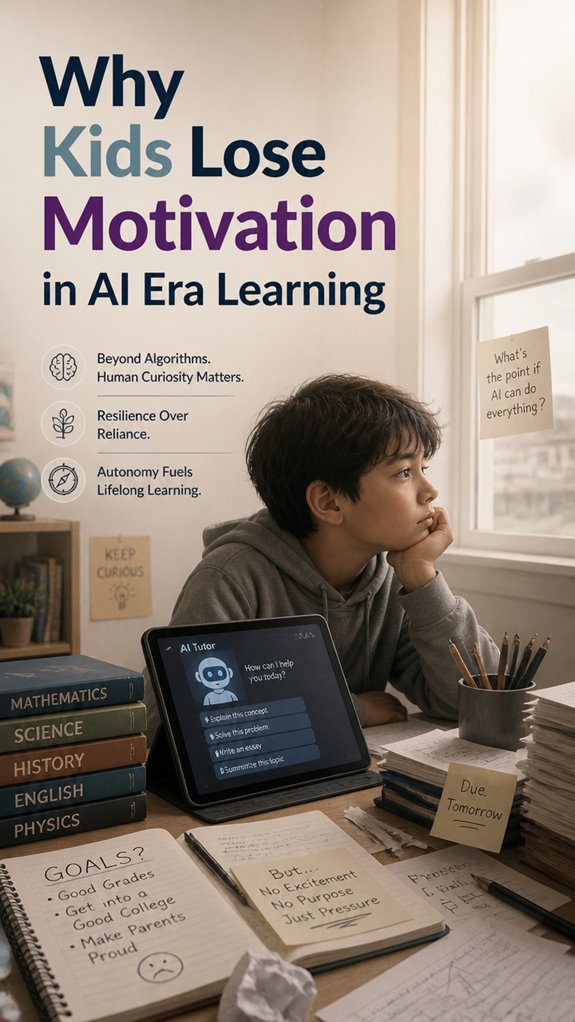

Why Your Child’s Focus Keeps Slipping Away
Is your kid’s attention span shrinking? The answer lies in digital overload. Constant notifications and visual chaos rewire young brains, weakening their ability to concentrate deeply. Self-regulation takes a hit when screens demand immediate responses every few seconds.
I watched my nephew struggle through homework last year, phone buzzing relentlessly. That moment sparked something. I realized countless parents faced this exact wall. We created Adaptive Atlas because kids deserve tools to reclaim focus in a world designed to fragment it. We document real strategies that actually stick, not theory that gathers dust.
Last Tuesday, I caught myself checking my phone seventeen times during dinner. Seventeen. My daughter mimicked the behavior perfectly. That’s when it clicked: I couldn’t preach focus while modeling distraction. We ditched phones for the meal. The conversation that followed felt revolutionary. She actually looked me in the eye. Small shift. Massive ripple effect. Now that’s our family baseline.
Quick Takeaways
- Constant notifications and app switching create cognitive overload, disrupting sustained attention and focus.
- Digital distractions, like background sounds and visual clutter, pull children’s attention away from focused tasks.
- Excessive screen time reduces neuroplasticity and weakens self-regulation abilities essential for maintaining focus.
- Surging feelings of boredom lead to impulsive scrolling and multitasking, impairing deep concentration.
- AI-driven environments and digital stimuli hijack reward pathways, making children more prone to addictive behaviors and attention drift.
How AI and Screen Time Are Changing Children’s Attention
As screens and AI tools become more integrated into daily life, many parents worry about how this affects their child’s ability to focus.
It’s true that increased screen time can lead to cognitive overload, making it harder for children to filter out distractions. This overload impacts emotional regulation, causing frustration or anxiety when attention wanes.
But instead of seeing this as a threat, view it as a signal to build systems that help children maintain clarity and calm. Focus isn’t about eliminating screens but managing how they’re used.
By cultivating habits that develop self-awareness and resilience, you can help your child navigate constant change. Long-term growth relies on creating environments where focus naturally strengthens, even amid rapid technological shifts. When children understand their sense of purpose, they’re better equipped to stay engaged with meaningful activities rather than defaulting to passive screen consumption.
This way, your child stays capable and adaptable, not overwhelmed.
Why Kids Need Productive Struggle to Build Focus and Grit
Children often resist difficult tasks, but this struggle is actually indispensable for developing focus and grit. When kids face challenges, they learn resilience training and adopt a growth mindset—believing that effort improves ability.
Children’s resistance to challenges fosters resilience and a growth mindset essential for adapting in a changing world.
This shift is crucial in a world where rapid change and AI tools require continuous adaptation. Some fear that struggle might overwhelm children or that failure damages confidence, but controlled, productive struggle builds long-term strength.
It teaches kids to stay engaged despite frustration, fostering patience and persistence. As a parent, your role is to create safe spaces for practice, encouraging effort without pressure. Learning freelancing skills early can provide practical opportunities for children to experience productive struggle in real-world contexts, building both competence and confidence.
Over time, this pattern helps children develop the focus needed to thrive amid constant change, ensuring they see obstacles as opportunities for growth rather than setbacks.
How Digital Distractions Erode Deep Focus and What You Can Do
Digital distractions can easily erode deep focus, especially when devices constantly signal for attention through notifications, updates, and alerts. For kids, this creates a constant pull away from sustained thinking and learning. It’s natural to feel worried, but you can help them regain control through simple mindfulness techniques.
Encourage sensory awareness—pausing to notice sounds, smells, and sensations—to anchor their attention. These practices strengthen focus as a skill, rather than relying on willpower alone.
Keep in mind, it’s about creating routines that develop resilience against distraction, not just banning screens. Over time, these patterns support your child’s ability to concentrate, learn deeply, and build future-ready capabilities. Exploring alternative career paths can also help kids develop focused motivation when they connect learning to meaningful goals they genuinely care about.
Your calm, consistent approach is enough to guide them toward better focus in an age of endless digital noise.
Strategies to Help Kids Rebuild Their Attention and Resilience

Building your child’s attention and resilience isn’t about quick fixes; it’s about creating routines and environments that nurture their natural ability to focus and bounce back.
Mindful mindfulness helps children develop awareness of their feelings and impulses, making them better at managing distraction and frustration.
Parental modeling is key—Inevitably, kids watch how adults handle setbacks and stay committed. When you demonstrate calmness and persistence, they learn these skills too.
Consistent, intentional habits build long-term resilience, helping your child navigate uncertainty without feeling overwhelmed.
Preparing your child’s mental framework for AI-driven changes requires the same intentional approach, helping them view technological shifts as normal aspects of growth rather than sources of anxiety.
Keep in mind, the goal isn’t perfect focus but steady growth in adaptability.
Over time, these foundational practices empower children to remain confident, capable, and prepared for a future of constant change, turning challenges into opportunities for learning.
Attention Awareness Guide for Parents
In today’s fast-changing world, attention awareness isn’t just about focusing better; it’s about helping your child develop a mindset that can navigate constant shifts and distractions. You can do this by cultivating mindfulness practices and teaching emotional regulation.
These tools help your child stay grounded, especially when faced with overwhelming digital stimuli. Understanding how stress management impacts your child’s ability to concentrate can help you better support their development.
Consider these strategies:
- Create calm, distraction-free zones at home
- Practice daily mindfulness exercises together
- Model emotional regulation through your actions
- Encourage open conversations about feelings and challenges
- Develop routines that promote reflection and self-awareness
Neuroplasticity Reduction Due to Digital Overstimulation
Even though screens are a common part of daily life, their constant use can quietly change the way your child’s brain develops. Digital overstimulation leads to a neuroplasticity decline, making it harder for children to adapt and focus. The prefrontal cortex, which governs decision-making and impulse control, shrinks with prolonged screen time. This weakens self-regulation and increases distraction. The reward system is hijacked through frequent notifications, reinforcing addictive behaviors. Memory formation suffers because constant multitasking and fragmented attention prevent long-term storage. Developing mental flexibility through intentional digital boundaries helps counteract these neurological changes and supports healthier cognitive development.
| Effect | Impact |
|---|---|
| Neuroplasticity decline | Limits brain’s ability to adapt |
| Digital overstimulation | Impairs focus and self-control |
| Reward pathway hijacking | Reinforces addictive digital habits |
| Memory disruption | Reduces memory retention |
| Default network disturbance | Causes mental fatigue |
Recognizing these patterns helps you guide your child toward healthier digital habits and a stronger, more flexible brain.
Identifying Digital Distraction Triggers

Digital distractions often catch your child off guard because they come from subtle triggers in everyday life. These impulse triggers—like notifications, quick apps, or background media—fuel digital overload, making it hard to focus.
Digital distractions sneak up through subtle triggers, fueling overload and disrupting your child’s focus.
Recognizing these helps you create space for meaningful engagement. Pay attention to these common triggers:
- Frequent device notifications that demand instant attention
- Switching between apps or tabs without pause
- Background sounds from videos or social media feeds
- Visual clutter on screens that pulls focus away
- Surging feelings of boredom that lead to impulsive scrolling
Understanding these triggers can also help you initiate calm discussions about AI with your children as they navigate an increasingly digital world.
The Adaptive Atlas Anti-Fragile Child System
Children face a world full of unpredictable changes, which can feel overwhelming for parents trying to prepare them. That’s where the Adaptive Atlas Anti-Fragile Child System comes in. It helps kids build resilience through mindful observing and emotional regulation. You focus on supporting their ability to stay engaged under pressure, grow from setbacks, and stay curious despite chaos. The system strengthens children’s capacity to not merely endure adversity but to use antifragility as a framework for turning challenges into opportunities for growth.
| Awareness | Response | Growth |
|---|---|---|
| Recognize feelings | Practice calming techniques | Build emotional strength |
| Notice triggers | Model self-regulation | Cultivate self-awareness |
| Stay present | Encourage reflection | Foster adaptability |
| Embrace challenge | Support recovery | Create resilience |
This system shifts how you see parenting — from control to cultivation of flexibility, empowering your child’s future within constant change.
The Full Adaptive Atlas Framework
Parents often worry that rapid AI changes will leave their kids behind in an unpredictable job market. You don’t need to fear this—build cognitive resilience and emotional agility instead.
The Full Adaptive Atlas Framework frees you from outdated linear paths, giving your child a system to thrive amid constant flux.
Here’s the connected five-layer flow that equips them for lifelong leverage:
- Anti-Fragile Child System: Builds grit to handle uncertainty, like Nassim Taleb’s antifragility.
- Learning Stack Model: Fuels self-directed skills that evolve with AI.
- Future Skill Stack: Targets irreplaceable traits like critical thinking.
- AI Learning System: Turns tools into amplifiers, not crutches.
- Child Type Navigator: Tailors it all to your kid’s unique wiring.
This framework restores your control, ensuring they adapt and create value forever.
The Adaptive Atlas Framework
Five connected systems designed to help parents raise adaptable, future-ready children in a world shaped by AI, automation, and constant change.
| 🛡️ |
Anti-Fragile Child SystemBuilds resilience, adaptability, and the ability to handle uncertainty without shutting down. |
| 📚 |
Learning Stack ModelDevelops self-directed learning habits and continuous skill acquisition beyond school systems. |
| 🚀 |
Future Skill Stack SystemFocuses on high-value human skills that remain relevant in an AI-driven economy. |
| 🤖 |
AI Learning SystemTeaches children how to use AI as a thinking partner instead of becoming dependent on it. |
| 🧭 |
Child Type Navigator SystemPersonalizes learning and development based on each child’s strengths and personality. |
FAQ
How Does AI Impact Children’s Long-Term Cognitive Development?
AI influences your child’s neuroplasticity development and executive function growth by providing adaptive learning tools, fostering independence, and encouraging critical thinking. This empowers them to shape their cognition and thrive amid continuous change and technological evolution, promoting liberated growth.
Can Digital Distractions Be Fully Eliminated From Children’s Environments?
You can’t fully eliminate digital distractions like screen addiction and tech dependence, but you can design environments that foster independence, resilience, and focus. Empower your child to manage technology consciously, gaining freedom from its grip in a thriving, future-ready way.
What Role Do Parents Play in Shaping Kids’ Attention Skills?
You shape your kid’s attention skills through intentional parental influence by engaging in attention training. By fostering mindful practices and guiding focus, you empower them to develop resilience, adaptability, and focus amidst a world full of distractions and rapid change.
Are There Specific Activities Proven to Improve Sustained Focus in Kids?
Envision opening a hidden garden within your child’s mind, cultivated through mindfulness exercises and outdoor adventures. These activities serve as keys, freeing kids from distraction’s grip and nurturing sustained focus amidst chaos’s wild, vibrant scenery.
How Do Individual Differences Affect Children’s Responses to Digital Overstimulation?
You see, individual variability and sensory sensitivity shape how children respond to digital overstimulation, so you can liberate them by tailoring their environment—reducing noise and screens—to match their unique sensory needs, fostering calm and focus.
References
- https://racheldines.substack.com/p/generative-ai-hurts-kids-ability-to-learn
- https://fortune.com/2025/11/18/we-lost-our-kids-to-social-media-now-ai-gen-z/
- https://www.childrenandscreens.org/learn-explore/research/ais-impact-on-childrens-social-and-cognitive-development-ying-xu-phd/
- https://humanintelligencemovement.org/human-centered-ai/the-future-of-child-development-in-the-ai-era/
- https://www.gse.harvard.edu/ideas/edcast/24/10/impact-ai-childrens-development
- https://www.technewsworld.com/story/our-children-are-not-ready-a-generational-crisis-in-the-age-of-ai-179887.html
- https://netpsychology.org/neuroplasticity-and-internet-use-brain-rewiring/
- https://www.tbsnews.net/thoughts/digital-influence-neuroplasticity-881701
- https://pmc.ncbi.nlm.nih.gov/articles/PMC7366944/
- https://www.iiis.org/CDs2025/CD2025Spring/papers/ZA620FU.pdf