Can Kids Actually Own Their Future in an AI World?
Yes, but it takes deliberate action. Kids need responsibility, emotional resilience, and critical thinking to navigate AI confidently. They must evaluate content ethically and treat setbacks as fuel for growth.
Why We Built Adaptive Atlas
Last year, I watched my nephew scroll through AI-generated content without questioning its source. That moment stung. He wasn’t equipped to think critically about algorithms shaping his worldview. So we launched Adaptive Atlas. It’s a resource hub designed to help parents and educators give kids genuine agency. Not fake empowerment. Real tools for real consequences.
The Moment That Changed Everything
I sat with a ten-year-old who’d created her first AI project. She stopped mid-sentence and asked, “But is this actually mine?” That question demolished me. She understood ownership meant understanding her role in the process. That’s when everything shifted for how we approach this work.
Quick Takeaways
- Foster responsibility and accountability through consistent habits, reflection, and transparent decision-making.
- Develop emotional literacy and resilience to navigate setbacks and remain adaptable to change.
- Teach critical thinking about AI ethics, privacy, bias, and the influence of AI on opinions.
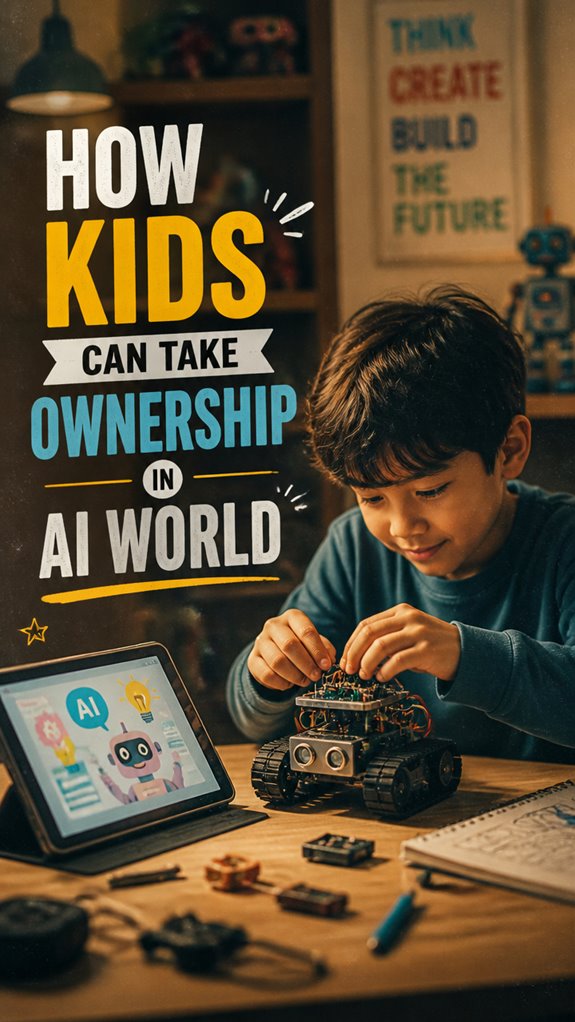
- Encourage ownership by empowering kids to explore, question, and responsibly use AI tools and content.
- Promote future-focused skills like adaptability, growth mindset, and ethical awareness to thrive in an AI-driven world.
Why Teaching Personal Responsibility Is Critical in an AI-Dominated Future
In an AI-dominated future, teaching your child personal responsibility becomes more important than ever. As automation and intelligent systems reshape work and daily life, developing their autonomy is key.
When you focus on fostering emotional literacy, your child learns to navigate complex feelings and situations confidently. This isn’t about controlling every outcome but about empowering them to take ownership of their choices and actions.
Fostering emotional literacy empowers children to confidently navigate feelings and take responsibility for their actions.
Fear about losing control is natural, but by building resilience and self-awareness, you give your child a sturdy foundation to adapt. Long-term, this creates capable, flexible individuals who can handle uncertainty without feeling overwhelmed.
Responsibility becomes a way to access their potential, turning challenges into opportunities for growth and independence, essential skills in a constantly changing world. By understanding how AI enhances learning abilities, children can leverage these tools to develop critical thinking skills that complement their growing sense of autonomy.
How to Help Kids Recognize and Own the Impact of Their Actions
Helping kids recognize and own the impact of their actions starts with creating space for reflection. When you encourage them to pause and think about how their choices affect others and the environment, you build emotional intelligence. Use questions like, “How did that decision feel?” or “Who else was affected?” to foster awareness.
Introducing collaborative decision making also helps kids see their role as part of a larger system. Here’s a simple chart to guide your conversations:
| Reflection | Empathy | Action |
|---|---|---|
| What happened? | How did it affect others? | What can I do differently? |
This approach turns responsibility into a tool for freedom, empowering your child to shape their future with awareness and confidence.
Fostering Confidence and Ownership Through Responsible Parenting
Fostering confidence and ownership in your child begins with creating a steady foundation of responsible parenting—where your actions model reliability, empathy, and consistency. Trust building is essential here. When your child sees you follow through on promises and listen without judgment, they develop a sense of safety and trust in themselves.
Emotional regulation is also vital; guiding your child to understand their feelings helps them manage stress and setbacks with resilience. Instead of reacting out of fear, approach challenges as opportunities for growth.
This consistent, calm guidance teaches your child that they can handle uncertainty, shaping their ability to take responsibility for their actions. Over time, this builds the confidence needed to navigate a rapidly changing world with purpose and ownership. Developing future-ready skills alongside emotional resilience ensures your child can adapt to new technologies and evolving workplace demands with both competence and self-assurance.
Teaching Kids to Evaluate AI Content Critically and Ethically
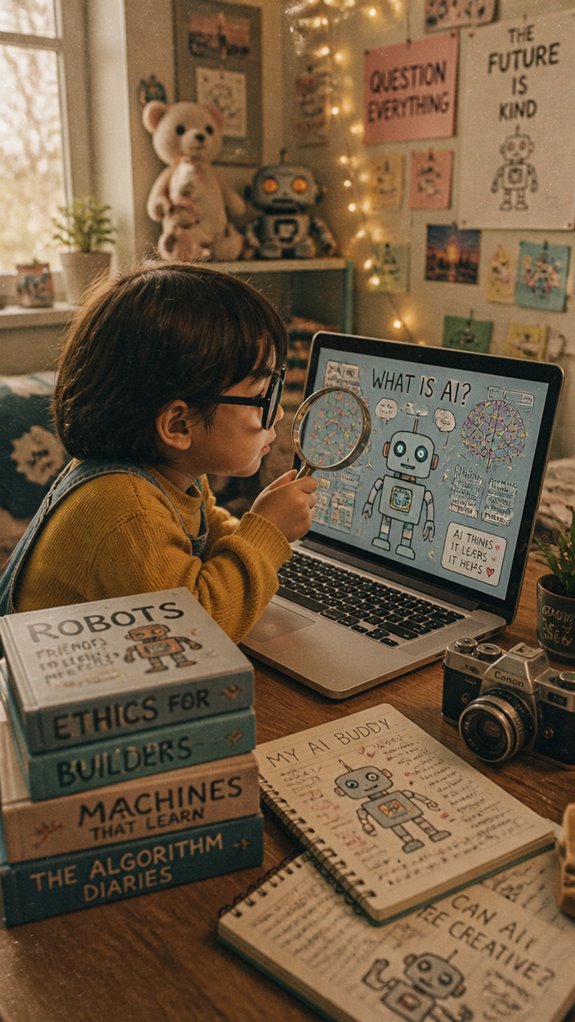
As AI becomes more integrated into everyday life, teaching your kids to evaluate AI-generated content thoughtfully and ethically is more important than ever.
Kids need to understand algorithm ethics—how algorithms are designed and who controls them—and the importance of data privacy.
Many children hear about AI’s powers but don’t realize how bias or misuse can influence what they see and believe.
Instead of fearing these issues, you can help them develop a critical eye by asking questions: Who created this? What data was used? Is it fair or biased?
Teaching these skills prepares them to navigate a world where AI shapes opinions, values, and choices.
It’s about building awareness and responsibility, so your children can think independently and advocate for ethical AI use long-term. Starting with foundational ethics concepts at an early age helps establish these critical thinking habits before they encounter more complex AI applications.
Strategies to Build Resilience in Kids Facing Rapid Change
In a world that changes rapidly, building resilience in your child isn’t about preparing for a specific challenge but developing a mindset that adapts to uncertainty. Focus on mindset shifting and emotional literacy, so your child learns to see change as an opportunity rather than a threat.
Help them understand that setbacks and failures are part of growth, fostering confidence and adaptability. By embracing antifragile principles, you teach your child that stressors and challenges can actually strengthen their ability to thrive.
Setbacks and failures are essential steps in growth, building your child’s confidence and ability to adapt creatively.
Practically, you can:
- Encourage reflection on experiences to build emotional awareness
- Promote a growth mindset that values effort over perfection
- Reinforce the idea that change brings new possibilities and learning opportunities
Practical Parenting Tips for Cultivating Responsibility and Ethical Thinking
Helping your child develop a strong sense of responsibility and ethical thinking begins with shaping everyday interactions that model these values consistently. Focus on teaching digital ethics, like respecting privacy and understanding the impact of sharing information.
Discuss how choices online and offline affect others and the environment, fostering empathy and accountability. To support future independence, encourage your child to reflect on their actions and make decisions aligned with integrity. The Digital Opportunity Explorer Toolkit provides practical frameworks for helping kids experiment with new digital opportunities while maintaining ethical boundaries.
Keep in mind, your example is powerful—show responsibility in your own tech use. Reframe fears about AI replacing human qualities by emphasizing collaboration and critical thinking.
Empirical Studies on Student Accountability
Empirical research on how students stay accountable while using AI tools is still emerging, but what we know offers useful guidance. While high-quality empirical validation remains limited, some patterns have appeared.
Emerging research highlights key patterns in student accountability and responsible AI use, despite limited high-quality validation.
- Accountability metrics can track how students monitor their understanding, choose strategies, and reflect on AI interactions. Vendors should be scrutinized for track record and ethical considerations, which can inform the development of effective accountability tools. Studies show that AI’s role in developing metacognitive skills depends on explicit support and feedback.
- Parents and teachers can shape responsible AI use by involving students in decision-making, encouraging transparency, and creating checks and balances. Understanding value creation in modern economy helps students see how their learning choices today connect to their economic contributions tomorrow.
These perspectives help you understand that accountability isn’t about perfect control but about building habits. Clear metrics and systems foster long-term skills, ensuring your child navigates the changing AI world confidently—and with integrity.
Overcoming Resistance to Change
Change often feels uncomfortable because it challenges our routines and beliefs about stability. Cultural norms shape our expectations, making behavioral shifts seem threatening. Kids may resist learning new skills or adapting because it feels unfamiliar or risky. But this resistance isn’t a barrier—it’s an opportunity. Understanding attention challenges today can help parents and educators recognize that resistance often stems from cognitive overload rather than simple stubbornness.
| Resistance Sources | Practical Reframes |
|---|---|
| Fear of failure | Emphasize that mistakes are part of growth. |
| Comfort with routines | Highlight long-term benefits of adaptability. |
| Social pressure | Encourage exploration and independent thinking. |
| Doubt about ability | Build confidence through small wins. |
Ownership Skills Toolkit for Kids
– Building resilience by embracing failure as part of growth, helping kids adapt and persist. Children can develop stronger ownership skills by implementing a mistake learning system that transforms setbacks into valuable learning experiences.
Teaching Resilience in Uncertain Futures
In a world where uncertainty is the only constant, teaching resilience isn’t about preparing your child for a specific future—it’s about helping them adapt and thrive regardless of what’s ahead.
Emotional agility is key; it means teaching children to recognize and manage their feelings, so setbacks don’t overwhelm them. Developing stress management skills early helps children build the emotional foundation they need to handle life’s challenges effectively.
Teaching children emotional agility helps them manage feelings and face setbacks with resilience.
A growth mindset encourages them to see failure as an opportunity to learn, not as a threat.
When children develop these skills, they gain confidence in their ability to face change and uncertainty.
Instead of fearing the unknown, they learn to navigate it with calm and clarity.
The Adaptive Atlas Anti-Fragile Child System
Building resilience isn’t just about bouncing back from setbacks; it’s about developing a foundation that lets your child stay engaged and grow through uncertainty. The Adaptive Atlas Anti-Fragile Child System helps children build moral autonomy and a growth mindset, empowering them to face change confidently.
Instead of shying away from difficulty, they learn to stay curious, reflect on challenges, and adapt effectively. An anti-fragile approach means your child doesn’t just survive disruption—they gain strength and capability from navigating uncertainty.
- Develop independence in decision-making
- Cultivate flexibility in thinking and learning
- Encourage continuous self-improvement
These practices create a sense of control and purpose, giving your child a clear path forward. The goal isn’t perfection but resilience—so they can thrive amid constant change, shaping their own future with confidence and new capabilities.
The Adaptive Atlas Framework
Five connected systems designed to help parents raise adaptable, future-ready children in a world shaped by AI, automation, and constant change.
| 🛡️ |
Anti-Fragile Child SystemBuilds resilience, adaptability, and the ability to handle uncertainty without shutting down. |
| 📚 |
Learning Stack ModelDevelops self-directed learning habits and continuous skill acquisition beyond school systems. |
| 🚀 |
Future Skill Stack SystemFocuses on high-value human skills that remain relevant in an AI-driven economy. |
| 🤖 |
AI Learning SystemTeaches children how to use AI as a thinking partner instead of becoming dependent on it. |
| 🧭 |
Child Type Navigator SystemPersonalizes learning and development based on each child’s strengths and personality. |
FAQ
How Can Parents Effectively Introduce AI Literacy at a Young Age?
You can introduce AI literacy early by making AI accessible through playful exploration, fostering creativity enhancement, and encouraging curiosity. Let kids experiment with AI tools, helping them see technology as a liberating force for innovative thinking.
What Are Practical Ways to Measure a Child’s Sense of Ownership Over Time?
You can track ownership development by observing your child’s initiative, resilience, and motivation strategies. Encourage reflection on challenges faced, fostering independence and self-awareness, which reveals how deeply they internalize responsibility and actively shape their growth trajectory.
How Do Cultural Differences Impact Teaching Responsibility in an AI Context?
You might think cultural differences hinder responsibility, but embracing diverse values and ethical outlooks truly liberates children, empowering them to navigate AI with confidence. Celebrate varied beliefs to foster responsible, adaptable explorers in our changing world.
What Role Do Peer Interactions Play in Developing Ownership and Resilience?
Peer influence and social dynamics ignite your child’s ownership and resilience, empowering them to navigate change confidently. By engaging authentically with peers, they build shared responsibility, learn adaptability, and harness collective strength to thrive amid developing AI-driven worlds.
How Can Children’s Unique Learning Styles Be Integrated Into Ai-Enabled Education?
You can integrate children’s unique learning styles through personalized learning, enabling adaptive feedback that respects their preferences. This approach liberates them to explore, adapt, and grow at their own pace, fostering autonomy and confidence in an AI-enhanced environment.
References
- https://conniealbers.com/what-still-matters-for-kids-in-an-ai-world/
- https://oxfordlearning.com/9-ways-to-help-kids-navigate-the-world-of-ai/
- https://washingtonstand.com/article/raising-children-for-an-ai-world
- https://www.gse.harvard.edu/ideas/edcast/24/10/impact-ai-childrens-development
- https://spielgaben.com/how-your-childs-first-5-years-will-determine-their-success-in-an-ai-dominated-future/
- https://fordhaminstitute.org/national/commentary/accountability-will-be-bedrock-ai-education
- https://scale.stanford.edu/research-in-action/understanding-evidence-base-ai-k12-education
- https://pmc.ncbi.nlm.nih.gov/articles/PMC11830699/
- https://www.frontiersin.org/journals/education/articles/10.3389/feduc.2024.1470979/full
- https://er.educause.edu/blogs/2020/7/artificial-intelligence-and-ethical-accountability