Want Your Child’s Brain to Actually Stay Organized?
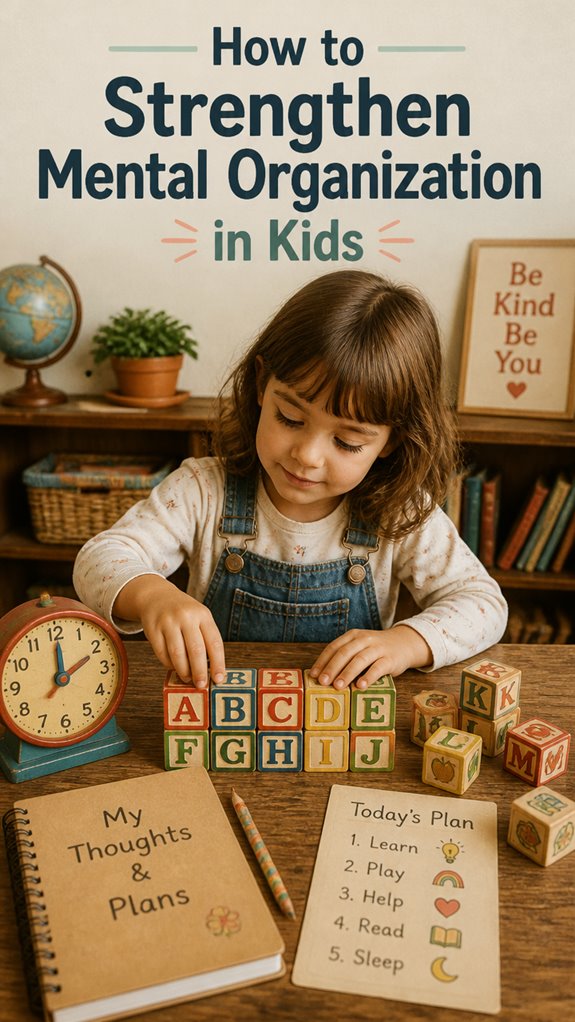
Build routines that stick. Foster resilience through consistent habits. Encourage activities developing working memory and cognitive flexibility like storytelling, puzzles, or mindfulness. Skip quick fixes. Long-term systems and patience transform how kids manage complexity.
How One Child’s Sticky Note System Changed Everything
My daughter couldn’t track her assignments. Color-coded chaos consumed her backpack. Then we discovered something: visual systems work. She started using sticky notes for daily tasks. Her confidence soared. That’s when I realized we needed Adaptive Atlas. Parents deserve tools that actually teach mental organization, not just promise it. We created this resource so families could access proven methods without the guesswork.
The Morning That Proved Flexibility Matters
Last Tuesday, my son’s routine crumbled when his school changed dismissal times. Instead of spiraling, he adapted. He’d practiced flexible thinking through our puzzle sessions. He problem-solved independently. That single moment showed me resilience isn’t about rigid systems. It’s about equipping kids to navigate unpredictability with confidence.
Quick Takeaways
- Establish consistent routines to reinforce organization and promote long-term executive function skills.
- Use engaging activities like puzzles, storytelling, and mindfulness to boost memory, flexibility, and focus.
- Encourage creative thinking and problem-solving to develop resilience and cognitive adaptability.
- Promote digital awareness and responsible online habits to support situational judgment and self-regulation.
- Foster emotional resilience through calm environments and reflective practices to enhance mental clarity and flexibility.
Why Working Memory Matters for Your Child’s Organization and Focus
Working memory is a vital mental skill that often gets overlooked, but it’s essential for your child’s ability to stay organized and focused. It helps them hold information in their mind long enough to make decisions, follow instructions, or solve problems.
When working memory is strong, your child gains mental clarity; they see connections more easily and can manage complex tasks with confidence. Many parents worry about their children struggling with focus, but understanding how to support working memory shifts the focus to building resilience.
It’s about creating systems that help your child practice holding and managing information, which in turn fosters adaptability for the future. Strengthening this skill isn’t about quick fixes, but about establishing routines that cultivate long-term mental agility. By learning to read and interpret data about your child’s learning progress, you can identify patterns in their working memory performance and adjust your support strategies accordingly.
Easy At-Home Strategies to Boost Your Child’s Executive Skills
Strengthening your child’s executive skills begins at home with practical routines that cultivate organization, focus, and decision-making. By creating consistent daily patterns, you help your child develop emotional resilience, teaching them how to handle setbacks calmly and recover quickly.
Encourage social skills by guiding their interactions, helping them build empathy and collaboration—key abilities for future relationships. Keep in mind, it’s normal to worry about the long-term, but your role is to foster environments where these skills grow naturally.
Simple strategies like establishing clear expectations, practicing mindful pauses, and modeling effective communication reinforce systems of reliable behavior. These routines empower your child to navigate uncertainty confidently, setting a foundation for resilience and adaptability that will serve them throughout their life. Consider incorporating digital project creation as a hands-on method to strengthen their organizational thinking and planning capabilities.
Science-Backed Activities to Improve Memory and Cognitive Control
Even though it’s natural to worry about your child’s future, there are proven activities that can boost memory and cognitive control now, helping them build strong mental habits for tomorrow. Activities that promote memory consolidation strengthen neural pathways, making learning more efficient. For example, engaging in regular review sessions or storytelling helps transfer information from short-term to long-term memory. Also, activities like puzzle-solving or memory games boost neural plasticity—the brain’s ability to adapt and rewire. When children develop prioritization skills, they learn to organize their thoughts and decide which tasks deserve their attention first, laying the groundwork for effective mental organization.
| Activity | Benefit |
|---|---|
| Repetition & recall | Reinforces memory pathways, improves retention |
| Storytelling | Enhances memory consolidation and understanding |
| Puzzles & games | Stimulate neural plasticity and problem-solving skills |
| Mindfulness & meditation | Support focus, reduce distraction, improve control |
| Learning new skills | Build cognitive flexibility and resilience |
These activities ground your child’s future in systems that promote sustained growth, not fleeting tricks.
Neuroscience Insights on Cognitive Flexibility
Understanding how children develop the ability to adapt to new situations is key to supporting their growth. Neuroscience shows that cognitive flexibility depends on neural pathways strengthening through experience. Research indicates that assessments like the Flexibility Scale can help identify individual differences in flexibility abilities. As children face different challenges, their brain’s synaptic efficiency improves, making it easier to shift thoughts and actions. This process starts early—by about 6 months, children begin to develop routines that help manage change. When you practice activities like switching tasks or reflecting on mistakes, you’re helping build these pathways. Parents and educators can support this development by using flexible goal adjustment strategies that allow children to modify their plans as circumstances evolve. It’s important to see flexibility not as a fixed trait but as a skill that improves with intentional practice.
Overcoming Attention Span Struggles
Many parents worry that their children simply can’t focus long enough to learn and grow in today’s busy world. It’s understandable to feel frustrated when attention seems fleeting.
But instead of seeing this as a problem, view it as an opportunity to build emotional resilience. When kids learn to manage their feelings and stay calm, they develop stronger focus naturally.
Mindfulness practices are a practical tool here—brief breathing exercises or simple meditation can anchor attention, reduce stress, and foster self-awareness. As knowledge work evolves, children need these foundational skills to adapt to changing learning environments and manage information overload.
Over time, these habits help children stay engaged, recover quickly from distraction, and approach challenges with confidence.
Recall, attention span isn’t fixed. It’s a pattern you can shape through consistent, supportive systems that prioritize well-being, adaptability, and long-term growth.
Mental Organization Toolkit for Kids
Building a strong mental organization toolkit for kids isn’t about perfecting every detail right away; it’s about creating reliable systems that children can learn to use consistently. Focus on simple organizational routines that can become habits, providing a steady foundation for independent thinking. Memory techniques help kids retain important information effortlessly, freeing mental space for creativity and problem-solving. Developing structured thinking habits early allows children to approach complex tasks with greater confidence and clarity. Here’s a helpful table:
| Memory Techniques | Organizational Routines |
|---|---|
| Repetition | Daily checklists |
| Visualization | Set times for tasks |
| Chunking | Clear, consistent schedules |
| Mnemonics | Prioritized to-do lists |
These tools foster confidence, reduce overwhelm, and prepare children for a future where adaptability and clarity are essential. Systems, not shortcuts, build resilience and long-term capability.
Creative Problem-Solving Strategies
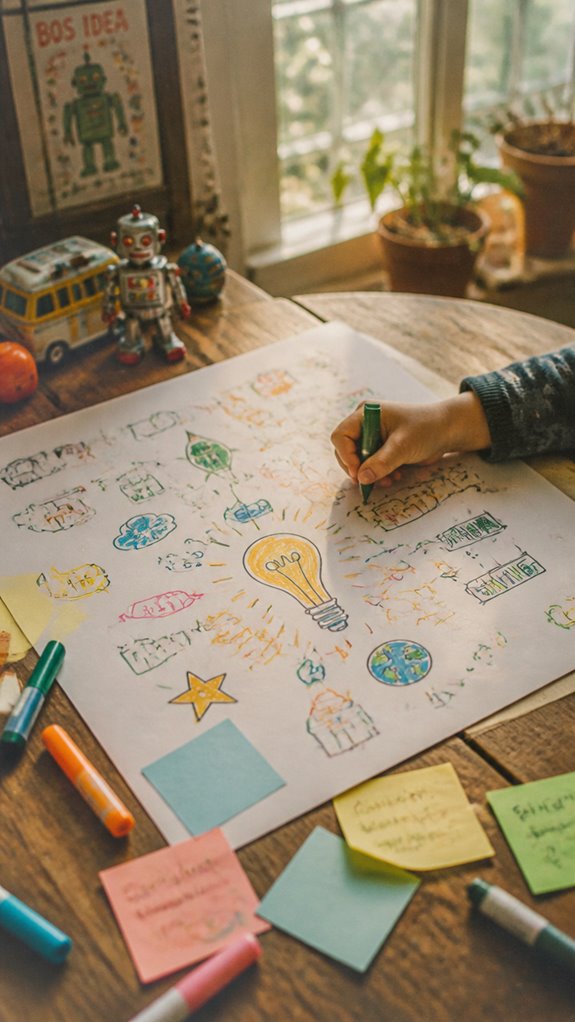
Creative problem-solving is an essential skill in a world that’s constantly changing, and it’s something you can actively nurture in your child. By encouraging creative brainstorming, you help them tap into their innate ability to generate ideas and explore solutions freely.
When kids practice brainstorming, they develop a mindset where innovation sparks naturally, leading to new ways of approaching challenges. This process teaches children to see problems as opportunities, a viewpoint critical for future success.
Remember, it’s normal to worry about their ability to adapt, but focusing on building their capacity for creative thinking creates a foundation that’s resilient. As they develop these skills, it’s equally important to guide them in understanding how their online choices and digital footprint contribute to their overall online reputation.
Steady, intentional support helps your child develop long-term skills—flexibility, curiosity, and confidence—that prepare them to navigate and create within an ever-evolving world.
The Adaptive Atlas Anti-Fragile Child System
| Capacity | Focus | Outcome | Approach | Key Benefit |
|---|---|---|---|---|
| Emotional Resilience | Recovery | Confidence | Challenge & Support | Future readiness |
| Neuroplasticity | Adaptability | Skill growth | Repetition & Reflection | Long-term growth |
The Anti-Fragile Child System strengthens mental organization by helping children not just withstand challenges, but grow stronger through them.
The Adaptive Atlas Framework
Five connected systems designed to help parents raise adaptable, future-ready children in a world shaped by AI, automation, and constant change.
| 🛡️ |
Anti-Fragile Child SystemBuilds resilience, adaptability, and the ability to handle uncertainty without shutting down. |
| 📚 |
Learning Stack ModelDevelops self-directed learning habits and continuous skill acquisition beyond school systems. |
| 🚀 |
Future Skill Stack SystemFocuses on high-value human skills that remain relevant in an AI-driven economy. |
| 🤖 |
AI Learning SystemTeaches children how to use AI as a thinking partner instead of becoming dependent on it. |
| 🧭 |
Child Type Navigator SystemPersonalizes learning and development based on each child’s strengths and personality. |
FAQ
How Can I Tailor Organizational Strategies to My Child’s Unique Learning Style?
You can tailor organizational strategies by applying personalized techniques that match your child’s learning preferences, empowering them to take ownership. This approach fosters independence, agility, and confidence, helping them navigate change with adaptability and a sense of liberation.
What Signs Indicate My Child Needs Professional Cognitive or Behavioral Support?
You might notice your child’s impulsivity feels like a wild stallion, making emotional regulation difficult. If they struggle to manage feelings or their impulsive actions cause distress, seeking professional support can help harness their energy effectively.
How Do Environmental Factors Impact a Child’s Ability to Stay Mentally Organized?
Environmental influences and lifestyle factors shape your child’s mental organization by affecting focus, routines, and stress levels. Creating supportive, structured surroundings and balanced habits empower your child to develop resilience and stay organized amidst life’s chaos.
Can Technology or Apps Replace Traditional Memory Aids for Kids?
Like a key opens a door, digital tools can effectively replace traditional memory aids, offering dynamic memory enhancement. You can liberate kids from rote memorization—empowering them to think critically and adaptively in a rapidly developing world.
What Long-Term Benefits Does Strengthening Mental Organization Provide Beyond School?
Strengthening mental organization boosts your child’s skill development, fostering independence, problem-solving, and resilience beyond school. It offers benefits like better decision-making, reduced stress, and empowered adaptability, liberating them to navigate life’s challenges confidently and proactively.
References
- https://www.thethinkacademy.com/blog/edubriefs-executive-function-skills-for-kids-memory-organization-and-time/
- https://www.kutestkids.com/blog/how-to-improve-your-child-s-organization-skills-through-therapy
- https://www.usmc-mccs.org/news/build-your-kid-s-mental-strength
- https://pmc.ncbi.nlm.nih.gov/articles/PMC4200392/
- https://childmind.org/article/helping-kids-who-struggle-with-executive-functions/
- https://www.childrenshopealliance.org/archives/26559
- https://www.chkd.org/patient-family-resources/our-blog/10-tips-to-building-mental-wellness-in-kids-and-teens/
- https://www.kidsmentalhealthfoundation.org/mental-health-resources/relationships/intentional-child-time
- https://prosolutionstraining.com/resources/articles/5-tips-to-implement-childrens-mental-health-supportive-strategies-.cfm
- https://www.childrensnational.org/about-us/newsroom/2017/first-single-assessment-to-capture-childrens-cognitive-and-social-flexibility