How Do Kids Build Learning Habits That Stick?
Simple routines plus consistent practice create independent learners. Daily reading, problem-solving activities, and games strengthen focus while praise for effort builds resilience. Neuroscience confirms repetition and small wins cement habits permanently into young brains.
A Parent’s Breakthrough Moment
My daughter refused math worksheets until I discovered Adaptive Atlas. This platform adjusts difficulty based on her actual performance, not frustration level. Watching her tackle increasingly complex problems without meltdowns transformed everything. We built Adaptive Atlas because traditional learning feels punitive. Kids deserve systems that celebrate progress, not penalize struggle. Now she asks for math time instead of hiding her homework.
When Consistency Finally Clicked
Last Tuesday, my son completed five consecutive days of independent reading without reminding. He marked his calendar, chose his books, tracked pages. That small win shifted something. He stopped seeing learning as my demand and started owning it. That’s the entire game right there.
Quick Takeaways
- Establish simple, consistent routines that encourage independent learning and integrate project-based activities for real-world relevance.
- Use fun, active, and sensory strategies like games, storytelling, and movement to boost engagement and memory retention.
- Foster a growth mindset by praising effort, encouraging reflection, and embracing challenges to build resilience and self-motivation.
- Create a supportive, distraction-free environment with organized routines and progress trackers to promote focus and confidence.
- Leverage AI tools and neuroscience insights to develop adaptive habits that enhance curiosity, problem-solving, and long-term skill development.
Set Up Easy Learning Routines for Kids
Creating simple, consistent learning routines for your child might seem small, but it’s a powerful way to build their ability to learn independently in a world that’s constantly changing.
Simple, consistent routines foster independent learning and build confidence in a constantly changing world.
Strong learning environments, supported by your active involvement, give children a sense of stability and control. Instead of overwhelming them with every detail, focus on establishing clear, manageable routines—like dedicated reading or problem-solving moments each day.
Consistency helps children internalize these habits, making learning feel natural rather than forced. Remember, your influence shapes their confidence and resilience, essential skills for steering through uncertainty.
This structure isn’t about perfection; it’s about creating a reliable foundation where curiosity and growth can flourish. Through steady routines, you empower your child to adapt and thrive long-term. Project-based learning approaches can deepen this foundation by encouraging children to engage with real-world problems that sustain their curiosity beyond structured lesson time.
Use Fun, Active Strategies to Boost Engagement and Memory
Using fun and active strategies to engage your child isn’t just about keeping them entertained; it’s a powerful way to help them recall and apply what they learn.
When you incorporate movement, play, and mindful reflection into learning, your child develops emotional resilience—learning to stay calm and focused amid challenges.
Games that require problem-solving or physical activity boost memory by activating different parts of the brain. Activities like storytelling or role-play deepen understanding and foster long-term retention.
These strategies also encourage kids to reflect on their progress, building awareness and confidence.
Effective learning systems integrate multiple sensory experiences that help children process information more deeply and retain it across different contexts. Instead of fearing constant change, you can use engaging, active methods to embed learning into their everyday routines, reinforcing their ability to adapt, think critically, and thrive in a dynamic future.
Help Kids Take Charge: Building Independence and Responsibility
Helping your child take charge of their own choices might seem challenging at first, but it’s one of the most powerful skills for their future. Autonomy development and responsibility cultivation aren’t about pushing them to act blindly but about guiding them to understand their role in decision-making.
Empowering children with decision-making skills builds confidence and resilience for a future of independence.
When you encourage your child to take ownership, you’re building their confidence and resilience—key traits that will serve them in an unpredictable world. This isn’t about removing your guidance but about creating space for independence.
Start by giving small, manageable choices and trusting their judgment. Over time, they learn to analyze options, accept setbacks, and develop a sense of responsibility that’s rooted in understanding their impact. Incorporating safe AI activities into their learning journey can further enhance their problem-solving skills while building confidence in navigating technology responsibly.
This process shapes children who are adaptable, capable, and prepared for long-term challenges.
Grow a Positive Learning Mindset for Long-Term Success
A positive learning mindset can seem like a soft skill, but it’s actually the foundation for your child’s long-term success in a changing world. Cultivating a growth mindset helps children see effort as a path to mastery and failure as a chance to learn.
To foster this:
- Encourage intrinsic motivation by focusing on their curiosity and passion.
- Celebrate progress, not just achievement, reinforcing that effort pays off.
- Model resilience and curiosity in your own actions, demonstrating that learning is lifelong.
This mindset builds confidence and adaptability, key for steering through uncertainty. It shifts their outlook from fear of failure to opportunities for growth. Problem solving skills are essential to developing this resilience, as they teach children to approach obstacles as solvable challenges rather than dead ends.
Keep in mind, you’re shaping their ability to learn independently and stay motivated through challenges—skills that will serve them well into the future.
Emerging Ai-Driven Skill Frameworks
Amid rapid technological change, understanding emerging AI-driven skill frameworks is essential for guiding your child’s development. These frameworks focus on AI collaboration and skill adaptability, helping kids thrive in uncertain futures. Instead of fearing automation, you can see AI as a partner that amplifies their thinking and problem-solving abilities.
| Skill Focus | Meaning for Your Child |
|---|---|
| AI Collaboration | Learning to work with AI tools for smarter decision-making. |
| Problem Framing | Developing the ability to define and approach complex challenges. |
| Flexibility and Adaptability | Building resilience to change and staying relevant over time. |
These frameworks empower your child to leverage technology confidently, ensuring they remain capable and adaptable, no matter what the future holds.
Neuroscience of Habit Formation
Understanding how habits form in the brain can help you guide your child’s behavior in a way that’s both effective and reassuring. Habit formation happens through neural pathways—these are the connections in the brain that strengthen with repetition.
When your child practices routines, their brain builds these pathways, making actions more automatic. To foster healthy habits, consider these points:
- Repetition reinforces neural pathways, helping habits become subconscious.
- Habit reinforcement occurs through dopamine release, rewarding consistent behavior.
- The basal ganglia takes over from the prefrontal cortex as routines automate, conserving mental energy.
Building these foundational habits early prepares children with future-ready skills that will serve them throughout their academic and professional lives.
Overcoming Procrastination Effectively
Procrastination doesn’t signal laziness—it’s often an emotional response to frustration or overwhelm, as researcher Piers Steel’s meta-analysis of 800 studies confirms.
You fear it derails your child’s future, but reframe it: master emotional regulation now, and they command their path amid change.
Start with task clarity—break assignments into small steps, set clear expectations, and link them to real goals. This cuts overwhelm, builds momentum. Posting chore lists on the refrigerator helps children remember responsibilities and fosters accountability.
Guide them to spot frustration triggers, breathe through it, and rehearse success mentally. When selecting which self-directed learning approaches work best, refer to future skill selection frameworks that align with your child’s strengths and interests.
Create a distraction-free zone with routines and visible trackers.
Praise effort, not smarts, to forge resilience. These systems turn avoidance into power, equipping your child to conquer ambiguity and self-direct learning for life.
Self Learning Habit Builder
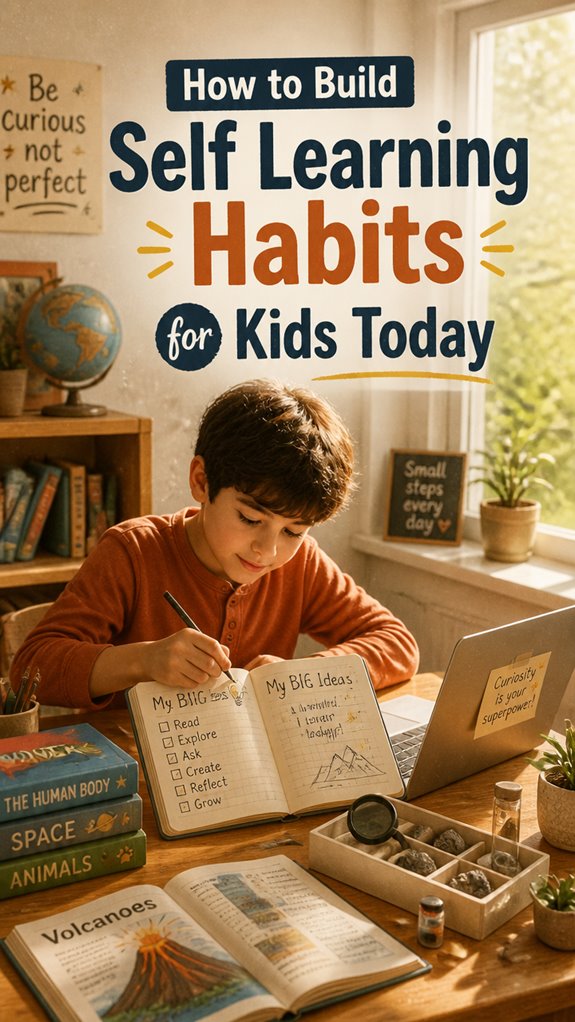
Building a self-learning habit for your child starts with helping them develop the mindset and routine to seek out knowledge independently. To do this, focus on three key areas:
1. Habit evolution: Encourage small, consistent steps.
As these grow, they reinforce the desire to learn and adapt, building resilience and confidence.
2. Motivation triggers: Identify what sparks your child’s curiosity—projects, questions, or real-world problems.
Using these triggers keeps learning meaningful and driven by purpose.
3. Long-term focus: Shift from immediate achievement to mastery and adaptability.
Instilling this mindset prepares your child for a future where continuous self-directed learning becomes their greatest strength.
This approach gives your child control over their development, fostering powerful, adaptable skills for tomorrow. Establishing daily routines for independent learners ensures that self-directed learning becomes a sustainable part of your child’s everyday life.
The Adaptive Atlas Learning Stack Model
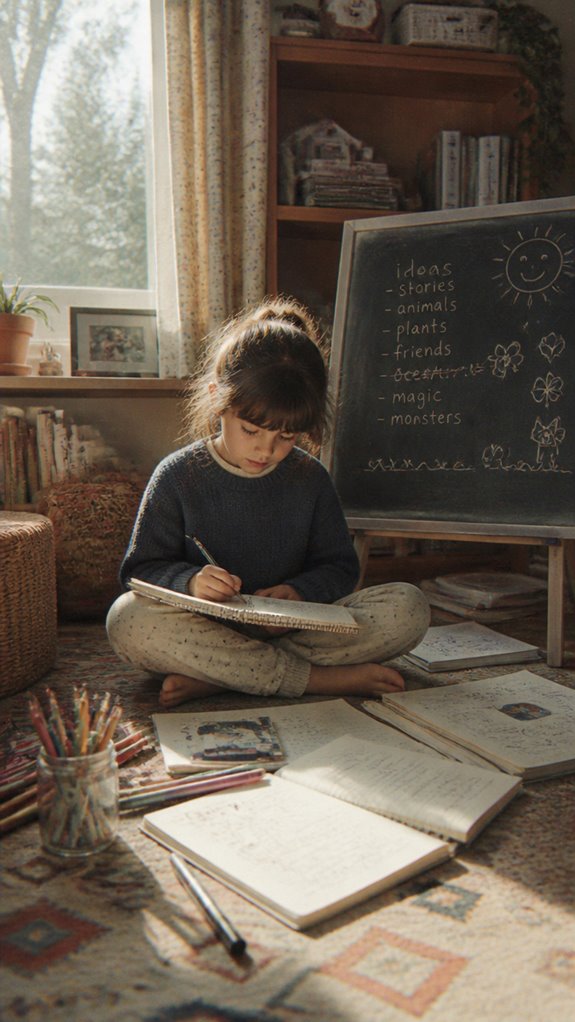
Children don’t learn in a line-by-line process anymore, and their learning journeys need to reflect that reality. The Adaptive Atlas Learning Stack Model recognizes this, emphasizing metacognitive strategies that empower children to think about their thinking. These strategies boost intrinsic motivation, helping kids stay engaged because they see learning as meaningful.
Instead of memorizing facts for a test, children learn how to learn—building habits of curiosity and resilience. This approach shifts the focus from external rewards to internal drive and self-awareness. Parents can support this development by creating personalized learning environments at home that respond to each child’s unique pace and style.
It’s about guiding children to develop capacity, adaptability, and confidence—skills shaped by long-term systems rather than quick fixes. With this model, you’re giving your child tools for a future where ability, not just knowledge, determines success.
The Adaptive Atlas Framework
Five connected systems designed to help parents raise adaptable, future-ready children in a world shaped by AI, automation, and constant change.
| 🛡️ |
Anti-Fragile Child SystemBuilds resilience, adaptability, and the ability to handle uncertainty without shutting down. |
| 📚 |
Learning Stack ModelDevelops self-directed learning habits and continuous skill acquisition beyond school systems. |
| 🚀 |
Future Skill Stack SystemFocuses on high-value human skills that remain relevant in an AI-driven economy. |
| 🤖 |
AI Learning SystemTeaches children how to use AI as a thinking partner instead of becoming dependent on it. |
| 🧭 |
Child Type Navigator SystemPersonalizes learning and development based on each child’s strengths and personality. |
FAQ
How Can I Encourage My Child to Enjoy Independent Learning?
Encourage your child’s playful exploration and foster Creative independence by providing them with diverse tools and opportunities to experiment freely. Empower their curiosity, support autonomous decision-making, and celebrate their initiative to build a passion for independent learning.
What Are the Signs My Child Is Developing Good Self-Learning Habits?
You’ll notice your child embraces challenges and persists through frustration, driven by strong motivational techniques and a supportive learning environment. They independently seek knowledge, adapt quickly, and demonstrate confidence—key signs of powerful self-learning habits forming naturally.
How Do I Tailor Routines for Children With Different Learning Styles?
You tailor routines for different learning styles by designing personalized routines rooted in adaptive activities, empowering your child to engage meaningfully. Focus on their strengths, adapt tasks accordingly, and foster independence to maximize their growth and self-learning mastery.
What Role Does Technology Play in Fostering Self-Directed Learning?
You’re right—technology dramatically fuels self-directed learning by enhancing digital literacy and opening vast online resources. Use these tools strategically, empowering children to explore, analyze, and develop independence, transforming them into autonomous creators capable of shaping their futures.
How Can Parents Balance Guidance and Independence Effectively?
Use parenting strategies that empower independence and apply motivational techniques to inspire your child’s curiosity. Balance guidance with autonomy by setting clear boundaries, encouraging exploration, and celebrating growth, enabling them to develop confidence and self-directed learning mastery.
References
- https://www.educatly.com/blog/741/8-home-study-habits-that-work
- https://bestbrains.com/mechanicsburg/article/building-study-habits-that-last
- https://tutoring.k12.com/resources/learning/confidence-habits/independent-learning-skills/parent-tips-for-building-independent-learning-skills/
- https://www.waterford.org/resources/home-learning-habits/
- https://www.institute4learning.com/2020/06/17/5-ways-to-help-your-child-develop-their-inner-resources-as-a-learner/
- https://www.highschoolofglasgow.co.uk/hsog-glasgows-leading-private-school/how-to-help-your-child-develop-effective-study-habits-at-home
- https://www.understood.org/en/articles/ways-to-help-your-grade-schooler-develop-good-study-habits
- https://www.edutopia.org/article/study-habits-to-teach-kids-this-school-year/
- https://www.mathnasium.com/blog/5-tips-to-help-your-child-develop-good-study-habits-126837498
- https://raisingchildren.net.au/preschoolers/behaviour/behaviour-management-tips-tools/teaching-skills