How Can Data Transform Your Child’s Learning Path?
Data-driven learning reveals your child’s true capabilities and growth areas, enabling personalized education that catches struggles before they compound. Research by scholars like John Hattie confirms targeted instruction amplifies achievement by 40 percent compared to one-size-fits-all approaches.
A Parent’s Breakthrough Moment
Last year, I watched my daughter Charlotte struggle silently through math. Her teacher flagged a pattern I’d missed entirely: she mastered concepts but froze under timed pressure. That’s precisely why we built Adaptive Atlas. We recognized teachers needed real-time intelligence, not gut feelings. The platform transforms raw performance data into actionable insights, letting instructors pivot instruction instantly. Charlotte’s anxiety dissolved within weeks once her teacher adjusted pacing based on actual data signals, not assumptions.
When Numbers Tell Stories Teachers Miss
My son’s reading comprehension scores plateaued for months. When we examined his data granularly, we discovered he excelled with narrative texts but stumbled on technical passages. Adjusting his reading selections worked. Numbers revealed what conversations couldn’t. His confidence surged when content aligned with his cognitive strengths.
Quick Takeaways
- It enables personalized learning experiences tailored to each child’s strengths and needs.
- Data tracking supports early intervention and proactive support for academic and emotional development.
- It fosters critical thinking skills by encouraging children to analyze digital information and AI outputs.
- Integrating data-driven approaches enhances engagement and improves learning outcomes.
- It prepares children with adaptable, future-ready skills for a rapidly evolving digital landscape.
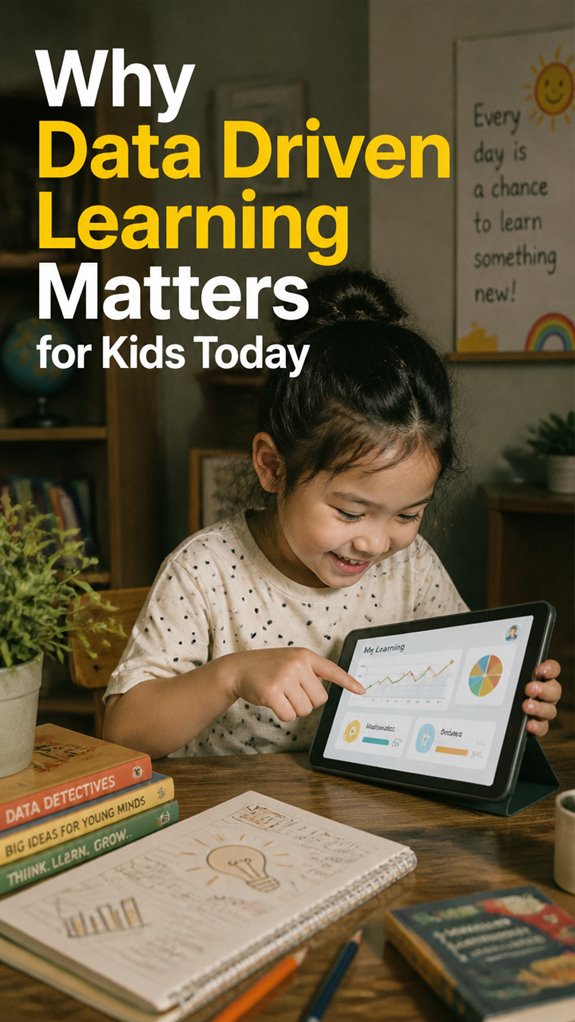
Why Data-Driven Learning Matters for Kids Today
Why does data-driven learning matter for kids today? It taps into their Neural Plasticity—the brain’s ability to change and adapt throughout life. This ability supports Cognitive Adaptation, meaning children can develop new skills and rethink old habits as their world evolves.
Instead of fearing rapid change, you can see it as an opportunity for growth. Data-driven learning helps children become flexible thinkers, capable of adjusting to new information and challenges. By systematically tracking skill development, you can identify which areas need additional support and celebrate progress in real time.
Seeing change as growth fosters resilient, adaptive minds ready for future challenges.
Recent research from organizations like the Society for Neuroscience shows that early experiences shape lifelong learning patterns. By focusing on systems that cultivate adaptability, you prepare your child for a future where continuous learning and resilience are pivotal.
Instead of controlling every outcome, you give them the tools to navigate and thrive in a world that’s always shifting.
How Data-Driven Insights Personalize Learning Experiences for Kids
Using data-driven viewpoints to tailor learning experiences means moving beyond one-size-fits-all approaches. Personalized assessments help identify each child’s strengths, gaps, and learning styles. This way, you can see where they excel and where they need more support, giving you clear directions for future growth.
Skill mapping allows you to track progress over time, ensuring learning stays aligned with the child’s developing needs. By utilizing learning progress data, you can make informed decisions about which instructional strategies work best for each individual learner. These understandings aren’t meant to replace your judgment but to empower you with a clearer picture of your child’s development.
Detecting and Supporting At-Risk Students Before Problems Worsen
Many parents worry about their children falling behind or not getting the help they need early enough. Data-driven systems can identify warning signs before a child’s difficulties grow worse, allowing for timely early intervention. This approach isn’t just about tracking test scores; it’s about understanding emotional resilience—the child’s ability to bounce back from setbacks.
With ongoing data, teachers can see subtle shifts in behavior or engagement, helping them support the child’s emotional and academic growth. Recognizing these signs early empowers you to collaborate actively with educators, focusing on strengths and areas for growth.
This proactive, systems-based approach builds a child’s confidence and long-term adaptability, giving them a stronger foundation for future challenges. By developing these competencies now, students will be better equipped to navigate the evolving job landscape and adapt to careers that may not yet exist. It’s about guiding them before problems deepen, fostering resilience that lasts a lifetime.
Empowering Teachers With Data to Improve Instruction and Engagement
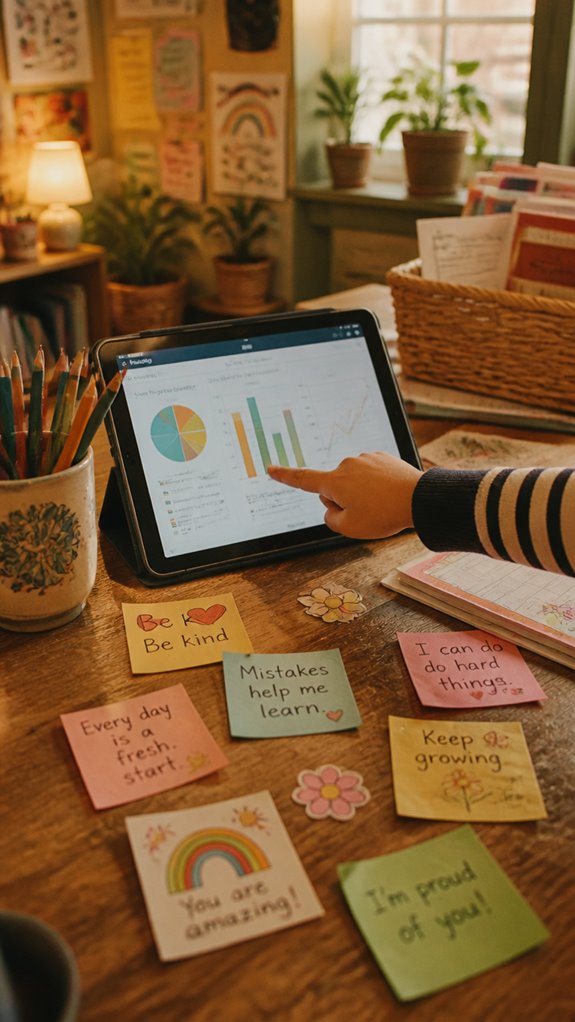
Data can be a powerful tool for teachers to tailor instruction and boost student engagement, especially as classrooms adapt to changing needs. By analyzing data, you can identify what works best for each child, helping them develop essential skills for the future.
However, it’s crucial to prioritize data privacy and ethical considerations. Parents and teachers share a responsibility to protect student information and use data responsibly. Teaching children about healthy tech habits alongside data practices creates a foundation for responsible digital citizenship.
Embracing these practices enhances trust and ensures equitable access to personalized learning. Instead of fearing data, view it as a way to better understand children’s strengths and challenges, guiding more meaningful engagement.
This approach empowers you to make informed, ethical decisions that support children’s growth, resilience, and long-term adaptability.
Practical Steps for Parents to Support AI-Driven Learning at Home
Supporting your child’s AI-driven learning at home begins with understanding that technology is a tool to enhance their natural curiosity and problem-solving skills, not replace them. To do this, prioritize safe, ethical AI use by explaining data privacy and modeling responsible behavior. Start by choosing apps and platforms that emphasize privacy and ethical AI principles, ensuring your child’s data remains protected. Foster independent thinking by encouraging your child to question how AI tools work and their impact. By helping your child identify their future goals and interests, you create a personalized learning path that makes AI tools more meaningful and purposeful. Use this table as a quick guide:
| Action | Focus |
|---|---|
| Select privacy-aware tools | Data privacy |
| Discuss AI’s role and ethics | Ethical AI |
| Encourage exploration with AI | Long-term learning |
| Model responsible use at home | Responsible digital habits |
This approach builds trust, skills, and confidence that will serve your child’s future mastery in a complex world.
80% of Future Jobs Require Adaptability
The world of work is changing faster than most people realize, and adaptability has become one of the most important skills for your child’s future. Today, 80% of future jobs will demand flexibility, creativity cultivation, and emotional intelligence. Many parents worry about job stability, but instead of focusing on fixed careers, it’s best to help children develop skills that thrive amid change. Encouraging emotional intelligence helps kids manage uncertainty calmly, while creativity cultivation equips them to solve problems in novel ways. Research from organizations like the World Economic Forum shows that those who can pivot and learn quickly will be the most successful. In the emerging AI economy, technical literacy and data fluency are becoming essential competencies that complement these human-centered skills. By nurturing versatility, you give your child the tools to navigate a future full of shifting roles, always staying relevant and confident in their abilities. Emerging workforce trends highlight the urgent need for transferable and durable skills, which can help children adapt to evolving industry demands over time.
Integrating Tech Into Learning

Integrating technology into learning doesn’t mean replacing traditional methods like books and hands-on activities, but rather enhancing them to better prepare children for the future. You can support digital differentiation by choosing age-appropriate tools that suit your child’s developmental level, encouraging exploration while maintaining focus. This approach builds their tech independence, helping them become confident users of digital resources, not just passive consumers. Instead of fearing screens, see technology as a partner that amplifies learning—interactive games reinforce skills, and simulations spark problem-solving. Balance remains key; technology should complement, not replace, foundational materials like art supplies and books. While traditional education methods provide essential structure and social development, combining them with digital tools creates a more comprehensive learning experience. With thoughtful integration, you help your child develop long-term capabilities that are adaptable in a rapidly changing world. Research shows that integrating technology effectively can lead to improved engagement and educational outcomes for students.
Data Learning Guide for Parents
Second, foster critical thinking, encouraging questions about digital content and AI outputs.
Third, model responsible sharing and respectful online behavior, demonstrating integrity.
Fourth, equip them with skills to evaluate sources, spot misinformation, and use AI tools ethically—viewing tech as a collaboration partner.
These steps give your child confidence in steering complex digital spaces, focusing on long-term mastery rather than short-term familiarity. Understanding learning progress data helps you track their development and identify areas where they need additional support in these digital competencies.
It’s about empowering them to make informed, ethical decisions—setting a foundation for future success and responsible engagement.
The Adaptive Atlas Learning Stack Model
Children today need more than just facts—they need a way to stay adaptable as knowledge constantly shifts. The Adaptive Atlas Learning Stack Model offers this by focusing on long-term capability.
It combines personalized feedback and an adaptive curriculum, ensuring each child’s learning pathway aligns with their strengths and challenges. Instead of rote memorization, your child develops skills like critical thinking, problem framing, and creativity—those most likely to retain value in the future. Research shows that adaptive learning systems significantly improve student engagement and outcomes by personalizing educational experiences in real time.
The model treats AI as a collaborative tool, enhancing independence without dependency. It’s grounded in the idea that flexibility, resilience, and self-directed learning are the keys to future success.
The Adaptive Atlas Framework
Five connected systems designed to help parents raise adaptable, future-ready children in a world shaped by AI, automation, and constant change.
| 🛡️ |
Anti-Fragile Child SystemBuilds resilience, adaptability, and the ability to handle uncertainty without shutting down. |
| 📚 |
Learning Stack ModelDevelops self-directed learning habits and continuous skill acquisition beyond school systems. |
| 🚀 |
Future Skill Stack SystemFocuses on high-value human skills that remain relevant in an AI-driven economy. |
| 🤖 |
AI Learning SystemTeaches children how to use AI as a thinking partner instead of becoming dependent on it. |
| 🧭 |
Child Type Navigator SystemPersonalizes learning and development based on each child’s strengths and personality. |
FAQ
How Can Data-Driven Learning Improve a Child’s Overall Resilience and Adaptability?
Think of data-driven learning as a mirror that reflects your child’s inner strength, boosting emotional resilience and social adaptability. You empower them to navigate change confidently, master self-awareness, and thrive amid uncertainty with developing skills and understanding.
What Ethical Considerations Exist Around Collecting and Using Children’s Learning Data?
You must prioritize privacy concerns by establishing clear consent procedures, ensuring children’s data is collected ethically, securely stored, and used responsibly. This safeguards their rights, promotes trust, and aligns with mastery in ethical data practices.
How Do Different Learning Styles Influence Data Collection and Personalization?
You understand that learning styles shape data collection and personalization, so you leverage learning preferences and data visualization, embracing the idea that “know thyself,” to tailor approaches for mastery and optimize each child’s unique developmental trajectory.
Can Data Analytics Replace Teacher Intuition and Experience Effectively?
Data analytics can’t replace teacher intuition and experience effectively because they rely on subtle understanding and situational judgment. Focus on enhanced teacher training and ensuring data transparency, so analytics complement, rather than replace, educators’ mastery and instinctual decision-making.
How Frequently Should Parents Review and Interpret Their Child’s Data Insights?
You should review your child’s data understanding regularly—weekly or biweekly—balancing parental involvement and respecting data privacy. Consistent review helps master adaptive parenting, ensuring you use insights to support growth without over-surveillance, fostering trust and continuous development.
References
- https://factsmgt.com/blog/the-power-of-data-8-ways-data-driven-solutions-benefit-k-12-schools/
- https://learningsciences.smu.edu/blog/implementing-data-driven-insights-to-improve-learning
- https://otus.com/resources/blog/how-to-truly-use-data-to-drive-instruction-and-boost-student-success
- https://www.schoolstatus.com/blog/transforming-k12-with-data
- https://antares.solutions/using-data-driven-education-to-impact-students/
- https://www.discoveryeducation.com/blog/educational-leadership/using-data/
- https://www.methodschools.org/blog/the-benefits-of-data-driven-education
- https://www.edutopia.org/article/using-data-improve-learning-outcomes/
- https://www.lindenwood.edu/blog/using-data-drive-instruction-data-in-classroom/
- https://www.robertwalters.us/insights/hiring-advice/blog/adaptability-the-skill-to-hire-for.html