How Can Parents Transform Learning Into a Lifelong Habit?
Structured routines paired with visual planning tools equip kids to navigate academic challenges independently. This foundation builds the resilience they’ll need far beyond school walls.
I watched my daughter struggle with scattered assignments until we implemented a simple visual schedule system. She’d felt overwhelmed, jumping between tasks without direction. Within weeks, something shifted. She started checking off goals herself, asking clarifying questions, and tackling complex projects without my prompting. That’s precisely why we created Adaptive Atlas. We recognized that intentional planning isn’t just about completing homework; it’s about wiring young brains for self-directed growth. Researcher Zimmerman’s work on self-regulated learning confirms what we’ve observed: kids who monitor their own progress develop genuine confidence.
Last month, my son mapped out a science project using chunked tasks and flexible timelines. He adapted his schedule mid-week without anxiety, pivoting when experiments needed retesting. He’d discovered something powerful: planning isn’t rigid. It’s liberating. That moment crystallized why this matters.
Quick Takeaways
- Teach kids to set realistic, achievable goals and break tasks into manageable steps for better focus and progress.
- Encourage reflection on completed tasks to improve planning accuracy and adapt strategies as needed.
- Use visual tools like charts or timers to help kids manage time and stay engaged.
- Foster self-awareness to identify effective learning strategies and adjust plans accordingly.
- Promote resilience and flexibility to help kids recover from setbacks and maintain steady progress towards future success.
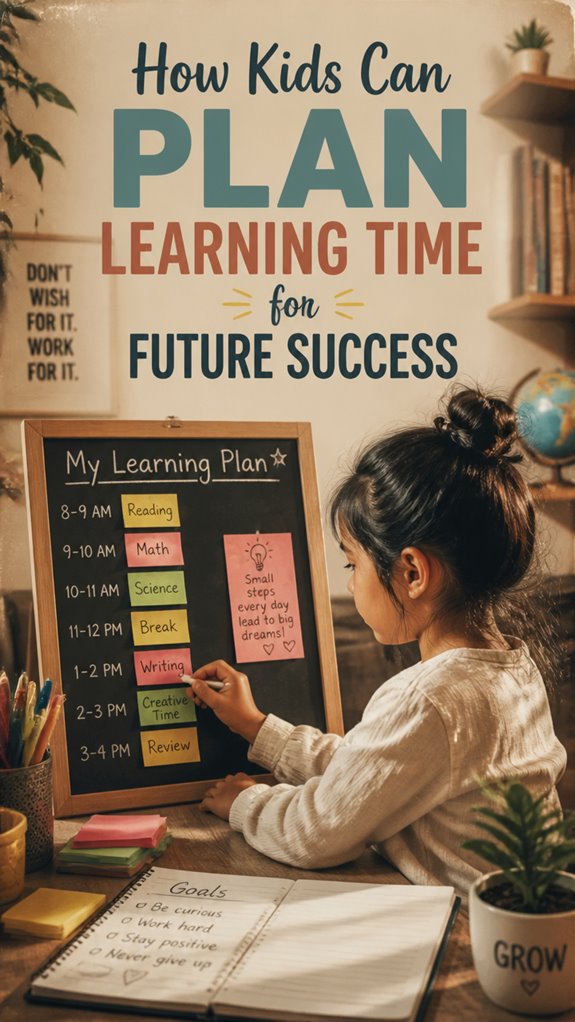
How Kids Can Plan Learning Time for Future Success
When helping kids plan their learning time for the future, it’s natural to worry about how they’ll handle constant change. Yet, the key isn’t about predicting all the shifts but fostering a strong parental mindset rooted in emotional resilience. You want your child to stay adaptable when faced with setbacks, not discouraged.
Encourage routines that build confidence and flexibility. Focus on nurturing qualities like perseverance and curiosity, which help children navigate uncertainty calmly. Keep in mind, your role is to model resilience yourself and create a steady environment. Teaching children to fix past digital errors can also help them learn from mistakes and build confidence in their ability to correct missteps.
This approach helps children develop a sense of control, even amid endless change. Long-term resilience and an adaptable mindset will serve them far better than rigid plans, preparing them to thrive in a future driven by continuous evolution.
Strategies for Teaching Kids to Estimate and Manage Their Learning Time
Estimates about how long a child needs to learn or complete tasks can feel uncertain, but teaching them to manage their time effectively turns that uncertainty into a valuable skill.
When children develop a growth mindset, they see challenges as opportunities, making time management more motivating.
To build this capacity, focus on:
- Encouraging them to set realistic time goals aligned with their intrinsic motivation
- Teaching reflection after tasks to improve future estimates
- Breaking tasks into smaller, manageable parts to reduce overwhelm
- Reinforcing the importance of flexibility and adapting when needed
- Celebrating progress to strengthen their confidence and sense of mastery
Using Visual Tools and Routines to Support Learning Time Planning
Using visual tools and routines can considerably strengthen your child’s ability to plan and manage their learning time. Neuroscience understanding shows that visual information engages different brain regions, making planning more effective.
Routines create predictable patterns, reducing anxiety around tasks and building a sense of control. Be mindful of cultural differences, as some cultures emphasize group routines while others focus on individual planning; understanding these influences helps tailor support.
For your child, consistent visual schedules—like charts or digital apps—offer clarity and structure. This approach nurtures independence and long-term adaptability, key for future success.
Tracking Progress and Adjusting Learning Plans for Better Outcomes
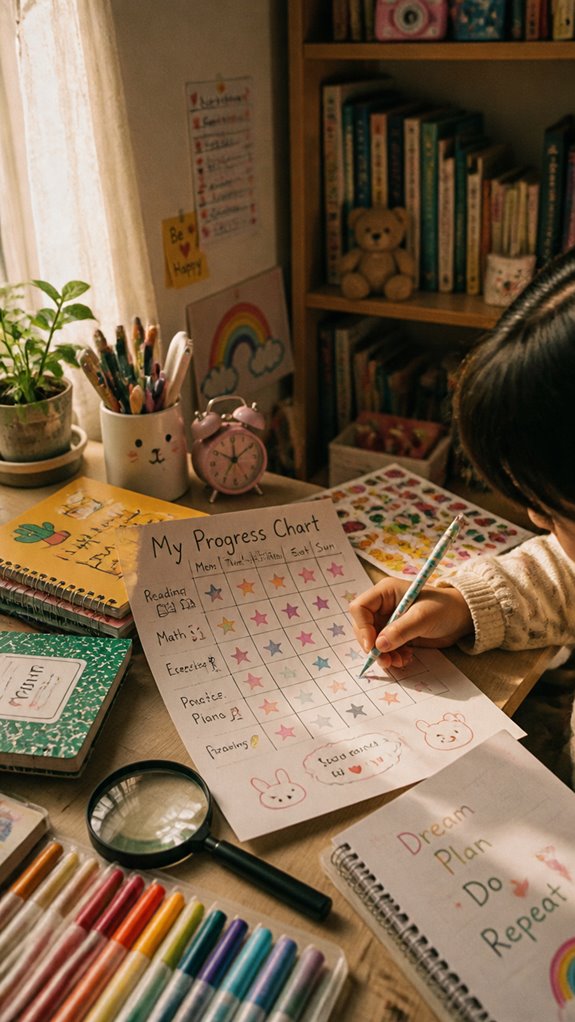
Tracking progress and adjusting learning plans might seem formidable at first, but it’s actually about keeping things flexible and aligned with your child’s growth.
Monitoring progress helps keep learning adaptable and aligned with your child’s evolving needs and growth.
You can use metacognitive reflection to help your child evaluate what’s working and what isn’t.
Goal setting techniques, like breaking big goals into smaller steps, keep learning focused and manageable.
Regular check-ins build awareness of progress and inform necessary adjustments.
Understanding causes of distraction can help you recognize when external factors are affecting your child’s learning plan and progress.
- Encourage your child to reflect on strengths and challenges
- Use simple data points to measure progress, not perfection
- Adjust plans based on emerging interests and skills
- Celebrate small wins to boost motivation
- Reinforce adaptable habits for long-term growth
Hourly Schedule Optimization Tips
Crafting an effective daily schedule helps your child build essential habits for a successful future, especially in a world that’s full of rapid change. When optimizing the schedule, focus on time management to prevent burnout and guarantee steady progress. Effective scheduling promotes healthy routines, which are crucial for developing resilience and a positive attitude towards learning. Break tasks into short, focused blocks—10-20 minutes for young children, 40-60 minutes for older kids—paired with frequent breaks. Use visual timers to help your child understand pacing and develop focus enhancement skills. Teaching your child to estimate task durations accurately encourages better planning and reduces frustration.
Prioritize one or two main activities each day, and leave room for flexibility. Structured thinking about planning empowers children to anticipate challenges and allocate resources effectively for their goals. Building this rhythm helps your child develop independence, manage their time well, and stay engaged—key skills for thriving amid ongoing change.
Troubleshooting Engagement Drop-Offs
When children’s engagement drops unexpectedly, it’s natural for parents to feel concerned about their child’s readiness for future challenges. However, spotting engagement triggers and applying reset strategies can turn setbacks into growth moments.
- Observe quietly to identify what causes disengagement, like boredom or confusion.
- Use movement breaks, such as yoga or quick walks, as reset strategies to re-engage attention.
- Revisit expectations and instructions to clarify goals, preventing frustration.
- Introduce novelty, like small surprises or varied themes, to reignite curiosity.
- Differentiate tasks to match your child’s current abilities, reducing overwhelm.
These approaches empower you to respond thoughtfully, helping your child develop confidence in decision making and adaptability.
Recognizing patterns and acting intentionally creates a stable foundation for their future learning, even during challenging moments.
Daily Learning Planner for Kids
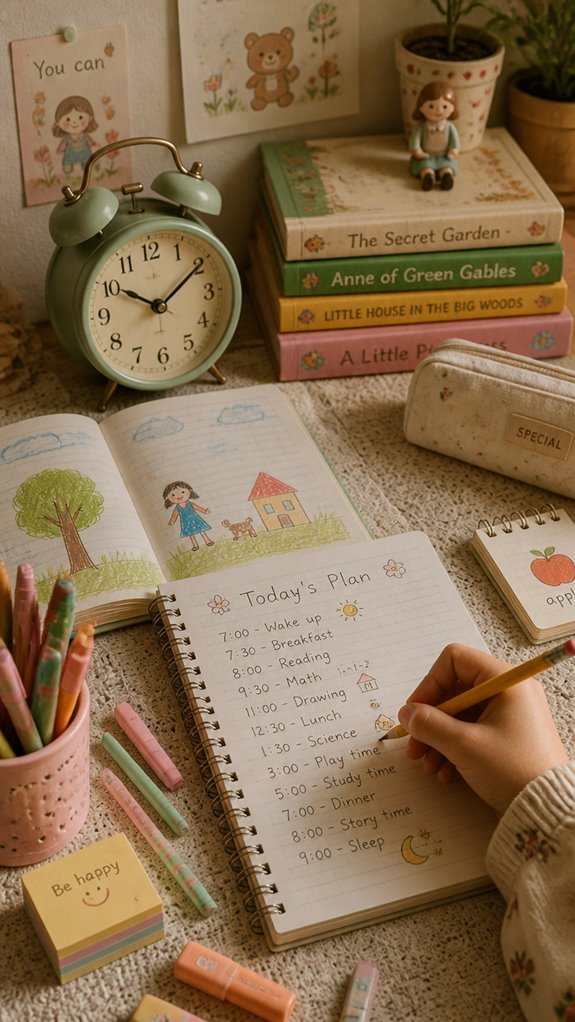
A daily learning planner for kids helps your child develop self-direction and adapt to change. It encourages parent-child collaboration, fostering emotional resilience needed in a fast-changing world. A well-structured planner creates a routine where children learn to set goals, manage time, and reflect on progress. Building self-learning habits through consistent daily planning strengthens your child’s capacity for independent thought and action.
| Task | Time Slot |
|---|---|
| Reading & Reflection | 9:00–10:00 AM |
| Creative Practice | 11:00–12:00 PM |
| Self-Review & Planning | 3:00–3:30 PM |
This clarity builds confidence, reduces anxiety, and reinforces mastery. By involving your child in planning, you shift focus from fear of future uncertainty to actionable daily habits. This system nurtures resilience and autonomy, shaping future-ready mindsets.
The Adaptive Atlas Learning Stack Model
The Adaptive Atlas Learning Stack Model offers a clear way to understand how your child can develop skills that last in a rapidly changing world. It focuses on building metacognitive development—the ability to understand how they learn—and emotional resilience, so they can handle setbacks and uncertainty.
Empowering children with lifelong skills through metacognition and resilience for a changing world.
- It encourages children to develop self-awareness about their learning processes and adapt strategies as needed.
- The model cultivates resilience by teaching children how to recover from challenges, not avoid them.
- It emphasizes learning how to learn, turning curiosity into continuous growth.
- The system promotes using AI tools thoughtfully, boosting independence and critical judgment.
- Finally, it personalizes growth, recognizing each child’s strengths, ensuring they stay adaptable for the future.
- Research shows that working memory skills are essential for academic success and can be significantly improved through intentional practice and strategic activities.
This approach gives you practical control, shaping confident, future-ready children.
The Adaptive Atlas Framework
Five connected systems designed to help parents raise adaptable, future-ready children in a world shaped by AI, automation, and constant change.
| 🛡️ |
Anti-Fragile Child SystemBuilds resilience, adaptability, and the ability to handle uncertainty without shutting down. |
| 📚 |
Learning Stack ModelDevelops self-directed learning habits and continuous skill acquisition beyond school systems. |
| 🚀 |
Future Skill Stack SystemFocuses on high-value human skills that remain relevant in an AI-driven economy. |
| 🤖 |
AI Learning SystemTeaches children how to use AI as a thinking partner instead of becoming dependent on it. |
| 🧭 |
Child Type Navigator SystemPersonalizes learning and development based on each child’s strengths and personality. |
FAQ
How Can Children Develop Intrinsic Motivation for Effective Time Management?
You can foster an intrinsic drive by offering choices, encouraging curiosity, and connecting tasks to their passions. Help children find personal meaning in their activities, reinforcing self-motivation to develop effective time management skills.
What Role Does Emotional Resilience Play in Managing Learning Schedules?
Approximately 70% of children struggle with emotional resilience, highlighting its importance in stress management. By cultivating emotional awareness, children master their reactions, stay focused, and adapt learning schedules effectively, ultimately fostering mastery in managing ongoing change and challenges.
How Can Parents Adapt Plans for Children With Different Learning Styles?
You adapt plans by creating tailored activities and personalized routines that align with each child’s unique learning style. This approach maximizes engagement, nurtures strengths, and builds resilience, empowering them to develop essential skills for thriving in a changing future.
How Do Cultural Differences Influence Children’s Time Management Approaches?
Cultural influences shape children’s time management philosophies by emphasizing collectivism or individualism, discipline or flexibility. You can master this by understanding these differences, adapting strategies accordingly, and fostering diverse viewpoints that enhance adaptability and long-term capability in children.
What Strategies Help Kids Stay Flexible When Plans Need Significant Changes?
You foster adaptability skills by encouraging kids to embrace change and practice flexibility strategies, such as re-evaluating goals, exploring alternative solutions, and maintaining a growth mindset, empowering them to navigate significant plan shifts confidently and effectively.
References
- https://www.scholastic.com/parents/family-life/parent-child/teach-kids-to-manage-time.html
- https://www.lysol.com/tips-resources/tools-for-teachers/teach-kids-time-management-lesson-plan/
- https://www.splashlearn.com/blog/how-to-teach-telling-time/
- https://autismclassroomresources.com/how-to-teach-telling-time/
- https://www.weareteachers.com/5-hands-on-ways-to-teach-telling-time/
- https://www.twinkl.com/blog/time-flies-when-youre-having-fun-helping-your-child-with-telling-time
- https://www.theottoolbox.com/build-clock-hands-on-learning-teach-time/
- https://home.oxfordowl.co.uk/maths/learning-to-tell-the-time/
- https://www.youtube.com/watch?v=3YJxNWyc-Tw
- https://tutoring.k12.com/resources/skills/time-management/time-blocking-techniques/avoiding-scheduling-pitfalls-with-time-blocking-for-elementary-school/