
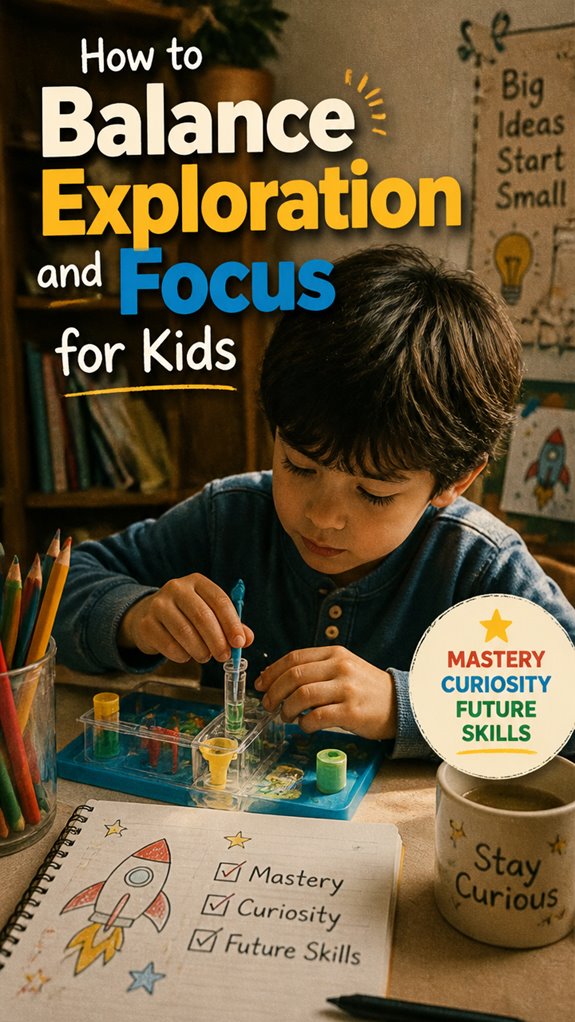
How Do Kids Actually Learn Best? Exploration or Focus?
Both matter equally. Research from the Learning Science Institute reveals that curiosity-driven exploration paired with structured focus builds resilience, independence, and genuine problem-solving abilities. Your child needs permission to wander mentally and physically, plus guardrails that keep them grounded.
Why We Built Adaptive Atlas
My daughter spent an entire afternoon deconstructing a broken radio instead of doing her homework. I almost stopped her. Then something clicked. She was learning circuitry, persistence, and systems thinking simultaneously. That moment inspired Adaptive Atlas. We created it because kids deserve tools that honor both their exploratory nature and their capacity for sustained attention. We write about this intersection because it’s where real learning happens.
A Personal Turning Point
Last year, I watched my son oscillate between scattered tablet time and rigid math drills. Neither worked. When I introduced theme-based projects blending both, something shifted. His focus deepened because curiosity provided the fuel. He wasn’t just solving problems. He was hunting for answers he actually wanted.
Quick Takeaways
- Set clear boundaries and safe spaces to encourage exploration while maintaining structure for focus.
- Offer a variety of activities that promote both curiosity-driven exploration and targeted concentration.
- Use organized environments to reduce distractions and help children transition smoothly between play and focused tasks.
- Incorporate regular breaks and quiet zones to balance active exploration with rest and focused attention.
- Foster independent learning and curiosity by guiding children to pursue interests within a safe and supportive framework.
Why Kids Need Both Exploration and Focus for Healthy Development
Many parents worry that their children might struggle to find stability in a world that’s constantly shifting. This concern often leads to over-control or an emphasis on narrow skills. But healthy development requires both exploration and focus.
Exploration builds child independence, helping children discover their interests and develop adaptability. Meanwhile, parental guidance provides a safety net, teaching kids how to navigate uncertainty without feeling overwhelmed. By fostering systems thinking skills, parents can help children understand how different elements of learning and life interconnect rather than viewing skills in isolation.
Recognizing that the future favors those who learn to balance curiosity with attention helps you rethink traditional approaches. It’s not about control, but about fostering systems that encourage growth in flexible, resilient children.
Simple Strategies to Help Kids Safely Explore and Focus
Balancing safe exploration with focused learning starts with clear, simple strategies that help your child develop confidence and resilience. Parent autonomy is key here—you set the tone and boundaries, which provide a sense of security. Encourage skill connection by helping your child see how different activities relate to their interests or future goals.
Let them explore freely within safe limits, knowing they’re developing essential traits like adaptability and curiosity. When they focus, guide them to set small, achievable goals that build momentum.
Understanding future-ready skills helps you identify which experiences will have the greatest impact on your child’s long-term development. Keep in mind, it’s not about perfect balance but creating a system that supports both exploration and focus over time. This approach builds long-term skills, preparing your child to navigate a world of continuous change confidently and independently.
How to Create Kids’ Environments That Boost Creativity and Focus
Creating environments that boost your child’s creativity and focus isn’t about having a perfectly curated space; it’s about intentionally designing settings that encourage exploration and concentration simultaneously. Well-designed creative environments foster curiosity and independence, while also supporting focused routines that build consistency. Research shows that effective learning systems integrate both open-ended exploration and structured activities to maximize children’s cognitive development.
| Aspect | Example | Benefit |
|---|---|---|
| Organized clutter | Clear storage for supplies | Reduces distraction |
| Zones for activity | Art corner, reading nook | Promotes targeted exploration |
| Quiet spaces | Soundproof areas | Enhances focus |
| Natural light | Large windows, greenery | Boosts mood and concentration |
| Flexibility | Moveable furniture | Builds adaptability |
Kids’ Curiosity Survey Results
Recent research confirms what many parents intuitively sense: curiosity is a powerful driver of learning and future success. Studies show that sensation seeking and cognitive flexibility are connected to curiosity. Children who pursue surprising events and explore new experiences demonstrate higher curiosity ratings even from infancy. This innate drive fuels their motivation, attention, and problem-solving skills, forming a foundation for lifelong learning. The longitudinal study found that infants’ responses to surprising events remain consistent over time, indicating that curiosity is a stable individual trait from early development. When guiding kids through digital project creation, parents can channel this natural curiosity into structured exploration that maintains focus. Parents often worry that too much curiosity might lead to distraction, but these findings reveal it’s essential for adaptability. By encouraging their natural curiosity—asking questions, exploring, defying expectations—you help build cognitive flexibility. This ability to shift viewpoints and seek new solutions prepares children for a future where continuous learning and resilience are critical. Keep nurturing curiosity as a core part of balanced development.
Interactive Problem-Solving Activities
Interactive problem-solving activities sharpen your child’s critical thinking and decision-making in ways that stick for life. You worry AI might automate jobs, but reframe that: these build adaptability, letting kids collaborate with tools like AI copilots for lasting leverage.
Interactive problem-solving hones kids’ critical thinking for life. Reframe AI job fears: it builds adaptability to thrive with AI copilots.
Dive into brain teasers, group puzzles, and scavenger hunts from the facts—these foster teamwork and logic, much like Lego’s construction challenges refine spatial reasoning. Add virtual reality for immersive bridge-building simulations, where kids test designs in real-time. Group puzzles boost teamwork and communication, turning play into practical collaboration skills.
Blend sensory activities, like Human Knot or textured building kits, to heighten tactile feedback and trust. When children explore diverse problem types, they develop flexibility across different domains before choosing deeper specialization.
This system—cycles of try, fail, refine—creates anti-fragile thinkers. Per researcher Carol Dweck’s growth mindset, they thrive in change, turning uncertainty into opportunity.
Start today; your child’s future compounds from here.
Balance Learning Toolkit for Kids
A balanced learning toolkit helps your child develop the skills they need to thrive in a world of constant change. Focus on building cognitive flexibility, which lets them adapt to new situations and think creatively.
Skill diversification is also key—encouraging them to explore different areas broadens their abilities and prepares them for unpredictable futures. It’s normal to worry about whether kids can keep up, but a thoughtfully designed toolkit provides structure without rigidity.
By integrating varied activities—like problem-solving, creative projects, and social interactions—you create a versatile foundation. This approach nurtures resilience and long-term adaptability, making children confident to navigate change. When you incorporate family learning into these activities, you amplify the benefits by creating shared experiences that strengthen both skills and relationships.
Recall, you’re guiding them to see challenges as opportunities, fostering long-lasting skills rather than fleeting achievements.
The Adaptive Atlas Learning Stack Model
The Adaptive Atlas Learning Stack Model provides a clear framework for helping children learn and adapt in a rapidly changing world. It emphasizes the importance of building long-term capability, not just memorization, through focused strategies.
To develop mastery, you should:
- Use compression techniques to break down complex concepts into manageable, meaningful parts, aiding knowledge retention.
- Encourage self-directed learning, empowering children to seek out new skills independently.
- Focus on future-proof skills like critical thinking and problem framing, rather than obsolete knowledge.
- Incorporate AI as a partner to amplify thinking, helping children learn how to use technology while maintaining independence.
This model shifts the focus from rote memorization to adaptable, strategic learning, giving your child tools to thrive amidst continuous change. By fostering lifelong curiosity, you ensure that children remain engaged learners who naturally seek out knowledge and adapt their understanding as the world evolves.
The Adaptive Atlas Framework
Five connected systems designed to help parents raise adaptable, future-ready children in a world shaped by AI, automation, and constant change.
| 🛡️ |
Anti-Fragile Child SystemBuilds resilience, adaptability, and the ability to handle uncertainty without shutting down. |
| 📚 |
Learning Stack ModelDevelops self-directed learning habits and continuous skill acquisition beyond school systems. |
| 🚀 |
Future Skill Stack SystemFocuses on high-value human skills that remain relevant in an AI-driven economy. |
| 🤖 |
AI Learning SystemTeaches children how to use AI as a thinking partner instead of becoming dependent on it. |
| 🧭 |
Child Type Navigator SystemPersonalizes learning and development based on each child’s strengths and personality. |
FAQ
How Can Parents Identify When a Child Needs More Exploration Versus More Focus?
You observe if your child’s creative play sparks curiosity and varies across learning styles, indicating a need for exploration. If they focus intensely and master skills efficiently, emphasize focus. Balance emerges by tuning to their cues, fostering mastery.
What Role Does Emotional Regulation Play in Balancing Exploration and Focus?
Emotional regulation, driven by emotional awareness and self-control, anchors your child’s ability to navigate exploration and focus smoothly. Developing these skills empowers your child to maintain balance amid challenges, enhancing mastery over their attention and motivation.
How Do Cultural Differences Influence Approaches to Childhood Exploration and Focus?
You recognize that cultural expectations and parenting styles shape children’s exploration and focus, influencing how you encourage independence or discipline. Mastery involves adapting your approach to align with cultural values while fostering resilience and curiosity.
What Are Warning Signs That a Child’s Balance Between Exploration and Focus Is Off?
You’ll notice signs like declining creativity enhancement, social interaction struggles, or withdrawal from new experiences, indicating your child’s exploration focus is imbalanced. Address these early by fostering supportive environments that encourage both independent discovery and collaborative learning.
How Can Technology Be Used to Support Both Exploration and Focus Simultaneously?
Envision a symphony where interactive apps and virtual reality are conductors guiding your child’s focus and exploration. Use these tools thoughtfully, blending immersive experiences with structured goals, fostering mastery in both curiosity and sustained attention seamlessly.
References
- https://www.brainbalancecenters.com/blog/how-to-help-your-child-build-better-focus
- https://www.kidsfirstservices.com/first-insights/how-to-help-your-child-build-focus-and-attention
- https://www.functionalneurologybraincenter.com/blog-post/helping-kids-improve-focus-balance-and-coordination-with-innovative-therapies-this-season-of-lig
- https://www.canr.msu.edu/news/the_importance_of_focus_and_self_control_for_young_children
- https://www.understood.org/en/articles/how-to-improve-focus-in-kids
- https://gradepowerlearning.com/resources/study-skills/concentration-activities-for-kids/
- https://www.youtube.com/watch?v=CFt1Gz8HtZk
- https://www.brainbalancecenters.com
- https://www.youtube.com/watch?v=JjG2FGV-8eE
- https://hub.jhu.edu/2021/06/28/curious-babies-become-curious-toddlers/