How Do We Spark Real Learning When Everything Feels Like a Checklist?
Kids thrive on structured self-directed exploration, not passive compliance. Research from Carol Dweck shows challenge-based learning rewires brains better than obedience-driven systems. Let them struggle productively. Model genuine questioning. Treat failure as feedback, not catastrophe.
Why We Built Adaptive Atlas
My daughter sat frozen over her math worksheet, waiting for me to solve it. That’s when I realized I’d become her crutch, not her guide. We ditched the immediate fixes and started asking “what if?” together. Watching her confidence rebuild through productive struggle sparked something in me. It’s why we created Adaptive Atlas: to give parents and educators frameworks that actually work when curiosity needs oxygen to breathe.
The Moment Everything Clicked
Last Tuesday, my son spent forty minutes debugging his own code instead of asking for answers. He failed repeatedly. He kept going. That persistence wasn’t taught through lectures. It emerged from environment design. We’d simply removed the safety net of instant solutions. His brain did the heavy lifting.
Quick Takeaways
- Create environments that invite open-ended questions and genuine exploration rather than rewarding obedience and compliance.
- Model curiosity yourself by demonstrating questioning, experimenting, and adapting to show children how to think independently.
- Embrace failure as essential growth by resisting immediate fixes and helping children extract lessons through reflection.
- Establish structured boundaries with dedicated exploration spaces that protect deep focus and prevent overwhelming unstructured chaos.
- Shift motivation from external demands to intrinsic curiosity by tracking progress and letting children discover their passions.
When Curiosity Dies: The Compliance Trap
When children spend years in systems that reward compliance over curiosity—raising hands to speak, following predetermined paths, treating questions as interruptions rather than invitations—something shifts. They learn that safety lies in obedience, not exploration.
This compliance pitfall quietly erodes the exact capability they’ll need most: independent thinking.
Compliance quietly erodes the independent thinking our children desperately need to navigate an uncertain world.
You’re watching your child internalize a dangerous lesson: authority has answers, and your job is to receive them. This creates fragility. When the world changes—and it will—they lack the muscle to think sideways or challenge assumptions.
The antidote isn’t rebellion. It’s permission. Create space where you genuinely invite their “why” questions.
Model intellectual curiosity yourself. When kids see you genuinely wondering, experimenting, and changing your mind, they understand that learning isn’t compliance. It’s power. Open-ended family dialogue about future possibilities helps children practice the exploratory thinking that rigid systems suppress.
Parents weighing alternative learning options should recognize how different educational models explicitly protect curiosity through self-directed exploration rather than predetermined curricula.
How Self-Directed Learning Loops Actually Work
The shift from compliance to capability doesn’t happen through lectures or motivation—it happens through loops. Self-directed learning loops are the engine where your child observes a problem, tests a solution, reflects on what worked, and adjusts.
This isn’t random trial-and-error; it’s metacognitive strategies in action—your child learning how they learn.
Cognitive flexibility is built into this rhythm. Each loop teaches your child that failure isn’t final; it’s data. They develop independence because they’re solving their own problems, not waiting for permission or answers.
What you’re doing here is creating a learner who owns their growth. Over time, these loops compound.
Your child becomes someone who doesn’t need external validation to keep going, because they’ve built their own feedback system. That’s future-ready thinking.
Creating Space for Independent Exploration
Self-directed learning loops only work if your child actually has space to operate them—and that’s where most parents get stuck. You’re worried about wasted time or unfocused wandering, but that worry often kills the very capability you’re trying to build.
Innovative environments don’t require expensive tools. They require permission. Set boundaries around screen time and structured activities, then create room for play-based inquiry. As AI rapidly transforms traditional career paths, the ability to self-direct learning becomes even more essential for future adaptability.
Let your child choose what to explore, make mistakes without correction, and follow curiosity down unexpected paths. This isn’t unstructured chaos—it’s how children develop independent thinking.
Montessori research and modern neuroscience both confirm this: children who direct their own exploration build stronger learning capacity than those following external agendas. Your job isn’t to fill the space. It’s to protect it.
When you observe your child’s unique strengths emerging during these moments of self-directed exploration, you gain valuable insight into how they naturally learn best.
Three Real Examples (And What Makes Them Work)
Permission alone isn’t enough—you need to see what independent exploration actually looks like in practice, because most parents struggle to recognize whether their child’s curiosity is building real capability or just spinning wheels.
Permission alone isn’t enough—you need to distinguish between curiosity that builds real capability and spinning wheels.
Here’s what actually works:
- Building with constraints: Your child designs a solution using only recycled materials. They hit friction, problem-solve, and develop creative collaboration with siblings or peers.
- Failing toward mastery: They attempt a coding project, hit errors, and debug independently. This builds emotional resilience and real learning loops.
- Teaching others: Your child explains what they’ve learned to someone younger. This cements understanding and reveals gaps in thinking.
- Iterating without perfection: They revise their work based on feedback, not grades.
These examples work because they’re not random. They’re systems that build capability while your child stays in control.
Early freelancing exposure helps children develop these same self-directed problem-solving habits by giving them real projects with genuine stakes and client feedback.
Matching Learning Challenges to Your Child’s Profile
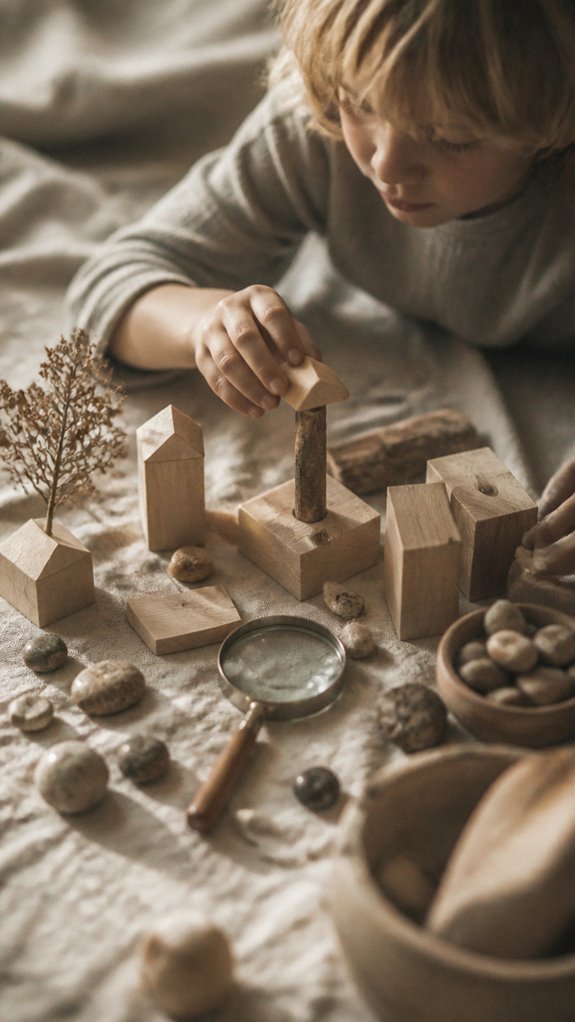
Once you’ve given your child permission to explore, the real work begins—matching the difficulty level and type of challenge to how they actually think and learn. Not all kids thrive in the same learning environments. Some need structure; others need freedom. Some learn through play-based activities; others need hands-on problem-solving. As freelancing reshapes career paths, children who develop adaptable learning skills early will be better positioned for the future of work.
The key is observation without judgment. Watch how your child engages when genuinely interested. Do they want to build, experiment, or discuss? Do they prefer collaboration or solo work? This isn’t about labeling them—it’s about creating conditions where curiosity naturally emerges.
When challenges align with how they’re wired, they stay engaged longer. They recover faster from struggle. They build the adaptability that matters most. Mastering learning how to learn early gives children a lasting advantage in any environment they encounter.
When Things Fall Apart: Failure as Discovery
When your child hits a wall—when the project doesn’t work, the code breaks, the experiment fails—that’s when most parents feel the urge to jump in and fix it. Resist that instinct. Failure is where resilience cultivation actually happens.
This is exploration scaffolding in action:
- Let them sit with the discomfort for a moment before offering help
- Ask what they notice about what went wrong instead of telling them
- Help them extract the signal—what does this failure teach them about the system?
- Create the next attempt together, with them leading the diagnosis
Your child isn’t developing grit through suffering. They’re building the neural pathways that say: *problems are solvable, and I can think through them*. That’s the foundation for everything that comes next. In an increasingly automated world, human emotional intelligence becomes the differentiator that no algorithm can replicate.
Teaching children to evaluate online information helps them apply these same critical thinking skills when research setbacks occur, turning misinformation encounters into additional opportunities for analytical growth.
Neuroscience of Adaptive Thinking
That neural rewiring your child’s brain undergoes when they solve a problem they’ve struggled with—that’s not just motivation, it’s neuroscience. When children face difficulty, their brains strengthen connections through neural plasticity. This isn’t passive; it’s active construction of capability. Strategic skill selection helps ensure these challenges are appropriately matched to your child’s developmental stage, preventing overwhelm while maintaining growth.
Cognitive flexibility—the ability to shift thinking strategies when one approach fails—develops through repeated exposure to challenge, not avoidance of it.
Neuroscientist Carol Dweck’s research shows that children who view struggle as growth activate different neural pathways than those who see it as failure.
Here’s what matters: every problem your child works through builds their adaptive capacity.
This isn’t about being tough. It’s about understanding that struggle literally reshapes their brain toward greater resilience and versatility.
That’s the foundation for thriving in uncertainty.
Practical application of these principles often begins with project-based learning, where open-ended challenges create natural opportunities for this neural adaptation to occur.
Intrinsic Motivation Drives Sustained Engagement
You can feed your child information all day, but without intrinsic motivation—the drive that comes from within, not from external rewards—none of it sticks. This is where real learning happens. When kids pursue questions because they’re genuinely curious, they build a growth mindset that carries them through uncertainty. Future-ready competencies develop most effectively when children discover them through self-directed exploration rather than forced instruction.
Here’s what sustains engagement:
- Autonomy matters: Let them choose the direction, even within boundaries
- Mastery fuels continuation: Progress itself becomes the reward, not grades or praise
- Purpose connects effort: Show how their learning creates real value
- Struggle becomes interesting: Frame challenges as information, not failure
Research from psychologist Carol Dweck shows children with intrinsic motivation outperform peers long-term. They’re not chasing external validation. They’re building capability.
That’s the foundation for thriving in unstable environments. Your role isn’t motivating them—it’s removing obstacles so their natural curiosity can lead. Creative inspiration from varied activities helps spark the initial interest that develops into lasting internal drive.
Shallow Engagement Over Deep Learning

Modern learning environments are built for speed, not depth. You’re watching your child skim content, complete tasks, and move on—rarely wrestling with ideas long enough to truly own them. This shallow engagement feels productive, but it trains the brain for distraction rather than mastery. Parents navigating this challenge can benefit from a structured future skill selection system that prioritizes depth over breadth when choosing what their children should learn. Developing an optimistic mindset in children helps them embrace struggle as opportunity rather than obstacle, transforming how they approach difficult material.
The antidote isn’t more content. It’s cognitive scaffolding: structured thinking frameworks that help your child move from surface-level understanding to genuine comprehension. Pair this with engagement rituals—consistent practices like weekly deep-dive sessions on a single problem—that signal to your child’s brain that depth matters.
When you normalize sustained focus and reward thinking over completion, you’re building the foundation for independent learning. This compounds. Your child learns that real capability comes from wrestling with complexity, not rushing through it. That’s the advantage in an accelerating world.
Curiosity Maintenance Program for Kids
When curiosity fades, it’s often not because children lose interest—it’s because the learning environment trains them to consume rather than question. You can reverse this by building a deliberate curiosity maintenance program that combines creativity cultivation with emotional resilience. A family learning system creates the supportive framework where this curiosity can flourish through shared exploration between parents and children.
Here’s what works:
- Create space for messy exploration without immediate answers or grades
- Model genuine questioning by asking “why” and “what if” in everyday moments
- Reward effort over outcomes so failure becomes information, not shame
- Rotate learning contexts regularly to prevent habituation and boredom
The goal isn’t constant stimulation. It’s helping your child develop the confidence to stay engaged when answers aren’t obvious. This exploration and questioning mindset becomes the foundation for lifelong learning and discovery.
This builds the independence and adaptability they’ll need as problems become more complex.
Curiosity isn’t fragile—it’s trainable.
The Adaptive Atlas Learning Stack Model
Most parents assume learning happens when a teacher delivers information and a child absorbs it—but that model was built for a world where information stayed stable long enough to matter. You’re now raising kids in a different reality.
The Learning Stack Model flips this: your child becomes the architect of their own learning, not the passive receiver.
This works because neuroscience patterns show that self-directed learning activates deeper neural engagement than passive instruction. Skill tracking helps parents recognize these activation patterns and support their child’s growing independence.
Your motivation strategies shift from “study because you’re told to” toward intrinsic drivers: curiosity about real problems, ownership of learning pace, and visible progress.
Your child develops internal feedback loops—noticing what clicks, adjusting when something doesn’t, and building confidence through repeated cycles of independent discovery.
When kids have freedom to explore broadly, they uncover passions through hands-on discovery that no predetermined curriculum can replicate.
This creates learners who stay curious because learning becomes theirs to control.
The Adaptive Atlas Framework
Five connected systems designed to help parents raise adaptable, future-ready children in a world shaped by AI, automation, and constant change.
| 🛡️ |
Anti-Fragile Child SystemBuilds resilience, adaptability, and the ability to handle uncertainty without shutting down. |
| 📚 |
Learning Stack ModelDevelops self-directed learning habits and continuous skill acquisition beyond school systems. |
| 🚀 |
Future Skill Stack SystemFocuses on high-value human skills that remain relevant in an AI-driven economy. |
| 🤖 |
AI Learning SystemTeaches children how to use AI as a thinking partner instead of becoming dependent on it. |
| 🧭 |
Child Type Navigator SystemPersonalizes learning and development based on each child’s strengths and personality. |
FAQ
How Do I Know if My Child’s Curiosity Is Genuine or Driven by External Reward Systems?
Watch what your child pursues when you’re not watching. Genuine curiosity sustains effort without external reward—they’ll return repeatedly, ask deeper questions, and tolerate frustration.
External rewards create dependency; once removed, engagement collapses. You’re building intrinsic motivation, not compliance.
Notice whether they’re chasing outcomes or exploring possibilities. This distinction determines whether they’ll adapt independently or need constant external validation. That’s your long-term leverage.
What’s the Difference Between Curiosity and Distraction in Today’s High-Stimulation Learning Environments?
Research shows 72% of children struggle to sustain focus in high-stimulation environments. You’ll spot genuine curiosity through mindful observation: your child asks follow-up questions, returns unprompted, and shows frustration when blocked.
Distraction vanishes quickly. Emotional cues matter—genuine curiosity creates engagement; distraction creates restlessness. This distinction shapes everything.
Children who develop real curiosity build independent learning capacity. That’s your leverage point for their future.
How Can Parents Distinguish Between Healthy Struggle and Learned Helplessness in Their Child?
You’ll spot the difference by watching what happens after struggle. Healthy struggle shows your child persisting—they’re frustrated but engaged, trying new approaches.
Learned helplessness looks like shutdown: they quit quickly, avoid similar tasks, or say “I can’t” automatically.
The key signal is emotional resilience. Kids with it bounce back.
They’re building intrinsic motivation—the internal engine that powers adaptability.
That’s your competitive advantage in an uncertain future.
Should I Intervene When My Child’s Curiosity Leads Them Toward Unpopular or Unconventional Interests?
You should actively encourage unconventional interests while setting clear parent boundaries.
Curiosity that defies convention builds the adaptive thinking future-ready kids need.
You’re not raising them for yesterday’s job market—you’re building their capacity to create value in directions that don’t yet exist.
Set boundaries around safety and effort, not interest itself.
That’s how you cultivate both resilience and originality simultaneously.
How Does AI Exposure Affect a Child’s Natural Curiosity and Independent Thinking Patterns?
AI exposure doesn’t diminish curiosity—it redirects it. Your child’s natural questions evolve from *what* to *how* and *why*.
When kids use AI as a thinking partner, they develop independent judgment by testing its outputs against their own reasoning.
The risk isn’t AI influence; it’s passive consumption.
You build resilience by teaching them to question AI’s limitations, experiment with multiple approaches, and own their conclusions.
This transforms tools into leverage for deeper thinking.