
Why Do Family Learning Routines Matter?
Strong routines transform how children process information and build confidence. Consistent daily structures like mealtimes and homework sessions create the neurological patterns that psychologist William Damon identified as crucial for developing resilience and curiosity.
When Routines Clicked for Us
Last summer, my daughter resisted our structured learning approach until we flipped the script. She designed her own schedule, picked sensory activities like garden projects and cooking experiments. That shift taught me something Adaptive Atlas emphasizes in our resource hub: routines aren’t rigid boxes; they’re scaffolding for independence. We document these real-world wins because families need permission to adapt, not perfection blueprints.
A Moment That Changed Everything
When my son took ownership of planning his study hour, something shifted. He suddenly remembered his assignments without reminders. That single decision transformed our household from battling compliance into cultivating genuine engagement. The autonomy mattered more than the structure itself.
Quick Takeaways
- Establish consistent daily routines with predictable times for meals, homework, and bedtime to build security and foster independence.
- Involve children in planning routines and activities to promote decision-making, engagement, and a growth mindset.
- Use visual schedules and cues to create a structured learning environment that supports familiarity and focus.
- Incorporate sensory activities and hands-on tasks to enhance engagement and reinforce neural pathways.
- Integrate technology and adaptive models to support flexible, creative, and innovative learning experiences.
Why Family Routines Support Child Development
Why do consistent family routines matter for a child’s development? Well, routines create a sense of stability and predictability, which are essential for building emotional resilience. When children know what to expect, they feel safer, allowing them to explore and take risks confidently.
These routines also foster curiosity cultivation, as regular opportunities for learning and discovery become embedded in daily life. Research from organizations like the American Psychological Association highlights that stable routines support emotional regulation and stress management.
Many parents worry about uncertainty in a changing world, but routines aren’t about control—they’re about providing a supportive framework. This structure helps your child develop confidence, adaptability, and a growth mindset, preparing them to navigate ongoing change with resilience and curiosity. By establishing these routines early, you equip your child with tools to manage anxiety about technological change and other uncertainties they’ll encounter as they grow.
How to Build Consistent Daily Routines
Building consistent daily routines may seem simple, but it’s a powerful way to give your child stability in a world that’s always changing. Focus on habits formation by creating clear, predictable patterns for daily activities.
Consistent daily routines provide children with stability and confidence in an ever-changing world.
When routines are consistent, children develop better time management skills, learning how to prioritize and manage their day.
Start with small, manageable steps, such as set times for meals, homework, and bedtime. Be intentional about reinforcing these habits each day, and review how they support your child’s growing independence and adaptability.
Keep in mind, consistency fosters a sense of security, helping children feel more confident and ready for future challenges.
Over time, these routines become second nature, laying a strong foundation for lifelong flexibility and resilience.
Getting Kids Involved in Planning Their Day
Have you ever wondered if your child can take more ownership of their day? Encouraging child autonomy is key to building lasting skills like decision-making and self-regulation.
When you involve them in planning, you foster both confidence and a sense of control, which prepares them for a world of routine flexibility.
Instead of rigid schedules, create space for your child to choose activities or set priorities, guided by their interests and strengths. For creative children especially, aligning their pursuits with future career exploration can make planning more meaningful and purposeful.
This shifts the focus from compliance to collaboration, helping them develop autonomy within a supportive structure.
Keep in mind, it’s about balancing guidance with independence—an approach trusted by educational experts like Carol Dweck, emphasizing growth mindset.
Over time, this practice strengthens their ability to navigate change, making adaptability a natural part of their future.
Adding Sensory Learning to Routine Activities

Incorporating sensory learning into daily activities helps children turn everyday routines into powerful opportunities for engagement and growth. Sensory integration and embodied cognition show that children learn best when they actively involve their senses. You can make simple tasks, like washing hands or setting the table, more meaningful by adding textures, sounds, and smells. This reinforces neural pathways that boost focus, resilience, and adaptability, essential skills for steering a changing future. These sensory experiences also create natural moments for respectful debate skills as children discuss their observations and preferences during shared activities. Here’s a quick guide:
| Routine Activity | Sensory Engagement |
|---|---|
| Handwashing | Feel the water, smell the soap |
| Meal prep | Slicing, smelling herbs, tasting foods |
| Cleaning | Touch different textures, listen to sounds |
Focusing on these small shifts builds long-term capacity, helping your child develop foundational skills rooted in embodied cognition, crucial for future mastery.
Adapting Routines as Your Child Grows
As your child grows, their needs and abilities change, so your routines should develop to match their development rather than stay static.
Embracing a growth mindset encourages them to see effort and adaptability as a path to mastery, boosting emotional resilience. To do this effectively:
Fostering a growth mindset helps children see effort and adaptability as essential steps toward developing resilience and mastery.
- Regularly reassess their skills and interests, adjusting routines to challenge and support their changing capabilities.
- Foster independence by encouraging them to set their own learning goals within routines, cultivating self-direction.
- Model flexibility and resilience, showing that adapting routines isn’t a sign of failure but a step toward long-term capability.
Data on Shared Daily Reading
Shared daily reading plays a powerful role in shaping your child’s language and literacy skills over time. Research shows that increased reading frequency and consistent exposure to stories considerably boost vocabulary growth.
For example, children who are read to five books daily hear about 1.4 million more words by kindergarten than those never read to. Regular reading sessions also foster higher-quality verbal interactions, which further support language development. Teaching safe online habits can complement these reading sessions by helping children navigate digital content responsibly.
While it’s common to worry about digital distractions, evidence suggests that everyday shared reading helps children build receptive and expressive vocabularies, even in lower socioeconomic groups.
Shared reading is associated with larger vocabularies across early childhood, emphasizing its importance for language acquisition. Prioritizing daily reading creates a steady pattern that benefits your child’s future academic success. Through consistent, intentional routines, you give your child the foundation for lifelong learning and adaptability.
Troubleshooting Inconsistent Reading Schedules
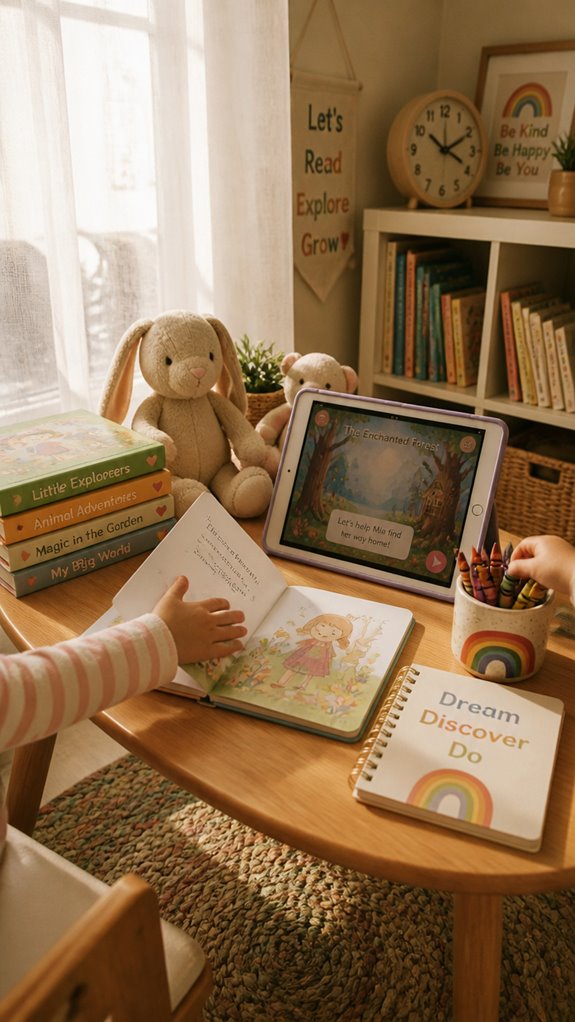
Establishing a consistent reading routine can seem intimidating when life pulls you in many directions, but small, intentional adjustments can make a big difference. Managing interruptions and balancing distractions are key to building habits that last. Research shows that consistent routines significantly improve children’s reading engagement and comprehension. To troubleshoot inconsistency:
- Identify daily time pockets—link reading to existing habits like after brushing or before dinner. Visual calendars or check-offs reinforce this pattern.
- Simplify and chunk the routine—limit tasks to 3–5 steps; use concrete cues like posted schedules or same location each day.
- Minimize distractions—select quiet, dedicated spaces; control sensory input; and use timers or visual cues to sustain focus.
Pairing reading with AI tools for creativity can further enhance engagement by allowing children to explore stories interactively and deepen their learning experience. These strategies turn perceived chaos into a structured environment, fostering a child’s confidence and ensuring that reading remains an essential, crucial part of their growth.
Family Routine Builder Toolkit
Creating a family routine builder toolkit gives you a practical way to develop consistent, meaningful habits that support your child’s adaptability and growth. Focus on fostering creative collaboration, where everyone actively contributes to shaping routines.
Develop a family routine toolkit to nurture adaptability, collaboration, and long-term growth through flexible, meaningful habits.
This shared effort strengthens emotional resilience, helping your child handle uncertainty and challenge calmly. A clear toolkit includes visual schedules, flexible activity plans, and regular check-ins to adapt routines as needed.
Keep in mind, the goal isn’t perfection but building systems that promote independence and growth. Simplify complex ideas into everyday actions, ensuring routines aren’t rigid but resilient. Selecting effective learning tools tailored to your family’s needs ensures your toolkit supports both consistency and meaningful engagement.
This approach helps your child develop skills essential for steering through a world of rapid change — skills like problem framing, emotional strength, and collaboration.
The result: a foundation for long-term mastery and confidence in your child’s future.
The Adaptive Atlas Learning Stack Model
The Adaptive Atlas Learning Stack Model is a practical way to understand how children can thrive amid constant change. It focuses on building flexible habits, like learning reinforcement and habit formation, to prepare for an unpredictable future.
Instead of fixed milestones, you’d encourage your child to develop adaptable skills that grow over time. The model emphasizes three key systems:
- Reinforce learning by creating routines that internalize new skills, making them part of everyday life.
- Prioritize habit formation that nurtures resilience, helping kids recover from setbacks and stay engaged.
- Use intentional repetition and reflection, turning knowledge into long-term capability.
This approach reassures you that progress isn’t about perfection but about cultivating a mindset of continuous growth—an essential foundation for your child’s future success and confidence. By understanding how the brain learns, you can align your family routines with the natural processes that make learning stick.
The Adaptive Atlas Framework
Five connected systems designed to help parents raise adaptable, future-ready children in a world shaped by AI, automation, and constant change.
| 🛡️ |
Anti-Fragile Child SystemBuilds resilience, adaptability, and the ability to handle uncertainty without shutting down. |
| 📚 |
Learning Stack ModelDevelops self-directed learning habits and continuous skill acquisition beyond school systems. |
| 🚀 |
Future Skill Stack SystemFocuses on high-value human skills that remain relevant in an AI-driven economy. |
| 🤖 |
AI Learning SystemTeaches children how to use AI as a thinking partner instead of becoming dependent on it. |
| 🧭 |
Child Type Navigator SystemPersonalizes learning and development based on each child’s strengths and personality. |
FAQ
How Can Routines Be Customized for Children With Sensory Processing Challenges?
You can customize routines by integrating sensory strategies tailored to your child’s needs and maintaining routine flexibility, allowing adjustments that promote comfort and engagement. This mastery guarantees your child develops resilience and adapts effectively within their unique sensory profile.
What Strategies Help Maintain Routines During Family Disruptions or Travel?
When chaos erupts, master Routine flexibility by adapting to travel’s whims. Embrace Travel adaptation as your secret weapon, weaving in spontaneous activities and flexible buffers, transforming disruptions into opportunities to reinforce resilience and your mastery of seamless routine maintenance.
How Do Routines Support Children’s Emotional Regulation Across Different Ages?
Routines foster emotional resilience by providing behavioral consistency, helping children manage stress and develop self-regulation skills. As they grow, routines adapt, reinforcing stability and empowering children to navigate their emotions confidently across different developmental stages.
What Role Do Dads or Extended Family Members Play in Routines?
Dads’ involvement and extended family support are like guiding stars in a constellation, illuminating children’s paths through routines. Their active participation deepens bonds, enriches learning, and creates a resilient support system that nurtures adaptable, future-ready kids.
How Can Technology Be Integrated Without Disrupting Family Routine Consistency?
You can integrate technology by establishing clear digital boundaries and managing screen timing, ensuring it complements rather than disrupts routines. Prioritize intentional use, set expectations, and reinforce habits that support consistent, purposeful family engagement and learning.
References
- https://sesameworkshop.org/resources/family-routines/
- https://www.childrens.com/health-wellness/how-to-create-a-daily-routine-for-kids
- https://sesameworkshop.org/topics/parenting/learning-through-routines/
- https://firstchildrenservices.com/5-everyday-routines-to-support-learning-at-home-for-children-with-special-needs/
- https://raisingchildren.net.au/preschoolers/behaviour/behaviour-management-tips-tools/routines
- https://www.childcareed.com/a/how-can-i-create-family-routines-for-morning-mealtime-and-bedtime-that-work-for-my-program.html
- https://challengingbehavior.org/docs/Positive-Solutions_Family-Routine_Guide.pdf
- https://minnieland.com/morning-routines-for-a-stress-free-start-to-your-familys-day/
- https://www.cambridge.org/core/journals/journal-of-child-language/article/associations-between-shared-book-reading-daily-screen-time-and-infants-vocabulary-size/510AE5663835A8EAE49CF0E51456DA04
- https://www.cipa.cornell.edu/sites/default/files/PAM/Parenting/professional pages/Shared Reading Time & Child Reading Scores_FINAL.pdf