

Why Does Family Learning Transform Your Child’s Future?
Family learning builds resilience, confidence, and critical thinking that research confirms predicts academic and personal success. When you engage in learning together, you’re not just transferring knowledge, you’re constructing a safety net for an unpredictable world.
I discovered this firsthand when my daughter struggled with math anxiety in third grade. Instead of hiring a tutor, we started solving problems together over breakfast. Within weeks, her attitude shifted. This experience sparked why we created Adaptive Atlas, our learning platform designed to make family learning feel natural rather than forced. We wanted parents and kids to experience what I had: the magic of learning as connection, not obligation.
Real Learning Happens at the Kitchen Table
Last year, I watched my son teach his younger sister how to code a simple game. No formal lesson. Just curiosity meeting patience. That 20-minute session taught her problem-solving skills no worksheet ever could. It reminded me that learning flourishes when it’s embedded in relationship, not isolated in worksheets or screens.
Quick Takeaways
- Family learning enhances emotional bonds, trust, and collaboration, building a supportive environment crucial for children’s motivation and resilience.
- Engaging in diverse, purposeful activities develops critical skills like creativity, adaptability, and problem-solving essential for future success.
- Establishing routines and digital discipline promotes focus, independence, and healthy habits, preparing children for a rapidly changing world.
- Parental involvement fosters confidence and a growth mindset, empowering children to navigate uncertainties and embrace lifelong learning.
- Family-based learning supports community bonding and skill development, creating strong foundations for a skilled and adaptable workforce.
Boosting Kids’ Academic and Lifelong Success With Family Learning
Many parents worry about preparing their children for a future that feels unpredictable, but instead of focusing on narrow goals like grades or specific careers, you can build a strong foundation for lifelong success through family learning.
Focus on family learning to build a resilient foundation for your child’s lifelong success and adaptability.
This approach boosts learning motivation by making learning meaningful and connected to real-life challenges. When children see relevance, they stay engaged, and their knowledge retention improves because they’re actively linking new ideas to existing understanding.
Rather than emphasizing rote memorization, focus on fostering curiosity and problem-solving. Building personal branding habits early through family learning helps children develop authentic self-presentation skills that will serve them throughout their lives.
Consistent, supportive interactions strengthen long-term capabilities, helping kids adapt to change.
Strengthening Parent-Child Bonds by Learning Together
Have you ever wondered how learning together can deepen your connection with your child while preparing them for a future filled with change? When you teach and explore alongside your child, you foster intergenerational bonding built on shared curiosity. This process creates lasting trust and understanding, essential in a world of constant adaptation.
Imagine:
- Engaging in open conversations about new ideas
- Discovering your child’s unique viewpoints
- Learning from each other’s strengths and experiences
- Creating a culture of mutual growth
These moments help your child see learning as a partnership, not just a task. They develop confidence, resilience, and adaptability—skills crucial for their future. Research shows that collaborative learning experiences between parents and children significantly enhance both academic outcomes and emotional development.
Embracing this approach shifts the focus from fear of the unknown to building a supportive, mastery-oriented environment.
Economic and Community Benefits of Investing in Family Education
Investing in family education creates lasting economic and community benefits that extend far beyond individual children. When parents actively engage in learning with their kids, it sparks policy innovation aimed at strengthening communities.
Family education investments foster community growth and inspire policies that benefit everyone’s future.
This shared effort builds social cohesion, creating networks of support that last over generations. These investments improve educational outcomes, leading to a more adaptable, skilled workforce ready for the uncertainties of the future.
Many parents worry about the fast pace of change, but focusing on developing core capabilities—like critical thinking and problem solving—is within your control. Flexible learning paths enable families to adapt their educational approach to each child’s unique pace and style, ensuring sustained engagement and growth.
When families prioritize ongoing learning, they set a foundation for sustainable growth, resilience, and opportunity.
Such investments foster a sense of collective progress, empowering children and communities to thrive amid continuous change.
Practical Strategies for Parents to Create a Thriving Home Learning Environment
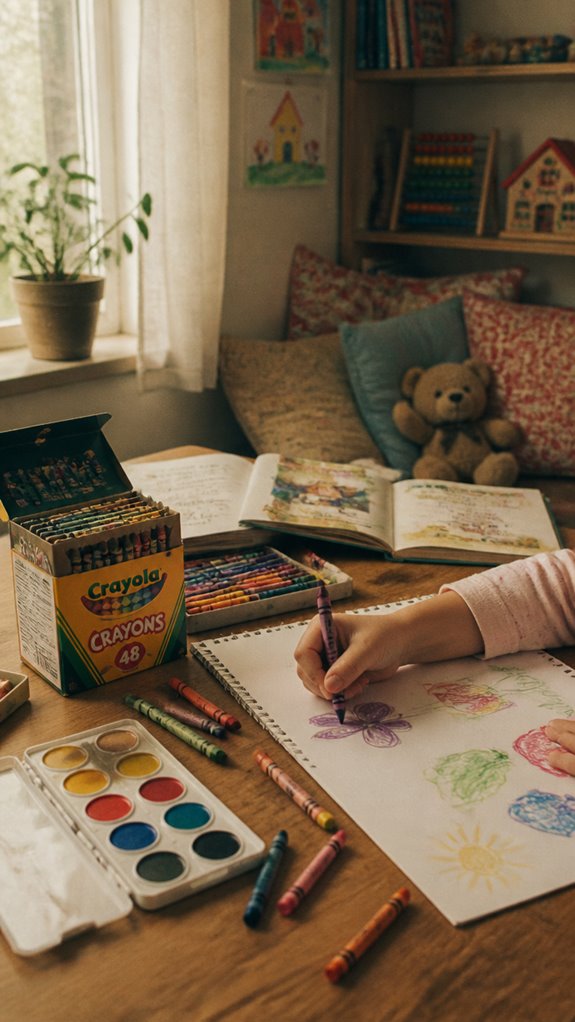
Creating a home learning environment that supports your child’s growth starts with setting up routines and spaces that encourage curiosity and independence. A clear daily rhythm helps children know what to expect, reducing anxiety and promoting self-discipline.
Designate specific areas for different types of learning, like reading, creative work, or problem-solving, to foster focus and skill diversity.
Cultivate a generational mindset by emphasizing adaptability and resilience over fixed success paths. Teaching children how to discuss emerging technologies thoughtfully helps them navigate an increasingly complex world with confidence.
Offer a variety of learning tools—books, puzzles, digital resources—that grow with your child’s changing interests.
Regularly celebrate efforts and progress, reinforcing that growth is ongoing.
Recall, your goal isn’t perfection but consistency, creating a foundation where your child can develop long-term skills essential for future success.
Parent Involvement Boosts Resilience
Parental support plays a crucial role in building a child’s resilience, and it’s reassuring to know that your involvement can make a meaningful difference. Your family communication creates a safe space where children feel understood and supported, fostering emotional resilience. When you respond with kindness and acceptance during tough moments, you help your child learn to bounce back from setbacks. Research shows that parental warmth boosts resilience and helps children develop active coping strategies, which are essential as they face an unpredictable future. By focusing on consistent, caring interactions, you strengthen your child’s ability to handle stress and uncertainty. This foundation not only benefits their current well-being but also prepares them for future challenges. Open communication between family members establishes the emotional foundation necessary for children to develop the confidence and trust required to navigate life’s difficulties.
| Family communication | Emotional resilience | Parental warmth |
|---|---|---|
| Builds trust | Fosters hope | Supports coping |
| Fosters understanding | Reduces anxiety | Enhances confidence |
| Reinforces support | Promotes adaptability | Strengthens bonds |
Addressing Digital Distraction Challenges
Digital distraction is a common challenge today, but it’s one you can address with intentional strategies that support your child’s long-term growth. Setting clear digital boundaries helps your child recognize limits and develop self-control amid constant device access. 75% of parents find it difficult to control child’s digital habits, highlighting the need for deliberate guidance in this area. Establishing family routines ensures technology doesn’t overshadow meaningful interactions, allowing for dedicated learning and connection time. You might visualize a family table free of devices during meals or device-free zones in the home, creating spaces for deeper engagement. Common problematic behaviors like excessive social media use and late-night screen time are digital habits kids should avoid to maintain healthy development. Recall, disrupting patterns of overstimulation enhances focus and emotional regulation, laying a foundation for resilience. Consistent boundaries and routines give your child predictability and safety, fostering essential skills for future adaptability. Confidence comes from knowing you’re shaping healthy habits that empower your child’s ability to navigate a tech-rich world effectively.
Family Learning Advantage Guide

In today’s fast-changing world, building a lasting learning advantage for your child doesn’t happen by chance — it requires a clear, purposeful approach. The Family Learning Advantage Guide helps you understand how to foster a resilient and adaptable mindset.
Focus on curriculum innovation by shifting from static teaching to dynamic learning ecosystems, where your child’s growth is continuous and personalized. This means creating environments that support curiosity, self-directed exploration, and skill-building that aligns with future needs. Research increasingly demonstrates that expanding learning beyond school is essential, as traditional classroom settings alone cannot provide the comprehensive skill development today’s children require.
Instead of relying on traditional methods, you develop systems that emphasize long-term capabilities—like critical thinking and adaptability—that research shows are essential for success.
With intentional setup, you guide your child towards mastery, confidence, and a future-ready mindset, reducing the fear of an unpredictable world and establishing a strong foundation for lasting achievement.
The Adaptive Atlas Learning Stack Model
How children learn in a world where knowledge updates rapidly can feel intimidating, but it’s actually an opportunity to focus on how they learn rather than what they memorize.
The Adaptive Atlas Learning Stack Model emphasizes that mastery comes from building adaptable skills rooted in generational continuity and cultural preservation.
Picture:
- Developing anti-fragile resilience to handle uncertainty.
- Fostering self-directed learning loops that adapt over time.
- Prioritizing future-proof skills like critical thinking and creativity.
- Using AI as a partner for amplification without dependency.
This model reassures parents that guiding children through systems and patterns creates stability amid change. Research demonstrates that adaptive learning systems personalize education by continuously adjusting content difficulty and instructional methods based on individual student performance and engagement.
It’s about empowering your child to develop a flexible identity and a capacity to thrive regardless of changing roles, preserving their belonging within family, community, and culture.
The Adaptive Atlas Framework
Five connected systems designed to help parents raise adaptable, future-ready children in a world shaped by AI, automation, and constant change.
| 🛡️ |
Anti-Fragile Child SystemBuilds resilience, adaptability, and the ability to handle uncertainty without shutting down. |
| 📚 |
Learning Stack ModelDevelops self-directed learning habits and continuous skill acquisition beyond school systems. |
| 🚀 |
Future Skill Stack SystemFocuses on high-value human skills that remain relevant in an AI-driven economy. |
| 🤖 |
AI Learning SystemTeaches children how to use AI as a thinking partner instead of becoming dependent on it. |
| 🧭 |
Child Type Navigator SystemPersonalizes learning and development based on each child’s strengths and personality. |
FAQ
How Does Family Learning Influence Children’s Emotional Intelligence Development?
Research shows family involvement boosts emotional resilience by 40%, enhancing social skills. You influence your child’s emotional intelligence by fostering open communication, empathy, and shared experiences, helping them navigate complex emotions and build meaningful relationships.
What Role Do Extended Family Members Play in a Child’s Learning Success?
You involve extended family by encouraging grandparent involvement and fostering siblings’ contribution, which enhances learning success. This collaborative environment provides diverse viewpoints, emotional support, and practical guidance, strengthening a child’s adaptability and long-term capability within an interconnected family network.
How Can Family Learning Programs Be Adapted for Diverse Cultural Backgrounds?
You can foster cultural inclusivity by tailoring family learning programs with language accommodations, respecting diverse traditions, and incorporating community viewpoints, ensuring mastery in supporting every child’s unique background and nurturing adaptable, future-ready capabilities across cultures.
What Are Effective Ways to Measure Long-Term Family Learning Impacts?
Did you know sustained engagement improves long-term learning outcomes by 60%? To measure impacts, track progress through ongoing assessments, reflection, and behavioral changes, ensuring you refine strategies that foster deep, mastery-level family learning over time.
How Does Family Learning Support Children’s Adaptability to Rapid Technological Change?
You support children’s adaptability by transmitting generational wisdom and fostering digital literacy, enabling them to navigate rapid technological change confidently, think critically, and leverage AI tools effectively, ensuring they stay relevant and resilient amid changing digital environments.
References
- https://familieslearning.org/blog/building-a-legacy-how-family-learning-changes-everything/
- https://www.familylearningcompany.com/family-learning/
- https://www.hanoverresearch.com/insights-blog/k-12-education/top-benefits-of-family-and-community-engagement/
- https://www.aclu-de.org/news/strengthening-bonds-power-family-engagement-education/
- https://www.powerschool.com/blog/why-parent-engagement-is-important-to-student-success/
- https://www.understood.org/en/articles/family-engagement-and-student-success
- https://www.canr.msu.edu/news/the-importance-of-family-engagement
- https://familieslearning.org/blog/at-the-heart-of-family-learning-building-the-conditions-to-support-transformational-change/
- https://pmc.ncbi.nlm.nih.gov/articles/PMC10111699/
- https://childandfamilypolicy.duke.edu/blog/news/study-reveals-how-parents-can-play-a-key-role-in-helping-their-children-develop-resilience-in-the-face-of-a-public-health-crisis/