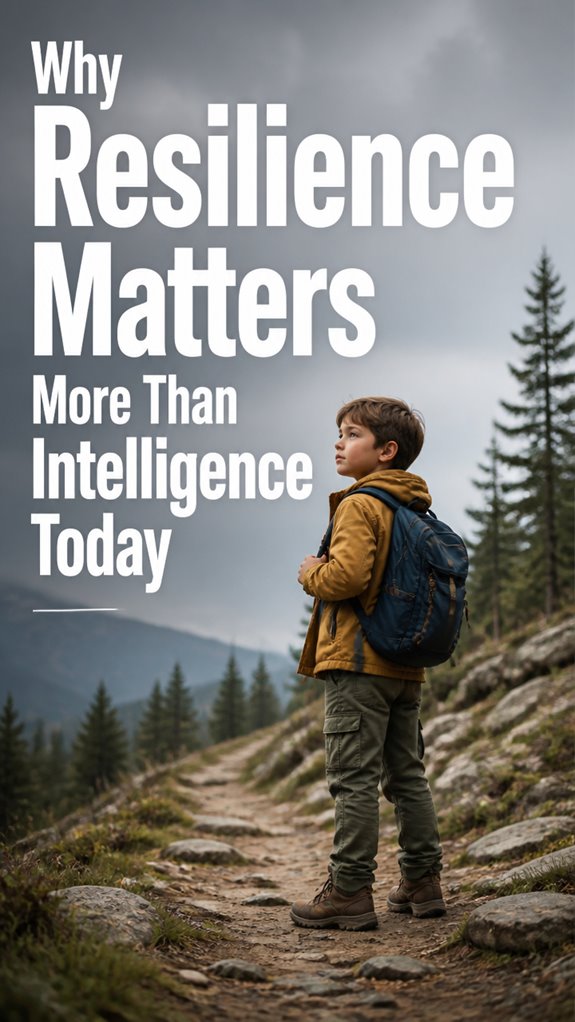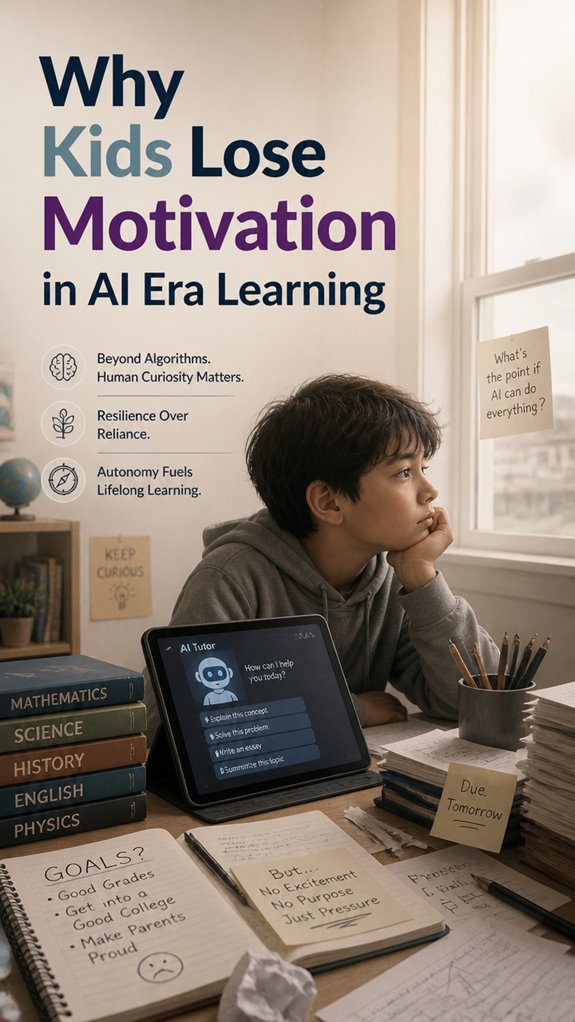
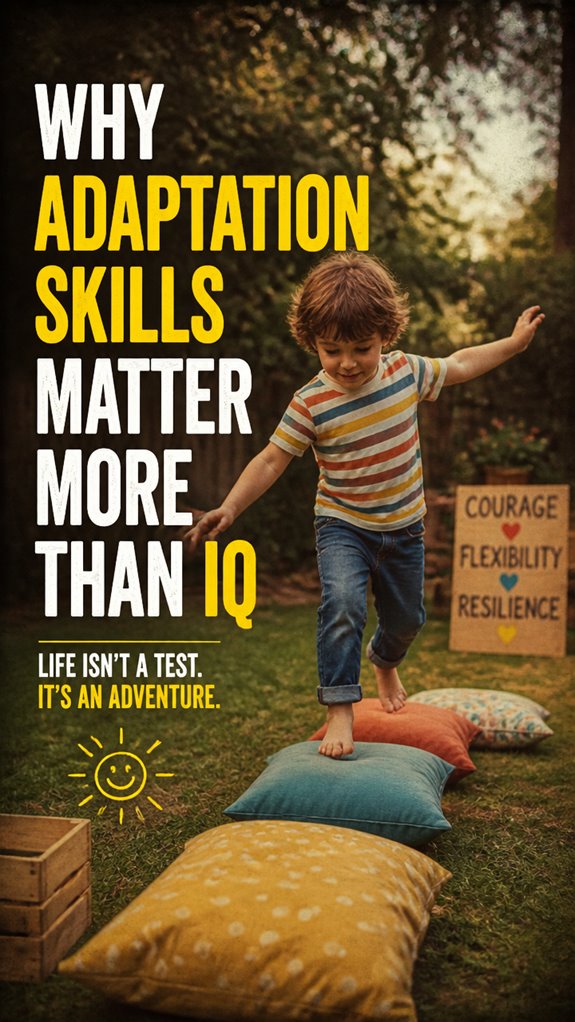
Why Does Your Child’s IQ Matter Less Than You Think?
Because adaptive skills like emotional regulation, flexibility, and social awareness actually predict real-world success better than test scores ever will. Your kid might ace standardized tests but crumble when facing rejection or change. That’s where adaptation enters the room.
I watched my nephew struggle through third grade. Straight A’s, impressive reasoning skills, terrible at handling mistakes. One failed math test triggered a meltdown that lasted hours. That’s when I realized: IQ doesn’t teach resilience. So we created Adaptive Atlas. We wanted parents to see what I finally understood. Adaptive skills aren’t luxury add-ons. They’re the operating system your child needs to actually function when life gets messy and unpredictable.
Last year, my daughter faced rejection from her preferred soccer team. Instead of spiraling, she asked questions, adjusted her training approach, and tried again next season. That moment crystallized everything. She possessed the exact skill her high IQ alone could never have given her: the capacity to bounce forward.
Quick Takeaways
- Adaptive skills enable children to navigate a constantly changing world, fostering resilience and independence beyond raw cognitive ability.
- Emotional regulation and flexibility are essential for overcoming setbacks and managing challenges, which IQ alone does not address.
- In rapidly evolving industries, adaptability skills are better predictors of future success than traditional IQ measures.
- Developing adaptive competencies supports lifelong learning, problem-solving, and decision-making in unpredictable environments.
- Focusing on adaptive skills enhances emotional intelligence and social awareness, crucial for personal and professional growth.
Why Adaptive Skills Are Essential for Child Resilience
In a world that’s constantly changing, your child’s ability to adapt isn’t just helpful—it’s essential to their resilience. When faced with uncertainty or setbacks, emotional resilience helps them stay balanced and face challenges without becoming overwhelmed.
Cognitive flexibility allows them to see options instead of feeling stuck in one way of thinking. These adaptive skills create a foundation for long-term success, especially as the future evolves rapidly.
Instead of fearing change, focus on developing these abilities as part of everyday routines. When children learn to handle frustration and stay curious, they build confidence. Building motivation and hope during uncertain times strengthens their ability to persist through difficulties.
This isn’t about fixing them but empowering them with tools for continuous growth. By nurturing these skills, you give your child the strength to navigate complexity and thrive in an unpredictable world.
Understanding the Key Differences Between Adaptive Skills and IQ
Many parents naturally focus on their child’s IQ, believing it’s the key to future success, but that’s only part of the story. IQ measures cognitive skills like reasoning, but it doesn’t capture adaptive skills, like cognitive flexibility and emotional regulation. These are essential for handling change and steering through life’s challenges.
Children with strong adaptive skills can shift their thinking when needed, stay calm under pressure, and adjust to new situations. That’s what truly prepares them for an uncertain, developing world. As AI continues to reshape industries and work environments, mental preparation becomes increasingly critical for navigating rapid technological change.
Instead of stressing over IQ scores, focus on cultivating patterns of resilience and self-awareness. Building these skills takes time and deliberate practice, but it creates a foundation for lifelong adaptability, empowering children to thrive regardless of what the future holds.
Main Domains of Adaptive Behavior That Promote Independence
Developing adaptive behavior in children isn’t about teaching them fixed skills; it’s about helping them build core patterns of independence that prepare them for ongoing change. These patterns revolve around three main domains:
- Contextual awareness — understanding social cues and environmental shifts, so they can adapt and respond appropriately without feeling overwhelmed.
- Emotional regulation — managing feelings effectively, which helps them stay balanced and resilient during challenges.
- Problem-solving and decision-making — relying on internal cues and learned patterns to navigate uncertainty confidently.
Fears about long-term stability are common, but by focusing on these domains, you’re empowering your child to stay flexible and resourceful. When children explore broadly before specializing in particular skills, they develop the adaptive foundations needed to apply learning across diverse situations.
This approach creates a future-ready foundation built on mastery of patterns, not fixed skills.
How Adaptive Skills Better Predict Success Than IQ

While IQ has long been seen as a predictor of success, recent research shows that adaptive skills actually provide a clearer path to future achievement. Skills like emotional intelligence and learning agility help children navigate uncertainty and develop resilience, which IQ alone can’t measure. Think of success as more about how well kids adapt, communicate, and grow with change—traits that foster independence and confidence.
| Skill Type | Focus | Impact |
|---|---|---|
| Emotional Intelligence | Managing emotions, empathy | Builds strong relationships |
| Learning Agility | Adapting to new info | Creates lifelong adaptive learners |
| Problem-Solving | Creative thinking, resilience | Prepares for complex future challenges |
| Decision-Making | Judgement, confidence | Turns uncertainty into opportunity |
Practical Strategies for Parents to Develop Adaptive Skills
Building adaptive skills in your child doesn’t require a radical overhaul; instead, it’s about incorporating small, intentional practices into everyday life that foster resilience, curiosity, and problem-solving.
Focus on enhancing emotional intelligence by encouraging your child to identify and express feelings, helping them navigate social interactions confidently.
Cultivate creative problem solving by posing open-ended questions and allowing space for experimentation, fostering their independence and resourcefulness.
Also, model adaptability yourself—embrace change openly and share stories of overcoming setbacks. These practices help develop a flexible mindset, preparing your child to thrive amidst uncertainty. Research consistently shows that resilience matters more than raw intelligence in determining long-term success and wellbeing.
Keep in mind, your role is to guide gently, emphasizing progress over perfection, so your child feels empowered to face the future’s challenges with confidence and autonomy.
Building a Resilient Future: Supporting Continuous Adaptive Skill Growth
| Key Idea | Practical Approach |
|---|---|
| Cultivate adaptability | Encourage your child to develop an evolutionary mindset, seeing change as an opportunity. |
| Embrace situational switching | Support activities that require shifting between tasks, strengthening their ability to adapt quickly. |
| Focus on resilience | Help your child handle setbacks, understanding failure as part of growth. |
As parents, we often worry about how quickly the world changes and what that means for our children’s future. Instead of fearing constant evolution, see it as an opportunity to build resilience. Foster an evolutionary mindset by encouraging curiosity and flexibility. Practice situational switching through diverse activities that challenge them to adapt. Reinforce the idea that setbacks aren’t failures but lessons. Learning to turn mistakes into growth empowers children to view errors as valuable feedback rather than sources of discouragement. This approach creates confident, adaptable children who can navigate uncertainty with calm and clarity. Your role is to provide a steady framework that emphasizes growth, not perfection, shaping a future-ready mindset.
Neuroplasticity Highlights Adaptability’s Primacy
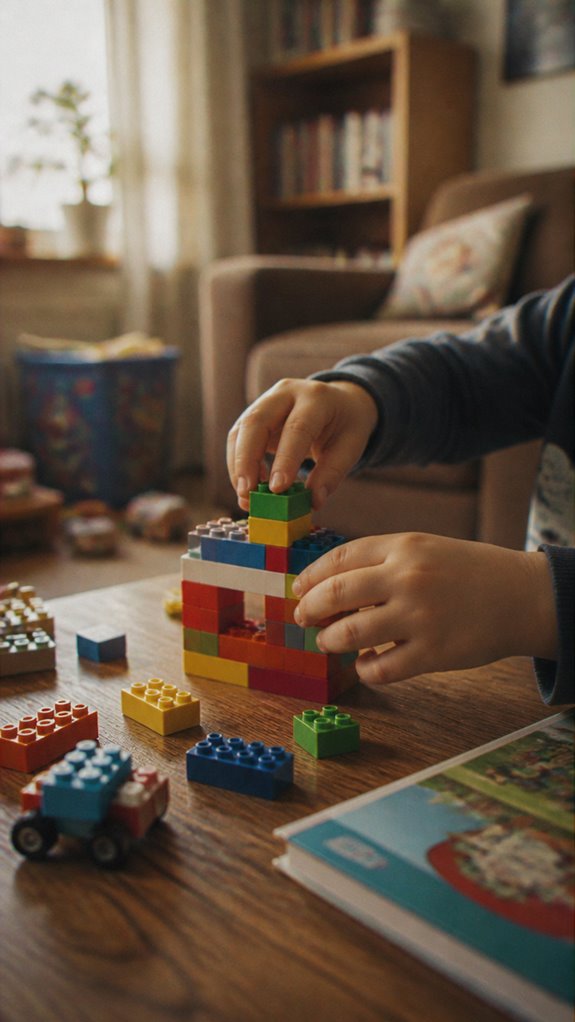
Neuroplasticity proves that your child’s brain is far more adaptable than many of us realize, especially during childhood. It’s rooted in neuroplasticity concepts that show the brain’s incredible flexibility to reorganize itself in response to experiences. This flexibility isn’t fixed; it persists through life, allowing ongoing learning and growth.
Here’s what neuroplasticity means for your child’s future:
- Strengthens neural pathways through repeated experiences, building foundational skills like problem-solving and communication.
- Prunes unused connections, helping the brain prioritize what matters most and stay efficient.
- Supports recovery and adaptation, enabling your child to bounce back and thrive amidst challenges.
Understanding brain flexibility empowers you to foster a growth mindset, encouraging continuous development based on long-term capabilities instead of static IQ. Micro learning approaches leverage this neuroplasticity by delivering content in small, focused segments that align with how the brain naturally adapts and retains information.
Handling Resistance to Change
Have you ever wondered why change feels so hard for children, even when it’s necessary for their growth? Resistance mechanisms, like fear of failure or losing control, often trigger change resistance. These reactions aren’t signs of weakness—they’re natural patterns that protect us from uncertainty.
As a parent, your goal is to see these reactions as signals, not obstacles. When children face change, calmly acknowledge their feelings and help them see the bigger picture: change is a process, not a threat. Research shows that fostering curiosity naturally reduces resistance by helping children view new situations as opportunities for discovery rather than threats to navigate.
Reframing resistance as part of growth empowers children to build resilience and adaptability. Instead of forcing or rushing them through discomfort, guide them to develop internal systems that manage resistance and navigate uncertainty with confidence.
This approach shapes future-ready children who can thrive amid ongoing change.
none
Understanding that “none” might seem like a blank space can be unsettling, but it’s also an opportunity. It’s your chance to nurture your child’s cognitive flexibility and emotional resilience.
Seeing “none” as an opportunity fosters growth in resilience and adaptable thinking.
These skills are essential for thriving in a future of constant change. Here’s what to focus on:
- Encourage adaptable thinking—help your child see challenges as opportunities, not threats.
- Foster emotional strength—teach them to manage frustration and recover from setbacks. Developing resilience and flexibility enables children to navigate uncertainty with greater confidence.
- Promote self-directed learning—support their curiosity and problem-solving independence.
Designing Resilient Future Learners
| Focus | Approach | Goal |
|---|---|---|
| Creating resilient learners | Foster calming routines, encouraging risk-taking, and embracing failure as growth, not threat | Build core resilience to handle future uncertainty with confidence |
| Embracing flexibility | Encourage creative flexibility by exploring multiple interests and viewpoints | Develop adaptability, so your child stays open and resourceful amid change |
| Supporting independence | Provide tools for self-directed learning and problem-solving | Cultivate skills that transcend specific knowledge, ensuring long-term relevance |
| Using systems instead of hacks | Focus on consistent patterns and long-term habits | Create a stable foundation to navigate constant change without fear |
| Personalization | Recognize each child’s unique strengths—adjust approaches accordingly | Empower children to see change as opportunity, not threat |
Research shows that adaptability for future success significantly outweighs traditional measures in predicting long-term achievement and career fulfillment.
Designing future-ready learners means creating a environment where your child can thrive amid these shifts.
The Adaptive Atlas Anti-Fragile Child System
In a world full of unpredictability, raising an anti-fragile child means teaching them how to grow stronger through challenges, not despite them. You help your child develop a growth mindset and emotional agility—key for thriving amid constant change.
This system revolves around three core principles:
- Building resilience through embracing failure and uncertainty.
- Fostering independence to adapt learning strategies as needs evolve.
- Cultivating emotional agility to manage setbacks calmly and confidently.
Rather than fearing the shifting terrain, view it as an opportunity to strengthen your child’s capabilities. The anti-fragile child system specifically teaches children to convert stressors into catalysts for growth and learning.
See every change as a chance to build your child’s resilience and unlock their true potential.
By focusing on systemic patterns—like adaptability and emotional resilience—you give them the tools to navigate the future with clarity and confidence.
This long-term approach empowers your child to grow stronger, no matter what lies ahead.
The Adaptive Atlas Framework
Five connected systems designed to help parents raise adaptable, future-ready children in a world shaped by AI, automation, and constant change.
| 🛡️ |
Anti-Fragile Child SystemBuilds resilience, adaptability, and the ability to handle uncertainty without shutting down. |
| 📚 |
Learning Stack ModelDevelops self-directed learning habits and continuous skill acquisition beyond school systems. |
| 🚀 |
Future Skill Stack SystemFocuses on high-value human skills that remain relevant in an AI-driven economy. |
| 🤖 |
AI Learning SystemTeaches children how to use AI as a thinking partner instead of becoming dependent on it. |
| 🧭 |
Child Type Navigator SystemPersonalizes learning and development based on each child’s strengths and personality. |
FAQ
How Do Adaptive Skills Vary Across Different Cultural or Socioeconomic Contexts?
You recognize that cultural perceptions influence how adaptability is valued, while socioeconomic barriers can limit access to growth opportunities. To foster adaptable skills, you work on overcoming these barriers and challenge cultural norms that restrict independent, innovative thinking.
Can Adaptive Skills Be Measured Accurately in Young Children?
You can’t measure adaptive skills in young children solely through traditional assessment methods or developmental milestones. Instead, focus on observing their ability to navigate change, recover from setbacks, and approach challenges with resilience and independence.
What Role Does Emotional Regulation Play in Adaptive Functioning?
Emotional regulation acts like a ship’s rudder, steering through turbulent waters. Emotional awareness helps you recognize storm clouds, while regulation strategies keep you steady, enabling kids to adapt, flourish, and navigate life’s unpredictable seas with confidence.
Are There Specific Interventions That Effectively Boost Adaptive Skills?
You can boost adaptive skills through behavioral interventions and skill development programs designed to foster resilience, critical thinking, and flexibility. Embrace these approaches to free yourself from limitations and empower your child for continuous, autonomous growth amid constant change.
How Does Technology Influence the Development of Adaptive Behaviors?
Envision teaching your child digital resilience through exploring AI tools, strengthening their adaptability. Technology fosters technological fluency, empowering them to navigate unforeseen changes confidently—liberating their mindset with skills for a dynamic, developing world.
References
- https://canfasd.ca/2020/08/19/article-summary-2-relation-between-adaptive-function-and-iq/
- https://www.frontiersin.org/journals/psychology/articles/10.3389/fpsyg.2021.692330/full
- https://digitalcommons.unl.edu/cgi/viewcontent.cgi?article=1262&context=specedfacpub
- https://pmc.ncbi.nlm.nih.gov/articles/PMC11940882/
- https://onlinelibrary.wiley.com/doi/full/10.1111/jar.12876
- https://sanjosementalhealth.org/mental-health/neuroplasticity-the-brains-ability-to-adapt-and-change/
- https://lonestarneurology.net/others/neuroplasticity-how-the-brain-heals-and-adapts/
- https://www.health.harvard.edu/mind-and-mood/tips-to-leverage-neuroplasticity-to-maintain-cognitive-fitness-as-you-age
- https://pmc.ncbi.nlm.nih.gov/articles/PMC12844308/
- https://pmc.ncbi.nlm.nih.gov/articles/PMC10741468/