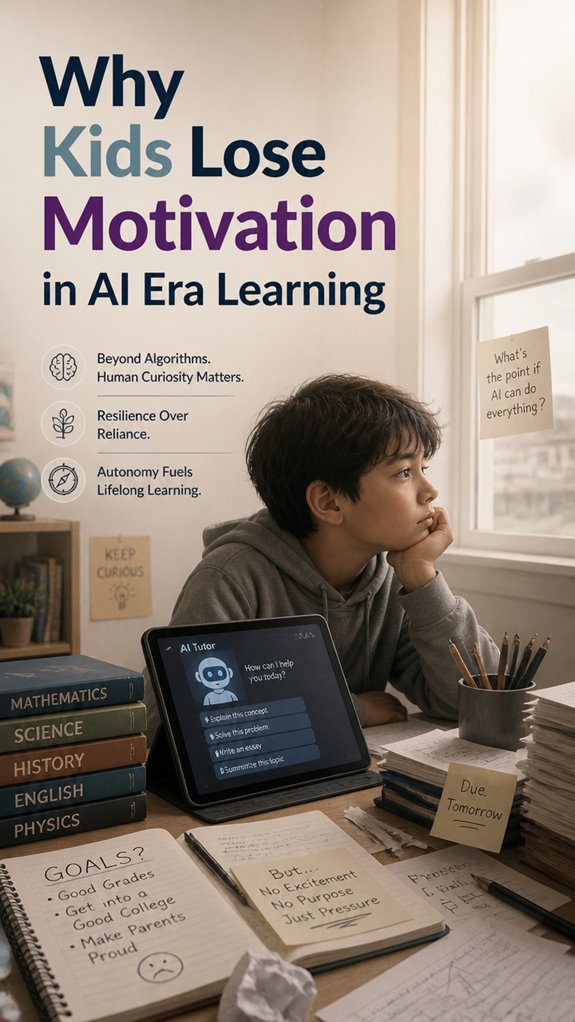

Is Your Child’s Real Problem Time or Energy?
Your child isn’t struggling because the clock says so. They’re struggling because their energy tank sits on empty. When kids run depleted, their prefrontal cortex goes offline. Learning vanishes. Impulse control crumbles. Frustration wins. You see irritability, shutdowns, lost motivation. That’s burnout wearing a kid suit.
How I Learned Energy Beats the Schedule
My daughter came home from school last year and literally collapsed on the couch at 3 PM. Not tired. Depleted. I’d packed her schedule like a backpack overstuffed with textbooks. Piano at 4. Soccer at 5:30. Homework at 7. I kept adding because I thought structure meant progress. At Adaptive Atlas, we write to expose exactly this myth. We help families see that capability doesn’t come from more. It comes from breathing room. From boredom. From genuine rest where brains actually restore themselves.
The Tuesday I Actually Changed
One Tuesday, I cancelled everything. No lessons. No activities. My daughter played with blocks for two hours. Just blocks. By evening, she’d solved a math problem she’d been stuck on for weeks. I watched her brain actually work. That’s when energy resilience clicked for me. Rest isn’t laziness. It’s the fuel for everything else.
Quick Takeaways
- Energy quality determines children’s learning capacity and resilience; depleted reserves cause shutdown when facing difficulty.
- Overscheduled children experience diminished motivation and fatigue manifesting as meltdowns on simple tasks, not slowness.
- Cognitive resources are finite; continuous instruction and fragmented attention decrease capacity for deep learning and skill development.
- Unstructured time, autonomous choice, and boredom create space for genuine curiosity and sustainable energy management habits.
- Building energy resilience over effort alone fosters emotional agility and adaptability needed for thriving amid uncertainty.
Understand Why Your Child’s Energy Tank Matters More Than Bedtime
While you’ve likely heard that consistent sleep schedules matter—and they do—what actually determines whether your child can learn, adapt, and handle challenge isn’t the clock on the wall; it’s the quality of energy they’re bringing to each moment.
Energy management is the real skill.
A well-rested child with depleted emotional reserves will shut down when faced with difficulty.
A child who’s developed dynamic resilience—the ability to recover and refocus—can learn through fatigue and frustration.
Your job isn’t to eliminate struggle or perfectly optimize bedtime.
It’s to help your child recognize when their tank is low and teach them how to restore it deliberately.
Building sustainable healthy habits creates the foundation for consistent energy restoration throughout their day.
This builds the self-awareness they’ll need to navigate constant change.
When they can manage their own energy, they’re no longer dependent on external schedules.
They’re self-directed and capable of handling whatever comes next.
How Sleep Loss and Energy Depletion Damage Learning and Behavior
You’ve learned to recognize your child’s energy patterns—when they’re recovering, when they’re pushing through, and how they respond to challenge. Sleep loss directly undermines this ability.
Sleep loss erases your ability to read your child’s energy patterns—when they’re recovering, pushing through, or hitting their limit.
When your child’s energy tank depletes, their behavioral resilience collapses. They become reactive instead of thoughtful, emotional instead of regulated.
This isn’t a character flaw. It’s biology. A tired brain struggles to access the prefrontal cortex—the part responsible for decision-making and impulse control. Your child can’t think clearly because they’re literally operating from a depleted state.
Energy restoration isn’t luxury. It’s infrastructure. When your child sleeps well, they recover the capacity to learn, adapt, and stay engaged with difficulty. Work and rest balance ensures their nervous system has time to process and consolidate what they’ve learned.
This is how anti-fragility actually builds. Without it, no skill development sticks.
The future demands capability under pressure. That capability begins with protecting sleep as non-negotiable.
Catch Energy Collapse Before the Meltdown: Warning Signs to Watch
Energy collapse doesn’t announce itself with a single crisis—it whispers through patterns you can learn to recognize.
Watch for the subtle shifts: your child becomes irritable over small frustrations, loses focus mid-task, or moves slower than usual. These aren’t character flaws. They’re signals that their energy ecosystem is depleted.
Your job isn’t to push harder. It’s to notice what drains them fastest and what restores them. Some children need movement. Others need silence.
Understanding these quantum emotions—how mood, focus, and resilience shift together—gives you real leverage. When children develop independent thinking skills, they gain the self-awareness to recognize their own energy patterns and make choices that sustain their efforts.
When you spot early warning signs, you intervene before burnout locks in. This isn’t pampering. It’s system design.
A child who learns to manage their energy becomes someone who can sustain effort, adapt under pressure, and keep building capability over decades.
Refill Your Child’s Energy Tank Before Adding Anything Else

Most parents instinctively add more—more tutoring, more activities, more expectations—when they sense their child falling behind. But this approach ignores what neuroscience reveals: a depleted child can’t absorb anything, no matter how excellent the instruction.
Energy psychology shows us that essential nutrition—rest, play, and autonomy—directly fuels learning capacity. AI and emerging technologies are creating personalized learning pathways that can adapt to your child’s energy levels and cognitive state, but only if the foundational energy work is done first. personalized learning pathways
Before you add another commitment, refill the tank:
- Restore unstructured time where your child chooses what to do
- Prioritize sleep and movement over evening optimization sessions
- Remove low-impact obligations that drain without building capability
- Create space for boredom, which sparks genuine curiosity
When your child’s energy returns, learning becomes possible again. You’re not falling behind by pausing. You’re building the foundation that makes everything else work.
Adaptability starts with a full tank, not an overscheduled calendar.
Burnout Replaces Traditional Underperformance
Children don’t just lag behind anymore—they burn out. You see it: packed schedules crush their spark before they even start. In today’s accelerating world, burnout replaces old underperformance as the real threat. You’re not powerless; build energy resilience now to free your child from this trap. When parents actively support their child’s confidence through encouragement and guidance, they create the foundation for sustainable energy management.
| Old Pattern | New Reality |
|---|---|
| Low effort, low grades | Exhaustion, shutdown |
| Fixed motivation | Motivation shifts daily |
| Linear school grind | Constant adaptation |
| Recovery through rest | Needs energy resilience |
Fear the burnout cycle? Reframe it: prioritize energy systems over endless tasks. Like Cal Newport’s deep work principles, you teach motivation shifts that compound into future adaptability. Your child thrives amid change, not despite it. Act today—liberate their potential.
Energy Awareness Guide for Parents
Recognizing your child’s energy patterns is where the real work begins. You’ve been taught to maximize hours—more study, more practice, more effort. But that framework collapses when energy runs dry. Your child’s capacity to think, learn, and adapt depends entirely on emotional endurance and energy sustainability, not clock time.
Start noticing these patterns:
- When does your child enter flow versus when do they fight resistance?
- What drains their tank fastest—social demands, cognitive load, or uncertainty?
- How long does recovery take after challenge?
- Which activities restore them most effectively?
This awareness isn’t soft parenting. It’s strategic. A child who understands their own energy rhythm can self-regulate in a world built on constant change. They won’t crash under pressure. They’ll know how to refuel and stay adaptable. Learning to embrace challenges helps children develop resilience and the emotional endurance needed to sustain their energy through demanding situations. That’s your real competitive advantage.
Cognitive Load Exceeds Clock Hours

Your child can sit at a desk for three hours and learn less than they would in thirty focused minutes—and this isn’t laziness or lack of motivation.
Cognitive load is the real measure. Your child’s brain has limited working memory—holding only 3-5 pieces of information simultaneously. When you exceed that capacity, learning stops. Without adequate cognitive resources, your child’s brain initiates protective shutdown responses to prevent further overwhelm. Using interest exploration strategies can help maintain engagement while respecting these cognitive limits.
| Signal | What It Means |
|---|---|
| Meltdowns on easy work | Working memory overwhelmed |
| “I can’t do it” despite understanding | Cognitive overload, not inability |
| Lessons dragging endlessly | Processing fatigue, not slowness |
| Frustration mid-task | Learning capacity reached |
Clock hours mean nothing without energy. Your job isn’t scheduling longer sessions—it’s protecting your child’s learning capacity by removing distractions, simplifying instructions, and breaking tasks into manageable chunks. This builds sustainable capability, not burnout.
Attention Residue Drains Development Potential
When your child switches from math to reading to checking a notification and back to math again, something invisible happens: a cognitive tax gets paid each time. That’s attention residue—the mental friction of shifting focus—and it’s depleting their development potential far more than you realize.
Each shift in focus costs energy, not just time. Your child’s focus endurance deteriorates, and their capacity for deep thinking shrinks. Learning to create value early requires the sustained attention that fragmentation destroys.
Here’s what happens:
- Mental transition costs drain energy faster than the actual work
- Fragmented attention prevents skill consolidation and real learning
- Energy resilience weakens when breaks never come
- Decision-making capacity drops as cognitive reserves deplete
The solution isn’t managing time better. It’s protecting energy by creating uninterrupted blocks where your child can think deeply. This builds the sustained attention that drives actual capability growth—the foundation they’ll need to navigate complexity ahead.
The Adaptive Atlas Framework
The five-layer system you’ve just learned about isn’t a curriculum or a collection of parenting tips—it’s an operating system for building capability in a child who’ll face genuine uncertainty. Each layer addresses how your child actually develops in real time, grounded in energy dynamics rather than abstract theory. Understanding AI era navigation requires recognizing that traditional time-management approaches fail when the landscape shifts faster than children can memorize solutions.
| Layer | Focus | Output |
|---|---|---|
| Anti-Fragile Child | Handling uncertainty | Resilience under pressure |
| Learning Stack | Self-directed growth | Continuous skill acquisition |
| Future Skill Stack | Relevant abilities | High-leverage thinking |
Your role shifts from controlling outcomes to establishing parental boundaries that protect your child’s energy for what matters. You’re not preparing them for one fixed future. You’re building someone who learns, adapts, and creates value across whatever comes next. This framework gives you permission to stop optimizing for perfection and start building real capability.
The Adaptive Atlas Anti-Fragile Child System
Because uncertainty now accelerates rather than settles, your child’s ability to stay functional under pressure matters more than how much they know or how quickly they achieve.
The Anti-Fragile Child System builds this foundation through:
- Emotional agility—staying engaged when outcomes feel unclear instead of shutting down
- Social resilience—recovering from difficulty with support and viewpoint intact
- Challenge reframing—learning that frustration signals growth, not failure
- Pressure tolerance—building capacity to think clearly when stakes feel high
This isn’t about making your child tough. It’s about teaching them that volatility is normal and manageable. Kids who develop these capacities don’t fear change; they navigate it. They stay curious when others panic.
This compound capability—handling uncertainty well—unlocks everything else your child will build.
The Adaptive Atlas Framework
Five connected systems designed to help parents raise adaptable, future-ready children in a world shaped by AI, automation, and constant change.
| 🛡️ |
Anti-Fragile Child SystemBuilds resilience, adaptability, and the ability to handle uncertainty without shutting down. |
| 📚 |
Learning Stack ModelDevelops self-directed learning habits and continuous skill acquisition beyond school systems. |
| 🚀 |
Future Skill Stack SystemFocuses on high-value human skills that remain relevant in an AI-driven economy. |
| 🤖 |
AI Learning SystemTeaches children how to use AI as a thinking partner instead of becoming dependent on it. |
| 🧭 |
Child Type Navigator SystemPersonalizes learning and development based on each child’s strengths and personality. |
FAQ
How Do I Know if My Child’s Energy Depletion Is Temperament-Based Versus a Sign of Actual Illness?
You’re watching your kid like they’ve got a million-pound weight strapped to their chest. Track temperament assessment patterns—does depletion follow challenges they’ve always struggled with? Illness indicators appear suddenly: fever, pain, or persistent lethargy that breaks their normal rhythm.
Can a Child Rebuild Cognitive Capability After Months or Years of Chronic Energy Depletion?
Yes. Your child’s cognitive resilience rebuilds through metabolic restoration—consistent sleep, nutrition, and movement recovery. You’ll see sharp thinking return within weeks once you’ve stopped the depletion cycle. Capability compounds back faster than you’d expect.
Should I Adjust My Child’s Bedtime Before or After Implementing Other Energy Restoration Methods?
You’ll want to stabilize energy balance first through movement, nutrition, and stress reduction—then adjust bedtime routines. Sequence matters: foundational restoration creates the conditions where earlier sleep actually sticks, freeing you both.
How Does Energy Management Connect to Building Anti-Fragility in Uncertain, Rapidly Changing Environments?
You’ll build resilience development when your child’s nervous system operates from restored energy rather than depletion. Stable energy creates the adaptive systems needed to navigate uncertainty without fracturing under pressure.
What’s the Relationship Between Energy Restoration and Developing Independent Learning Loops in Children?
You’re building a battery, not a clock. When you restore your child’s energy—through play, rest, solitude—they develop the mental resilience and emotional regulation required to self-direct their learning. Depleted minds can’t think independently.
References
- https://welcome.practicewise.com/spring-forward-fall-back-how-do-time-changes-affect-kids-mental-health/
- https://www.maggiedent.com/blog/become-an-energy-detective-for-your-child/
- https://www.psychologytoday.com/us/blog/thoughts-on-thinking/202508/how-the-experience-of-time-differs-between-adults-and-children
- https://melbournekidsvillage.com/blog/f/timing-is-everything-understanding-the-impact-of-time-of-day-on
- https://www.sciencedaily.com/releases/2013/07/130708200158.htm
- https://contemplationstation.substack.com/p/why-time-felt-slower-when-we-were-128
- https://www.learningrx.com/harrisonburg/cognitive-overload-homeschool-routine/
- https://my.chartered.college/impact_article/cognitive-load-theory-and-its-application-in-the-classroom/
- https://primarytimery.com/2018/06/10/cognitive-load-a-case-study/
- https://www.pvms.org/pioneering-progress/2025/3/11/helping-children-manage-cognitive-overload