How Can We Prepare Kids for an AI-Driven Future?
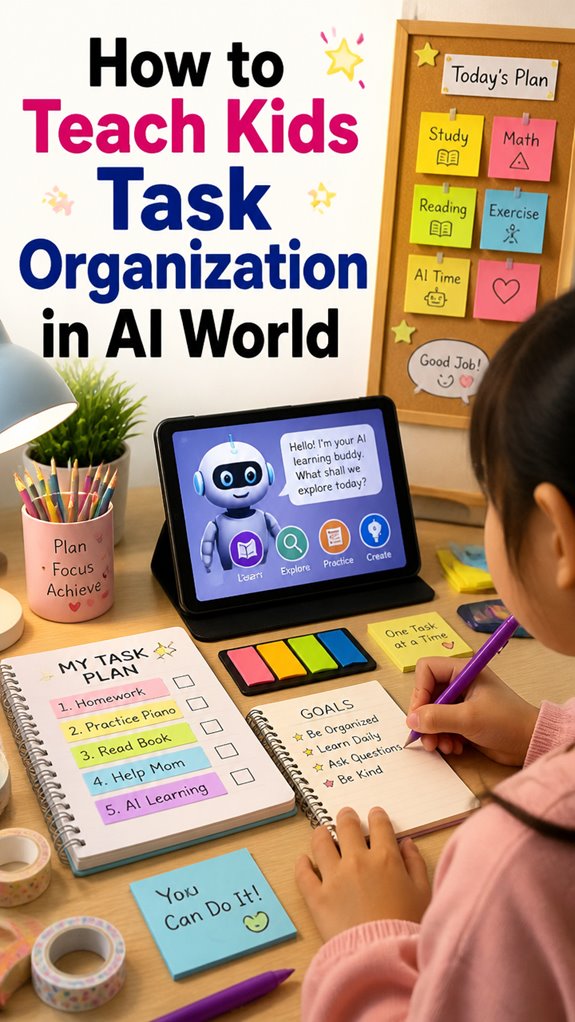
Task organization becomes the cornerstone of resilience when children navigate constant technological change. Breaking tasks into steps, prioritizing effectively, and balancing digital tools with analog methods builds adaptive thinking skills they’ll genuinely need.
A Real Moment That Changed How I Teach Organization
My daughter sat overwhelmed by homework, paralyzed by three simultaneous projects. I watched her freeze, then noticed something: she needed a system, not motivation. That day, we created her first task map using Adaptive Atlas, our platform designed specifically to help families transform chaos into clarity. We built it because we realized kids don’t need more apps—they need frameworks that actually stick.
When Systems Meet Real Life
Last Tuesday, my son used his task breakdown to manage a science project independently. No nagging. No meltdowns. Just methodical progress through steps he’d organized himself. That’s when organization stops being homework help and becomes genuine confidence building. The tool guided him; resilience did the rest.
Quick Takeaways
- Incorporate AI tools to guide children in identifying priorities and planning tasks effectively.
- Use digital and analog organizers combined with gamified challenges to foster engagement and routine.
- Teach flexible thinking and problem-solving through AI-supported real-time feedback and scenario practice.
- Encourage self-monitoring and reflection with AI prompts to build awareness and adaptive decision-making.
- Foster resilience and emotional strength by emphasizing progress, handling setbacks, and viewing failure as growth.
Why Teaching Kids Task Organization Builds Critical Executive Skills
Teaching kids task organization might seem simple at first, but it actually helps develop some of their most critical executive skills.
Helping kids organize tasks builds vital executive skills for confidence and resilience.
When you guide children to plan, prioritize, and break tasks into manageable steps, you’re strengthening their emotional resilience. They learn to handle frustration when things don’t go smoothly, building confidence and adaptability.
This process also sparks creativity development by encouraging flexible thinking and problem-solving. Incorporating resilience-building exercises into task organization practice reinforces their ability to bounce back from setbacks and persist through challenges.
In today’s fast-changing world, these skills prepare your child to navigate uncertainty with calm and focus. Keep in mind, your goal isn’t perfection but consistent support.
How AI Tools Help Kids Plan and Prioritize Effectively
Have you ever wondered how children today can manage a world full of constant change? AI tools can be powerful allies in helping kids plan and prioritize. They assist in problem solving by breaking down complex tasks into manageable steps, empowering children to stay organized and focused. Tech collaboration allows kids to brainstorm ideas, gather feedback, and adjust priorities flexibly. While traditional education paths provide foundational learning, AI-enhanced task organization prepares students for adaptive problem-solving in evolving environments.
| AI Problem Solving | Tech Collaboration |
|---|---|
| Guides kids to identify the most important tasks | Facilitates teamwork and shared planning |
| Offers real-time feedback | Encourages adaptable, long-term thinking |
| Builds confidence in decision-making | Supports independent learning and growth |
These tools aren’t about replacing children’s abilities but amplifying their capacity. They help children develop essential skills for the future—control, agility, and creativity—by integrating technology into daily decision-making.
Simple Ways to Introduce Digital Task Organizers at Home
Kids today need flexible tools to stay organized amid constant change, and digital task organizers can be a straightforward way to support this. Start with fun, engaging options like gamified challenges that turn organization into a game. This keeps children motivated without feeling overwhelmed.
If your child prefers simple choices, analog alternatives such as colorful planners or checklists can build foundational skills. The key is to make organization feel like a natural part of their routine, not a chore.
Keep in mind, your goal isn’t perfection but to foster independence and resilience. By introducing digital tools gradually, you empower your child to navigate a world of rapid change confidently. Teaching kids how to manage their digital footprint early ensures they understand the importance of organizing and cleaning up their online presence as they grow.
This approach aligns with long-term adaptability—an essential skill for the future.
Using AI to Encourage Reflection and Self-Monitoring in Kids
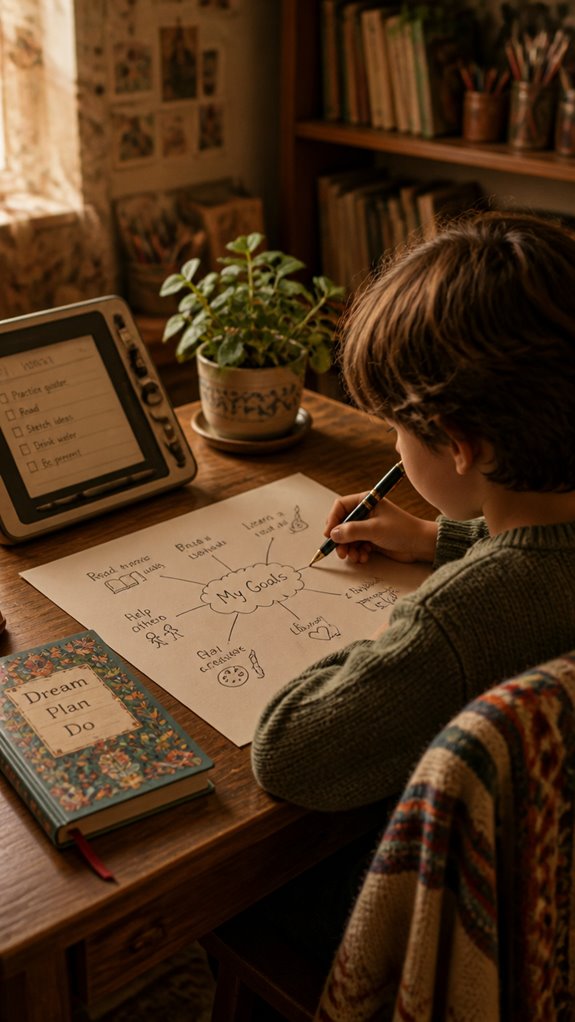
While many worry that technology might overwhelm children or lead them to passive consumption, AI offers a powerful way to foster self-awareness and reflection. With AI tools, your child can learn to pause and think about their actions, strengthening their cognitive flexibility and emotional regulation.
These systems can prompt kids to ask themselves questions like, “Did I handle that well?” or “What could I do differently next time?” This encourages ongoing self-monitoring and mindful decision-making. Research shows that future-ready skills like self-reflection are essential competencies that help children adapt to evolving workplace demands.
Instead of fearing AI, see it as a partner helping kids develop the inner skills that will serve them in an uncertain future. By integrating AI thoughtfully, you empower children to build independence, resilience, and adaptability—key qualities for thriving in a world of constant change.
Activities to Teach Kids Break Down Tasks and Sequence With AI
Teaching children to break down tasks and create clear sequences helps them develop essential skills for steering an unpredictable world. Using creative scaffolding, you can guide kids in planning steps one at a time, making complex projects more manageable.
This process builds emotional resilience, as children learn to handle frustration and setbacks without giving up. Instead of fearing chaos, see it as an invitation for growth.
Encourage them to ask “What’s the first step?” and “What comes next?” This pattern reinforces systems thinking, helping kids see how parts connect into a whole. Structured thinkers benefit particularly from this sequential approach, as it aligns with their natural preference for organized processes and clear logical progression.
It’s about giving them a sense of control and confidence to adapt. These skills will serve them long-term, preparing them to navigate change with clarity and resilience.
Tips to Foster Independence and Resilience Using AI Planning Tools
You might worry that technology could make children overly dependent or less resilient, but smart use of AI planning tools can actually foster independence and confidence.
In a world shaped by generational shifts and cultural differences, these tools help kids learn to adapt and problem-solve on their own.
Imagine your child:
Imagine your child developing problem-solving skills and confidence with AI-guided planning and reflection.
- Using AI to map out steps for a project, building decision-making skills
- Adjusting plans as things change, cultivating flexibility
- Reflecting on their progress, developing self-awareness
- Collaborating with AI to troubleshoot challenges, boosting resilience
These habits teach children to navigate uncertainty without fear, giving them a sense of mastery over their learning and future.
With intention, AI becomes a partner in growth, not a crutch. Research shows that skill specialization timing matters when children are developing these organizational competencies, as premature focus on single tasks can limit their adaptability across domains.
Developing Executive Functioning Skills
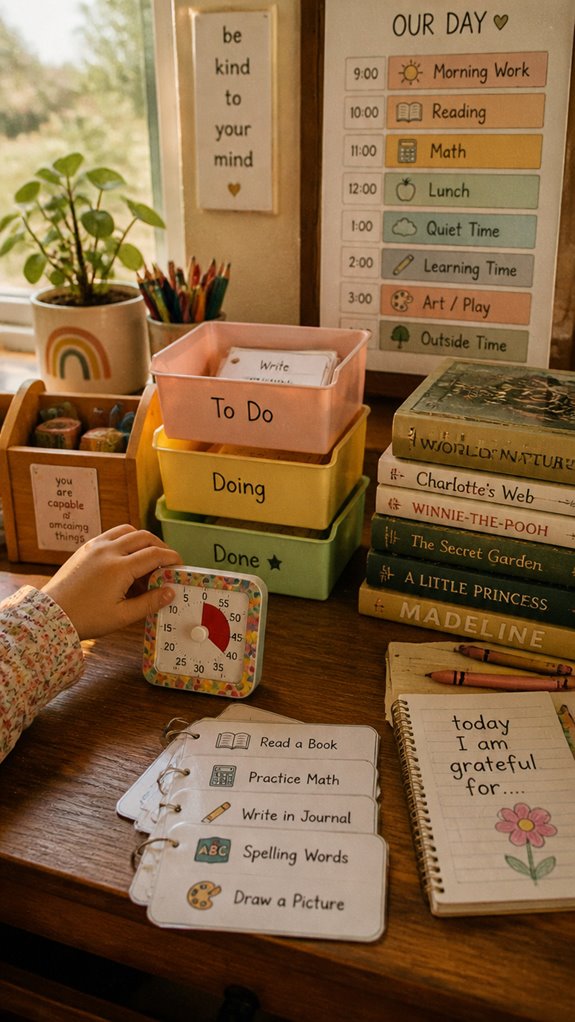
Have you noticed how some children seem naturally organized and focused, while others struggle with managing daily tasks? Developing executive functioning skills is key to closing that gap. It’s about strengthening memory management and emotional regulation, so children can handle complex or unexpected situations calmly. Executive functions involve setting goals, taking actions, and following through despite difficulties—skills that are essential for daily success. Instead of framing it as a hurdle, see it as building a foundation for their long-term success. Using practical systems like visual supports, timers, and routines helps children organize tasks step-by-step. These tools improve their ability to plan, prioritize, and recover from setbacks. Keep in mind, your goal isn’t perfection but progress. By fostering these skills, you’re empowering your child to stay adaptable, confident, and resilient—the qualities they’ll need to navigate a world that’s always changing.
Child Resistance to Change
Children often resist change because it feels unfamiliar or threatens their sense of control. This child resistance can make adaptation seem challenging, especially in a world where continuous change is the norm.
To support them, envision new routines building confidence:
- Visualize stepping stones, where each step feels safe yet leads forward.
- See setbacks as part of growth, not failure.
- Picture your child developing resilience through small, manageable shifts.
- Envision a flexible mindset that adapts rather than resists, turning uncertainty into opportunity.
Understanding change adaptation helps your child view change as a skill, not a threat. By implementing micro learning sessions, you can break down complex changes into digestible pieces that build confidence gradually. This outlook fosters long-term capability and prepares them for the constant evolution of the AI world.
It’s about guiding them to embrace growth with calm confidence, not fear.
none
In today’s rapidly changing world, predicting the future for your child can feel overwhelming or even impossible. Instead, focus on nurturing their imagination development and emotional intelligence.
These skills shape how they approach challenges and adapt to new situations. When children develop strong imagination, they learn to see possibilities beyond what’s obvious, empowering them to create and innovate.
Developing imagination helps children see beyond the obvious, fostering creativity and adaptability for future challenges.
Emotional intelligence helps them understand their feelings and relate well to others, building resilience and collaboration.
Don’t worry about perfect control—your role is to foster an environment where curiosity and connection thrive. By emphasizing these timeless skills, you give your child a solid foundation for a future shaped by constant change. Teaching them to use mistakes as growth opportunities strengthens their ability to navigate setbacks with confidence and learn from each experience.
Recall, the goal isn’t certainty, but empowerment through adaptable, thoughtfully developed inner strengths.
Integrating AI for Resilience
Even as AI tools become more integrated into daily life, it’s natural to worry about how children will handle setbacks and uncertainties. To foster resilience, focus on developing their Quantum resistance and cognitive scaffolding. You can help children:
- Embrace failure as part of the growth process
- Practice adaptable thinking in unpredictable situations
- Build emotional strength through consistent practice
- Use AI as a partnership, not a replacement
These approaches teach kids that resilience isn’t about avoiding difficulty but learning to navigate it confidently. Rather than fearing change, they’ll see opportunities for growth and innovation. By cultivating long-term thinking, children develop the foresight to anticipate challenges and plan strategically for their futures beyond immediate obstacles.
The Adaptive Atlas Anti-Fragile Child System
The foundation of a future-ready child begins with resilience—specifically, developing what Adaptive Atlas calls an anti-fragile mindset. This means fostering child autonomy and emotional resilience so your child can face unpredictability confidently.
It’s natural to worry about uncertainty or failure, but rather than shielding them from difficulty, you can support their growth by encouraging independence and problem-solving.
When children learn to stay composed under pressure, they develop a sense of control over their emotions and situations. This doesn’t mean pushing them beyond their limits but helping them build the capacity to recover and grow through challenges.
The anti-fragile child system provides a structured framework for parents to intentionally cultivate these capacities in their children. Over time, this sense of inner strength becomes a reliable way for children to navigate a world that’s always shifting, ensuring they’re prepared for whatever the future holds.
The Adaptive Atlas Framework
Five connected systems designed to help parents raise adaptable, future-ready children in a world shaped by AI, automation, and constant change.
| 🛡️ |
Anti-Fragile Child SystemBuilds resilience, adaptability, and the ability to handle uncertainty without shutting down. |
| 📚 |
Learning Stack ModelDevelops self-directed learning habits and continuous skill acquisition beyond school systems. |
| 🚀 |
Future Skill Stack SystemFocuses on high-value human skills that remain relevant in an AI-driven economy. |
| 🤖 |
AI Learning SystemTeaches children how to use AI as a thinking partner instead of becoming dependent on it. |
| 🧭 |
Child Type Navigator SystemPersonalizes learning and development based on each child’s strengths and personality. |
FAQ
How Can Parents Tailor AI Task Tools to Suit Different Children’s Learning Styles?
You tailor AI task tools by understanding each child’s individual learning preferences, then customizing features and workflows for personalized activity planning. This empowers you to support their unique strengths, fostering independence and adaptability in a rapidly changing, AI-driven world.
What Strategies Help Children Stay Motivated When AI Feedback Highlights Mistakes?
Motivation motivates, maintaining momentum amidst mistakes. Use encouraging feedback techniques, celebrate small successes, and foster a fearless, flexible mindset that transforms errors into essential experiences, empowering children to persist and progress confidently in their AI-enhanced journey.
How Do Cultural Differences Influence Approaches to Teaching Task Organization Skills?
Cultural values and teaching philosophies shape how you approach task organization, empowering kids with diverse methods that honor their backgrounds. By embracing these differences, you liberate children to develop adaptable skills aligned with their unique worldviews.
What Precautions Ensure AI Tools Support, Not Replace, Genuine Skill Development?
You must prioritize AI ethics and focus on skill assessment, ensuring AI tools amplify genuine skills without replacing critical thinking. This approach liberates children, fostering authentic growth while maintaining human oversight and emphasizing measurable, meaningful development.
How Can Educators Balance AI Use With Traditional Teaching Methods Effectively?
Ever envisioned blending traditional methods with AI integration, like mixing new colors into a familiar palette? You can foster digital literacy, empower students, and balance tech with face-to-face learning to liberate creativity and critical thinking simultaneously.
References
- https://www.littlelit.ai/post/how-can-kids-use-ai-to-build-real-world-skills
- https://schoolai.com/blog/maximizing-student-productivity-with-ai-organizers/
- https://mountainlaurel.org/future-proofing-your-child-for-an-ai-world/
- https://allprodad.com/4-ways-to-lead-your-kids-in-our-new-ai-world/
- https://blogs.clemson.edu/online/designing-effective-assignments-in-an-ai-world/
- https://oxfordlearning.com/9-ways-to-help-kids-navigate-the-world-of-ai/
- https://www.secondstep.org/resources/blog/helping-students-thrive-in-an-ai-world-starts-with-human-skills
- https://brilliantstarmagazine.org/parents-teachers/teaching-tools-techniques/lesson-/helping-kids-navigate-the-world-of-artificial-intelligence
- https://truthforteachers.com/truth-for-teachers-podcast/stay-human-teaching-students-to-protect-their-brain-power-in-an-ai-world/
- https://www.youtube.com/watch?v=QQ3cX9doeqY