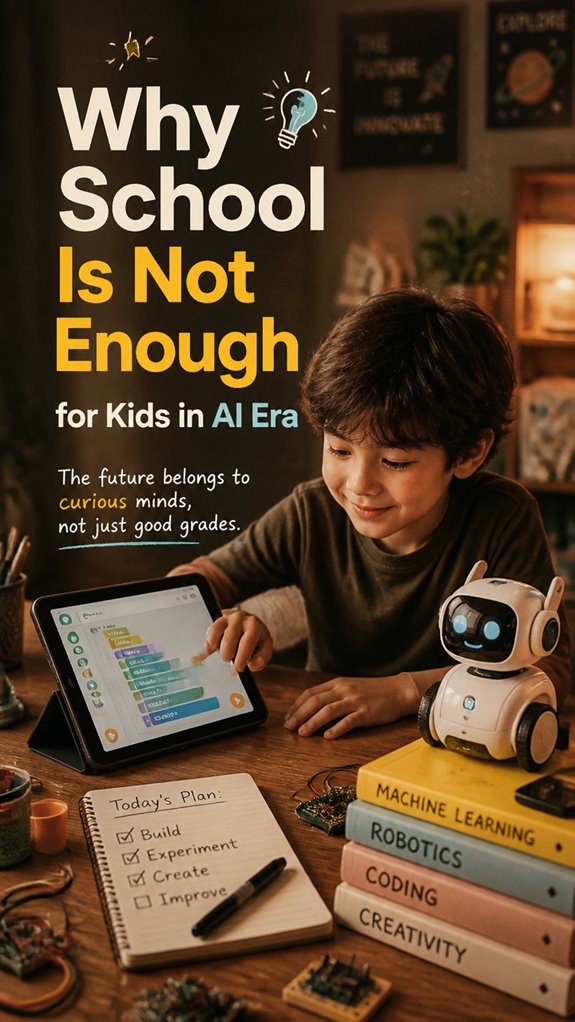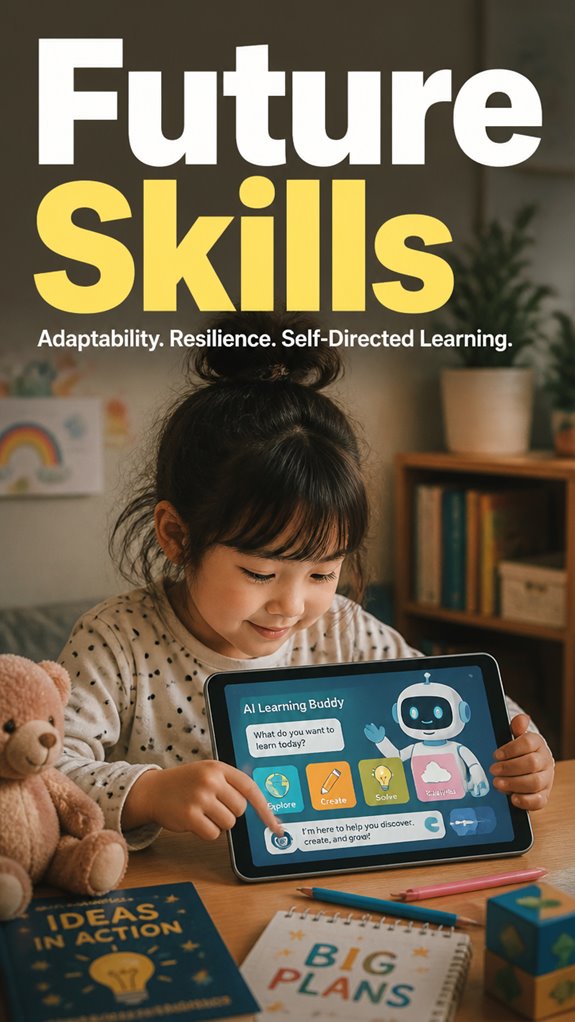
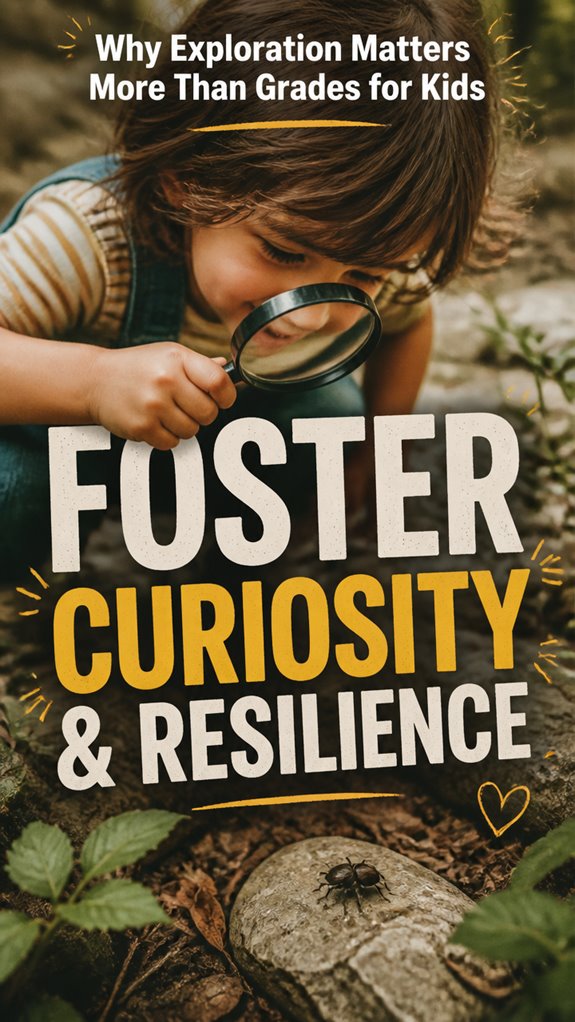
Why Does Exploration Beat Grades for Your Child’s Future?
Grades measure performance. Exploration builds resilience, creativity, and adaptability. Research confirms hands-on discovery strengthens neural pathways better than test scores ever could.
How I Learned This the Hard Way
My daughter scored straight A’s but froze when faced with real problems. She couldn’t troubleshoot, couldn’t pivot, couldn’t think sideways. That’s when I realized grades were a false comfort. We shifted toward open-ended projects, messy experiments, and “I don’t know, let’s figure it out” moments. That’s exactly why we built Adaptive Atlas. We wanted a space where kids explore without the grade-obsession paralyzing their thinking.
The Moment Everything Clicked
Last Tuesday, she faced a coding challenge with no “right answer.” Instead of panicking, she asked questions, tested ideas, failed twice, and solved it. No rubric. No points. Just genuine problem-solving. That fifteen minutes taught her more than any semester of perfect test scores.
Quick Takeaways
- Exploration fosters curiosity, deeper understanding, and creativity beyond what standardized grades measure.
- Focusing on exploration develops resilience, problem-solving, and adaptability essential for long-term success.
- Grades often limit genuine interests, while exploration encourages intrinsic motivation and personal strengths.
- Hands-on, open-ended activities enhance neural pathways and emotional resilience more effectively than test scores.
- Prioritizing discovery over grades prepares children for an unpredictable, innovation-driven future.
Why Exploration Is Essential for Kids’ Learning and Growth
Children are naturally curious, and this curiosity is the foundation of their growth and learning. When you support exploration, you help develop sensorimotor skills that strengthen neural pathways crucial for future learning. Exploration supports healthy development This hands-on engagement improves their ability to understand cause-and-effect and spatial relationships, building confidence in their problem-solving abilities. Exploration also fosters emotional resilience—children learn to cope with frustration and setbacks, essential skills for maneuvering the unpredictable world ahead. Rather than viewing mistakes as failures, recognize them as powerful learning opportunities that strengthen your child’s ability to bounce back from challenges. Instead of fearing unscripted learning moments, view them as opportunities to build the child’s capacity to adapt and stay resilient. Encouraging open-ended inquiry allows your child to test ideas freely, fueling creativity and independence. These experiences prepare them not just for school, but for lifelong success in a constantly shifting environment.
How Focusing on Grades Can Stifle Kids’ Creativity and Curiosity
When grades become the main focus, they can steer kids away from exploring their true interests and thinking deeply about what they’re learning. A performance-driven mindset makes children prioritize quick wins over genuine understanding. They may fear failure, avoiding risks that foster creativity. The result is a narrow view of talent—limited to what’s tested—dampening curiosity and self-expression. Additionally, reliance on high-stakes assessments can increase anxiety, which further inhibits creative thinking and exploration. Assessment practices that prioritize process and effort over final outcomes can help maintain motivation and nurture a child’s innate curiosity.
This environment hampers long-term motivation and growth. To build future-ready kids, you need a motivational balance that prioritizes creative freedom, risk-taking, and diverse strengths. This empowers them to innovate, adapt, and lead confidently, shaping a resilient, capable generation.
Simple Ways to Build Exploration Habits and Resilience
Building exploration habits and resilience doesn’t have to be complicated or overwhelming. Focus on simple, intentional practices that empower your child to take risks and develop confidence.
Simple, intentional practices empower children to take risks, build confidence, and develop resilience effortlessly.
Use creative prompts to inspire curiosity and encourage them to ask questions. Incorporate risk-taking strategies like climbing trees or maneuvering obstacle courses to build resilience through real-world challenges. Research shows that early exploration helps children develop better decision-making skills before they commit to specialized pursuits.
Try these practical steps:
- Engage in outdoor activities like micro hikes or nature bingo to deepen observation skills.
- Create indoor movement challenges with blankets or pillows to foster confidence in physical exploration.
- Integrate daily habits like gardening or pointing out objects during walks to nurture ongoing curiosity.
- Support unstructured play, allowing kids to discover and invent on their own.
These routines reinforce resilience, independence, and future readiness—skills essential in our changing world.
Parent Strategies to Encourage Inquiry and Personal Interests
Encouraging inquiry and nurturing personal interests in your child starts with creating environments that invite exploration naturally. You can do this by offering creative freedom—setting up spaces with provocation tables, household objects, and materials that spark curiosity. These setups empower children to investigate on their own, building confidence and a sense of control. Intrinsic motivation develops when children pursue activities driven by genuine interest rather than external rewards like grades. Focus on curiosity nurturing through open-ended questions and mindful observation, allowing kids to lead their own discovery journey. Instead of fearing lack of structure, see this as a system that fosters independence and resilience, essential skills for a flexible future.
Why Supporting Exploration Prepares Kids for a Successful Future in the AI Era

Supporting exploration is essential for preparing kids for a future increasingly shaped by AI because it helps them develop the skills they’ll rely on most—like problem-solving, creativity, and adaptability.
When children take creative risks and learn to handle emotional setbacks, they build emotional resilience that prepares them for uncertainty.
You can encourage:
- Creative risk-taking to foster innovation
- Resilience through failure and challenge
- Independent, self-directed learning habits
- Confidence in adapting to change
It’s natural to worry about staying ahead, but focusing on building capability provides control.
AI tools are there to amplify thinking, not replace it.
These collaborative and adaptive abilities are strengthened when children learn to work effectively with others in exploratory environments, building the teamwork foundation they’ll need throughout their lives.
Neuroscience of Exploratory Learning
Understanding how the brain supports exploratory learning helps you see why it’s so valuable for your child’s long-term success.
Exploratory learning nurtures resilience and adaptability, laying a strong foundation for your child’s lifelong success.
The hippocampal networks play a key role here by guiding decisions through novel information, helping your child adapt and learn from new experiences.
When children explore actively, their brains strengthen connections based on neuroplasticity principles—they become more efficient at forming and remodeling neural pathways. This process is vital for developing independent problem-solving skills and critical thinking.
Engaging in challenges with the right balance of difficulty and support activates these brain systems naturally, encouraging growth.
As Kavli Institute researchers highlight, active exploration shapes resilient, adaptable minds. Early exposure to freelancing and independent work further cultivates these exploratory skills by requiring children to navigate uncertainty and make autonomous decisions in real-world contexts.
Brain Plasticity Responds to Exploration
When children explore their environment, their brains respond in remarkable ways that support long-term growth, so parents can feel reassured that active engagement really does shape development.
Exploration triggers synaptic pruning—eliminating unused connections—and synapse formation—creating new ones—based on what’s relevant to their experiences. This dynamic process is driven by neurotrophic pathways, which produce growth factors like FGF-2, promoting brain plasticity and recovery.
Repeated, meaningful activities strengthen neural connections, while less-used pathways fade away. This means your child’s brain becomes more efficient, adaptive, and ready for future challenges. When exploration is guided by ethical decision-making, children develop not only cognitive flexibility but also the moral reasoning skills needed to navigate complex problems responsibly.
Instead of fearing complexity, see exploration as the key to nurturing a resilient, flexible mind, laying the foundation for a future where capability and adaptability lead the way.
Navigating Student Frustration Effectively
Student frustration hits every classroom, but you handle it best by building emotional regulation into daily routines, turning tense moments into growth opportunities that strengthen your child’s adaptability for life’s uncertainties.
You master classroom de-escalation by modeling deep breaths—count in for 10, out for 10—clearing space if needed, then validating feelings: “Tell me what’s going on.” Acknowledge their frustration without agreeing, using phrases like “I feel frustrated because” to name emotions.
Role-play coping mechanisms, like “if-then” plans or positive imagery, and identify triggers ahead with preferred activities.
This system, backed by psychologist Carol Dweck’s growth mindset research, reframes setbacks as skill-builders. Beyond academic performance, encouraging kids to develop freelance skills early fosters independence and resilience that extends far beyond the classroom.
Parents fear meltdowns derail progress; you control it, forging resilient kids who thrive amid change.
Exploration Over Grades Guide
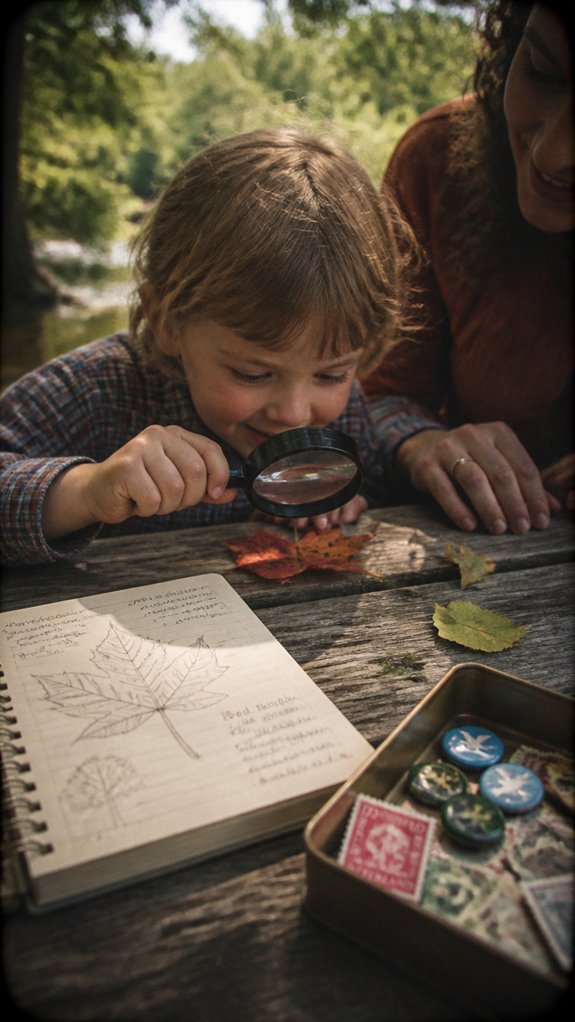
Many parents worry that their child’s progress depends solely on test scores and grades, but research and new approaches show a different path forward. Instead of fixating on points, focus on fostering exploration that builds memory retention and social skills—key for future success. When children engage in real-world problem solving, they develop deeper cognitive abilities that standardized tests alone cannot measure.
To do this:
- Encourage self-directed projects that stimulate curiosity and long-term understanding.
- Use reflection practices to deepen memory retention and identify learning gaps.
- Create group activities that enhance social skills and collaborative thinking.
- Value progress and process over mere scores, supporting resilience and growth mindset.
The Adaptive Atlas Learning Stack Model
The Adaptive Atlas Learning Stack Model is designed to help your child become a confident, independent learner in a world where knowledge, skills, and technology are constantly changing.
It emphasizes exploration ethics and curiosity cultivation, fostering an environment where your child learns to navigate uncertainty with resilience. This model isn’t about memorizing facts but about building self-directed habits that adapt as they grow.
Fostering resilience through curiosity and self-directed habits prepares children to confidently navigate an ever-changing world.
It encourages them to approach challenges as opportunities for growth, rather than obstacles. By cultivating curiosity responsibly, your child develops the skills needed for long-term success—like critical thinking and problem-solving—that remain valuable in an AI-driven future. When children explore their passions fully, they build deeper engagement with their learning and discover directions that align with their unique strengths and interests.
This system gives you a practical way to support their ability to learn continuously, stay adaptable, and confidently shape their own path amid change.
The Adaptive Atlas Framework
Five connected systems designed to help parents raise adaptable, future-ready children in a world shaped by AI, automation, and constant change.
| 🛡️ |
Anti-Fragile Child SystemBuilds resilience, adaptability, and the ability to handle uncertainty without shutting down. |
| 📚 |
Learning Stack ModelDevelops self-directed learning habits and continuous skill acquisition beyond school systems. |
| 🚀 |
Future Skill Stack SystemFocuses on high-value human skills that remain relevant in an AI-driven economy. |
| 🤖 |
AI Learning SystemTeaches children how to use AI as a thinking partner instead of becoming dependent on it. |
| 🧭 |
Child Type Navigator SystemPersonalizes learning and development based on each child’s strengths and personality. |
FAQ
How Can Teachers Integrate Exploration Into Already Packed Curriculums?
You can integrate exploration by incorporating hands-on experiments and providing creative freedom within lessons. Challenge students to solve real-world problems, fostering independence, curiosity, and active engagement, ultimately transforming your curriculum into a dynamic, empowering learning experience.
What Role Do Parents Play in Fostering Intrinsic Curiosity at Home?
You are the gardener of your child’s curiosity, sowing seeds through encouragement that blooms into wonder. Cultivate their innate curiosity daily, nurturing independence and exploration, so they flourish as confident, lifelong explorers in the garden of endless possibility.
Are There Specific Tools That Support Independent Explorative Learning?
You can empower your child’s explorative learning with digital tools and creative resources like open-ended materials and interactive platforms. These tools foster independence, ignite curiosity, and build critical thinking, giving your child the power to shape their own learning journey.
How Does Exploration Improve Long-Term Adaptability Beyond Academic Skills?
Exploration enhances adaptive thinking and cultivates lifelong flexibility by teaching you to navigate uncertainty, embrace change, and develop resilience—skills essential to maintaining confidence, innovating effectively, and thriving amid rapid, unpredictable shifts in the world.
What Are Common Misconceptions About “Learning Through Play” in Education?
You might believe play misconceptions, thinking it’s unstructured chaos, or that exploration myths prevent genuine learning; however, play actively builds critical skills, fosters independence, and challenges traditional views—powerful tools for future-ready children.
References
- https://abetterpathtolearning.com/2024/12/16/learners-as-explorers/
- https://www.shanahanonliteracy.com/blog/what-do-we-do-with-above-grade-readers
- https://www.edweek.org/teaching-learning/opinion-we-are-more-than-our-grades-a-students-perspective/2022/12
- https://pmc.ncbi.nlm.nih.gov/articles/PMC5663305/
- https://hbsp.harvard.edu/inspiring-minds/why-focusing-on-grades-is-a-barrier-to-learning
- https://galileo-camps.com/blog/the-power-of-exploratory-learning-for-young-children/
- https://littleyogasocks.com/blogs/news/discovering-the-world-the-essential-role-of-exploration-in-a-childs-growth
- https://blog.pinecrest.edu/why-play-and-exploration-are-key-for-young-students-to-learn-1
- https://bbmacademy.com/blog/benefits-of-kids-outdoor-exploration-and-learning/
- https://pmc.ncbi.nlm.nih.gov/articles/PMC11693834/