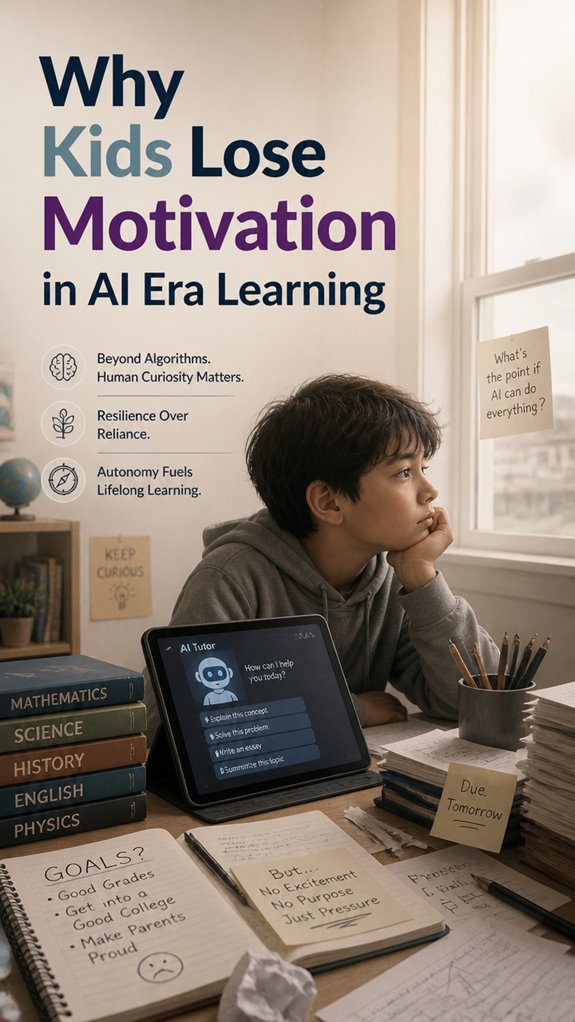

Why Should Your Child Fail More Often?
Mistakes forge resilience and problem-solving skills that reshape how kids navigate challenges. When children experience setbacks in safe spaces, they build genuine confidence and adopt growth mindsets that stick.
A Parent’s Discovery About Learning Through Stumbling
My daughter froze during her piano recital. She missed three notes. I watched her shoulders drop, expecting tears. Instead, she finished the piece, glanced at me with determination, and said, “Can I try that section again next week?” That moment shifted everything. At Adaptive Atlas, we write stories like this because parents need permission to let their kids struggle. We believe setbacks aren’t interruptions to learning. They’re the actual learning.
The Moment I Stopped Rescuing
Last spring, my son built a cardboard robot that collapsed twice. Instead of rebuilding it myself, I sat beside him. We examined what failed. He redesigned it. When that robot finally stood upright, his pride eclipsed anything I could have constructed. That’s when I realized our job isn’t protecting them from failure. It’s teaching them failure rebuilds stronger.
Quick Takeaways
- Mistakes are vital for learning, fostering resilience, curiosity, and a growth mindset essential for navigating a rapidly changing world.
- Making errors stimulates brain development by forming new neural connections and boosting mental flexibility.
- Embracing mistakes builds problem-solving skills, self-efficacy, and emotional regulation vital for future success.
- Creating environments that normalize errors reduces shame and encourages risk-taking and confidence.
- Continuous feedback and adaptive systems turn mistakes into opportunities for long-term resilience and personalized growth.
Why Kids Need to Embrace Mistakes to Grow
Many parents worry that mistakes can harm a child’s confidence or create setbacks, but in reality, mistakes are essential for growth in a world that’s constantly changing.
Embracing error rituals and failure rituals teaches children resilience. These rituals help children see mistakes not as failures, but as opportunities to learn and grow. When children understand that errors are part of the process, they become more adaptable, curious, and confident.
Embracing mistakes fosters resilience, curiosity, and confidence, turning failures into vital opportunities for growth.
Instead of avoiding mistakes, encourage them to view setbacks as valuable feedback. This shift builds a mindset of continuous improvement, which is essential in a future that rewards flexibility and independent thinking. Understanding how mistakes impact online reputation helps children recognize the broader consequences of their actions and decisions.
Clear routines around mistakes foster a sense of control, helping children develop skills for long-term success and resilience in unpredictable environments.
How Making Errors Builds Brain Power and Strengthens Memory
Making errors isn’t just about learning what not to do—it actually strengthens your child’s brain. When kids make mistakes, they develop error resilience, which helps them adapt and grow stronger.
This process taps into brain plasticity, a remarkable ability of the brain to rewire and improve with effort. Instead of fearing failure, see errors as opportunities. Each mistake challenges the brain, encouraging it to form new connections and memories.
This active pattern of learning builds mental flexibility and confidence. It’s important to nurture this mindset early, so your child learns that setbacks aren’t blockers—they’re part of long-term growth. With consistent support, errors become stepping stones, accessing their potential to navigate an ever-changing future with clarity and resilience.
The Role of Growth Mindset in Building Resilience and Problem-Solving Skills
A growth mindset is essential because it shapes how children perceive challenges and setbacks. When kids believe they can improve through effort, they develop self-efficacy, giving them confidence to face problems head-on.
This outlook also supports emotional regulation, helping children stay calm when things go wrong and learn from frustration instead of giving up. By viewing mistakes as opportunities, children build resilience—an important skill as the world changes rapidly.
They learn that effort, persistence, and reflection matter more than perfection. This internal shift makes problems feel less intimidating and promotes long-term thinking.
Project-based learning at home provides an ideal environment for children to practice these skills in real-world contexts, allowing them to encounter authentic challenges and develop solutions collaboratively. As parents and teachers, your role is to foster this viewpoint, showing kids how to see setbacks as part of growth, not failure—setting a foundation for a project-based learning mindset.
Creating Supportive Environments That Celebrate Mistakes and Learning

Creating a supportive environment means intentionally framing mistakes as natural and valuable parts of learning, rather than signals of failure. When you encourage risk-taking, you help your child develop emotional literacy — understanding and managing feelings that come with setbacks.
Instead of punishing errors, see them as opportunities for growth and exploration. This approach builds confidence and resilience, essentials for steering through a world of constant change. Just as blending human skills with AI tools creates better outcomes in professional settings, combining your child’s natural abilities with guided learning from mistakes produces stronger development.
Remember, children learn best when they feel safe to try and stumble without judgment. Your calm reassurance guides them to view mistakes as steps toward mastery.
Practical Tips for Parents to Encourage Kids to Learn From Mistakes
How can you, as a parent, turn mistakes into powerful learning moments for your child? Start by embracing error tolerance. Instead of punishing or criticizing mistakes, view failure as an essential part of growth. Use failure reframing to help your child see setbacks as opportunities to learn.
Talk about what they can gain from each experience, rather than what went wrong. Encourage curiosity and resilience by modeling calm acceptance. Highlight effort over results and celebrate progress. When children approach challenges with a maker mindset, they’re more likely to experiment, iterate, and view mistakes as data rather than defeats.
- Focus on process, not perfection
- Normalize mistakes as part of learning
- Ask questions that promote reflection
- Avoid labels that restrict growth
- Reinforce that failure builds capability
This approach helps your child develop confidence, adaptability, and long-term problem-solving skills, shaping a future-ready mindset.
Preparing Kids for the Future by Building Resilience and Adaptive Thinking
Instilling resilience and adaptive thinking in children helps them navigate a world where change is constant and often unpredictable.
Error acceptance is central to this process. When kids learn to see mistakes as opportunities rather than failures, they develop resilience training that prepares them for the future’s uncertainties.
Instead of fearing setbacks, they gain confidence, knowing they can recover and adapt. This mindset isn’t about avoiding errors but understanding that mistakes are part of growth.
As parents, your role is to create a safe environment where children feel supported in trying new approaches and embracing challenges. Developing adaptability skills through deliberate practice helps children respond effectively to the rapid changes they’ll encounter throughout their lives.
Building resilience and adaptive thinking isn’t quick fix; it’s a long-term system that equips kids with the mental flexibility to thrive amid ongoing change, shaping capable, self-reliant adults.
Mistake Value Guide for Parents

Mistakes are an inevitable part of growth, and how your child perceives and handles them can shape their ability to adapt and succeed in an unpredictable world.
Embracing mistake acceptance fosters a healthy risk tolerance, encouraging children to see errors as opportunities, not failures. This mindset builds resilience and confidence, essential for future challenges.
You can support this by:
- Reminding your child that mistakes are natural and part of learning
- Praising effort and persistence, not just success
- Modeling mistake acceptance yourself
- Creating a safe space for taking risks and trying new things
- Teaching them to analyze errors calmly for growth
Understanding growth mindset principles helps children recognize that abilities can be developed through dedication and learning from setbacks. This approach empowers your child to navigate uncertainty, building skills that will serve them in a rapidly changing future.
Neuroscience of Error-Driven Learning
When children make mistakes, their brains actively respond in ways that support learning and growth. This response involves neural plasticity—the brain’s ability to change—and error signals that tell the brain to adapt. These signals, generated in parts like the medial prefrontal cortex and ACC, help children recognize and correct their errors. Neural overlap exists in cerebellum activity during different adaptation tasks, indicating that similar mechanisms are engaged across various types of error correction. The brain’s response weakens as skills become more automatic, showing learning’s dynamic nature. This process isn’t about fixing failure but about building resilience and adaptability. This adaptive response is crucial for refining motor and cognitive skills over time. When you understand that mistakes trigger these neural signals, you see how every error is an opportunity for growth. By strategically selecting which skills to prioritize, parents can help children focus their error-driven learning on skill development areas that matter most to them. Instead of fearing mistakes, focus on creating an environment where error signals stimulate the brain’s capacity to learn faster, more deeply, and more intentionally—setting your child up for a future of continuous adaptation.
Misunderstanding Feedback Importance
Feedback often gets misunderstood as simply pointing out what’s wrong, but its true power lies in guiding learning and growth. When you see feedback as part of a feedback loop, you create space for error acceptance. This helps children understand mistakes as opportunities to learn, rather than failures to fear.
Instead of reacting defensively, they can develop resilience and curiosity. Keep in mind, effective feedback is a steady, ongoing process that supports long-term adaptability. It’s not about perfect answers but about building confidence to navigate uncertainty and change. Research shows that children’s brain development is significantly enhanced when mistakes are reframed as valuable learning experiences rather than sources of shame.
By fostering error acceptance and viewing feedback as a tool, you help children build core skills for the future—skills of self-awareness, problem-solving, and continuous growth.
- Build trust in mistakes as learning signals
- Shift focus from fault to opportunity
- Encourage curiosity and resilience
- Use feedback as a growth cycle, not a judgment
- Empower children to adapt confidently
The Adaptive Atlas Anti-Fragile Child System
Children face a world filled with uncertainty and rapid change, which can be overwhelming for parents concerned about their kids’ resilience. Instead of fearing this, focus on building an anti-fragile mindset—a core part of the Adaptive Atlas system. This means teaching children risk management skills and fostering emotional intelligence.
Helping children handle setbacks without shutting down is key. It’s about teaching them to see challenges as growth opportunities, not just threats. By doing this, you equip your child to stay calm under pressure, adapt quickly, and learn from failure. The anti-fragile child system strengthens their ability to not just recover from adversity, but to grow stronger through it.
These qualities prepare them for an unpredictable future, where flexibility and resilience matter more than avoiding mistakes. In this way, you create a foundation that promotes long-term growth and confidence.
Ultimately, this approach shapes children who thrive in any environment.
The Full Adaptive Atlas Framework
The Full Adaptive Atlas Framework offers a clear approach for guiding your child through a world of constant change. Instead of fixed plans, it introduces adaptable systems that foster confidence and resilience. You’ll help your child develop strong risk assessment skills, so they understand uncertainty without fear.
Building cognitive flexibility is key, enabling them to switch strategies when needed. The framework encourages you to see mistakes as essential growth points, not failures.
It also emphasizes personalized learning, recognizing that every child’s path is unique. By focusing on systems—like self-directed learning, future skills, AI tools, and individual profiles—you create a flexible foundation.
This approach guarantees your child stays capable, relevant, and ready to thrive in an unpredictable future.
The Adaptive Atlas Framework
Five connected systems designed to help parents raise adaptable, future-ready children in a world shaped by AI, automation, and constant change.
| 🛡️ |
Anti-Fragile Child SystemBuilds resilience, adaptability, and the ability to handle uncertainty without shutting down. |
| 📚 |
Learning Stack ModelDevelops self-directed learning habits and continuous skill acquisition beyond school systems. |
| 🚀 |
Future Skill Stack SystemFocuses on high-value human skills that remain relevant in an AI-driven economy. |
| 🤖 |
AI Learning SystemTeaches children how to use AI as a thinking partner instead of becoming dependent on it. |
| 🧭 |
Child Type Navigator SystemPersonalizes learning and development based on each child’s strengths and personality. |
FAQ
How Can Parents Effectively Normalize Mistakes Without Fostering Carelessness?
You can normalize mistakes by fostering a growth mindset and emphasizing fault tolerance, encouraging your child to see errors as opportunities for learning rather than carelessness. This liberates them to explore confidently without fear.
What Are Signs That a Child’s Response to Failure Indicates Resilience?
If your child calmly discusses failure, seeks solutions, and shows emotional regulation, they demonstrate a growth mindset and resilience. These signs reveal they’re embracing challenge, learning from setbacks, and pushing through difficulties with confidence and adaptability.
How Does Cultural Background Influence Children’s Attitudes Toward Errors?
Ironically, cultural norms often dictate error acceptance, shaping children’s attitudes. You might think liberation means breaking free, but in reality, challenging deeply embedded beliefs about mistake shame fosters genuine growth and resilient, adaptable mindsets.
Can Too Many Mistakes Lead to Frustration or Decreased Motivation?
Yes, too many mistakes can cause learning anxiety, diminish motivation, and hinder confidence-building. To stay liberated, you should foster a supportive environment that embraces errors as essential growth opportunities, encouraging resilience and curiosity without fear of failure.
How Can Teachers Incorporate Error-Based Learning in Diverse Classrooms?
You can incorporate error-based learning in diverse classrooms by embracing error amplification, providing learning scaffolds that support risk-taking, and fostering a safe space for experimentation, empowering students to learn actively and adaptively across different backgrounds.
References
- https://www.kqed.org/mindshift/48770/how-making-mistakes-primes-kids-to-learn-better
- https://www.pvms.org/pioneering-progress/2025/1/29/the-gift-of-mistakes-how-learning-through-errors-builds-independence-and-growth
- https://azopt.net/pediatric-physical-therapist/
- https://www.naeyc.org/resources/blog/mistakes-now-benefits-later
- https://raisethebarclinic.com.au/how-making-mistakes-is-an-important-part-of-a-growth-mindset/
- https://pmc.ncbi.nlm.nih.gov/articles/PMC6987755/
- https://genmindful.com/blogs/mindful-moments/helping-children-embrace-mistakes-for-a-growth-mindset
- https://otl.ucsb.edu/tales/magic-mistakes
- https://pmc.ncbi.nlm.nih.gov/articles/PMC3817858/
- https://pmc.ncbi.nlm.nih.gov/articles/PMC6666478/