Are Traditional Schools Failing Our Kids in the AI Age?
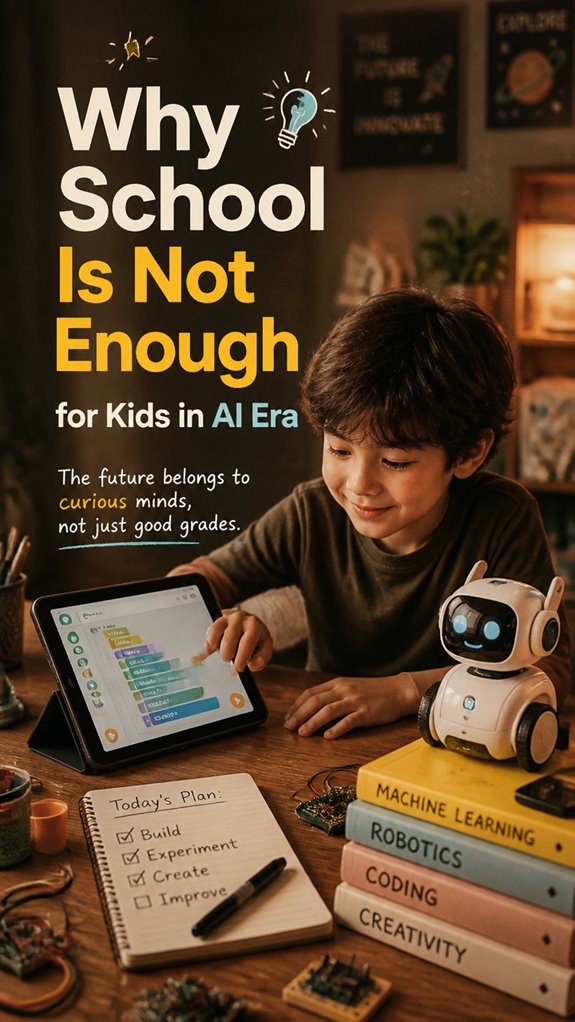
Traditional education leans heavily on memorization and test scores. Yet these approaches miss what matters most: creativity, critical thinking, and adaptability. Your child needs resilience, curiosity, and digital literacy to navigate an AI-driven world.
How I Learned This the Hard Way
My daughter came home frustrated. She’d aced every test but couldn’t solve a real problem when it mattered. That’s when I realized school was teaching her what to think, not how to think. We started building with Adaptive Atlas, a platform designed to close exactly this gap. We created it because kids deserve learning that develops actual capability, not just credentials.
The Moment Everything Clicked
Last month, she tackled a coding challenge without instructions. She didn’t freeze or panic. She asked questions, tested ideas, failed safely, and iterated. No textbook taught her that. Real-world problem-solving did. She’d finally developed the one skill every employer actually wants: the ability to learn anything, anywhere.
Quick Takeaways
- Traditional schools focus on memorization and standardized tests, neglecting crucial skills like creativity, critical thinking, and adaptability needed in the AI era.
- Rapid technological change requires self-directed, resilient, and lifelong learners beyond conventional curricula.
- Developing digital literacy and misinformation awareness is essential to navigate the online information landscape safely.
- Emotional resilience, play, and extracurricular exploration foster innovation, confidence, and social-emotional intelligence vital for future success.
- Personalized, autonomous learning models build skills like decision-making, systems thinking, and AI fluency for uncertain, complex environments.
Why Traditional Schools Can’t Prepare Kids for an AI Future
Have you ever wondered why traditional schools, despite their best efforts, seem ill-equipped to prepare kids for a future shaped by AI? It’s because much of the system is tied to outdated cultural norms and a rigid educational hierarchy.
Schools focus on memorization and standardized testing, expecting children to fit into predefined roles. However, in an age of rapid change, this model limits their ability to adapt, innovate, or think critically about complex issues.
Focusing on memorization and tests limits kids’ ability to innovate and think critically in a rapidly changing world.
The world no longer rewards knowledge as much as it rewards agility and problem-solving. Children need skills that go beyond the classroom, like creativity and independent thinking. Parents and educators must take a strategic approach by guiding skill development intentionally rather than leaving it entirely to conventional curricula.
Instead of clinging to old models, we must shift towards systems that develop adaptability—guiding our kids to thrive in an uncertain future.
The Skills Kids Must Develop Outside School to Succeed With AI
To succeed alongside AI, children need skills that go beyond what traditional schools often teach. They must develop abilities that make them adaptable, creative, and critically questioning. These skills help them navigate rapid change confidently and create value in new ways.
Consider these key areas:
- Creativity cultivation—encourage your child’s unique ideas and innovation, making them a source of new solutions.
- Critical questioning—teach them to analyze information deeply and challenge assumptions, essential in an age of abundant data.
- Self-directed learning—support habits that foster continuous skill-building and curiosity. Independent learning at home builds confidence and intrinsic motivation that extends far beyond the classroom environment.
- AI fluency—help them understand and leverage AI tools as partners, amplifying their thinking without dependency.
These skills will safeguard your child’s future, empowering them to thrive amid change.
How Schools Need to Adapt for AI Readiness
Schools often feel overwhelmed by the rapid pace of technological change and the rise of AI, leaving many parents worried about whether traditional education can keep up. But this is an opportunity to redefine what learning means. To prepare kids for the AI era, schools must redesign curricula to focus on core capabilities like critical thinking, problem framing, and emotional resilience. These skills develop adaptability—crucial for a world in constant change. Alongside technical literacy, students need to master value creation skills that will remain relevant as AI transforms industries and job markets.
| Curricula Focus | Emotional Resilience |
|---|---|
| Emphasize inquiry and creativity | Teach managing setbacks and stress |
| Prioritize skills over facts | Foster growth mindset |
| Incorporate project-based learning | Build confidence to navigate uncertainty |
| Use AI tools for personalized learning | Develop self-awareness and adaptability |
Practical Ways Parents Can Support Kids’ Learning in the AI Era
Supporting your child’s learning in the AI era starts with understanding that your role isn’t to teach them everything but to help them build core capabilities that will serve them for life. Your focus should be on nurturing emotional resilience, fostering creative exploration, and encouraging independent thinking.
To do this, consider these practical steps:
- Promote resilience by allowing your child to experience setbacks and learn from failure.
- Support creative exploration through open-ended projects and encouraging curiosity.
- Teach decision-making skills that help them navigate ambiguity confidently.
- Use AI tools together to understand how they amplify thinking without replacing it.
- Implement a curiosity maintenance program by creating regular opportunities for your child to explore topics that genuinely interest them, ensuring their natural desire to learn remains active and engaged throughout their education.
Neuroplasticity Benefits From Adaptability

Understanding how the brain changes over time can seem intimidating, but it offers a reassuring truth: neuroplasticity, the brain’s ability to adapt and reorganize itself, is more flexible than many realize.
When you focus on fostering adaptability in your child, you strengthen their neuroplasticity resilience—helping their brain respond to challenges with confidence and strength. Brain adaptability means they can learn new skills, recover from setbacks, and adjust to rapid changes in the world. Developing systems thinking skills enables children to understand complex interconnections and see how their adaptability creates ripple effects across different areas of their lives.
Instead of fearing the unknown, view it as an opportunity to develop capacity and flexibility. By encouraging an adaptable mindset, you empower your child to build long-term resilience—an essential trait for thriving in an unpredictable future.
This approach positions them to stay relevant, capable, and confident no matter how the world evolves.
Neural Flexibility Research Findings
Recent research on neural flexibility shows how our brains are wired for adaptability, a key trait for kids growing up in a constantly changing world. Your child’s brain dynamics constantly reconfigure, enabling them to switch tasks, absorb new information, and recover from setbacks. This neural flexibility is driven by networks like the cingulo-opercular and hippocampal regions, which create new connections and organize responses to fresh environments. Variations in neural network patterns, especially in visual and memory hubs, can predict cognitive decline early on, enabling proactive intervention. Brain networks demonstrate dynamic “rewiring” predicted to help early detection of cognitive decline. Increased neural flexibility links to better learning, long-term memory, and adaptability. Variations in brain dynamics emerge early, even before traditional tests detect issues. Building strong online reputation habits during these formative years supports not only digital safety but also the development of critical thinking skills that complement neural flexibility. Understanding these patterns empowers you to support your child’s long-term resilience and growth.
Addressing Misinformation Online
As misinformation floods social media—where falsehoods spread 70% faster than facts—you worry it’ll confuse your child’s grasp of reality. You see 72% of adults across 25 nations name it a major threat, yet younger users repost without checking. Calm down: you control this by building digital literacy and misinformation awareness now.
Equip your child to dominate information chaos. Teach them to spot patterns—algorithms amplify lies, habitual users drive 37% of false shares on Facebook. Understanding moral reasoning development helps children internalize why verification matters beyond just following rules.
| Threat Pattern | Power Move |
|---|---|
| Falsehoods shared 70% faster | Pause, verify sources |
| Youth repost unverified | Build fact-check habits |
| Trust in media at 30% | Question engagement bait |
| 43% struggle distinguishing | Train cross-check skills |
This system future-proofs their decisions, turning vulnerability into leverage. (124 words)
Beyond School Learning Framework
When kids step outside traditional classroom walls, they encounter a scenery full of opportunities to learn in new ways. Childhood play becomes a crucial tool, fostering emotional resilience and independence. Play helps children manage setbacks, develop confidence, and learn to adapt—skills essential in a world of constant change. Implementing a curiosity maintenance program ensures that children sustain their natural desire to explore and learn throughout their developmental years.
Outdoor play promotes resilience, confidence, and adaptability through fun, hands-on learning experiences.
- Engaging in unstructured play builds resilience, teaching kids to handle frustration calmly.
- Outdoor activities foster curiosity and innovation, preparing them to think creatively.
- Social interactions strengthen emotional intelligence, helping them navigate complex relationships.
- Creative play nurtures a growth mindset, encouraging flexibility and lifelong learning.
The Adaptive Atlas Learning Stack Model

The Adaptive Atlas Learning Stack Model offers a clear way to understand how children can develop skills that will serve them well in an ever-changing world. It emphasizes learning autonomy and cognitive resilience—key to thriving amidst constant change. Instead of relying solely on traditional schooling, this system builds your child’s ability to adapt, recover from setbacks, and think independently. Research shows that environmental factors play a significant role in shaping how children internalize and retain these adaptive learning strategies. Here’s how it works:
| Layer | Focus |
|---|---|
| Anti-Fragile Child | Builds resilience to uncertainty and failure. |
| Learning Stack | Cultivates self-directed, adaptive learning habits. |
| Future Skills | Develops critical thinking, creativity, decision-making. |
| AI Tools | Teaches children to collaborate with technology, not depend on it. |
| Personalization | Guarantees development fits each child’s unique strengths. |
This model gives you practical, long-term direction—empowering your child for the future rather than reacting to it.
The Adaptive Atlas Framework
Five connected systems designed to help parents raise adaptable, future-ready children in a world shaped by AI, automation, and constant change.
| 🛡️ |
Anti-Fragile Child SystemBuilds resilience, adaptability, and the ability to handle uncertainty without shutting down. |
| 📚 |
Learning Stack ModelDevelops self-directed learning habits and continuous skill acquisition beyond school systems. |
| 🚀 |
Future Skill Stack SystemFocuses on high-value human skills that remain relevant in an AI-driven economy. |
| 🤖 |
AI Learning SystemTeaches children how to use AI as a thinking partner instead of becoming dependent on it. |
| 🧭 |
Child Type Navigator SystemPersonalizes learning and development based on each child’s strengths and personality. |
FAQ
How Can Parents Directly Foster Adaptability in Their Children?
You can foster adaptability in your children through hands-on learning and active parental involvement, encouraging exploration, resilience, and critical thinking. By engaging directly and supporting their growth, you empower them to navigate change confidently and develop long-term, versatile skills.
What Are the Most Effective Ways to Teach Ethical AI Use at Home?
You can teach ethical AI use at home by prioritizing AI literacy, setting clear ethical guidelines, and leading by example. Recognize that 88% of AI professionals see ethical AI education as essential for future power and influence.
How Do We Measure a Child’s Long-Term Readiness for a Shifting Job Market?
You measure a child’s long-term readiness by evaluating their mastery of future skills and their career resilience. Watch how they adapt, learn independently, and leverage AI tools, ensuring they thrive amidst ongoing change and remain empowered in any progressing job terrain.
What Role Does Emotional Intelligence Play in AI Collaboration?
You leverage emotional awareness and relationship building to excel in AI collaboration, asserting your influence. Mastering these skills grants you power, enabling you to connect deeply, influence decisions, and navigate ambiguity with confidence and strategic authority.
How Can Schools Better Integrate AI to Support Personalized Learning?
Think of AI tools as a key to open each child’s potential. You can drive curriculum redesign to personalize learning experiences, empowering students to harness AI’s power, shaping confident, adaptable learners ready to thrive in a rapidly developing world.
References
- https://learningpolicyinstitute.org/blog/educating-ai-era-urgent-need-redesign-schools
- https://stefanbauschard.substack.com/p/why-ai-is-so-hard-for-education
- https://www.edweek.org/technology/rising-use-of-ai-in-schools-comes-with-big-downsides-for-students/2025/10
- https://allaccess.collegeboard.org/high-school-student-use-ai-surging-are-schools-ready
- https://www.centerforneurologyandspine.com/post/phoenix-breakthroughs-in-brain-health-how-neural-flexibility-could-flag-alzheimers-years-earlier
- https://www.colelab.org/pubs/2024_Cole_COBS.pdf
- https://www.eurekalert.org/news-releases/1084420
- https://www.psypost.org/increased-neural-flexibility-may-signal-brain-network-breakdown-in-alzheimers/
- https://pmc.ncbi.nlm.nih.gov/articles/PMC12485794/
- https://pmc.ncbi.nlm.nih.gov/articles/PMC9055953/