How Can Parents Spark AI Readiness Without Burning Out?
The secret isn’t forcing coding lessons at age five. Instead, weave curiosity into everyday moments through play-based exploration, achievable goals, and genuine celebration of effort over perfection.
My daughter once spent three hours building increasingly complex marble runs. She wasn’t thinking about algorithms, yet she was learning spatial reasoning and debugging. That’s when I realized we’d been approaching skill-building backwards. This insight shaped Adaptive Atlas, our platform designed to let kids discover AI concepts through natural play rather than rigid curricula. We built it because motivation dies when learning feels like punishment.
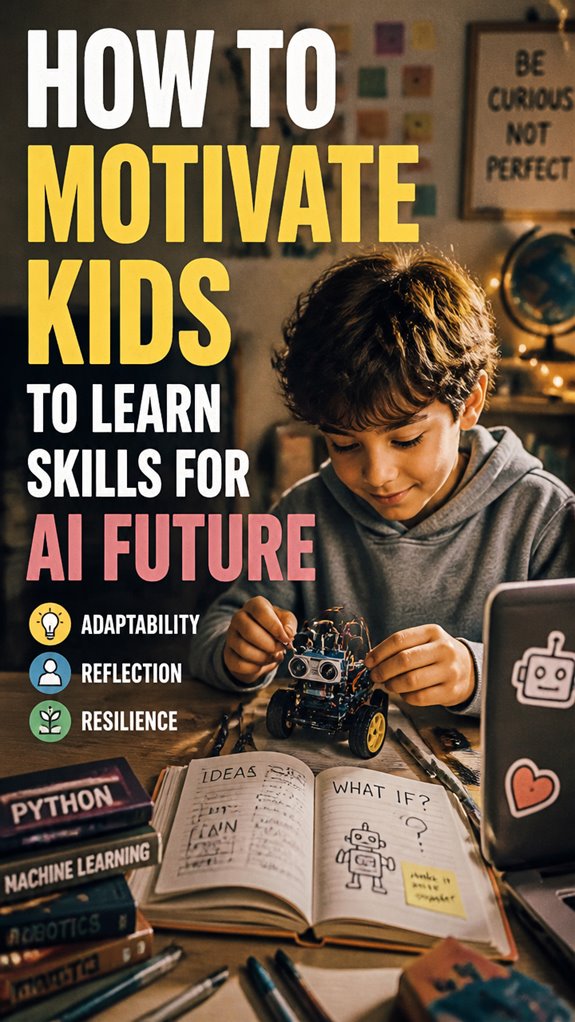
Last month, I watched my son troubleshoot why his robot wouldn’t navigate a maze. He didn’t quit. He adjusted angles, tested theories, failed repeatedly. No praise needed. The problem itself became the reward. That’s the environment kids crave when preparing for AI futures.
Quick Takeaways
- Foster curiosity through engaging, hands-on activities like robot building or AI-based puzzles to make learning fun and meaningful.
- Set small, achievable goals that build confidence and highlight progress toward mastering AI-relevant skills.
- Incorporate gamified challenges and rewards to motivate sustained effort and promote a growth mindset.
- Encourage critical thinking by analyzing AI outputs and promoting independent problem-solving and reflection.
- Create a supportive environment that emphasizes effort, resilience, and collaboration to build intrinsic motivation and confidence.
Why Spark Kids’ Curiosity in AI?
Helping kids develop curiosity in AI begins with understanding that we’re living in a time of continuous change, not a static future. Artificial curiosity fuels their drive to explore technology, turning wonder into meaningful learning.
Fostering curiosity in AI helps kids embrace change as an opportunity for growth and innovation.
When you encourage tech exploration, you help children see AI as a tool for creative problem-solving, not something to fear. Research from organizations like OpenAI shows that curiosity is a key driver of innovation, so fostering it early is essential.
Instead of worrying about AI replacing jobs, focus on how curiosity builds an adaptable mindset — the foundation for future success. You can guide them to see AI as an exciting world of possibility, empowering their independence and long-term capability.
This approach keeps learning grounded and purposeful, framing change as an opportunity rather than a threat.
How to Use Play-Based Activities to Teach AI Skills
Using play-based activities is a practical way to introduce children to AI skills without overwhelming them. Engaging them through gamified challenges and creative role playing makes learning meaningful and fun. These activities foster critical thinking, problem-solving, and adaptability—core skills for the AI future—while building confidence. Instead of fear around complex tech, you create a safe space where kids experiment and grow. For example, a game might involve designing a robot or solving puzzles that mirror real AI systems. Independent learning empowers children to take ownership of their educational journey and develop self-directed problem-solving abilities. Use this chart to visualize the impact:
| Emotional Benefit | Practical Outcome |
|---|---|
| Confidence in learning | Better problem-solving skills |
| Curiosity and exploration | Long-term adaptability |
| Joy in discovery | Preparedness for future challenges |
This approach helps your child develop autonomy, a crucial advantage in an unpredictable world.
How to Set Achievable Goals to Build Kids’ Confidence
Have you ever wondered how setting small, achievable goals can actually boost your child’s confidence over time? Goal alignment is key here—help your child connect each step with their bigger picture, so they see progress rather than chaos.
Confidence building happens when children experience success regularly, and that success leads to a sense of control over their learning. Focus on realistic targets that push slightly beyond comfort zones, but remain within reach.
This approach transforms fear into curiosity and frustration into a sense of accomplishment. Keep in mind, young learners thrive when they recognize their growth as part of a clear system.
How to Foster a Growth Mindset Around AI Learning
In today’s world, many parents worry that their children might fall behind as AI tools become more common, but fostering a growth mindset around AI learning can turn that concern into confidence.
Neuroscience perspectives show that emotional resilience is key to embracing challenges. When kids see learning as a process they can improve through effort, they develop confidence, even when facing complex AI concepts. Research on engaging learning systems demonstrates that interactive experiences strengthen both motivation and retention in young learners.
Instead of fearing failure, encourage them to view setbacks as opportunities to grow. Repeat that effort, persistence, and curiosity are what matter most.
This outlook builds resilience, making children more adaptable and prepared for ongoing change.
How to Create a Supportive Environment That Motivates Kids
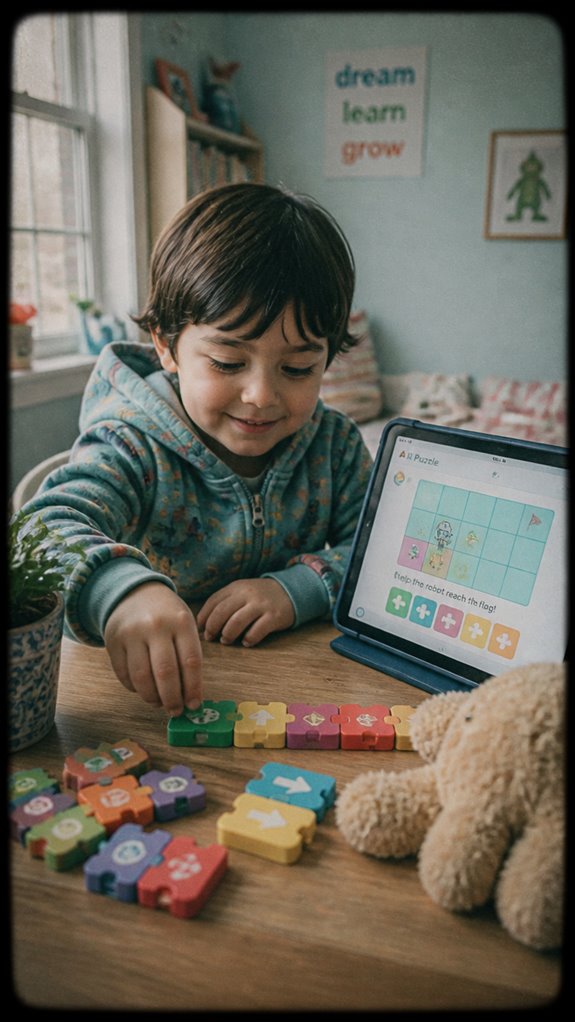
Creating a supportive environment that motivates kids begins with understanding that their sense of safety and confidence is essential for exploring new skills. When children feel emotionally supported, they’re more willing to take risks and face challenges without fear of failure.
A safe, supportive environment encourages kids to explore, take risks, and grow with confidence.
Peer collaboration plays a key role here—kids learn better when working together, sharing ideas, and encouraging one another. Research from organizations like the Collaborative for Academic, Social, and Emotional Learning shows that supportive social bonds boost motivation and resilience.
As a parent or teacher, your calm presence and consistent encouragement lay the foundation for a growth mindset. Keep in mind, it’s about creating a space where kids see challenges as opportunities, not threats.
Studies demonstrate that AI-enhanced writing practice can significantly strengthen their ability to express ideas clearly while receiving immediate, constructive feedback. This approach prepares them to navigate future uncertainties with confidence and adaptability.
Gen Ai’s Impact on Education
Generative AI is dramatically reshaping education, but it’s important to see these changes as opportunities rather than threats. Many fear that AI might replace human skills or diminish authentic learning. As traditional jobs disappear, understanding how careers are evolving becomes crucial for parents guiding their children’s education.
Instead, focus on how AI can empower your child’s development. Ethical considerations are key—children must learn to use AI responsibly and understand its impact.
Collaborative learning becomes more essential, as children share perspectives, solve problems together, and build social-emotional skills.
This approach prepares them to navigate a future where humans and AI work side by side.
Incentive Strategies for Sustained Engagement
Maintaining your child’s engagement in learning can feel overwhelming, especially with constant distractions and rising expectations. To stay ahead, you need effective incentive strategies.
- Use reward systems that link effort to meaningful outcomes, motivating children to stay committed while building confidence.
- Implement progress tracking so your child clearly sees how they improve over time, reinforcing their sense of mastery.
- Schedule regular check-ins to celebrate achievements, fostering a culture of accountability that drives sustained effort.
Recent research indicates that goal setting within personalized learning environments can significantly boost student motivation and engagement. Developing future-ready skills early helps children build adaptability and resilience in a rapidly changing world. These strategies aren’t about quick fixes—they’re about creating a system where your child’s motivation grows naturally from their own progress.
It’s about empowering them to see learning as a path to future success, not just a task to complete.
Addressing Student Distraction
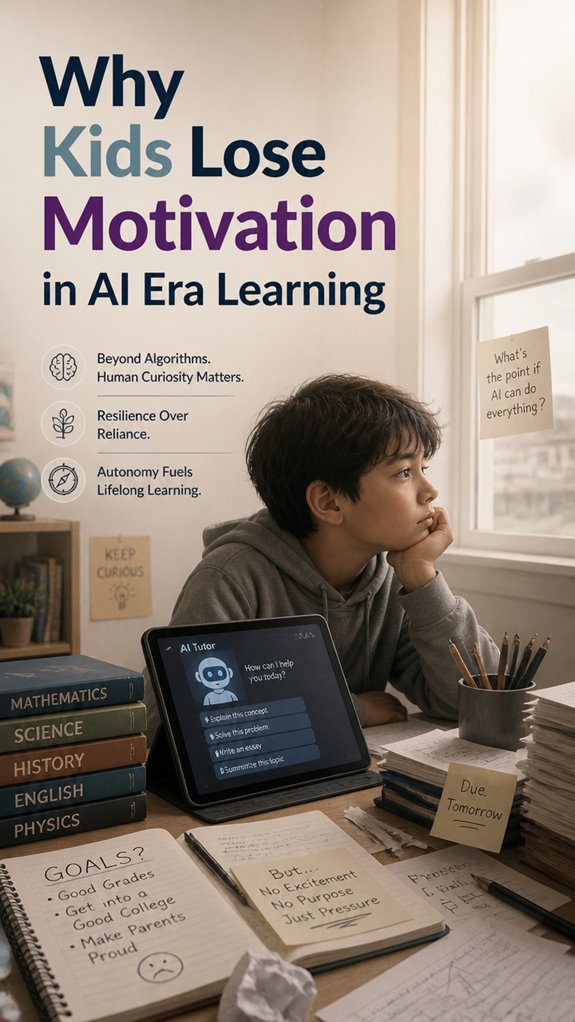
Have you noticed how AI tools can make it tempting for students to seek shortcuts instead of deep learning? This challenge calls for distraction management and focus reinforcement. When students rely on instant answers, they bypass effortful learning that builds neural pathways, risking erosion of critical thinking skills. Overuse of AI diminishes problem-solving skills vital for academic and real-world applications. To counter this, you can help children develop habits that resist distraction, like setting clear goals and creating devoted learning routines. Reinforcing focus means encouraging them to see value in effort, even when solutions seem immediate. Fostering independent thinking helps children evaluate information critically rather than passively accepting AI-generated answers. Keep in mind, AI isn’t the enemy—it’s a tool to be used intentionally. Your role is to guide children in maintaining their concentration and neural development, ensuring effort remains central to long-term capability. Over time, this approach builds resilient learners prepared for the dynamic future.
Kids Motivation Booster Program
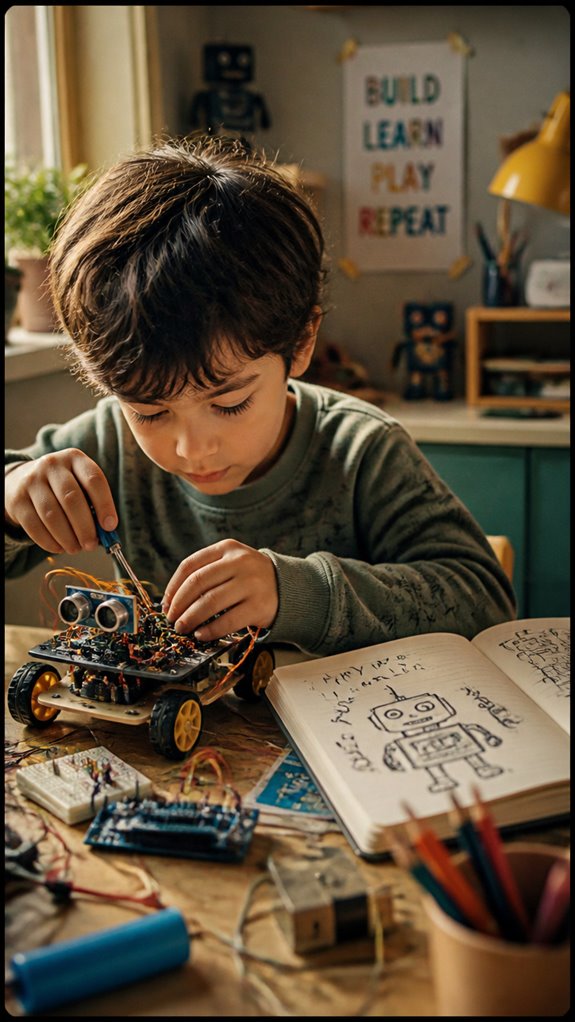
Building motivation in children isn’t about pushing them harder but about inspiring a sense of purpose and confidence in their abilities. The Kids Motivation Booster Program focuses on strengthening emotional resilience and encouraging creative expression. Here’s what it involves:
- Empowering Challenges: Giving children manageable challenges builds their resilience. It teaches them to recover from setbacks and view failure as growth.
- Creative Freedom: Encouraging kids to explore arts, storytelling, or problem-solving fosters creative expression. This makes learning meaningful and engaging.
- Purposeful Rewards: Recognizing effort over results strengthens intrinsic motivation. It creates a sense of mastery, preparing them for a future where confidence and adaptability rule.
This program shifts focus from fear of obsolescence to building lifelong capability. It gives your child the tools to thrive. A thoughtfully designed learning space reinforces these motivational strategies by reducing distractions and supporting the emotional and creative development essential for building lasting habits.
The Adaptive Atlas Learning Stack Model
The Adaptive Atlas Learning Stack Model provides a practical way to support your child’s ability to learn continuously in a world where knowledge is always changing. It focuses on building cognitive scaffolding, helping your child develop stronger metacognitive strategies—knowing how they think and learn.
Instead of traditional schooling that emphasizes memorization, this model encourages self-directed learning, adaptability, and resilience. It teaches children how to reflect on their progress, set new goals, and adjust strategies, which are essential skills for steering through the uncertain future. While traditional education has long been the default pathway for families, modern learners benefit from models that blend structured guidance with personalized exploration.
Many parents feel overwhelmed or worried about their child’s ability to keep up, but by understanding and applying this system, you empower them to stay adaptable and confident. It’s about creating a mindset that thrives amid constant change, not fearing it.
The Adaptive Atlas Framework
Five connected systems designed to help parents raise adaptable, future-ready children in a world shaped by AI, automation, and constant change.
| 🛡️ |
Anti-Fragile Child SystemBuilds resilience, adaptability, and the ability to handle uncertainty without shutting down. |
| 📚 |
Learning Stack ModelDevelops self-directed learning habits and continuous skill acquisition beyond school systems. |
| 🚀 |
Future Skill Stack SystemFocuses on high-value human skills that remain relevant in an AI-driven economy. |
| 🤖 |
AI Learning SystemTeaches children how to use AI as a thinking partner instead of becoming dependent on it. |
| 🧭 |
Child Type Navigator SystemPersonalizes learning and development based on each child’s strengths and personality. |
FAQ
How Can Parents Evaluate if Their Child Is Developing AI Literacy Effectively?
You can evaluate your child’s AI literacy through targeted AI assessment and skill indicators, observing their ability to use AI tools independently, adapt to new tech, and think critically about AI’s role—powerful signs of effective AI capability development.
What Are Some Signs of Genuine Interest Versus Superficial Engagement in AI Activities?
You can identify interest indicators by observing your child’s engagement cues, like deep questioning and persistence, revealing genuine curiosity. Superficial engagement often shows as minimal effort, distraction, or fleeting attention, indicating a lack of true interest in AI activities.
How Do Cultural Differences Influence Motivation Strategies for AI Skill Development?
Cultural influences shape motivation differences like the fuel that powers a fire, directly impacting how you inspire children to develop AI skills. Leverage these nuances to craft strategies that ignite their inner drive and emancipate their potential.
What Role Do Peer Interactions Play in Fostering Motivation for AI Learning?
Peer collaboration fuels motivation by fostering social encouragement, empowering children to challenge each other, exchange ideas, and build confidence together. You harness this dynamic to activate their intrinsic drive and cultivate a future-ready mindset through collective learning.
How Can Teachers Personalize AI Learning to Match Diverse Child Learning Styles?
You can craft a customized curriculum that adapts to each child’s learning style and integrates interactive feedback, empowering them to engage deeply, build confidence, and master AI skills aligned with their unique strengths and preferences.
References
- https://www.littlelit.ai/post/ai-for-kids-5-strategies-to-teach-kids-ai-effectively
- https://www.learningrx.com/reston/how-is-ai-changing-learning-and-what-skills-do-kids-need-most-34/
- https://www.98thpercentile.com/blog/ai-for-childrens-learning
- https://www.facultyfocus.com/articles/teaching-with-technology-articles/helping-students-develop-ai-prompting-skills-for-critical-thinking/
- https://www.apa.org/topics/artificial-intelligence-machine-learning/ai-literacy-teens
- https://ptaourchildren.org/tips-for-teaching-your-kids-how-to-use-ai/
- https://nssa.stanford.edu/studies/engagement-and-learning-benefits-goal-setting-rewards-human-ai-tutoring
- https://www.enrollify.org/blog/ai-for-student-engagement
- https://answerr.ai/ai-education-programs-student-engagement/
- https://knowledge.wharton.upenn.edu/article/how-can-companies-incentivize-ai-adoption/