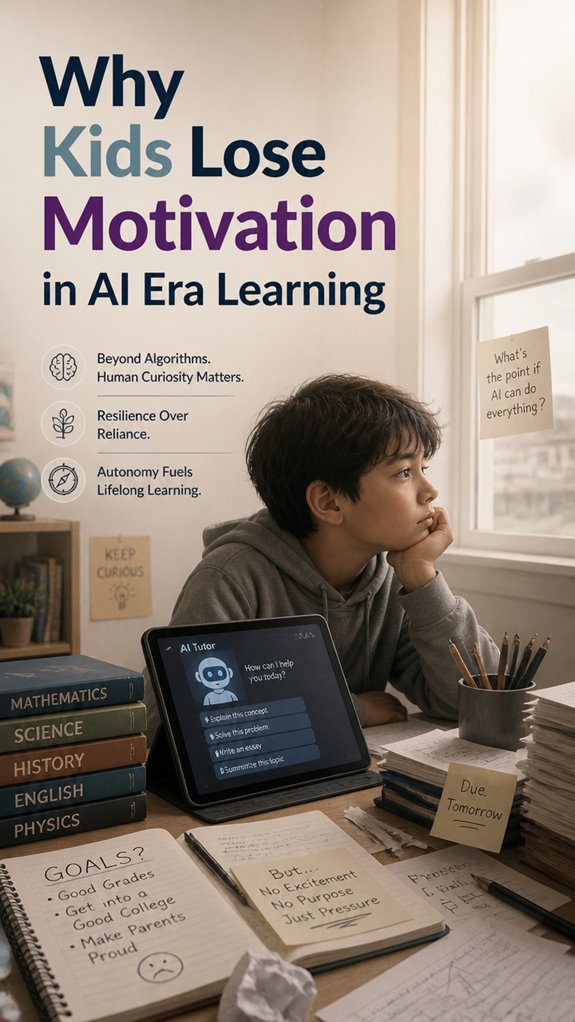

How Can Parents Foster Genuine Interest Without Crushing Joy?
Create spaces where curiosity thrives naturally, letting kids choose activities that spark real excitement rather than parental ambition.
A Lesson From My Kitchen Table
My son fidgeted through piano lessons for months. One afternoon, he abandoned the keyboard to build a cardboard synthesizer instead. That moment shifted everything. Rather than pushing classical training, I grabbed markers and joined him. At Adaptive Atlas, we write about these intersections because pressure kills exploration. Kids don’t need another achievement checkbox. They need permission to wander intellectually, fail spectacularly, and discover what actually matters to them.
When Curiosity Looks Like Chaos
Last year, my daughter spent three weeks obsessed with bug identification. She’d drag me outside at 6 AM, field guide in hand. I almost suggested something “more productive.” Then I watched her confidence bloom. That’s when I genuinely understood the research backing intrinsic motivation. Her learning happened because she chose it, not because I mandated it.
Quick Takeaways
- Offer diverse activities and materials to allow children to explore at their own pace without fixed expectations.
- Encourage choice and autonomy, letting kids select activities that genuinely interest them.
- Create a low-pressure environment where failure and quitting are viewed as natural parts of learning.
- Support reflection on interests and progress without judgment to foster intrinsic motivation.
- Model curiosity and patience, showing enthusiasm for children’s discoveries without pushing for specific outcomes.
How to Create a Variety of Activities to Spark Kids’ Interests
How can you create a wide array of activities that genuinely spark your child’s interests? Start by offering diverse options—sports, arts, music, science, dance—so your child can explore different domains. This encourages creative exploration and supports discovering what truly motivates them from within.
Keep in mind, the goal isn’t to push a specific activity but to let curiosity guide the process. Follow their lead and observe which activities naturally draw their attention.
Encourage curiosity by observing your child’s interests and supporting their natural exploration.
Provide tools, materials, and low-pressure environments where they can freely experiment, fail, and try again. Offering variety helps build intrinsic motivation, fostering a love for learning that lasts.
When children control their exploration, they develop confidence and resilience—skills that will serve them well into the future.
Let Kids Follow Their Curiosity and Decide What’s Right for Them
When you let children follow their curiosity and choose activities based on what genuinely interests them, you help build their confidence and intrinsic motivation. Autonomy support shows children they’ve control over their learning and play, which strengthens their ability to make decisions and develop resilience.
Curiosity nurturing encourages deeper engagement by allowing kids to explore at their own pace, rather than pushing them into activities they don’t care about. Many parents fear losing control or wasting time, but research from organizations like the Institute of Education shows that children who lead their interests develop stronger self-regulation and problem-solving skills. When children pursue their passions through self-directed exploration, they naturally strengthen writing and communication skills as they document their discoveries and share their learning.
Instead of steering them, trust their instincts and offer options. This approach fosters independence, preparing them for lifelong learning and adaptable success.
Making It Easy to Quit and Reflect, Building Confidence and Self-Knowledge
Creating space for kids to quit activities without feeling like they’re failing is a key part of building their confidence and self-knowledge. When children face temporary setbacks, it’s natural to worry they’ll develop a fixed mindset.
Encouraging kids to gracefully quit activities fosters confidence and growth, helping them embrace setbacks as opportunities.
Instead, use reflection practices to help them see challenges as opportunities. Understanding how to interpret learning progress data can help you recognize patterns in what engages your child and what doesn’t.
Here are three ways to do this:
- Encourage kids to ask themselves, “What did I learn?” after trying an activity.
- Support honest reflection on what fit and what didn’t, helping them see their changing preferences.
- Remind them that quitting is part of discovering their strengths and interests—this builds resilience for future pursuits.
This approach fosters independence and prepares them to face inevitable setbacks with confidence, shaping their long-term growth.
Percentage of Parents Encouraging Hobbies
Many parents naturally want to support their child’s growth through hobbies and recreational activities, but sometimes it feels overwhelming to know where to start or whether to push further.
Parental guilt can creep in when we worry about missing opportunities or not encouraging enough, especially with peer influence shaping perceptions. The good news is, research shows that roughly one-third of parents actively help with hobbies, like coaching sports or organizing arts classes, indicating strong engagement.
Higher-income families tend to encourage arts and sports more often, but all parents can foster key habits by providing simple opportunities and listening to their child’s interests. Understanding future-ready skills can help guide which activities and hobbies will best prepare children for success.
Keep in mind, supporting exploration without pressure builds confidence, resilience, and a genuine love for learning—traits that last a lifetime.
Addressing Picky Eating Behaviors

Picky eating often emerges as a normal phase between ages 2 and 4, rooted in evolutionary caution around new foods. Yet, patterns set by ages 4 to 9 can linger without early guidance.
Picky eating peaks normally at ages 2–4 from evolutionary wariness of novel foods, but habits formed by 4–9 persist without intervention.
You hold the power to shape your child’s lifelong eating habits through calm, strategic moves that build confidence and openness. Parents need to start intervention early to prevent pickiness from persisting.
Command mealtimes with these systems:
- Boost parent child communication: Discuss foods curiously, asking what they notice about tastes and textures—this fosters trust and reduces refusal cycles.
- Prioritize sensory integration: Gently expose them to varied fruits, veggies, and textures over 10+ times, modeling enjoyment yourself to normalize adventure.
- Ditch pressure tactics: Share family meals without bribes or force, preventing anxiety-driven selectivity that starves nutrient intake like fiber and iron.
You’ll prevent constipation risks and malnutrition, securing their healthy future. Act early; you’ve got this.
Multi Interest Support System for Parents
Supporting children with multiple interests might feel overwhelming at first, but it’s really about creating a flexible system that encourages exploration and resilience. Your boundaries matter, but they should support autonomy rather than restrict it.
Children thrive when they learn to balance their passions without feeling pressured by peer influence or societal expectations. Focus on setting clear, calm parental boundaries that foster independence and self-discovery.
Keep in mind, your role isn’t to control every choice, but to offer guidance and a safe space for trial and error. When children explore different cultures, they naturally develop broader perspectives and deeper curiosity about the world around them.
By cultivating an environment that values effort, curiosity, and adaptability, you prepare your child to navigate an unpredictable future.
This approach transforms fear into a thoughtful strategy, empowering your child to develop long-term resilience and confidence.
The Adaptive Atlas Learning Stack Model
- It nurtures self-directed learning by encouraging children to explore their interests without rigid instructions.
- It emphasizes adaptability, helping kids learn to navigate shifting information and environments.
- It reinforces resilience, teaching children to recover from setbacks and learn from failures.
This model shifts the focus from memorization to thinking and decision-making—skills that give your child power in the unpredictable future. Instead of fearing change, you can embrace a system that strengthens their capacity to thrive amid constant evolution. Research shows that self-learning habits developed early create a foundation for lifelong curiosity and independent problem-solving.
The Adaptive Atlas Framework
Five connected systems designed to help parents raise adaptable, future-ready children in a world shaped by AI, automation, and constant change.
| 🛡️ |
Anti-Fragile Child SystemBuilds resilience, adaptability, and the ability to handle uncertainty without shutting down. |
| 📚 |
Learning Stack ModelDevelops self-directed learning habits and continuous skill acquisition beyond school systems. |
| 🚀 |
Future Skill Stack SystemFocuses on high-value human skills that remain relevant in an AI-driven economy. |
| 🤖 |
AI Learning SystemTeaches children how to use AI as a thinking partner instead of becoming dependent on it. |
| 🧭 |
Child Type Navigator SystemPersonalizes learning and development based on each child’s strengths and personality. |
FAQ
How Can I Tell if My Child Is Genuinely Interested or Just Curious?
Start recognizing curiosity by observing if your child consistently seeks out activities, asks questions, and persists beyond initial exposure. Signs of real interest include deep engagement, effort, and spontaneous exploration—these highlight genuine passion rather than fleeting curiosity.
What if My Child Struggles to Focus on Any Activity?
If your child struggles with focus and attention, encourage interest over hobby by offering diverse activities, simplifying choices, and providing autonomy. Powerfully support their exploration, normalize setbacks, and foster resilience to *unleash* deep engagement.
How Do I Handle Sibling Rivalry Over Activities or Interests?
To handle sibling rivalry over shared activities, you assert your leadership by encouraging cooperation, setting clear boundaries, and fostering mutual respect. Promote shared activities that resonate with all and remind them of their collective strength, empowering them to collaborate harmoniously.
What’s the Best Way to Support Interest Development in Neurodivergent Children?
You assess your neurodivergent child’s interests with keen observation, then implement targeted motivation strategies—providing autonomy, celebrating effort, and offering varied opportunities—empowering them to develop passions confidently and resiliently, harnessing their full potential.
How Can I Balance Encouraging Exploration Without Pushing Too Hard?
Think of encouragement techniques as watering a delicate plant—you nurture growth by respecting boundaries and offering steady support instead of force. Power lies in patience, allowing your child to explore freely, guided gently without overwhelming, fostering resilience and genuine curiosity.
References
- https://academyofscholars.com/the-spark-effect-10-ways-to-help-children-discover-and-explore-their-passions/
- https://livingjoyfully.ca/articles/helping-kids-find-their-passion/
- https://www.weirdunsocializedhomeschoolers.com/helping-kids-explore-their-interests-when-you-dont-have-a-clue/
- https://www.pinkcouchwellness.com/post/how-to-support-your-child-without-adding-pressure
- https://childmind.org/article/pushing-kids-without-pushing-too-hard/
- https://learnbehavioral.com/blog/reframing-your-childs-intense-interests-as-a-strength
- https://www.pewresearch.org/social-trends/2015/12/17/5-childrens-extracurricular-activities/
- https://experiencelife.lifetime.life/article/survey-says-parents-want-more-active-time-for-and-with-their-kids/
- https://www.fidelitycharitable.org/about-us/news/study-shows-that-more-than-80-percent-of-parents-find-success-in-modeling-philanthropic-behavior.html
- https://pmc.ncbi.nlm.nih.gov/articles/PMC8611177/