Why Exploration Beats Early Specialization for Kids
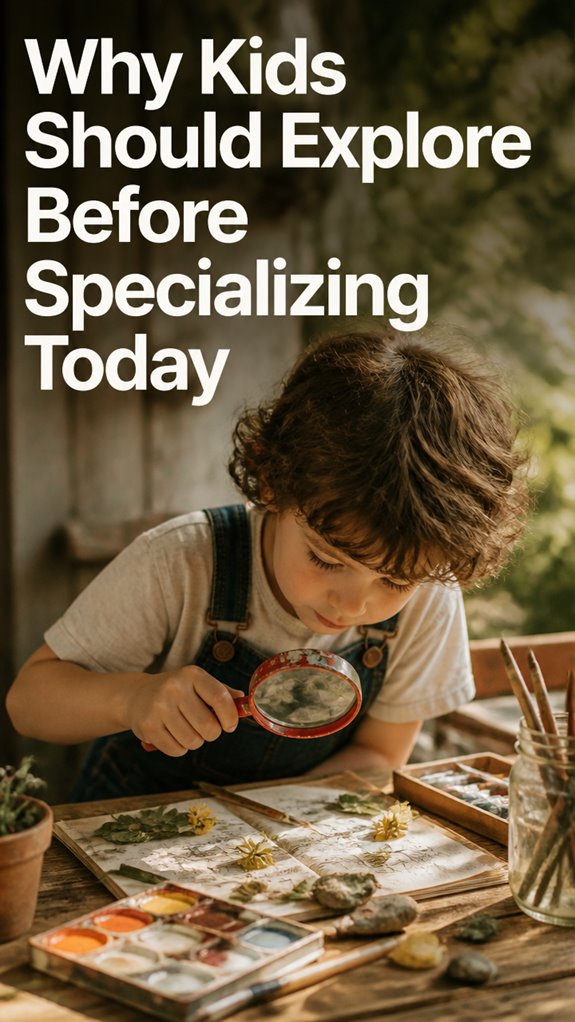
Should your child pick a path at age seven, or wander through possibilities first? Research from the OECD reveals that exploration builds adaptability and problem-solving skills essential for unpredictable futures. Early diverse experiences create stronger foundations than narrow specialization.
I watched my daughter struggle with piano lessons until she discovered coding. That pivot sparked something genuine. At Adaptive Atlas, we document these pivotal moments because kids deserve space to find their real interests, not our predetermined ones. Exploration isn’t lost time; it’s the actual curriculum.
Last summer, my son spent three weeks convinced he’d become a marine biologist. He didn’t. But he learned observation, persistence, and how to follow curiosity. That skill transfers everywhere. Sometimes the destination matters less than the journey’s texture.
Quick Takeaways
- Exploration builds foundational skills like creativity, problem-solving, and adaptability vital for future specialization.
- Engaging in diverse activities fosters curiosity and confidence, preventing early burnout and promoting lifelong learning.
- Play and exploration develop social-emotional skills such as cooperation, empathy, and resilience essential for success.
- Early exploration encourages a growth mindset, helping children embrace failure and learn from setbacks.
- Broad experiences prepare children to adapt to rapid changes and navigate an interconnected, unpredictable world.
Why Early Exploration Is Key to Lifelong Learning
Children’s early years are a critical window for exploration because they develop the foundation for lifelong learning. During this time, creating a flexible curriculum allows children to follow their interests naturally. This flexibility isn’t about distraction; it’s about passion cultivation—encouraging curiosity to thrive.
Early childhood is a vital time to nurture curiosity through flexible, interest-driven learning that builds lifelong skills.
Many parents worry that too much exploration might delay focus or future success. But research from organizations like the OECD shows that early exploration builds essential skills like adaptability, problem-solving, and creativity. For socially inclined children, exposure to collaborative and people-focused environments during exploration naturally cultivates interpersonal skills that align with rewarding career paths.
Instead of emphasizing early specialization, focus on nurturing a child’s sense of wonder. This approach equips them to develop confidence and a love of learning that lasts.
It’s about building a system where exploration shapes their skills for a complex world—setting them up for long-term success.
How Free Play Boosts Cognitive, Motor, and Social Skills
Free play might seem simple, but it’s actually the foundation for developing essential skills that last a lifetime. Through unstructured activity, your child strengthens motor coordination—balancing, running, and manipulating objects—and this builds confidence in their physical abilities.
Social development also thrives during free play, as children navigate sharing, cooperation, and conflict resolution naturally. These interactions foster empathy and communication, crucial skills for future relationships.
Some parents fear that free play isn’t productive enough or worry about safety, but this approach creates resilient, adaptable kids who can handle uncertainty and social complexities. As children develop these foundational competencies through exploration and play, they build the adaptive skills for AI that will enable them to thrive in rapidly evolving technological landscapes.
To support this, provide safe, open environments and trust their ability to explore. Over time, these skills form a robust base, helping your child thrive in a dynamic, interconnected world.
How Exploration Now Sets the Stage for Future Success
Exploration is the foundation for developing skills that will serve your child in a future shaped by rapid change. When kids explore, they build creative confidence—trust in their ability to invent, adapt, and solve new problems. This process also nurtures risk tolerance, helping them handle uncertainty without fear.
Some parents worry about their children falling behind or making wrong choices. Instead, see exploration as a way to prepare them for an unpredictable world. It strengthens their capacity to learn independently, adapt, and leverage new tools—like AI—as cognitive partners.
This approach doesn’t eliminate failure but teaches children how to grow from it. Over time, exploration’s long-term payoff is a flexible, resilient mindset that empowers your child to navigate uncertainty with confidence and mastery.
Practical Ways Parents Can Encourage Exploration Before Specializing

Encouraging your child to explore freely can seem overwhelming, especially when you worry about them falling behind or making wrong choices. Yet, exploration builds creative problem solving and emotional intelligence—core skills for the future. To support this, provide diverse, open-ended activities like art projects, outdoor adventures, or science experiments, giving space for curiosity to flourish. Use the table below to visualize their growth:
| Exploration Strategies | Skill Development Focus |
|---|---|
| Play-based learning | Creative problem solving |
| Unstructured time | Emotional resilience |
| Cross-disciplinary projects | Adaptability |
| Real-world tasks | Decision-making |
| Peer collaboration | Social-emotional skills |
Global Youth Innovation Rates Increase
Across the globe, young people are already driving change in ways that shape the future. They harness cultural diversity and creative expression to develop innovative ideas and real solutions. Platforms like MIT Solve and movements such as climate strikes show how youth are creating impact, not waiting for approval.
Young people are shaping the future through innovation, cultural diversity, and impactful activism.
Over 60% of youth are engaged with global goals like SDGs, tackling issues from climate to gender equality through digital access and collaborative tools. This rising innovation reflects their ability to adapt and experiment beyond traditional boundaries. Digital engagement is growing rapidly among youth, empowering them to collaborate and influence policy on a global scale. When children develop faster learning speed, they gain confidence to engage with complex global challenges more effectively.
As parents, you can see that fostering curiosity, cultural awareness, and creative expression now prepares your child to contribute meaningfully.
Historical fears about youth’s role fade when you recognize their capacity to shape a resilient, inclusive future. Building these skills early helps them navigate a rapidly changing world confidently.
Experiential Learning Enhances Resilience
Have you ever wondered how children develop the resilience they’ll need in an unpredictable world? Experiential learning plays a key role, building skills like creative problem solving and emotional agility.
When kids face real challenges—whether outdoors, in the workplace, or through social projects—they learn to adapt and rebound from setbacks. These experiences foster a mindset that sees failures as growth opportunities, not dead ends. Early exploration across diverse fields helps children identify their strengths and interests while building foundational competencies that support future specialization.
Reflecting on stressors and setbacks in guided journals, for example, makes resilience concrete and boosts mental toughness. Research from organizations like the American Psychological Association confirms that such hands-on learning improves mental well-being and supports long-term adaptability. Additionally, empirical research shows that engaging directly with complex situations enhances critical thinking and emotional intelligence, which are vital for building true resilience.
This approach helps children see uncertainty as part of growth, giving them the tools for future resilience and a confident, proactive mindset.
Exploration First Guide for Parents
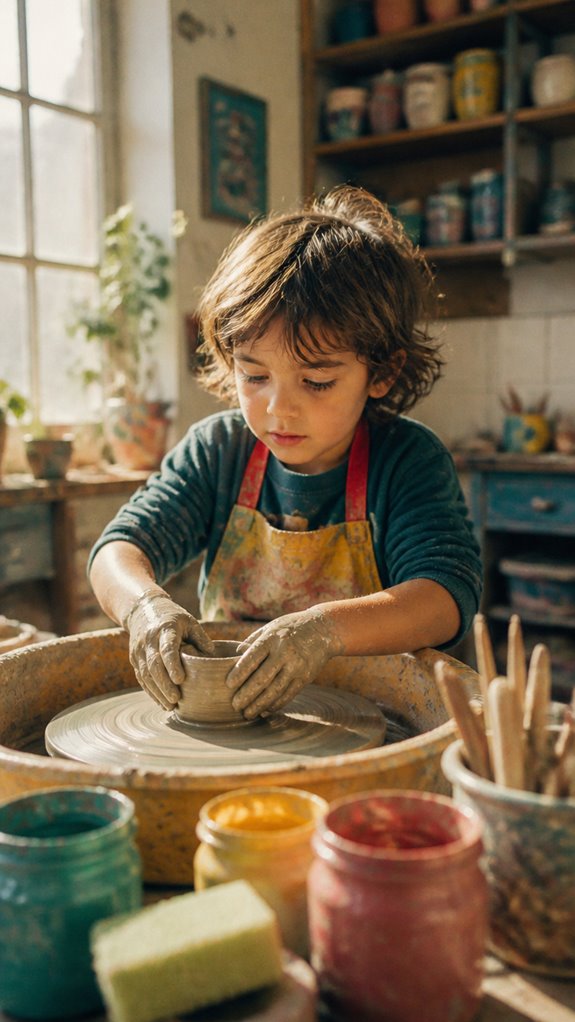
In today’s rapidly changing world, it’s natural to worry about how to prepare your child for what’s ahead. Emphasizing exploration first helps develop skills like risk management and creative experimentation. Instead of aiming for early mastery, encourage your child to try different activities and interests.
This approach builds resilience, confidence, and adaptability — qualities essential for an uncertain future. Fears of wasted time or mistakes are common, but they can be reframed as valuable learning opportunities. Research shows that broad learning experiences during childhood lead to better problem-solving abilities and increased innovation later in life.
By supporting exploration, you create a safe space for your child to experiment, reflect, and refine their interests. This fosters a growth mindset, helping them navigate unpredictability with curiosity and confidence.
Recall, the goal is to nurture flexible, capable children ready for continuous change.
The Adaptive Atlas Learning Stack Model
The Adaptive Atlas Learning Stack Model recognizes that in a world of constant change, teaching children how to learn independently is more important than simply giving them fixed knowledge. This model builds skills like cognitive flexibility and skill diversification, helping kids adapt to new challenges.
Here’s how it works:
- Self-directed learning allows children to experiment and respond to continually changing information, ensuring they stay adaptable rather than dependent on static facts.
- Feedback loops teach kids to reflect and adjust, cultivating resilience and long-term mastery over their growth.
- Personalized growth acknowledges each child’s unique strengths, helping them develop relevant skills and confidence for the future.
As personalized learning environments become increasingly integrated into educational systems, they enable students to pursue exploration across multiple disciplines before committing to specialized paths.
The Adaptive Atlas Framework
Five connected systems designed to help parents raise adaptable, future-ready children in a world shaped by AI, automation, and constant change.
| 🛡️ |
Anti-Fragile Child SystemBuilds resilience, adaptability, and the ability to handle uncertainty without shutting down. |
| 📚 |
Learning Stack ModelDevelops self-directed learning habits and continuous skill acquisition beyond school systems. |
| 🚀 |
Future Skill Stack SystemFocuses on high-value human skills that remain relevant in an AI-driven economy. |
| 🤖 |
AI Learning SystemTeaches children how to use AI as a thinking partner instead of becoming dependent on it. |
| 🧭 |
Child Type Navigator SystemPersonalizes learning and development based on each child’s strengths and personality. |
FAQ
How Can I Balance Exploration With Formal Education Demands?
You balance exploration with formal education by prioritizing creative freedom and sensory play, integrating them into structured learning. Active engagement fosters mastery, enabling children to explore diverse interests while meeting educational demands without sacrificing curiosity or personal growth.
What Age Is Best for Children to Begin Unstructured Exploration?
You should start unstructured exploration around age two, when creative play and sensory experiences naturally foster curiosity. Early engagement in open-ended activities builds adaptability and mastery, empowering your child to navigate and shape an ever-evolving world confidently.
How Do Cultural Differences Influence Exploration and Specialization?
Cultural diversity shapes exploration motivation, influencing how children perceive learning and growth. Recognizing these differences helps you foster adaptable skills, guiding children to navigate varied environments confidently and develop a flexible, mastery-oriented approach to their advancing interests.
What Role Do Digital Tools Play in Early Exploration Today?
Digital tools like virtual learning and creative coding empower you to open early exploration, fostering mastery in self-directed learning, problem-solving, and innovation. They amplify curiosity, enabling kids to experiment, adapt, and develop essential future-ready capabilities seamlessly.
How Can Parents Support Exploration Without Overwhelming Children?
Think of guiding exploration as planting a garden: you provide the soil and sunlight—parental boundaries—while encouraging creative freedom. Balance structure and independence to foster mastery, allowing children to thrive without feeling overwhelmed or constrained.
References
- https://www.naeyc.org/resources/pubs/yc/may2019/outdoor-play-is-essential
- https://valleyymca.org/early-childhood-learning-benefits/
- https://gokindy.com.au/blog/what-your-child-is-actually-learning-during-free-exploration
- https://www.genevamontessori.org/benefits-of-hands-on-learning-for-early-childhood
- https://headstart.gov/learning-environments/supporting-outdoor-play-exploration-infants-toddlers/benefits-outdoor-play-exploration
- https://www.oac.edu.au/news-views/sensory-play/
- https://blogs.idos-research.de/2024/11/12/technology-as-a-catalyst-driving-the-youth-engagement-in-global-development-boon-or-a-bane/
- https://www.un.org/pl/desa/young-people-are-changing-world-0
- https://www.citigroup.com/global/foundation/news/press-release/2025/citi-foundation-announces-recipients-2025-global-innovation-challenge-granting-collective-25-million-50-nonprofits-accelerating-youth-employability
- https://www.un.org/development/desa/pd/sites/www.un.org.development.desa.pd/files/undesa_pd_2026_world_population_highlights-youth.pdf