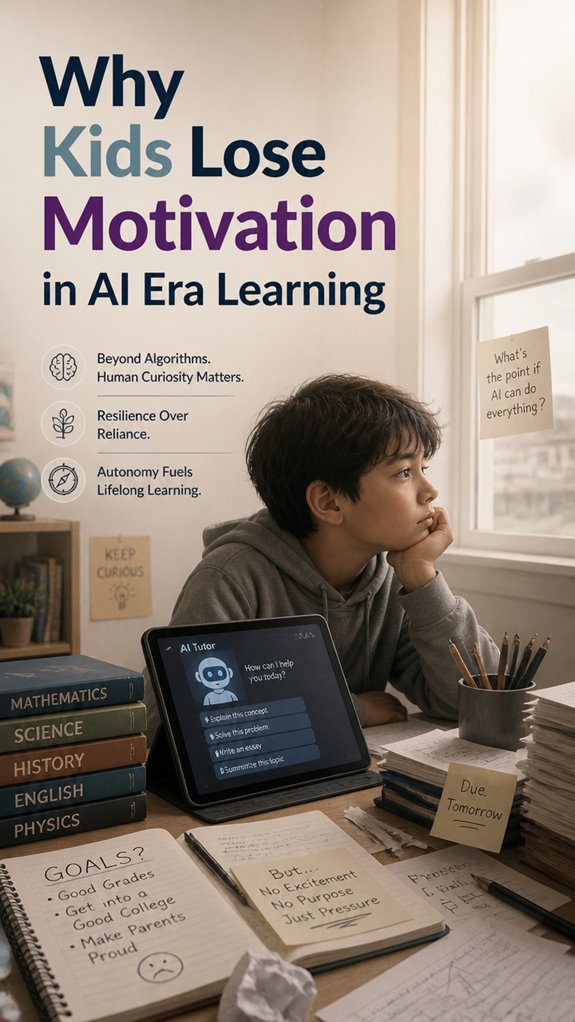
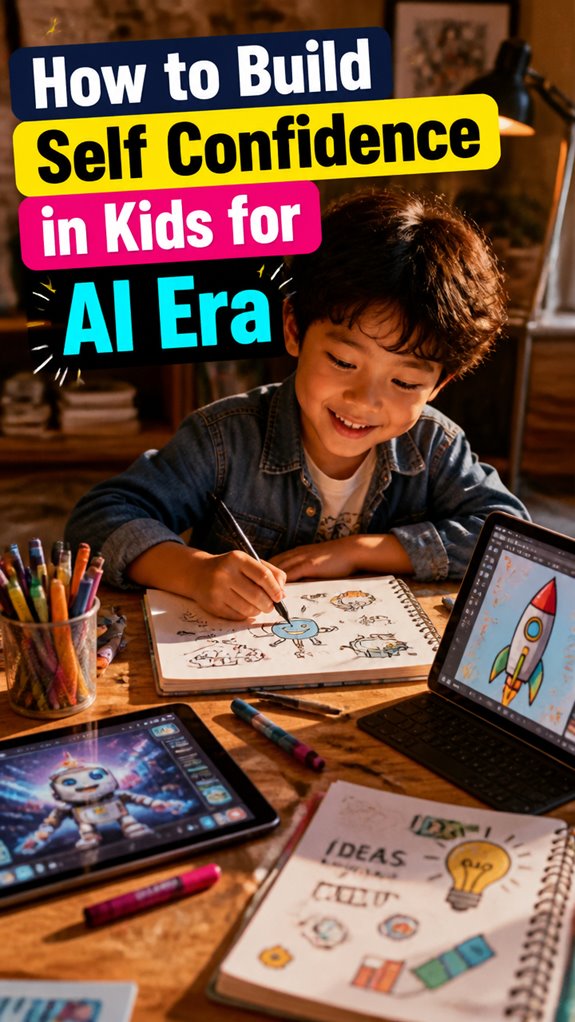
How Do We Actually Build Real Confidence in Kids Facing AI?
The answer sits in three core practices: nurturing resilience through productive struggle, teaching critical thinking over passive consumption, and modeling ethical tech use at home. Your child needs to see mistakes as data, not disasters.
A Lesson From the Classroom
I watched my daughter freeze during a coding challenge last year. The screen displayed an error message, and her instinct was to quit. Instead of swooping in, I sat beside her and asked one question: “What’s the code trying to tell you?” She debugged it herself in five minutes. That moment sparked something. We started Adaptive Atlas specifically because kids need frameworks to navigate uncertainty, not just information. They need permission to feel uncomfortable while learning. The platform exists so you don’t have to figure this out alone.
The Real Turning Point
Last week, my son admitted he’d failed a digital citizenship quiz. Rather than punish him, we discussed why he’d answered recklessly. He chose to retake it. That conversation taught him more about responsible AI use than any lecture could have delivered.
Quick Takeaways
- Foster a growth mindset by celebrating effort and learning from mistakes to encourage resilience and confidence.
- Promote child-led projects and hands-on activities to build independence and practical skills.
- Teach responsible AI use and critical thinking to empower kids to navigate technology confidently.
- Create a secure, supportive environment that nurtures emotional awareness and self-understanding.
- Encourage experimentation and risk-taking in a safe setting to develop adaptability and problem-solving skills.
How Can I Help My Child Build Self-Awareness and Confidence?
Building self-awareness and confidence in your child doesn’t happen by chance; it’s a deliberate process that starts with creating a safe space for exploring who they are. You can do this through mindfulness practices that help children tune into their feelings without judgment.
Creating a safe space fosters self-awareness, guiding children to understand and embrace their true feelings.
Encouraging emotional intelligence allows them to understand and manage emotions, building resilience and self-trust over time. Instead of fearing their mistakes, teach them to see challenges as opportunities for growth.
This approach shifts their focus from fixed outcomes to continuous learning. Keep in mind, confidence is rooted in awareness—helping your child recognize their strengths and areas for development gives them a strong foundation. Developing opinion forming skills enables children to think critically about their experiences and build convictions grounded in their own values.
In the long run, this supports their ability to adapt, collaborate, and thrive in a constantly changing world.
What Are Simple Ways to Teach Resilience and Embrace Failure?
It’s natural to worry about how your child will handle setbacks or failure, especially in a rapidly changing world. But fostering a growth mindset helps children see failures as learning opportunities, not reasons to give up. Teaching failure resilience means showing them that setbacks are part of growth.
Encourage your child to face challenges with curiosity, knowing that effort and persistence lead to progress. Reframe mistakes as useful data, not personal flaws. Celebrate effort, not just success, to build confidence.
Over time, this approach helps kids see struggles as steps to mastery, giving them the tools to navigate uncertainty and adapt. When children learn to embrace failure, they develop resilience that prepares them for tomorrow’s unpredictable environment. Learning to address digital mistakes early also teaches kids accountability and helps prevent lasting impacts on their online presence.
How Do I Encourage Child-Led Projects and Practical Life Skills?
Encouraging child-led projects empowers children to take ownership of their learning and build important practical skills that will serve them in a changing world. Through playful experimentation, kids learn to explore ideas freely, developing confidence in their ability to try, fail, and improve.
Task autonomy gives children the freedom to choose what interests them, fostering intrinsic motivation and a sense of control. Some parents fear chaos or lack of direction, but this approach actually cultivates resilience and independence.
How Can We Develop Critical Thinking and Use AI Responsibly?

Many parents worry that with AI advancing rapidly, their children might rely too heavily on technology rather than developing true critical thinking skills. But fear often comes from outdated ideas about learning and decision-making.
Instead, focus on teaching your child to use AI responsibly, as a tool for amplifying thinking, not replacing it. Encourage questions like “Is this information trustworthy?” and help them recognize cognitive biases that skew judgment.
Introducing concepts of Ethical AI helps children understand its impact on society and the importance of fairness. Having calm discussions about AI fears with your child creates a foundation for understanding both the opportunities and challenges that technology presents.
Reframe reliance on AI as a chance to build strong reasoning skills—using technology to challenge assumptions and explore multiple viewpoints.
This approach empowers your child to navigate the future confidently, making thoughtful choices that align with their values and long-term growth.
Children’s Reluctance to Take Risks
Children’s reluctance to take risks often stems from a mindset shaped by fear of failure or disappointment. This impacts their risk tolerance and bravery development, which are essential in an uncertain world. In an AI-driven environment, children may become over-reliant on technology to solve problems, further reducing their willingness to take independent risks.
Children’s fear of failure can hinder their willingness to take risks and grow bravely.
To foster growth:
- *Reframe failure as learning:* Show that mistakes are part of growth, not reasons to withdraw.
- *Encourage small risks:* Help them practice bravery through manageable challenges that build confidence over time.
- *Model vulnerability:* Share your own failures and how you overcame them, creating a safe space for experimentation.
The Adaptive Atlas Anti-Fragile Child System
Building resilience into a child’s character is more important now than ever, because the world is unpredictable and filled with constant change. In this environment, emotional agility and mindset development are key. You want your child to stay calm, adaptable, and confident, even when faced with setbacks.
The Adaptive Atlas Anti-Fragile Child System helps build this by encouraging children to view challenges as opportunities to grow. It promotes resilience through practices that develop emotional agility—helping kids manage feelings and bounce back. The system is grounded in anti-fragile principles that go beyond mere survival, enabling children to actually strengthen and improve through adversity.
Instead of avoiding failure, they learn to navigate it, strengthening their confidence. This system shifts focus from fixed abilities to long-term growth, empowering children to embrace change and remain capable no matter what the future holds.
The Adaptive Atlas Framework
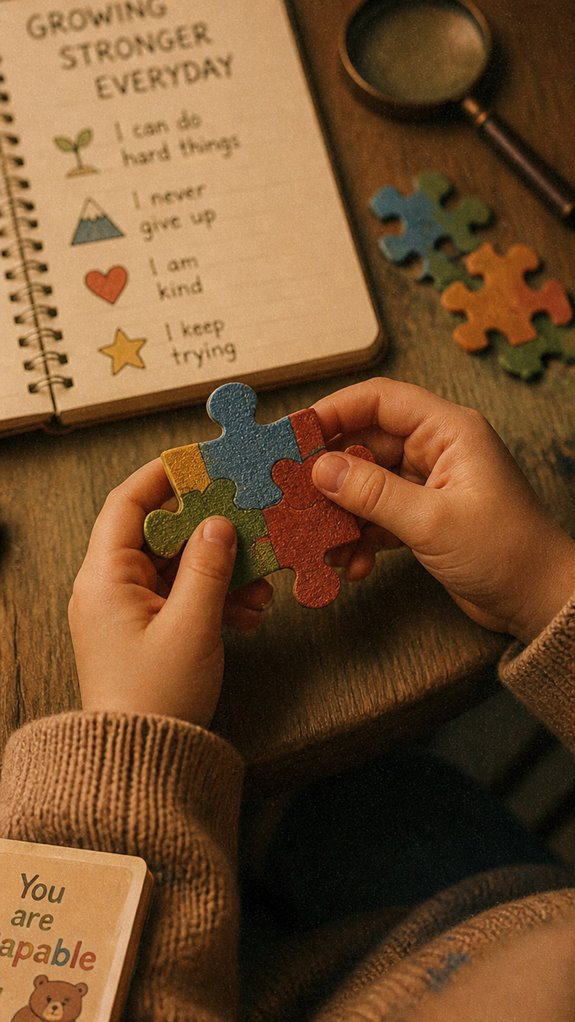
The Adaptive Atlas Framework offers a clear way to navigate a future full of uncertainty and rapid change. It’s designed to help your child develop emotional resilience and a growth mindset, key traits for facing constant challenges. Here’s how it works:
- Building inner strength through the Anti-Fragile Child System, so they stay confident despite setbacks.
- Encouraging self-directed learning with the Learning Stack Model, giving them control over their growth.
- Leveraging AI tools intelligently, turning technology into an empowering partner without dependency.
This system shifts focus from fixed skills to adaptable capabilities.
It reassures you that by fostering resilience and curiosity, you’re setting a foundation for your child to thrive, no matter what the future holds.
Neuroplasticity Research Insights
Neuroplasticity shows us that the brain isn’t fixed; it’s adaptable, especially in childhood. This flexibility relies on neuroplasticity mechanisms that continually shape brain adaptability. When your child experiences challenges, their brain rewires itself, strengthening neural pathways through repeated success and new experiences. Even adverse childhood events can be countered with positive inputs, as nurturing environments and targeted activities promote resilience. Measurement approaches, such as interventions and nurturing experiences, can influence how these neural pathways develop and strengthen, emphasizing the importance of early positive engagement. Confidence isn’t just about innate talent; it’s built through these repeated, meaningful experiences that reinforce a sense of mastery. By providing consistent opportunities for growth and supportive feedback, you help your child develop neural pathways rooted in self-efficacy. Strong parent-child relationships create the foundation upon which confidence is built, as children thrive when they feel securely connected to their caregivers. Keep in mind, your child’s brain can change and grow over time — it’s a dynamic system, always ready to adapt and strengthen through mindful nurturing.
Confidence Building Program for Kids
Fears about kids losing confidence as they face a rapidly changing world are common, but you can take practical steps to support their growth.
A confidence-building program centers on fostering resilience through team challenges, encouraging independence despite peer influence, and emphasizing long-term skills over quick wins.
- Use team challenges to promote collaboration, where kids learn to support each other and develop shared confidence.
- Address peer influence by teaching kids to trust their own judgment, helping them stand firm instead of seeking approval.
- Focus on consistent, small victories that reinforce their ability to adapt and grow over time.
This approach shifts the focus from fear of change to empowering children with systems that build genuine confidence—ready for whatever the future holds. When children engage in calculated risk-taking, they develop resilience and learn from both successes and setbacks, accelerating their growth in an unpredictable world.
Creative Problem-Solving Techniques
Creative problem-solving is an essential skill in a world that constantly changes, and many parents worry about whether their kids can handle real-world challenges.
The key is encouraging creative brainstorming and innovative experimentation. These approaches help children see that solutions don’t have to be straightforward or perfect on the first try.
Instead, they learn to explore new ideas, test them out, and adapt along the way. This builds confidence because kids realize that setbacks are part of growth, not failures.
By creating a safe space for experimentation, you empower your child to think independently and develop resilience. Online platforms like digital creative tools provide structured environments where children can safely experiment with their ideas across multiple formats and mediums.
Over time, these skills become habits, preparing them for an unpredictable future where flexibility and inventive thinking are more valuable than memorized answers.
The Adaptive Atlas Framework
Five connected systems designed to help parents raise adaptable, future-ready children in a world shaped by AI, automation, and constant change.
| 🛡️ |
Anti-Fragile Child SystemBuilds resilience, adaptability, and the ability to handle uncertainty without shutting down. |
| 📚 |
Learning Stack ModelDevelops self-directed learning habits and continuous skill acquisition beyond school systems. |
| 🚀 |
Future Skill Stack SystemFocuses on high-value human skills that remain relevant in an AI-driven economy. |
| 🤖 |
AI Learning SystemTeaches children how to use AI as a thinking partner instead of becoming dependent on it. |
| 🧭 |
Child Type Navigator SystemPersonalizes learning and development based on each child’s strengths and personality. |
FAQ
How Can I Prevent Over-Reliance on AI in My Child’s Learning Process?
You can prevent AI dependence by encouraging your child to balance digital overload with real-world exploration, fostering critical thinking, independence, and curiosity. Set boundaries for AI use, emphasizing active learning over passive consumption, to guarantee genuine growth and confidence.
What Strategies Foster Emotional Regulation Alongside Self-Confidence Development?
Ironically, to truly foster emotional regulation and confidence, you need to let your child feel deeply—building emotional awareness—and practice self-control skills, freeing them from dependency on external validation for inner strength and resilience.
How Do Cultural Differences Impact Confidence-Building Approaches for Children?
You embrace cultural influences, recognizing confidence variation across backgrounds, and tailor your approach to suit each child’s unique surroundings. By respecting differences, you empower their self-belief, freeing them from limiting norms and fostering authentic, resilient confidence in diverse environments.
Can Too Much Encouragement Hinder a Child’s Resilience and Independence?
Like watering a plant too much, overusing parental praise and validation techniques can weaken resilience and independence. Excessive encouragement may lead kids to depend on external approval, blunting their ability to face challenges confidently and thrive autonomously.
How Do I Support My Child’s Adaptability During Unpredictable Technological Changes?
You can support your child’s adaptability skills by fostering tech resilience, encouraging curiosity, and emphasizing learning over perfection. Let them explore new tools, embrace failure, and view change as an opportunity for growth, freeing them from fear of the unknown.
References
- https://www.psychologytoday.com/us/blog/parenting-beyond-power/202508/how-to-prepare-your-kids-for-the-age-of-ai
- https://www.youtube.com/watch?v=FTIJl8vv5Yw
- https://www.gse.harvard.edu/ideas/edcast/24/10/impact-ai-childrens-development
- https://www.youtube.com/watch?v=0euV-gLL9VQ
- https://ai.gopubby.com/ai-proof-kids-what-skills-your-child-needs-to-thrive-tomorrow-b341956328e2
- https://pmc.ncbi.nlm.nih.gov/articles/PMC8292919/
- https://www.arrowsmith.ca/blog/the-brains-role-in-confidence-motivation-and-resilience-at-every-age
- https://cafo.org/understanding-neuroplasticity-and-its-importance-for-children-in-adversity/
- https://learnbehavioral.com/blog/brain-plasticity-2
- https://pmc.ncbi.nlm.nih.gov/articles/PMC7013153/