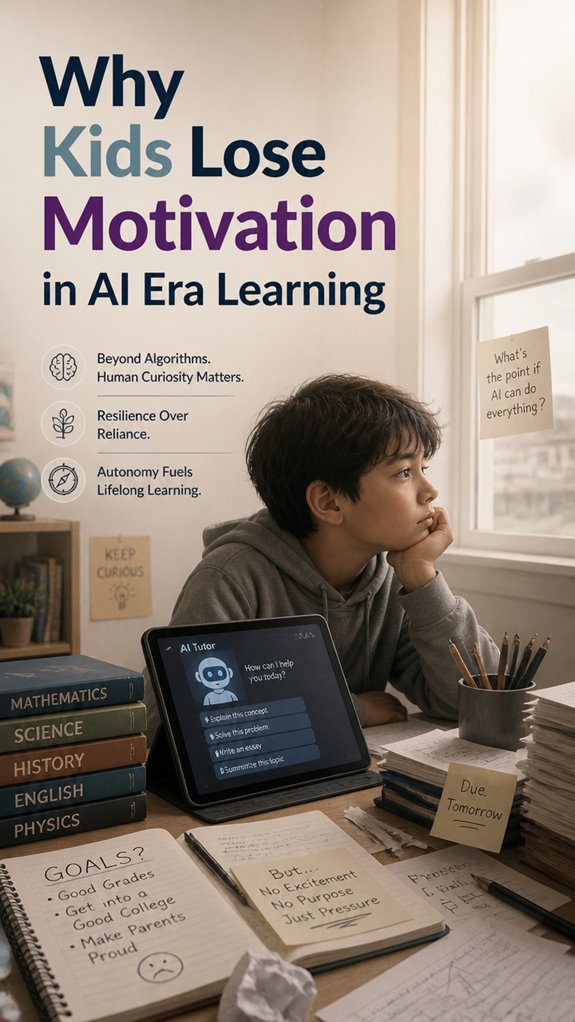
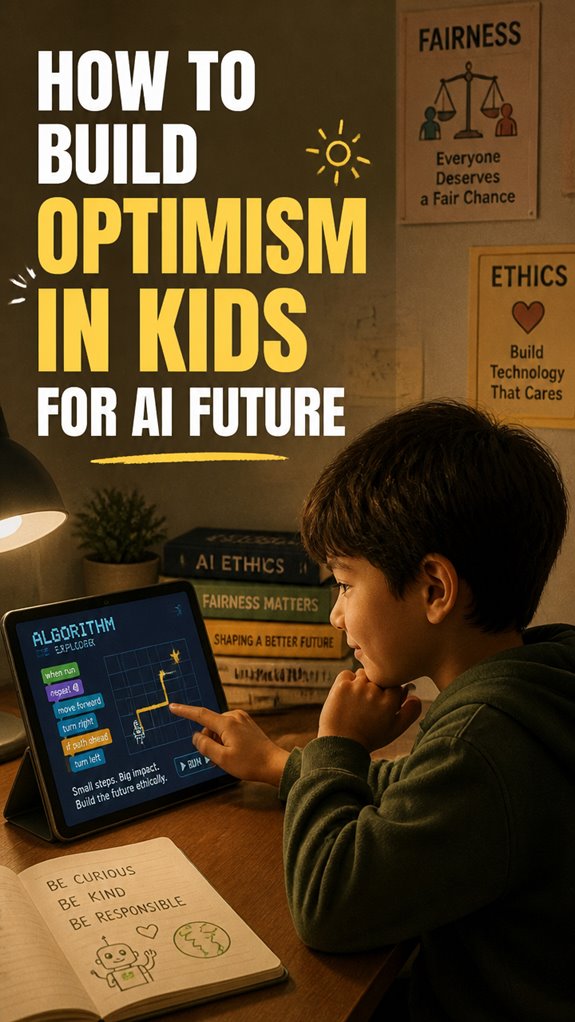
How do we raise kids who see AI as opportunity, not threat?
By cultivating resilience, creativity, and growth mindset, children learn to view challenges as learning opportunities rather than obstacles. Frame technological change as expansion, not replacement. Encourage emotional awareness and critical thinking about both AI’s potential and pitfalls. These foundational skills transform anxiety into confidence.
My Journey Teaching Kids to Embrace Change
Last year, my daughter came home convinced robots would steal all jobs. Instead of dismissing her fear, I showed her how AI created entirely new roles we couldn’t imagine a decade ago. That conversation sparked something. It’s why we built Adaptive Atlas—a resource designed to help parents and educators decode AI’s impact without the jargon or doom-scrolling panic. We wanted families to actually talk about this stuff together, not just survive it.
When My Kid Rewired My Thinking
My son asked me a deceptively simple question: “Mom, if AI does the boring stuff, what should I get really good at?” That moment shifted everything. He wasn’t worried about replacement; he was curious about contribution. Kids intuitively understand adaptation when we model it honestly. They need permission to be excited about learning alongside emerging technology, not terrified of it.
Quick Takeaways
- Foster a growth mindset by framing AI challenges as opportunities for learning and creativity.
- Encourage curiosity about AI, highlighting its potential benefits and ethical considerations.
- Create a supportive environment that emphasizes resilience, viewing setbacks as pathways to mastery.
- Teach emotional regulation skills to handle uncertainties and changes associated with technological growth.
- Promote responsible AI participation by empowering children with critical thinking and ethical awareness.
Why Optimism Is Essential for Kids in an AI Future
In an era of rapid technological change, it’s natural to worry about what the future holds for kids. That concern often stems from uncertainty, but it can also be an opportunity to foster childhood curiosity and forward thinking.
When you focus on building optimism, you help your child see change not as a threat, but as a chance to grow and create. Teaching them that skills like adaptability and creative problem-solving are valuable encourages resilience. Project-based learning at home is an effective way to develop these competencies while keeping children engaged and motivated.
Instead of fixating on what might go wrong, guide them to view challenges as opportunities to learn. This mindset provides a sense of control in a world that constantly evolves.
How to Cultivate a Growth Mindset and Resilience
Building a growth mindset and resilience in children can seem challenging in today’s fast-changing world, but it’s an essential step for their long-term success. Many parents worry about failure or constant change, but what matters most is fostering self-efficacy—the belief that they can learn and adapt.
When children see setbacks as opportunities to grow, they develop resilience. Encourage them to view challenges as part of the process, not as threats. Reinforce that effort and learning matter more than perfection.
This helps cultivate a growth mindset, empowering kids to see themselves as capable of overcoming obstacles. Over time, they’ll build confidence in their abilities, better preparing them for a future shaped by continual change and innovation.
Activities That Boost Creativity and Problem-Solving Skills
Encouraging children to participate in activities that boost creativity and problem-solving can considerably prepare them for a future of continuous change. One way is exploring imaginary worlds through storytelling exercises. These activities allow children to invent scenarios and characters, fostering flexible thinking.
You can also introduce puzzles and open-ended projects that challenge them to find solutions creatively. Engaging in role-playing games helps develop empathy and quick thinking. Building empathy through interactive play strengthens their ability to navigate an increasingly complex world shaped by artificial intelligence.
Remember, the goal isn’t perfection but cultivating a mindset that welcomes experimentation and resilience. If your child feels overwhelmed, remind yourself that these activities build essential skills over time.
Building Emotional Intelligence and Self-Directed Learning

Growing emotional intelligence and self-directed learning may seem complex, but they’re essential for a child’s future success in a changing world. Focus on developing emotional awareness so your child can understand their feelings and those of others. This helps build empathy and resilience.
Self regulation allows them to manage impulses, stay calm under pressure, and adapt calmly to setbacks. These skills foster confidence, independence, and a sense of control amid uncertainty.
Many parents fear they’re shortchanging their children with traditional lessons, but fostering emotional intelligence and the capacity to learn independently creates a solid foundation for lifelong growth. Incorporating safe practical exercises into daily routines helps children apply these emotional skills in realistic situations and builds their confidence for real-world challenges ahead.
Teaching Kids to Think Critically About AI and Its Ethics
Although AI is becoming more present in our daily lives, teaching kids to think critically about its ethics isn’t just about understanding technology—it’s about shaping their mindset to navigate complex questions responsibly.
You can foster AI literacy and ethical reasoning by encouraging kids to ask questions like, “Who benefits from this technology?” and “What are the potential risks?” It’s important they see issues like bias, privacy, and decision transparency as part of the bigger picture.
Instead of fearing AI’s influence, help them understand their role as active, thoughtful participants. Frame ethical questions as opportunities for exploration, empowering children to analyze and shape AI’s impact. By building writing and communication skills, kids can better articulate their concerns and ideas about technology’s role in society.
This approach guides them toward responsible independence, ensuring they stay adaptable and capable in a *changing* tech *terrain*.
Creating a Supportive Family Environment for Learning and Adaptability
Creating a supportive family environment sets the foundation for your child’s ability to adapt and learn continuously. Open parent-child communication helps build trust and understanding, giving your child space to express thoughts and concerns about change.
A supportive family nurtures adaptability and trust, empowering children to face change with confidence and curiosity.
Establishing a steady family routine offers predictability amidst uncertainty, fostering stability and resilience. Remember, it’s normal to feel overwhelmed by rapid technological shifts, but instead of focusing on fears, shift your focus to empowering your child through consistent, positive interactions.
By listening actively and encouraging curiosity, you help children feel safe exploring new skills and ideas.
Long-term, this approach nurtures flexibility and confidence, essential for steering through an unpredictable AI-driven future. Small, deliberate patterns of support create an environment where your child can thrive no matter how the world evolves.
Addressing Fear of Obsolescence

Many parents feel worried that their children might become obsolete as AI and automation reshape the job market. This fear is normal but can be reframed through technological optimism. Instead of seeing AI as a threat, see it as a tool to empower your child’s future skills. Understanding parental anxiety about AI can help you transform worry into proactive preparation for your children’s futures.
Focus on building data literacy—help them understand how information works and how to interpret it confidently. This skills foundation prepares them to adapt, not just compete.
- Encourage curiosity about how AI works to boost confidence
- Teach critical thinking to navigate change effectively
- View constant learning as an opportunity, not a risk
The Adaptive Atlas Anti-Fragile Child System
Building resilience in children starts with helping them handle uncertainty, frustration, and failure. This foundation empowers your child to stay engaged through challenges, nurturing their childhood imagination and curiosity cultivation.
Building resilience helps children embrace challenges, fostering imagination, curiosity, and confidence to navigate an ever-changing world.
Instead of shielding them from difficulty, invite them to explore solutions, encouraging a growth mindset. When children learn to recover from setbacks, they gain confidence in steering through an unpredictable future—one shaped by AI and rapid change.
It’s essential to trust their natural curiosity and creative energy, fostering an environment where they see failure as an opportunity for learning. Keep in mind, resilience isn’t about avoiding difficulty but building capacity to grow through it. The anti-fragile child system strengthens this capacity by deliberately exposing children to manageable challenges that teach them to thrive under stress.
This approach sets the stage for long-term adaptability, enabling your child to embrace change with optimism and a sense of empowerment, rather than fear.
The Adaptive Atlas Framework
- Emphasizes long-term capability over short-term memorization
- Focuses on learning how to learn and solve new problems
- Builds confidence in using AI as a tool for growth
Neuroscience of Resilience Training
Resilience isn’t just about bouncing back from setbacks; it’s rooted in the way our brain adapts and rewires itself over time. Neuroscience understandings show that creating resilience practices in children strengthens neural pathways associated with emotional regulation and flexibility. For example, engaging in activities like mindful touch or movement activates the brain’s somatosensory system, reinforcing positive emotional states. When children experience consistent emotional attunement from adults, their neural circuitry grows stronger, supporting long-term resilience. Building a flexible identity mindset helps children separate their self-worth from specific outcomes, enabling them to view challenges as opportunities for growth rather than threats to their core sense of self.
| Resilience Practices | Brain Benefits |
|---|---|
| Mindful touch and movement | Builds neural pathways for emotional regulation |
| Attuned adult support | Strengthens circuits for stress response and adaptability |
| Repeating positive beliefs | Reinforces neuroplasticity, making resilience more automatic |
| Play and social interaction | Activates learning regions, promoting flexible thinking |
Optimism Builder Program for Kids
Many parents worry about how to help their children stay positive in a world that feels unpredictable. The Optimism Builder Program for Kids offers a way forward. It shifts focus from fear of change to empowerment through skill-building, supported by tech integration and playful, engaging methods.
- Encourage play-based learning to foster curiosity and resilience.
- Use tech tools that amplify strengths and boost problem-solving skills.
- Cultivate a growth mindset that embraces uncertainty as opportunity.
This program avoids panic, emphasizing long-term capabilities over short-term solutions. It helps children see challenges as chances to grow, not threats. Building sustainable healthy routines creates the foundation needed for children to maintain optimism and energy as they develop these new capabilities.
Future Ethical Considerations
As we think about preparing children for a future shaped by AI, it’s important to contemplate the ethical questions that come with this leap. Concerns like tech addiction and algorithm bias often surface, but they don’t have to control us.
Instead, see these as opportunities to teach children awareness and responsibility. Help them understand how technology influences choices and how biases can distort fairness. While certain skills may need rethinking in an AI-driven world, focus on building critical thinking and ethical judgment, not just technical competencies.
Teach children to recognize technology’s influence and biases, fostering awareness and responsibility for fair, ethical choices.
Reframe fears into practical steps: set boundaries around screen time, encourage curiosity about how algorithms work, and promote values of fairness and transparency.
This gives your child tools for making responsible decisions and helps them navigate a complex digital terrain with confidence and purpose.
The Adaptive Atlas Framework
Five connected systems designed to help parents raise adaptable, future-ready children in a world shaped by AI, automation, and constant change.
| 🛡️ |
Anti-Fragile Child SystemBuilds resilience, adaptability, and the ability to handle uncertainty without shutting down. |
| 📚 |
Learning Stack ModelDevelops self-directed learning habits and continuous skill acquisition beyond school systems. |
| 🚀 |
Future Skill Stack SystemFocuses on high-value human skills that remain relevant in an AI-driven economy. |
| 🤖 |
AI Learning SystemTeaches children how to use AI as a thinking partner instead of becoming dependent on it. |
| 🧭 |
Child Type Navigator SystemPersonalizes learning and development based on each child’s strengths and personality. |
FAQ
How Can Parents Assess Their Child’s Natural Tendencies Towards Optimism or Pessimism?
You can assess your child’s natural tendencies by observing their child temperament and optimism indicators—notice how they respond to challenges, setbacks, or new situations. These reactions reveal whether they lean towards optimism or pessimism naturally.
What Role Does Play Have in Developing Resilience and Adaptability?
Play fosters emotional resilience and fuels a growth mindset by encouraging exploration, experimentation, and embracing challenges, empowering kids with the capacity to adapt, overcome setbacks, and confidently navigate change, ultimately cultivating resilient, adaptable, and liberated learners.
How Do Cultural Differences Influence a Child’s Outlook on AI and Future Uncertainty?
You influence your child’s outlook by challenging restrictive cultural narratives and embracing diverse generational viewpoints, empowering them to see uncertainty as opportunity, fostering independence, resilience, and a liberated mindset ready to navigate AI-driven futures confidently and creatively.
Can Introducing AI Early Cause Dependency or Reduce Intrinsic Motivation?
Introducing AI early can cause dependency, reduce intrinsic motivation, and hinder independent thinking. To liberate your child, foster curiosity, encourage exploration, and balance AI use with activities that ignite passion and build resilience, avoiding reliance on technology alone.
How Do I Balance Teaching Optimism With Realistic Awareness of AI Challenges?
You balance teaching optimism by fostering future awareness and ethical considerations, encouraging kids to see opportunities in AI’s potential while understanding its challenges. This empowers them to innovate responsibly, embracing change with confidence and critical understanding.
References
- https://safeaikids.com/insights/prepare-kids-for-ai-future-skills-for-kids/
- https://www.ontrackschool.com/preparing-kids-for-ai-driven-future/
- https://oxfordlearning.com/future-ready-study-skills-how-to-prepare-your-child-for-the-ai-age/
- https://www.youtube.com/watch?v=FTIJl8vv5Yw
- https://ai.gopubby.com/ai-proof-kids-what-skills-your-child-needs-to-thrive-tomorrow-b341956328e2
- https://pmc.ncbi.nlm.nih.gov/articles/PMC12166937/
- https://www.pesi.com/blogs/building-resilient-beliefs-a-brain-boosting-practice-for-kids/
- https://developingchild.harvard.edu/resource-guides/guide-resilience/
- https://instituteofchildpsychology.com/product/raising-resilient-children-practical-tools-and-strategies-online/
- https://ppc.sas.upenn.edu/research/resilience-children