How Should Parents Teach Kids When AI Does the Remembering?
Memorization is dead. Your child needs self-directed learning: questioning, testing ideas, recovering from failure. AI handles routine answers. You’re building critical thinking, uncertainty navigation, and ethical decision-making instead.
Why We Built Adaptive Atlas
My daughter came home frustrated. She’d memorized facts for a test but couldn’t apply them to real problems. That moment sparked something. I realized we were optimizing for the wrong outcome. At Adaptive Atlas, we design learning environments where struggle becomes the teacher. We pair human curiosity with AI thinking partnership because that’s where genuine growth lives. Challenge strengthens neural pathways. Emotional engagement accelerates learning. Together, they create adaptability.
A Real Shift
Last week, my son failed a coding challenge. Instead of fixing it for him, I asked what went wrong. His eyes lit up. He debugged it himself. That’s the moment I understood: struggle isn’t something to rescue kids from. It’s the soil where resilience grows.
Quick Takeaways
- Shift from memorization to self-directed learning with internal feedback loops, since AI handles rapid knowledge retrieval and synthesis.
- Use spaced retrieval and deliberate pacing over cramming to optimize neural consolidation and build deep foundational understanding.
- Embrace productive struggle and exposure to challenges to develop resilience, problem-solving skills, and neural plasticity across the lifespan.
- Leverage AI as a cognitive partner for routine execution while maintaining human ownership of judgment, ethics, and original thinking.
- Cultivate meta-skills like emotional intelligence, ethical reasoning, and communication—universally relevant capabilities machines cannot replicate.
How Children Learn Differently in the AI Era
As the information landscape has fundamentally shifted—with AI systems now capable of retrieving, explaining, and synthesizing knowledge faster than any human—the old model of learning through memorization and passive instruction has become not just outdated but actively counterproductive. The most effective approach now involves human-AI collaboration where children develop judgment alongside technical fluency.
Your child’s advantage now lies elsewhere: in asking better questions, connecting ideas across domains, and knowing when and how to use intelligent tools as thinking partners.
This shift demands a different learning posture. Rather than absorbing information, your child must learn to navigate ambiguity, experiment with problems without guaranteed answers, and build skill versatility across multiple settings.
Future adaptability depends on this. Researchers at MIT and Stanford confirm that self-directed learning loops—where children generate their own feedback and adjust course—produce deeper capability than traditional instruction.
You’re not preparing your child to memorize answers. You’re building someone who can think.
This evolution in learning directly addresses the anxiety many parents feel about raising children in an uncertain technological future, transforming that concern into actionable confidence.
Self-Directed Learning: Why Instruction Alone Fails Now
Traditional instruction—where a teacher delivers information and a child receives it—was designed for a world where information was scarce and gatekeeping mattered. That world no longer exists.
Your child now needs to learn how to learn independently, because the pace of change outpaces any curriculum.
The pace of change now outpaces any curriculum. Self-directed learning is no longer optional—it’s essential.
Self-directed learning means your child develops internal feedback loops instead of waiting for external validation. They ask questions, test ideas, and adjust course based on what works.
This isn’t about abandoning guidance—it’s about shifting from passive reception to active exploration.
Think of quantum education: students operating across multiple learning pathways simultaneously, not following a single track.
Whether they’re exploring Mars colonization or mastering a skill, they’re building the meta-ability to acquire knowledge continuously.
That’s the foundation for thriving when circumstances inevitably shift.
Parents who adopt an AI Mindset Reset can better support their children’s transition to self-directed learning models that prioritize adaptability over rigid instruction.
Just as career thinking has evolved beyond outdated models in response to a changing world, education must similarly transform to prepare learners for an unpredictable future.
Building Resilience: Why Struggle Matters More Than Comfort
When you protect your child from every difficulty, you’re actually removing their access to the only conditions under which real capability develops. Overcoming fear happens through exposure, not avoidance. Embracing discomfort builds the neural pathways that allow your child to stay functional under pressure—exactly what they’ll need when facing unfamiliar problems AI can’t solve. When parents foster independent thinking, they create the foundation for children to approach challenges with confidence rather than dependence. Just as students must learn to evaluate sources when checking facts, children need opportunities to critically assess their own problem-solving attempts through productive struggle.
Research from Carol Dweck on growth mindset shows that children who experience productive struggle develop stronger problem-solving abilities. The goal isn’t to make things hard for hardship’s sake. It’s to let your child fail at something that matters, then recover.
Each cycle strengthens their resilience system.
This isn’t cruelty. It’s preparation. Your child’s future depends on their ability to navigate uncertainty without shutting down. Struggle is the only teacher that builds that capacity.
AI as a Thinking Partner, Not a Replacement
Your child’s instinct will be to see AI as either a threat or a shortcut—neither is accurate, and neither serves their future. The real power lies in AI collaboration: treating these tools as cognitive partners that amplify thinking rather than replace it. Just as stress management for kids builds essential resilience for their future success, developing a healthy relationship with AI prepares them for an evolving world. When children embrace collaborative problem-solving with AI, they discover that meaning and direction must still originate from human judgment.
A technological mindset isn’t about mastering code. It’s about understanding that AI handles execution while your child owns the judgment. They ask better questions. AI surfaces answers. They evaluate trade-offs. AI models scenarios. They decide direction.
This distinction matters enormously. Children who view AI as a thinking partner develop independence instead of dependency. They outsource routine cognitive work and reserve their energy for what machines can’t do: original thinking, ethical reasoning, and creative problem-framing.
That’s leverage. That’s future-ready.
Skills That Stay Valuable When Technology Changes

The skills that matter most aren’t the ones tied to specific tools or platforms—they’re the ones that remain relevant regardless of what technology replaces what next. Focus on emotional intelligence: your child’s ability to read situations, collaborate across differences, and navigate complexity that no algorithm can fully automate.
Pair this with ethical reasoning—the capacity to ask not just “can we?” but “should we?” as technology accelerates. AI writing assistance can support young learners in developing stronger communication skills, but human judgment remains irreplaceable.
These meta-skills compound over time. They’re what allow your child to learn any tool, adapt to any shift, and lead in uncertain environments. They can’t be outsourced or automated.
When your child masters thinking clearly, connecting meaningfully with others, and making principled decisions, they’re building the foundation for relevance in any future. That’s sustainable advantage.
In the AI economy, understanding how value is created becomes essential for developing skills that machines cannot replicate.
Adapting Your Learning System to Your Child’s Thinking Style
Building emotional intelligence and ethical reasoning gives your child a powerful foundation, but here’s what many parents miss: those meta-skills don’t develop the same way in every child.
Personalized learning isn’t about customizing every lesson. It’s about matching how your child thinks to how they learn:
- Visual processors thrive with diagrams, timelines, and spatial organization
- Sequential thinkers need step-by-step frameworks and clear progressions
- Pattern recognizers excel when you highlight connections across domains
- Kinesthetic learners need to build, test, and iterate physically
Your job isn’t to force one approach. Instead, observe how your child naturally solves problems. Do they sketch first or ask questions? Do they want the big picture or specific details?
When you align learning to their thinking style, emotional intelligence develops naturally. They stay engaged because the process fits them. That’s when real capability compounds. Teaching children how to protect their online reputation is also essential, as their digital footprint can shape opportunities and relationships for years to come.
In the AI era, communication strengths become even more critical as children must learn to collaborate effectively with both humans and intelligent systems.
Neuroscience of Continuous Learning
When you understand how your child’s brain actually learns—not how textbooks say it should—you reveal the difference between cramming and compounding capability. Neural adaptability is the engine.
Your child’s brain doesn’t build knowledge in isolated units; it strengthens connections through repeated, spaced engagement. This synaptic strengthening happens fastest when learning feels relevant and slightly challenging—not overwhelming. Just as children learn to curate their digital presence to shape how others perceive them, they must learn to intentionally manage what their brain retains and strengthens through repeated engagement.
Neuroscientist James Clear’s research on habit formation shows that small, consistent practice outperforms intense cramming.
Your child’s brain physically rewires itself through continuous exposure, not one-time instruction.
When you structure learning as ongoing cycles rather than seasonal events, you’re not just improving grades; you’re building a nervous system designed for constant change.
This is how adaptability becomes automatic.
Self-learning habits enable children to direct their own educational journeys, transforming passive instruction into active discovery.
Brain Plasticity Research Findings
Your child’s brain isn’t locked into a fixed capacity at birth—it’s actively reorganizing itself throughout their entire life, and you’re either supporting that process or working against it.
Neuroscience reveals that neuroplasticity potential remains active well into adulthood. Your role is to understand how:
- Synaptic pruning strengthens pathways used frequently while unused connections fade, making repeated practice and challenge essential.
- Myelination accelerates when learning matters emotionally to your child, not just academically.
- Neural networks rewire through struggle, not comfort—difficulty signals growth happening.
- Continuous novelty triggers adaptive reorganization, keeping your child’s brain responsive rather than rigid.
This isn’t theoretical. When you expose your child to varied problems, mistakes become neural investments.
The brain you’re building today isn’t preparing for a fixed future—it’s building the adaptability your child needs to thrive within constant change.
Cognitive Overload Reduces Retention

However, understanding how your child’s brain builds capability through challenge doesn’t mean overwhelming it with information all at once. Cognitive fatigue sets in when you compress too much learning into narrow windows. Information saturation doesn’t strengthen retention—it fractures it. Your child’s working memory has real limits, and ignoring them backfires.
Research from cognitive scientists shows that spacing, not density, drives long-term capability. When you protect your child from overload, you’re not coddling them. You’re creating the conditions where actual learning happens.
The strategy is deliberate pacing. Introduce core concepts, allow time for processing, then build on that foundation. This rhythm respects how brains actually consolidate knowledge into usable skill.
Your child gains depth over breadth, resilience over burnout.
Effective Learning Strategies Guide
The difference between children who build lasting capability and those who plateau often comes down to how they structure their learning, not how hard they try.
You’re not looking for memorization strategies. You’re building self-directed learners who adapt as the world shifts. Here’s what actually works:
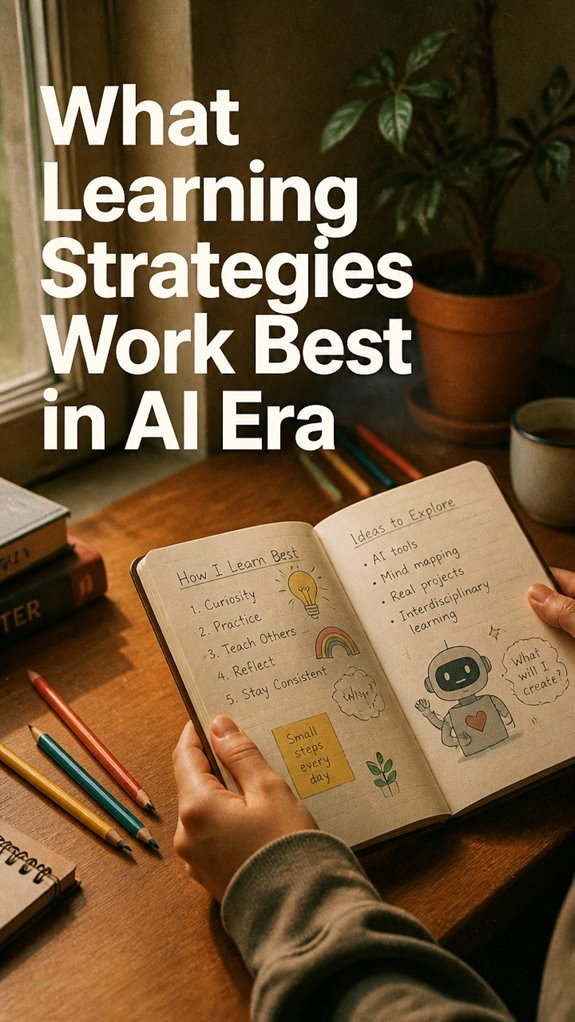
- Spaced retrieval over cramming – Space practice across days, not hours. This embeds knowledge deeper and builds retention that compounds.
- Teach-back loops – Have your child explain concepts to you. This reveals gaps and builds emotional intelligence by requiring clarity.
- Contextual application – Connect learning to real problems, not isolated exercises. This builds cultural literacy and shows why capability matters.
- Feedback integration – Create safe failure. Children who reflect on mistakes, not hide them, develop resilience and independent judgment.
Structure beats effort. Your child’s future depends on systems, not heroics.
True self-directed learning develops when students understand how to learn itself, making them capable of adapting to any new challenge they encounter. Independent education paths allow children to pursue knowledge without the constraints of traditional school systems, fostering genuine curiosity and ownership over their learning journey.
The Adaptive Atlas Learning Stack Model
Knowing how to learn matters more than what you learn, especially when information changes faster than any child can memorize it. The Adaptive Atlas Learning Stack Model flips this reality into your advantage. Future learning environments will increasingly demand this adaptive mindset as knowledge evolves.
Rather than relying on teachers or curricula to deliver knowledge, you’re building learning ecosystems where your child drives the process. They develop self-directed loops: asking questions, experimenting, gathering feedback, adjusting. This isn’t trial-and-error; it’s systematic curiosity cultivation.
The model stacks three elements: self-awareness about how they learn best, access to tools and resources, and regular reflection that tightens their feedback loop.
As your child practices this rhythm, learning becomes their superpower, not a subject they endure.
This compounds over time. Each skill they acquire independently makes the next skill easier to acquire.
Just as children uncover passions through exploration, your learner discovers what drives them by following their own questions rather than predetermined paths.
The Adaptive Atlas Framework
Five connected systems designed to help parents raise adaptable, future-ready children in a world shaped by AI, automation, and constant change.
| 🛡️ |
Anti-Fragile Child SystemBuilds resilience, adaptability, and the ability to handle uncertainty without shutting down. |
| 📚 |
Learning Stack ModelDevelops self-directed learning habits and continuous skill acquisition beyond school systems. |
| 🚀 |
Future Skill Stack SystemFocuses on high-value human skills that remain relevant in an AI-driven economy. |
| 🤖 |
AI Learning SystemTeaches children how to use AI as a thinking partner instead of becoming dependent on it. |
| 🧭 |
Child Type Navigator SystemPersonalizes learning and development based on each child’s strengths and personality. |
FAQ
How Do I Know if My Child Is Actually Learning Versus Just Appearing Busy?
You’ll spot real learning through mindful monitoring of skill assessment, not activity level. Watch whether your child can explain what they’ve learned to someone else, apply it to new problems, or identify gaps in their understanding.
Busy work produces nothing transferable. Genuine learning shows up as curiosity driving questions, increased confidence tackling harder challenges, and the ability to learn independently next time. That’s what compounds.
When Should I Intervene Versus Let My Child Figure Things Out Alone?
Intervene when frustration freezes progress, not when discomfort demands it. Your child’s capability compounds through autonomy encouragement—let them struggle productively.
Researcher Carol Dweck’s growth mindset research confirms: struggle builds neural pathways. Step in when you see shutdown, not difficulty.
This builds frustration tolerance essential for AI-era work. The distinction: confusion that drives curiosity stays theirs. Confusion that creates defeat needs your guidance.
You’re building independent problem-solvers, not rescue-dependent learners.
How Much Screen Time and AI Tool Use Is Appropriate for Different Ages?
Digital boundaries aren’t about restriction—they’re about intentional design. Before age 10, limit AI tool exposure to guided exploration with you present.
Ages 10-14, introduce supervised creative experimentation. By 15+, you’re building judgment, not policing screens.
The real measure isn’t hours; it’s whether your child uses AI as a cognitive amplifier or avoids struggle. You’re teaching discernment, not fear.
What Happens if My Child Falls Behind Peers Using Traditional Learning Methods?
Traditional metrics no longer measure future readiness. Your child’s learning adaptability matters far more than short-term peer comparison.
You’re building independent thinking, not test scores. Child motivation compounds when they control their learning pace and direction.
Early “falling behind” often means they’re developing deeper frameworks while peers memorize. Focus on capability building—critical thinking, problem-solving, AI collaboration.
That’s what creates long-term advantage.
How Do I Measure Progress When There’s No Standard Curriculum or Test?
You’re building a ship without a map—and that’s actually your advantage. Measure progress through personalized assessment: track when your child identifies gaps independently, redesigns their approach, and applies learning across situations.
Adaptive feedback loops matter more than test scores. You’re looking for growing capability, not compliance.
Can they think harder about yesterday’s problem? That’s the metric. That’s what compounds into real future readiness.