Are Your Child’s Learning Paths Holding Them Back?
Flexible learning paths do the opposite. They build genuine skills for an uncertain world by honoring what your child actually excels at, not forcing them into predetermined boxes.
Why We Built Adaptive Atlas
My daughter sat in a standardized classroom for three years, bored senseless. She craved deep dives into marine biology, yet spent afternoons on worksheets about topics that didn’t spark her curiosity. That’s when we created Adaptive Atlas. We built it because kids like mine deserve learning routes that bend toward their passions, not away from them. This tool lets parents and educators actually personalize education instead of pretending to.
A Moment That Changed Everything
Last month, I watched my niece solve a complex problem using her own unconventional method. Her teacher almost corrected her. Instead, she paused, listened, and suddenly realized the kid had discovered something brilliant. That moment proved what we already knew. When learning paths adapt to individual thinking styles, resilience builds naturally.
Quick Takeaways
- They prioritize individual strengths and interests, supporting personalized growth and engagement.
- Flexible paths develop adaptability and resilience crucial for success in a rapidly changing world.
- They foster critical thinking, creativity, and problem-solving skills needed in an AI-driven future.
- Personalized learning environments promote lifelong learning and help children navigate uncertainty confidently.
- Incorporating neuroplasticity and strategic thinking enhances long-term brain development and skill mastery.
What Are Flexible Learning Paths and Why Do They Matter?
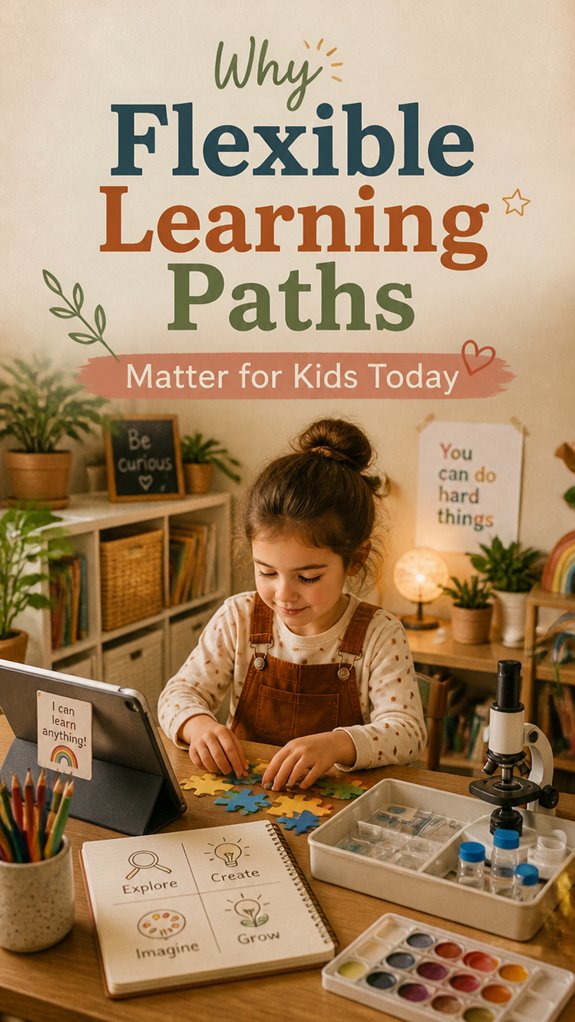
Flexible learning paths focus on giving children the ability to adapt and grow based on their individual strengths and interests, rather than following a one-size-fits-all plan. This approach emphasizes learning flexibility and skill diversity, allowing kids to develop a broad range of capabilities.
Flexible learning paths help children grow by adapting to their unique strengths and interests, fostering confidence and resilience.
Instead of rigid, predefined routes, children learn to navigate uncertainty and discover what works best for them. It’s natural to worry about their future, but flexible paths turn that fear into confidence.
They provide a practical foundation for long-term adaptability, empowering kids to keep learning and developing. By focusing on systems that support growth, parents can help children build resilience, critical skills, and a mindset ready for constant change. Adaptive education paths enable students to progress at their own pace while receiving personalized support tailored to their unique learning needs.
This isn’t about predicting the future; it’s about preparing children to thrive in it.
How Do Flexible Learning Paths Develop Skills for an AI-Driven Future?
As technology continues to evolve rapidly, it’s natural to worry about how children will keep up. Flexible learning paths help develop future skills by focusing on adaptability and mastery, not just memorization. They use a novel curriculum that emphasizes critical thinking, problem-solving, and collaboration.
Peer collaboration is central, encouraging children to learn from and inspire each other, fostering leadership and teamwork. These systems allow children to explore different interests and adapt their strengths over time.
By emphasizing systems over rote learning, they prepare kids to navigate ambiguity confidently. This approach makes the skills necessary for an AI-driven future accessible and practical.
Ultimately, flexible paths empower children to shape their own success, turning unpredictability into opportunity through long-term capability building.
Emerging Trends Shaping Flexible, Personalized Education?
Have you noticed how education is shifting in response to rapid technological change? New trends are emerging, driven by educational innovation that challenges the idea of sticking strictly to tradition. Instead of resisting change, you can see evolution shaping how children learn. Personalized learning models now tailor education to each child’s strengths, pace, and interests, granting power to both parent and student. While traditional education systems have served generations of students, research increasingly demonstrates that flexible learning pathways better prepare children for success in our rapidly evolving world. Here’s a quick comparison:
| Tradition | Evolution |
|---|---|
| Fixed curriculum, one size fits all | Adaptive, versatile, child-centered |
| Rigid testing, memorization | Focus on skills like critical thinking, creativity |
| Teacher-led instruction | Learner-driven, autonomous learning |
| Standardized progression | Ability to pivot and grow continuously |
This approach reduces fear, focusing on long-term capabilities over outdated routines. It empowers you to create a future-ready environment for your child, rooted in system thinking, not hype.
Emerging Skills for Uncertain Futures
What skills will children need most in uncertain, rapidly changing futures? They’ll need abilities that help steer choices confidently and cultivate resilience.
Facing constant change, your child must develop skills like:
Facing constant change, children must build adaptability, critical thinking, creativity, and emotional resilience to thrive.
- Adaptability to new settings and tools
- Critical thinking to evaluate rapidly developing information
- Creativity to generate innovative solutions
- Emotional resilience to handle setbacks and uncertainty
These skills empower children to navigate complexity without fear. Rather than worrying about unpredictable futures, focus on building their capacity to stay flexible and resilient.
This approach shifts the narrative from threats to opportunities. By nurturing these capabilities now, you give your child the long-term strength to thrive—no matter what the future holds.
It’s about giving them the tools to lead their own journey with confidence. Combined with developing positive online self-presentation, children can build authentic personal brands that reflect their values and strengths.
Neuroscience on Adaptable Learning
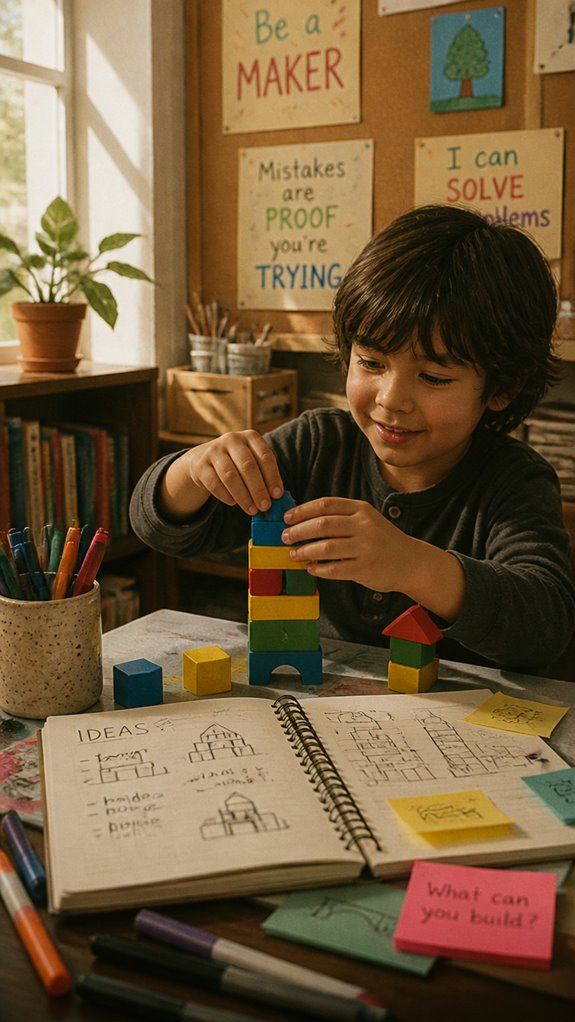
Understanding how children’s brains adapt can help you create more effective ways to support their learning. Neuroplasticity knowledge shows that the brain reorganizes through new connections lifelong. This means children can develop new skills and adapt, even as they grow. Neuroplasticity allows the brain to continuously reorganize and strengthen neural pathways based on experiences and learning opportunities. Long-Term Potentiation, or LTP, strengthens memory with repeated practice, making learning more effective over time. Real-time personalized content keeps cognitive load manageable, helping kids stay engaged without feeling overwhelmed.
Fear of static progress is natural, but neuroscience reminds us that flexibility in learning is a strength. Establishing healthy daily routines provides the structure and consistency that supports optimal brain function during learning. By designing environments that promote adaptability — allowing children to switch strategies and build resilient neural pathways — you empower them to navigate change confidently.
This long-term view aligns with their future, shaping learners who thrive through continuous growth.
Identifying Effective Adaptability Practices
When it comes to building adaptability in children, small, consistent practices often have the biggest impact. You can foster emotional resilience and creativity by intentionally introducing manageable changes:
- Rotate chores or snacks to help your child handle small disruptions.
- Adjust routines gradually, like bedtime or morning activities, to build comfort with change.
- Use playful scenarios, like “What if it rains?” to strengthen decision-making.
- Model flexibility by openly adjusting your plans and praising efforts to try new approaches.
- Teaching children to use technology wisely can reinforce adaptability by encouraging them to adjust their screen time and explore different digital tools for learning.
- Developing adaptability skills also promotes emotional balance, helping children manage their feelings better during transitions. Developing adaptability skills also promotes emotional balance, helping children manage their feelings better during transitions.
These practices show your child how to manage uncertainty smoothly, turning adaptability into a strength that will serve them in a rapidly changing world.
Over time, they develop confidence to navigate challenges—key to their future success.
Flexible Learning Strategy Toolkit
Creating a flexible learning strategy for your child may seem overwhelming at first, especially in a world where change happens rapidly. But with a clear approach, you can shape curriculum design and classroom environments that empower your child’s growth.
Focus on structures that foster adaptability—dynamic schedules, project-based learning, and varied instruction methods. This isn’t about abandoning core knowledge; it’s about framing learning as an ongoing process, ready to pivot as needed.
Prioritize adaptable structures—like dynamic schedules and diverse teaching methods—to support continuous, flexible learning.
Schools like Carol Dweck’s research on growth mindset show how resilient thinking boosts future success. By intentionally designing environments that encourage exploration and independence, you help your child develop skills to navigate uncertainty confidently. Adequate rest and recovery plays a crucial role in consolidating learning and supporting cognitive development during these formative years.
This proactive approach gives your child control, prepares them for lifelong learning, and ultimately shapes their ability to thrive amid constant change.
The Adaptive Atlas Learning Stack Model
The Learning Stack Model forms the core of how children develop adaptive skills in a world where knowledge is always changing. You might worry about keeping up with constant change, but this model builds resilience and a growth mindset, so your child learns to thrive amid uncertainty. By incorporating practical life skills into this framework, children learn to apply their knowledge directly to real-world situations, strengthening both their confidence and competence.
- Develops self-directed learning, fostering independence
- Reinforces resilience by embracing challenges and setbacks
- Focuses on long-term capability over short-term achievement
- Integrates AI tools as allies in reasoning and problem-solving
This approach shifts the focus from memorization to strategic thinking, preparing your child for a future where adaptability is king. It’s not about predicting every change but building the capacity to navigate it confidently.
With this system, you give your child the tools to succeed in an unpredictable world.
The Adaptive Atlas Framework
Five connected systems designed to help parents raise adaptable, future-ready children in a world shaped by AI, automation, and constant change.
| 🛡️ |
Anti-Fragile Child SystemBuilds resilience, adaptability, and the ability to handle uncertainty without shutting down. |
| 📚 |
Learning Stack ModelDevelops self-directed learning habits and continuous skill acquisition beyond school systems. |
| 🚀 |
Future Skill Stack SystemFocuses on high-value human skills that remain relevant in an AI-driven economy. |
| 🤖 |
AI Learning SystemTeaches children how to use AI as a thinking partner instead of becoming dependent on it. |
| 🧭 |
Child Type Navigator SystemPersonalizes learning and development based on each child’s strengths and personality. |
FAQ
How Can Parents Effectively Support Custom Learning Journeys at Home?
You can support custom learning journeys by actively involving yourself in your child’s growth, leveraging home resources creatively, and fostering independence. Your engagement empowers your child to develop adaptable skills essential for thriving in a rapidly changing world.
What Challenges Do Schools Face in Implementing Flexible Learning Pathways?
Schools struggle with curriculum design that supports flexibility and require extensive teacher training to adapt. You need empowered educators who can innovate, personalize learning, and confidently navigate the complexities of implementing dynamic pathways to guarantee future-ready students.
How Do Assessments Adapt to Personalized, Competency-Based Progress?
Studies show 70% of educators believe assessments must evolve. You can break free from standardized testing and curriculum rigidity by implementing personalized, competency-based progress, empowering kids to demonstrate mastery through flexible, meaningful evaluations tailored to their unique strengths.
Can Flexible Learning Paths Accommodate Students With Special Needs?
Yes, flexible learning paths empower you to tailor education with assistive technology and individualized support, enabling students with special needs to thrive. You can strategically adapt tools and methods to unseal their full potential in any learning environment.
What Role Does Community and Peer Interaction Play in Flexible Education?
Like a sturdy bridge, community and peer interaction strengthen flexible education by fostering social engagement, driving collaborative projects, and empowering children to navigate change confidently. These connections build resilience and leadership in dynamic, developing learning environments.
References
- https://www.thebinaschool.com/blog/alternative-school-programs
- https://www.k12.com/how-online-learning-works/online-flex-program/
- https://www.edelements.com/blog/personalizing-learning-flexible-pace-path
- https://www.tshanywhere.org/post/free-learning-programs-kids
- https://www.score-academy.online/blogs/alternative-schooling-options-students-need-support-flexibility
- https://www.imaginelearning.com/products/mypath/
- https://www.connectionsacademy.com/support/resources/article/best-online-learning-platforms-for-kids/
- https://standtogether.org/stories/education/alternative-education-pathways-for-k-12-education
- https://www.understood.org/en/articles/build-flexible-thinking-child
- https://software-and-technologies.educationtechnologyinsights.com/news/neuroscience-principles-driving-the-adaptive-learning-revolution-nid-3640.html