
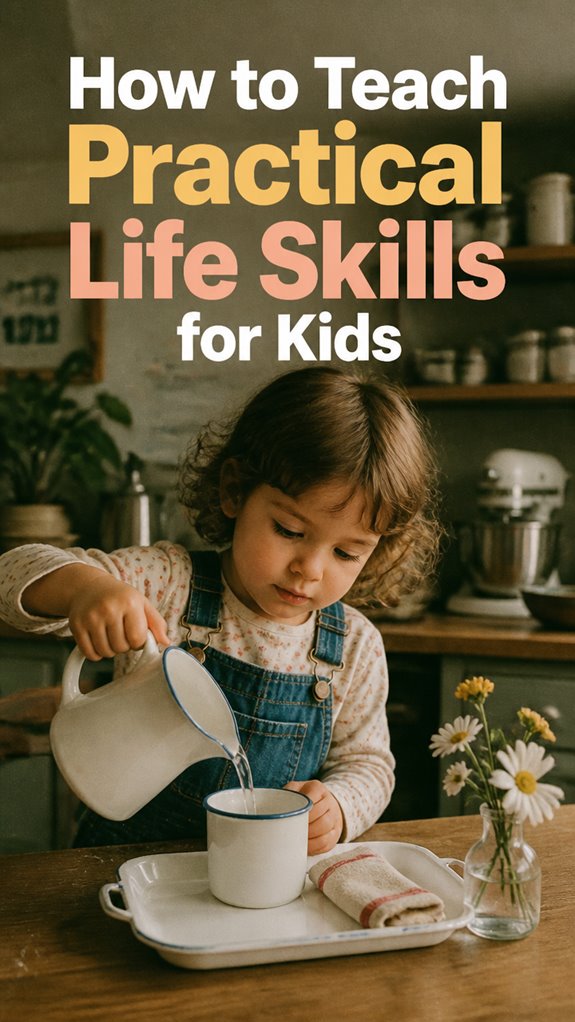
How Do Kids Actually Learn Life Skills That Stick?
Build independence through age-appropriate tasks, routines, and everyday teachable moments like meal prep. Stay consistent, offering support without pressure. These skills cultivate resilience and confidence.
A Lesson From The Kitchen Counter
Last summer, my eight-year-old burned toast while I watched (resisting the urge to intervene). That scorched bread taught her more about consequences than any lecture could. This moment sparked my mission with Adaptive Atlas, where we document real parenting breakthroughs. We write because parents deserve strategies grounded in actual experience, not theory alone.
When Chores Became Connection
My teenager initially resisted laundry duties. One Tuesday, I stepped back completely. By week three, she owned the process. That shift from resistance to autonomy reminded me that independence isn’t handed over, it’s earned through repetition and trust. The mess she makes now feels like progress.
Quick Takeaways
- Use age-appropriate, manageable tasks to gradually develop responsibility and independence at each developmental stage.
- Incorporate practical activities into daily routines, like cooking, chores, and shopping, to reinforce real-world skills.
- Apply Montessori-inspired methods, creating structured routines and personalized plans that promote self-regulation and confidence.
- Encourage parental involvement through consistent support, feedback, and creating a conducive environment for skill practice.
- Foster resilience and a growth mindset by framing setbacks as learning opportunities and promoting curiosity and problem-solving skills.
Why Practical Life Skills Are Essential in Childhood Development
Practical life skills are fundamental to childhood development because they build confidence, independence, and resilience—traits that are more important than ever in a world of continuous change.
Practical life skills foster confidence, independence, and resilience, empowering children to thrive amid ongoing change and uncertainty.
When you focus on teaching skills like emotional intelligence and cultural awareness, you’re helping your child understand themselves and others better. This fosters empathy and adaptability, which are essential for maneuvering through diverse environments.
It’s normal to worry about whether these skills are enough, but reframing them as core capabilities helps you see the long-term value. Tools like artificial intelligence can support this learning process by providing personalized feedback and engaging ways to practice these essential competencies.
These skills lay a foundation for your child to remain grounded and flexible, even when the future feels uncertain.
How to Identify Appropriate Skills for Different Age Groups
Understanding which skills are appropriate for different age groups can feel overwhelming, especially with so many voices giving conflicting advice. To manage this, focus on age appropriate assessments and skill progression. By building future-ready skills systematically, you ensure children develop competencies that will serve them throughout their lives.
Start by identifying what children can reasonably do at each stage of development. For example:
- Early childhood (ages 3-5): Basic self-care, simple chores, and social skills.
- Middle childhood (ages 6-12): More complex tasks, responsibility, and problem-solving.
- Adolescence (13+): Independence skills, critical thinking, and planning for future needs.
Montessori-Inspired Strategies to Teach Real-World Skills at Home
Many parents worry about how to prepare their children for real-world success at home without feeling overwhelmed by conflicting advice or unsure where to start. Montessori-inspired strategies offer a clear, practical approach that builds essential skills like emotion regulation and cultural integration.
Focus on creating routines where children learn to manage feelings through calm, respectful communication and social interaction.
Incorporate diverse cultural understanding into everyday activities—cooking, storytelling, or community projects—to foster empathy and adaptability.
Encourage independence by setting up simple chores that promote responsibility and confidence.
These methods help children develop resilience and intercultural awareness, laying a strong foundation for future collaboration and problem-solving.
Developing a personalized learning plan aligned with your child’s individual pace and interests ensures these practical skills take root and evolve as they grow.
Stay consistent, observant, and responsive—these systems cultivate capable, adaptable children prepared for an unpredictable world.
Incorporating Practical Skills Into Daily Routines to Build Confidence and Independence

Integrating practical skills into daily routines helps children develop the confidence and independence they’ll need in a changing world. When you involve your child in meal planning, they learn to make choices, consider nutrition, and build organization skills.
Incorporating money management—such as giving them a small allowance or teaching budgeting—strengthens their financial literacy and decision-making.
Offering flexible learning paths allows children to progress at their own pace while mastering these practical skills, ensuring each child can build competence in their own way.
Here are three ways to embed these skills:
- Let your child help plan weekly meals, encouraging responsibility and conversation about healthy choices.
- Assign simple budgeting tasks like saving for a toy or sharing chores for allowance.
- Practice real-life scenarios, like shopping together, to build confidence in handling money and making decisions.
Fear about future uncertainty lessens when you see these routines as opportunities to foster resilience and practicality, creating a solid foundation for your child’s growth.
Long-Term Benefits: Cultivating Resilience and Lifelong Learning in Kids
A single moment of resilience can shape a child’s ability to navigate future challenges with confidence. By fostering emotional intelligence and resilience, you help your child develop a mindset rooted in generational resilience, where overcoming setbacks becomes part of their strength.
This mental toughness isn’t just about bouncing back; it’s about understanding feelings, managing stress, and learning from mistakes. These skills prepare children for lifelong learning, making them adaptable and open to new ideas in a constantly changing world. Maintaining this curiosity requires intentional effort through a curiosity maintenance program that prevents the natural decline in learning interest as children encounter obstacles.
Instead of fearing failure, you can view it as a crucial step in growth. Building resilience today lays the foundation for self-awareness, problem-solving, and confidence tomorrow.
This long-term focus helps your child thrive, regardless of what the future may hold.
Engagement Metrics for Skill Teaching
Monitoring how children engage with practical skills helps us understand their growth and persistence over time. Key engagement metrics include behavioral observation and emotional engagement. Engagement is crucial because it reflects the effectiveness of teaching methods and the overall health of the learning community. Here are three ways to evaluate this: 1. Behavioral observation: Notice participation levels and how often children complete hands-on tasks. These show their focus and willingness to try. 2. Emotional engagement: Observe body language, enthusiasm, or confidence after tasks, along with feedback surveys. These indicate their connection to the activity. 3. Progress tracking: Use exit tickets or reflection checks to gauge their sense of belonging and investment. Focusing on these metrics helps you see how well children are developing resilience and adaptability. Supporting analytical learners requires understanding their need for analytical flexibility when adapting to new teaching methods and tools. It also reassures you that consistent observation supports long-term success, rather than relying solely on test scores or quick evaluations.
Addressing Tech Distraction Issues
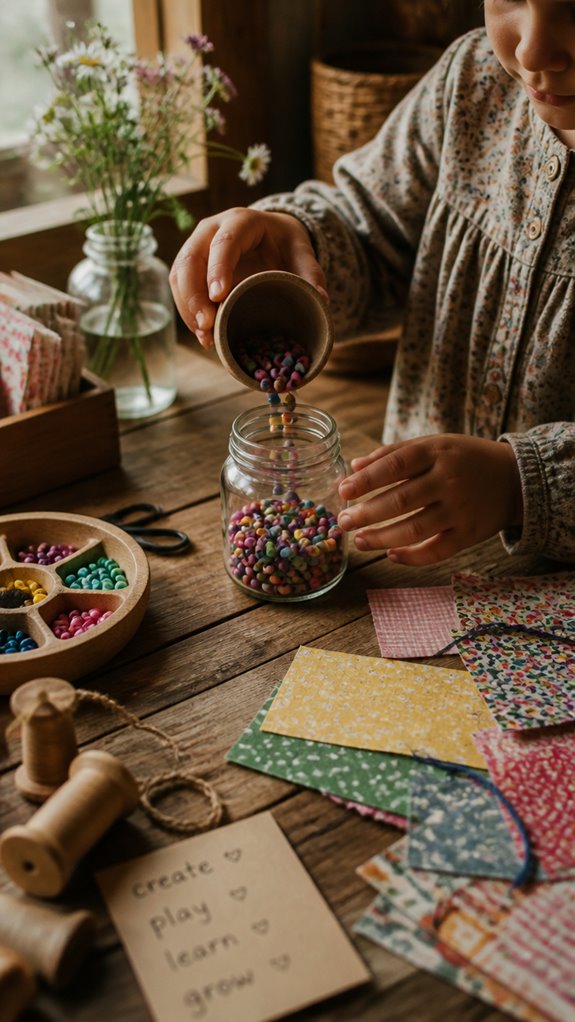
Have you noticed how digital devices can quickly hijack your child’s attention and disrupt their focus? This is a common challenge, but understanding the impact of tech addiction helps clarify the need for clear digital boundaries. Kids exposed to constant fast-paced media often struggle with concentration, memory, and emotional regulation. Excessive screen time can delay developmental milestones and weaken impulse control, especially in children with ADHD. Setting intentional limits isn’t about restricting—they’re about creating space for skills like patience, problem-solving, and self-regulation. As a parent, you control the environment, not the technology. Establish routines, designated screen-free times, and encourage offline activities. These measures support your child’s ability to focus and develop resilience, shaping a future where they’re adaptable and confident in a world filled with distraction. While intelligence alone doesn’t guarantee success, resilience outweighs intelligence in determining how well children navigate challenges and bounce back from setbacks. Additionally, research shows that screen time reduction can significantly improve attention spans and cognitive development.
Practical Life Skills Toolkit for Kids
Building practical life skills is essential for preparing children to navigate a world of constant change. You can start by evaluating their current abilities through skill assessments, helping identify strengths and gaps.
Building practical skills prepares children for constant change and growth. Regular assessments help identify strengths and areas to improve.
Parent involvement is key—you’re the guide, providing consistent support and feedback.
Consider these steps:
- Establish regular skill assessments to track progress over time.
- Create personalized learning plans that focus on core skills like problem-solving, communication, and resilience.
- Use daily routines as opportunities to reinforce learning and foster independence.
Hands-on activities provide engaging ways to practice these skills in real-world contexts, making learning both practical and memorable for children.
The Adaptive Atlas Learning Stack Model
The Adaptive Atlas Learning Stack Model offers a clear way to understand how children develop the skills they’ll need for an unpredictable future. It emphasizes learning autonomy, so children can direct their own growth amid constant change. This model promotes skill transfer, helping kids adapt skills across situations, rather than relying on memorized facts. As education continues to evolve, personalized learning pathways will become increasingly important for meeting the diverse needs of individual learners.
| Layer | Core Focus | Benefit |
|---|---|---|
| Anti-Fragile Child System | Handling uncertainty | Resilience in volatility |
| Learning Stack Model | Self-directed learning | Independence in acquiring skills |
| Future Skill System | Critical thinking and creativity | Long-term adaptability |
The Adaptive Atlas Framework
Five connected systems designed to help parents raise adaptable, future-ready children in a world shaped by AI, automation, and constant change.
| 🛡️ |
Anti-Fragile Child SystemBuilds resilience, adaptability, and the ability to handle uncertainty without shutting down. |
| 📚 |
Learning Stack ModelDevelops self-directed learning habits and continuous skill acquisition beyond school systems. |
| 🚀 |
Future Skill Stack SystemFocuses on high-value human skills that remain relevant in an AI-driven economy. |
| 🤖 |
AI Learning SystemTeaches children how to use AI as a thinking partner instead of becoming dependent on it. |
| 🧭 |
Child Type Navigator SystemPersonalizes learning and development based on each child’s strengths and personality. |
FAQ
How Can Parents Tailor Practical Skills for Children With Diverse Learning Styles?
You tailor practical skills by applying learning style adaptations, customizing activity planning to each child’s strengths. Observe how they engage most effectively, then design experiences that optimize their unique approach, fostering mastery through personalized, flexible, and responsive methods.
What Are Effective Ways to Motivate Reluctant Children to Participate in Life Skills?
Studies show 80% of motivated learners engage more fully; start with tailored motivation strategies, incorporate engaging techniques like gamification, and give autonomy. Pair challenges with relevance to cultivate intrinsic drive and deepen long-term mastery.
How Do Practical Skills Support Children’s Emotional Regulation and Social Competence?
You support emotional resilience by teaching kids practical skills like problem-solving and self-regulation, which foster social awareness. Through active practice, you help them manage emotions and develop critical social competence for meaningful connections and adaptive resilience.
When Is the Appropriate Time to Introduce Complex Tasks Like Cooking or Budgeting?
Timing considerations depend on your child’s developmental readiness, which you observe through their desire to learn, attention span, and ability to follow multi-step instructions. Introduce complex tasks like cooking or budgeting gradually, ensuring confidence and competence grow together.
How Can Practical Life Skills Be Adapted for Children With Special Needs?
You can adapt practical life skills by incorporating sensory integration techniques and using adaptive tools, enabling children with special needs to develop independence. Focus on personalized approaches that enhance engagement, comfort, and skill mastery within their unique learning environments.
References
- https://montessoriacademy.com.au/montessori-at-home/getting-started/age-appropriate-family-work/
- https://www.montessorilearninginstitute.com/practical-life-skills-every-child-should-learn
- https://www.brighthorizons.com/article/education/teaching-kids-life-skills-seven-essential-life-skills-to-succeed
- https://treehouseschoolhouse.com/blog/100-life-skills
- https://katherinemartinko.substack.com/p/100-practical-life-skills-that-every
- https://www.flagmontessori.com/blog/top-5-practical-life-skills-your-kindergarten-student-should-learn/
- https://www.youtube.com/watch?v=SE-YrYJ4Fe8
- https://motimatic.com/industry/higher-ed/measuring-student-engagement/
- https://www.edthena.com/4-ways-to-measure-student-engagement/
- https://www.perts.net/student-engagement