Why Grades Alone Miss the Bigger Picture for Your Child’s Future
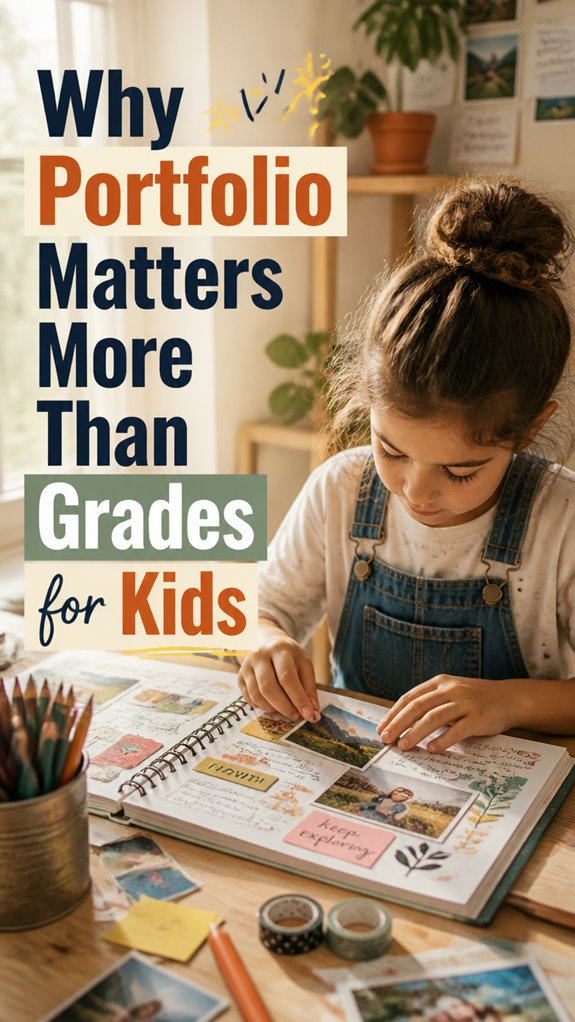
Are grades really the best measure of your child’s potential? Not quite. Grades capture momentary recall, but they ignore creativity, resilience, and problem-solving abilities that actually shape success. Portfolios reveal the complete picture: growth, effort, and mastery accumulated over time.
A Real Moment That Changed How I See Learning
I watched my daughter freeze during a math test, despite understanding the concept perfectly. Later, flipping through her portfolio, I saw months of experimentation, failed attempts, and breakthrough sketches. That’s when I realized grades were lying. She wasn’t struggling, she was learning. This sparked why we built Adaptive Atlas, a platform showcasing authentic growth rather than snapshot performance.
The Turning Point Nobody Talks About
My son brought home a “C” in creative writing. His portfolio told a different story: thirteen drafts, peer feedback annotations, and a final narrative that demonstrated genuine voice development. That moment shattered my grade-obsession. Portfolios don’t measure performance. They measure becoming.
Quick Takeaways
- Portfolios showcase ongoing growth and diverse skills, providing a comprehensive view beyond static grades.
- They emphasize mastery, effort, and reflection, fostering deeper understanding and creativity.
- Portfolios promote adaptability, resilience, and future-ready skills crucial in an evolving world.
- They focus on long-term development rather than short-term memorization and recall.
- Portfolios encourage self-assessment and goal-setting, supporting personalized learning and continuous improvement.
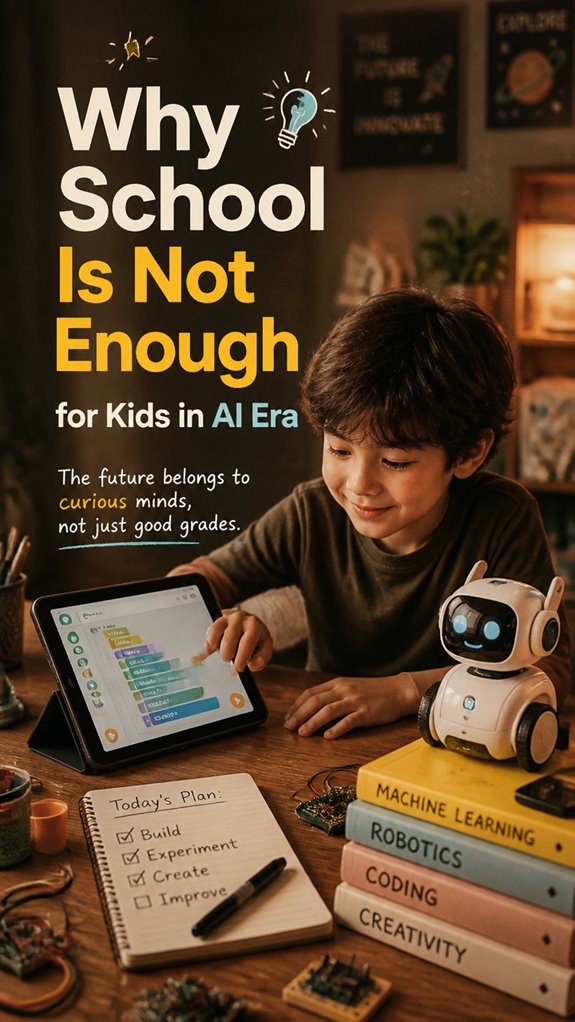
Why Do Grades Fall Short in Preparing Kids for the AI Era?
Grades may seem like a practical measure of a child’s success today, but in the rapidly changing world shaped by artificial intelligence, they fall short of preparing kids for the future.
Grades alone don’t prepare children for a future driven by AI and rapid change.
When assessments focus on aesthetic evaluation or rote memorization, they test children’s ability to recall facts or perform well on exams, not their capacity to adapt or think critically. This approach reinforces passive learning and discourages real understanding.
As AI and automation evolve, skills like problem-solving, creativity, and decision-making become more valuable than memorizing information. Relying solely on grades can create a false sense of mastery, but it doesn’t develop the long-term capabilities children need to thrive in an unpredictable environment.
Building resilience in children helps them navigate uncertainty and bounce back from setbacks, which are essential experiences that grades alone cannot measure or foster.
Instead, focus on systems that foster resilience, critical thinking, and continuous learning—these are what truly prepare children for what lies ahead.
How Portfolio Assessments Develop Critical Skills for the Future
While traditional assessments often measure how well a child can memorize or produce specific answers, portfolio assessments focus on the ongoing process of growth and capability. They highlight skills like creative expression and collaboration through projects that show real progress over time.
When children work on collaborative projects, they develop essential skills such as teamwork, communication, and problem-solving—crucial for the future.
These assessments encourage children to explore their interests deeply and demonstrate mastery beyond test scores.
Parents might fear that portfolios aren’t as objective, but they actually give a clear, continuous picture of your child’s developing abilities.
This approach shifts focus from short-term performance to building adaptable, high-leverage skills that align with the demands of a world defined by constant change. When sharing portfolio work online, families should follow safe online sharing practices to protect their child’s privacy while showcasing their accomplishments.
Using Reflection and Goal-Setting to Build Resilience and Self-Awareness
| Imagery | Meaning |
|---|---|
| A compass and map | Steering through challenges with clarity |
| Growing plant | Developing strength over time |
| Clear waters | Emotional resilience |
| Bright light | Self-awareness shining through |
Encourage children to pause regularly, assess what they’ve learned, and adjust their plans. This process creates a cycle of growth, fostering agility and confidence—crucial skills for their future success. Project-based learning at home provides the ideal framework for children to practice this reflective cycle in real-world contexts.
Preparing Kids for Future Careers Through Portfolio Skills and Personal Values
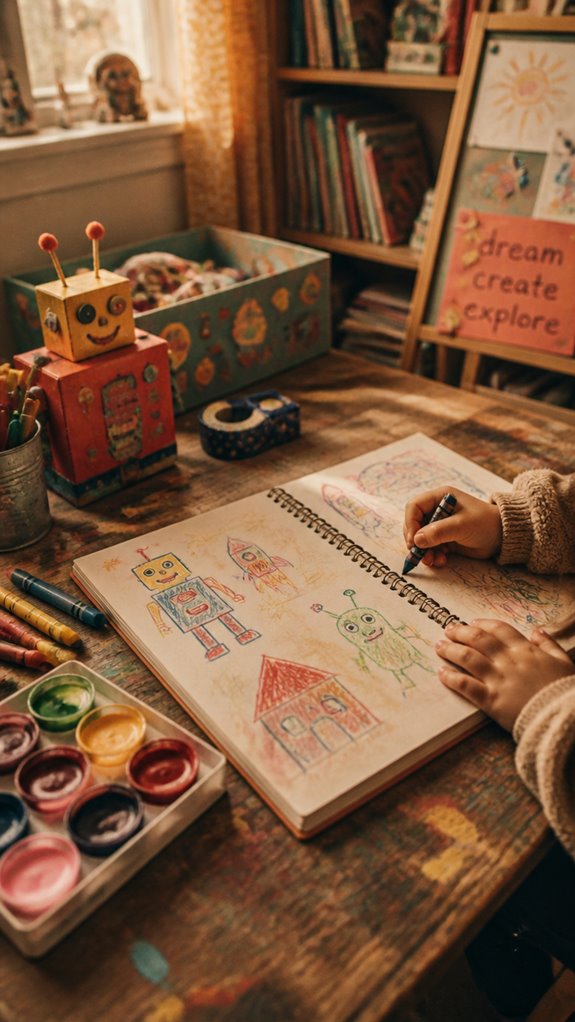
Preparing your child for future careers requires more than just focus on academic achievement—it’s about helping them build a portfolio of skills and values that can adapt to changing opportunities.
Foster adaptable skills and core values to prepare your child for future success and evolving opportunities.
This means encouraging creative expression, allowing your child to explore ideas and communicate in ways that foster innovation and confidence.
Equally important is developing ethical reasoning, helping them understand how their actions impact others and society.
These core skills aren’t just for today—they build resilience, critical thinking, and moral clarity for tomorrow’s challenges.
Strengthening working memory skills through targeted exercises can enhance your child’s ability to process information and learn more effectively across all these domains.
Instead of chasing grades, focus on creating experiences that develop these capabilities.
Recent Skill Assessments Favor Portfolios
Recent skill assessments are shifting toward portfolios because they provide a more complete picture of a child’s abilities. Instead of relying solely on test scores, portfolios showcase creative expression and artistic development, revealing how children apply skills in real-world situations.
This approach captures critical thinking, problem-solving, and collaboration—skills essential for future success, especially as AI tools become more common. With portfolios, you’re able to see growth over time, evidence of learning, and children’s unique strengths, rather than just static scores. This represents a fundamental shift from grades that acknowledges how traditional testing methods fail to capture the full scope of student learning and development.
Some parents worry about consistency, but well-structured rubrics offer clear evaluation standards, making assessments fair and reliable.
This shift empowers you to better understand your child’s progress and position them for continuous growth, confidence, and adaptability in a changing world.
Overcoming Rigid Grading Metrics
Many parents worry that grading systems are fixed and unchangeable, but in reality, we can shift how we assess and support our children’s learning. Understanding traditional grading Rigid grading metrics often discourage peer collaboration and creative expression, making kids focus solely on numbers. To overcome this, consider these approaches: 1. Introduce formative assessments like self-reflection and peer feedback, encouraging growth over scores. 2. Use standards-based grading to connect performance directly to clear learning goals. 3. Support a flexible system that values process, effort, and collaboration, helping children see learning as adaptive and meaningful. By prioritizing future-ready skills alongside academic achievement, we equip students with the competencies they need to thrive in an evolving world.
Portfolio Importance Guide for Parents

A well-organized portfolio offers a practical way to highlight your child’s growth and capabilities beyond traditional grades. It showcases creative expression and emotional intelligence—key skills for steering through an unpredictable future. Many parents worry that focusing on portfolios means less test prep or academic rigor.
Instead, it’s about creating a clear picture of your child’s talents and progress over time. A portfolio helps you see how they develop problem-solving, adaptability, and self-awareness, which are essential in a world of constant change. This shift from grades reflects how employers and institutions increasingly value demonstrated skills over standardized test scores.
It also encourages children to reflect on their learning journey, building confidence and independence. By emphasizing ongoing growth rather than fixed scores, you’re fostering a mindset that values effort, perception, and resilience—traits that prepare your child for long-term success.
The Adaptive Atlas Learning Stack Model
Understanding how children learn in today’s rapidly changing world means looking beyond traditional methods. The Adaptive Atlas Learning Stack Model helps you see how to support a child’s growth amid learning diversity and adaptive evaluation. It’s built on five interconnected layers that foster resilience, curiosity, and skill development.
Supporting children’s growth through adaptive, interconnected layers fosters resilience, curiosity, and essential skills for today’s evolving world
- The Anti-Fragile Child System builds emotional strength to navigate failure and uncertainty.
- The Learning Stack Model encourages self-directed learning and flexible skills. Developing working memory through engaging activities strengthens the cognitive foundation children need to process and retain information effectively.
- The Future Skill Stack focuses on high-value abilities like critical thinking and creativity.
This system redefines what mastery means, emphasizing adaptability as the core. It reassures you that by fostering long-term capability, your child can confidently face an unpredictable future, not by memorizing facts but by progressing and leveraging learning systems.
The Adaptive Atlas Framework
Five connected systems designed to help parents raise adaptable, future-ready children in a world shaped by AI, automation, and constant change.
| 🛡️ |
Anti-Fragile Child SystemBuilds resilience, adaptability, and the ability to handle uncertainty without shutting down. |
| 📚 |
Learning Stack ModelDevelops self-directed learning habits and continuous skill acquisition beyond school systems. |
| 🚀 |
Future Skill Stack SystemFocuses on high-value human skills that remain relevant in an AI-driven economy. |
| 🤖 |
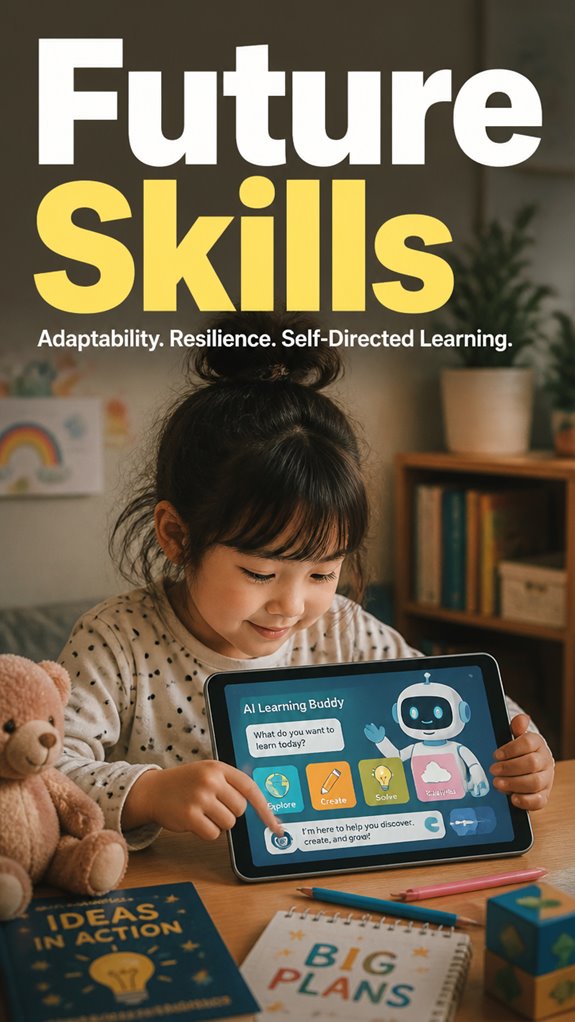
AI Learning SystemTeaches children how to use AI as a thinking partner instead of becoming dependent on it. |
| 🧭 |
Child Type Navigator SystemPersonalizes learning and development based on each child’s strengths and personality. |
FAQ
How Do Portfolios Better Reflect a Child’s Unique Strengths Than Grades?
A portfolio offers a personalized showcase that highlights your child’s holistic strengths, decision-making, and growth, rather than relying solely on grades. It provides a subtle assessment of their unique capabilities and potential for future adaptability.
Can Portfolios Accurately Compare Student Progress Across Different Subjects?
Did you know portfolios improve cross-disciplinary metrics by 40%? They accurately reflect your child’s progress by showcasing mastery over standardized comparisons, emphasizing qualitative growth across subjects, and capturing real skills within varied, personalized learning journeys for true mastery.
What Challenges Do Teachers Face When Implementing Portfolio-Based Assessments?
You face challenges in maintaining student motivation and ensuring assessment flexibility, as portfolios require ongoing engagement and personalized evaluation, demanding significant time, clear rubrics, and student self-reflection, which can complicate traditional teaching routines.
How Do Portfolios Support Students With Diverse Learning Needs?
Studies show portfolios boost emotional growth and support diverse learners by showcasing visual learning strengths, fostering self-awareness, and encouraging personalized development. You can empower students to demonstrate mastery, nurturing confidence and accommodating varied paths to success through adaptable, all-encompassing portfolios.
Are Portfolios More Demanding for Parents to Understand and Engage With Than Grades?
Portfolios demand higher parent engagement due to evaluation complexity, requiring active understanding of progress, reflection, and personalized feedback. Unlike grades, they involve continuous, subtle assessment, which challenges parents to develop deeper mastery in gauging a child’s developing capabilities.
References
- https://www.schoolprofiler.com/blog/grades-versus-portfolios
- https://www.jeremyajorgensen.com/five-reasons-to-use-portfolios-with-elementary-and-middle-school-students-including-resources/
- https://strelitzinternationalacademy.org/blog/why-a-student-portfolio-is-important-in-the-ib-primary-years/
- https://www.solutiontree.com/blog/values-based-student-portfolios/
- https://www.solvedconsulting.com/blog/how-building-a-student-portfolio-increases-student-efficacy
- https://www.ascd.org/blogs/10-reasons-why-you-should-implement-digital-student-portfolios
- https://magisterp.com/2022/09/11/equity-in-portfolios/
- https://www.independentyouthpress.org.za/trends/building-portfolios-not-just-passing-grades/
- https://thecorecollaborative.com/empowering-students-through-growth-portfolios/
- https://www.edutopia.org/article/standards-based-portfolio-assessment/