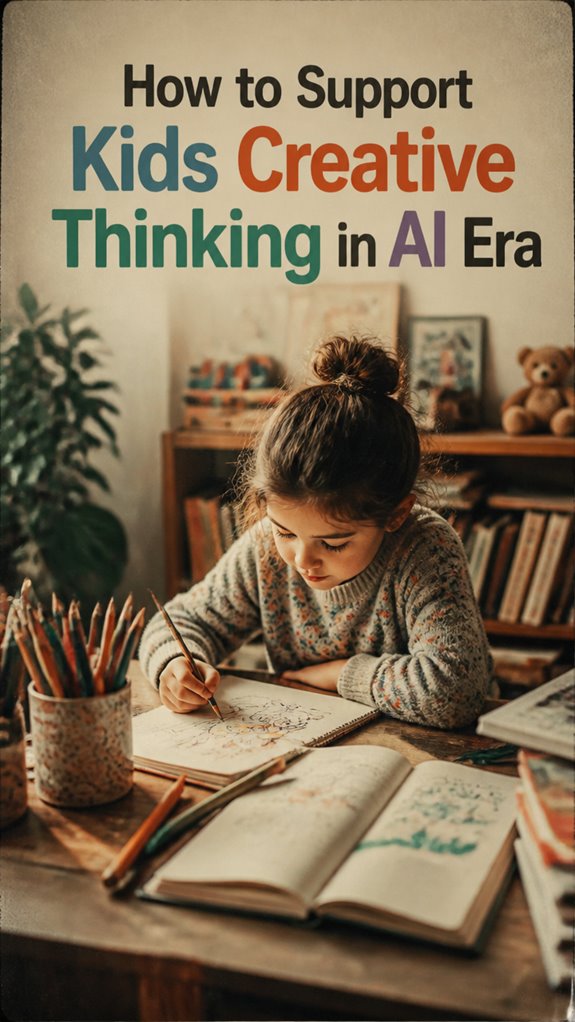
How Can Kids Thrive Creatively When AI Shapes Everything?
The answer lies in intentional nurturing. Create spaces where curiosity feels safe, where wild ideas aren’t dismissed. Use AI as a creative collaborator, not a replacement for thinking. Teach prompt crafting. Build resilience through failure.
Why Adaptive Atlas Exists
My daughter once spent three hours generating AI images, then deleted them all. “They’re not mine,” she said. That gutted me. It crystallized why we created Adaptive Atlas. We recognized that kids needed frameworks to leverage AI without losing agency over their creative voice. Researcher Mitchel Resnick from MIT emphasizes that creative confidence matters more than tools. We wanted to bridge that gap.
A Moment That Changed My Approach
Last year, my son struggled with a story outline. Instead of handing him answers, we crafted prompts together, reviewed what AI suggested, then he rewrote sections. He owned the final piece. That’s when I realized the magic isn’t the tool. It’s the intentional pause. The reflection. The choice to remain the author of your own thinking.
Quick Takeaways
- Create a safe, supportive environment that encourages exploration, imagination, and resilience in the face of rapid technological change.
- Use AI as a tool to amplify personal ideas, fostering confidence and expanding creative boundaries through synthetic imagination.
- Teach children clear prompt-writing and reflective journaling to enhance communication skills and critical thinking with AI.
- Educate kids on AI literacy and ethics, promoting responsible use and understanding of AI’s role as a collaborative partner.
- Assess and develop cognitive flexibility with targeted interventions, emphasizing continuous learning and adaptability for future challenges.
Foster a Playful Environment That Sparks Creativity
Creating a playful environment is one of the most effective ways to spark your child’s creativity and help them develop adaptable skills for the future. When children engage in imaginative exploration, they learn to see possibilities beyond the obvious.
Spontaneous experimentation encourages curiosity and resilience, essential qualities in a world of rapid change. Instead of controlling every activity, give your child space to explore freely and try new ideas without fear of mistakes.
This approach builds confidence and critical thinking, shaping a mindset that views challenges as opportunities. AI tools can further enhance this creative development by providing personalized feedback on writing skills as children experiment with storytelling and expression. Keep in mind, fostering play isn’t just about fun; it’s about nurturing a flexible, inventive brain that can adapt to future uncertainties.
Use AI to Boost Unique, Personal Ideas
| Column 1 | Column 2 | ||
|---|---|---|---|
| Concept | Using AI as a tool can help your child turn their personal ideas into something truly unique. By engaging synthetic imagination, they can combine their thoughts with AI-generated suggestions, expanding possibilities beyond traditional boundaries. | Technique | Encourage idea incubation by guiding your child to iterate over their thoughts, using AI to refine and develop their vision. This process nurtures their ability to generate original, personal concepts that stand out. |
| Benefit | These methods build confidence in their creative process, reinforcing that their voice matters. They learn to trust their ideas, knowing AI is there to amplify their thinking, not replace it. | Future Impact | Ultimately, this cultivates an adaptable mindset—crucial in a world where mastery over the synthesis of ideas and tools guarantees lasting relevance. |
Implementing adaptive education paths allows children to develop creative thinking at their own pace while leveraging AI as a personalized learning companion.
Teach Kids How to Write Clear Prompts and Reflect on Their Work
Helping your child learn how to write clear prompts and reflect on their work might seem small, but it’s a powerful skill in an AI-driven world.
Effective prompt refinement teaches kids how to communicate their ideas precisely, shaping better responses from AI tools. Encourage reflective journaling to develop self-awareness and critical thinking, helping children understand what works and what doesn’t.
These practices build long-term skills—clarity, problem-solving, and learning agility—that are essential in a future where information shifts constantly.
It’s natural to worry about technology diminishing skills, but this approach shifts focus toward mastery and adaptability. Starting these conversations early through calm family discussions helps children feel supported as they navigate their relationship with AI tools.
Support Learning AI Skills and Ethical Use
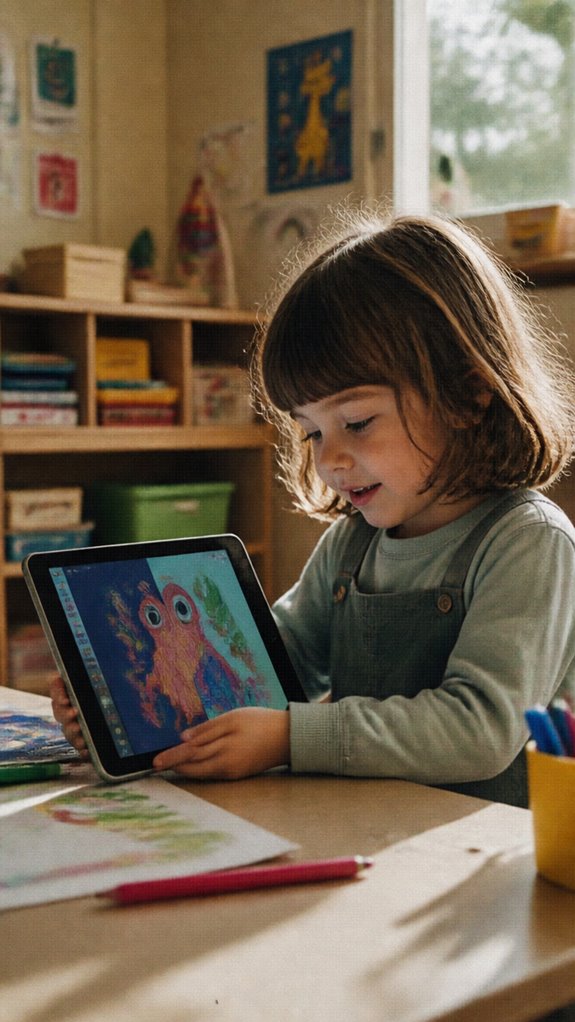
As AI becomes more integrated into everyday life, teaching your child to understand both the skills and ethics of using these tools is essential for their future. Supporting learning AI skills involves helping your child develop AI literacy—understanding how these systems work, how to collaborate with them, and how to use AI responsibly.
It’s equally important to emphasize AI ethics, encouraging them to ponder fairness, privacy, and accountability. Understanding parental concerns about AI can also help you guide conversations with your children about responsible technology use. Instead of fearing automation, focus on future mapping—guiding children to see AI as a partner that amplifies their capabilities.
Measuring Cognitive Flexibility in Children
Measuring cognitive flexibility in children offers a clear window into how well they can adapt to change and handle new challenges, skills that are crucial for the future. You might worry about whether your child’s brain can keep up with rapid change, but tools like standardized testing and brain imaging give understanding into their abilities. For example, tasks like the Dimensional Change Card Sort assess rule-following flexibility, showing progress around age five. Researchers from organizations such as Children’s National Health System also developed measures like FlexibilityScale, which connects cognitive skills to social adaptability. These assessments help identify areas for growth and guide timely interventions. Research suggests that skill specialization timing should be considered carefully alongside cognitive flexibility development, ensuring children build adaptability before narrowing their focus. Keep in mind, cognitive flexibility develops with practice and support—it’s a skill you can nurture, shaping your child’s readiness for a constantly evolving world. Validated assessment tools like the FlexibilityScale provide concrete insights into your child’s abilities to adapt and thrive.
Overcoming Fixed Mindset Barriers
Children are naturally curious and enthusiastic to learn, but many develop fixed mindsets early on, believing their abilities are set in stone. This mindset often stems from fixed mindset origins, where children interpret ability as static. Children with perfectionistic traits often struggle with trying new activities due to fear of failure, which can hinder their willingness to explore and innovate. Fortunately, neuroplasticity concepts show that the brain can change and grow throughout life, including in childhood. You can help your child reframe from “I can’t” to “I can’t yet,” encouraging persistence and resilience. Praise effort, not just results, to nurture a growth mindset. When children see challenges as opportunities for growth, they’re more willing to explore and take risks. Engaging learning systems create structured environments where kids can practice these mindsets consistently. Consistent language and supportive feedback create safe spaces for failure and learning. Overcoming fixed mindset barriers requires patience, but it builds a foundation for sustained creativity and adaptability in a constantly developing future.
Creative Support Toolkit for Parents

Supporting your child’s creativity in today’s changing world starts with giving them the tools to experiment, take risks, and learn from setbacks—without fear of failure holding them back. Focus on nurturing their neurodiverse strengths, recognizing unique ways they see and approach the world.
Emotional resilience is key; children who learn to adapt and recover from challenges develop confidence and independence. Encourage open-ended play, curiosity, and exploration to build these qualities. Parents can utilize creative support guides designed specifically to help facilitate this developmental process.
Keep in mind, setbacks are learning opportunities, not failures. Provide a safe space where your child feels supported and understood.
This fosters a growth mindset, helping them develop long-term adaptability and creativity. With this toolkit, you help your child see themselves as capable, ready to navigate a future shaped by continuous change.
The Adaptive Atlas Learning Stack Model
Have you ever wondered how kids will keep learning in a world where knowledge is constantly changing? The Adaptive Atlas Learning Stack Model offers a clear path. It’s built on strong theoretical frameworks that emphasize adaptability and cognitive scaffolding—supporting children as they build skills to navigate complexity.
Instead of fixed lessons, it encourages self-directed learning, where children develop the ability to learn independently and respond flexibly to new challenges. Research shows that effective learning tools at home can significantly enhance a child’s ability to engage with self-directed learning experiences. This system helps children strengthen their capacity for critical thinking, problem framing, and creativity—skills that remain valuable, no matter how fast technology evolves.
The Adaptive Atlas Framework
Five connected systems designed to help parents raise adaptable, future-ready children in a world shaped by AI, automation, and constant change.
| 🛡️ |
Anti-Fragile Child SystemBuilds resilience, adaptability, and the ability to handle uncertainty without shutting down. |
| 📚 |
Learning Stack ModelDevelops self-directed learning habits and continuous skill acquisition beyond school systems. |
| 🚀 |
Future Skill Stack SystemFocuses on high-value human skills that remain relevant in an AI-driven economy. |
| 🤖 |
AI Learning SystemTeaches children how to use AI as a thinking partner instead of becoming dependent on it. |
| 🧭 |
Child Type Navigator SystemPersonalizes learning and development based on each child’s strengths and personality. |
FAQ
How Can I Encourage Risk-Taking Without Fear of Failure?
You can gently foster a safe space where encouraging independence and celebrating originality thrive, guiding your child to view setbacks as valuable lessons. Emphasize growth, resilience, and trust in their developing ability, cultivating fearless exploration and innovative thinking.
What Are Effective Ways to Balance AI Use and Original Thinking?
Balance AI integration by encouraging your child to harness AI as a cognitive tool, fostering originality through reflective questioning, experimentation, and diverse problem-solving approaches. Support their mastery of combining AI with independent, creative thinking to elevate innovation.
How Do Cultural Differences Impact Children’s Creative Development?
You know, “Rome wasn’t built in a day,” so understanding that cultural influences shape kids’ creative expression is essential. Embrace diverse viewpoints, fostering an environment where cultural background enhances their ability to think divergently and develop mastery in creative development.
What Signs Indicate a Child’s Creative Self-Efficacy Is Growing?
You’ll notice their growing creative self-efficacy through more imaginative play and confident problem-solving skills. They explore new ideas freely, embrace challenges as opportunities, and persist in inventive ways, demonstrating trust in their creative abilities.
How Can I Foster Curiosity in Children Who Are Resistant to New Ideas?
Challenge resistance with curiosity; juxtapose familiar routines against unexpected ideas, igniting an imagination boost. Use innovation sparks to show children how exploring unknowns reveals exciting possibilities, nurturing mastery through patience, questions, and collaborative discovery in their unique learning journey.
References
- https://www.edsurge.com/news/2024-09-18-how-ai-can-foster-creative-thinking-in-the-classroom-and-beyond
- https://www.linkythinks.com/blog/creativity-in-the-age-of-ai
- https://joanganzcooneycenter.org/2024/09/24/can-ai-help-kids-feel-creative/
- https://www.govtech.com/education/k-12/ai-necessitates-teaching-critical-thinking-creativity
- https://www.sparknify.com/post/igniting-creativity-in-the-ai-era-a-guide-for-founders-and-parents
- https://www.robowunderkind.com/blog/why-ai-in-k-5-isnt-about-replacing-childhood—its-about-empowering-it
- https://talkerresearch.com/children-crave-hands-on-creative-experiences-even-as-they-embrace-ai/
- https://www.childrensnational.org/about-us/newsroom/2017/first-single-assessment-to-capture-childrens-cognitive-and-social-flexibility
- https://www.yorku.ca/ncepeda/publications/DW2015.pdf
- https://pmc.ncbi.nlm.nih.gov/articles/PMC10910035/