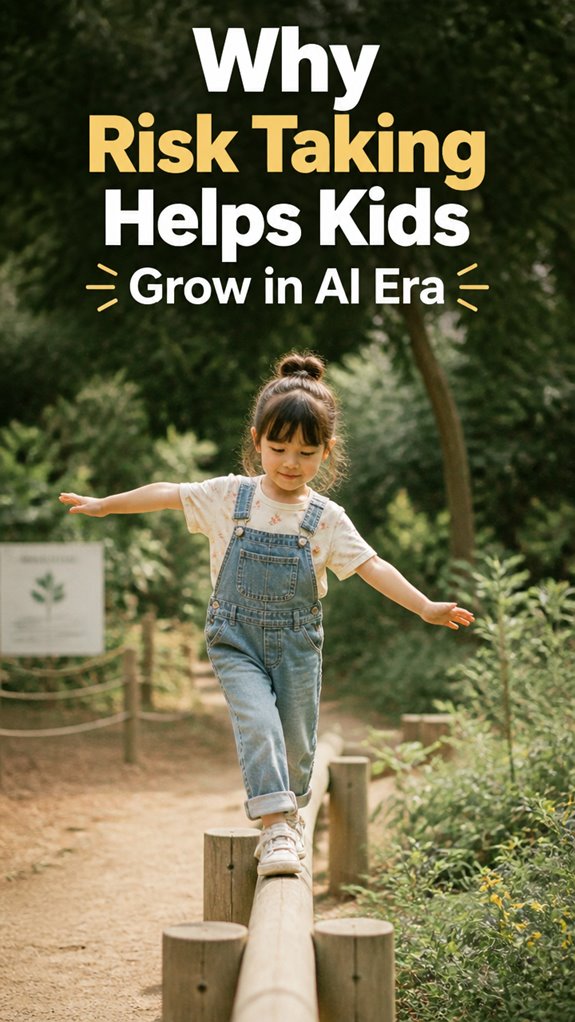
How Can Risk-Taking Shape Your Child’s Future in an AI World?
In an AI-driven landscape, encouraging calculated risks builds resilience, curiosity, and problem-solving abilities your child genuinely needs. Mistakes transform into learning accelerators when you reframe them correctly. Independence, creativity, and adaptability emerge from this mindset—capabilities artificial intelligence simply cannot replicate.
Why We Built Adaptive Atlas
My daughter froze during her first coding competition. She’d memorized syntax but feared breaking her program. Watching her paralysis, I realized something crucial: protective parenting backfires in unpredictable environments. That moment sparked Adaptive Atlas. We created it because children need permission to stumble, debug, and discover solutions independently. This tool helps families normalize productive failure alongside technological change.
A Turning Point That Changed Everything
Last month, my son proposed a ridiculous business idea using AI. I almost dismissed it. Instead, I asked questions. Three weeks later, he’d built a prototype, failed twice, pivoted, and learned more than any textbook could teach. That’s when resilience became real.
Quick Takeaways
- Risk-taking cultivates curiosity, exploration, and innovative problem-solving essential for adapting to AI-driven environments.
- Embracing challenges builds resilience, emotional strength, and confidence to navigate uncertainties in a rapidly changing world.
- Encouraging risk fosters critical thinking, questioning, and conflict resolution skills needed for digital collaboration.
- Balancing AI assistance with autonomous decision-making promotes independence and personalized learning growth.
- Developing a growth mindset through risk-taking prepares children to adapt, innovate, and thrive amid continuous technological change.
Why Risk-Taking Is Essential for Kids’ Cognitive Growth in the AI Age
In the AI era, it’s natural for parents to worry about how to best prepare their children for an uncertain future. But instead of focusing on predicting every change, consider fostering their future curiosity through quantum exploration — encouraging them to try new things without fear of failure.
Risk-taking isn’t about reckless moves; it’s about building your child’s capacity to handle ambiguity and uncertainty. These experiences develop their cognitive flexibility, making them adaptable in a shifting environment. By intentionally guiding kids toward future-ready skills, parents can ensure their risk-taking translates into meaningful competencies.
When children explore, they learn to see challenges as opportunities for growth. This mindset becomes a foundation for innovation and resilience.
How Facing Challenges Builds Resilience and Confidence in Children
Challenges can feel uncomfortable for both children and parents, especially in a world that’s changing rapidly. But facing these challenges helps children build emotional resilience and develop a growth mindset.
Facing challenges builds resilience and a growth mindset for children in a rapidly changing world.
When kids encounter setbacks, they learn to manage frustration and stay engaged. This resilience isn’t about avoiding difficulty; it’s about normalizing effort and failure as part of growth.
Over time, children start trusting their ability to handle uncertainty, which reinforces confidence. Instead of fearing failure, they see it as a chance to learn and adapt.
As parents, your role is to support this process by creating safe spaces for challenge and encouraging persistence. Teaching children decision making skills empowers them to evaluate options and take ownership of their choices, which strengthens their confidence in facing uncertain situations.
This lasting resilience and confidence give kids the foundation they need to navigate a future shaped by continuous change, not fear.
How Conflict and Friction Help Kids Develop Critical Thinking and Problem-Solving Skills
Friction and disagreements aren’t just obstacles—they’re powerful tools for developing your child’s critical thinking and problem-solving skills. Facing conflict helps kids build emotional resilience, allowing them to recover from setbacks and grow stronger. It also increases their risk tolerance, teaching them to navigate uncertainty with confidence. When children work through disagreements, they learn to evaluate different viewpoints, question assumptions, and develop innovative solutions. Preparing kids for remote collaboration environments ensures they can apply these conflict-resolution skills in digital teamwork settings where miscommunication is common.
| Conflict Type | Skill Development | Future Impact |
|---|---|---|
| Minor disputes | Emotional resilience | Handling future stress |
| Creative disagreements | Critical thinking | Innovation, problem-solving |
| Team conflicts | Collaboration | Leadership, adaptability |
| Frustration from failure | Risk tolerance | Confidence in trial and error |
| Challenging ideas | Perspective-taking | Deep understanding, versatility |
Balancing AI Assistance With Child Independence : Tips for Parents and Educators
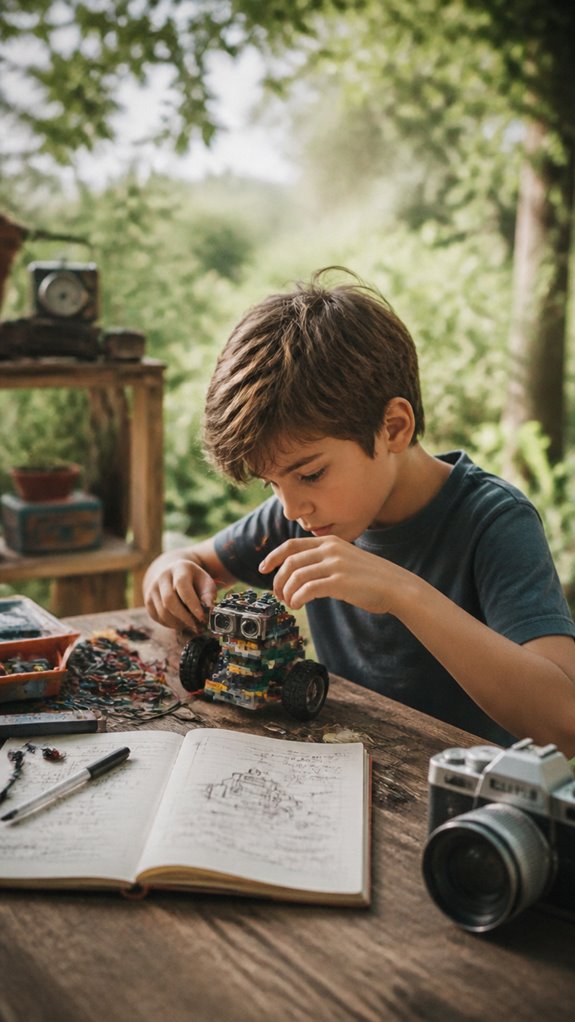
Balancing AI assistance with your child’s independence is about setting a clear, purposeful framework that fosters autonomy while leveraging technology as a smart partner.
You want them to develop emotional intelligence and moral development, which are essential for maneuvering the social and ethical challenges of the future.
Think of AI as a tool, not a crutch—used to amplify their thinking, not replace it. This approach reduces fears of dependency, instead emphasizing long-term skills like judgment, empathy, and ethical reasoning.
Instead of micromanaging every step, create environments that encourage experimentation and self-directed learning. Understanding your child’s unique strengths helps you tailor these environments to their natural abilities and learning style.
This helps children gain confidence to act independently, while still benefiting from AI’s support.
It’s about building resilient, adaptable kids who see technology as an empowering extension of their own capabilities.
How Parents Can Encourage Healthy Risk-Taking and Conflict Resolution
Encouraging children to take healthy risks might feel uncomfortable because it involves stepping back from constant protection. You worry about emotional vulnerability and conflict, but these are essential for growth.
When kids face social negotiation, they learn to navigate differences, build resilience, and develop self-confidence. It’s important to create a safe space where they can experiment with making decisions and managing disagreement.
Reinforce that failure isn’t the end — it’s part of learning. By guiding them to express emotions openly and negotiate with others, you help build skills that matter in an AI-driven future. These conversations about AI fears and concerns can be easier when children have already practiced expressing themselves authentically with family.
This approach shifts your role from protector to facilitator, empowering your child to face uncertainty with confidence. It’s about fostering independence and long-term adaptability, not avoiding risk.
Creating a Practical Framework to Foster Courage and Independence in the Digital Era
How can you build a practical system that helps your child develop courage and independence in today’s digital world? Start by nurturing emotional resilience and a growth mindset. Recognize that failure and uncertainty are part of learning—they are opportunities for growth, not threats. Create routines that intentionally challenge your child, encouraging them to take manageable risks. Understanding how children interpret digital content helps parents guide their risk-taking in age-appropriate ways. Use a simple table to visualize the process:
| Support System | Practical Action |
|---|---|
| Emotional resilience | Encourage reflection and coping strategies after setbacks |
| Growth mindset | Praise effort and persistence over fixed intelligence |
| Independent exploration | Provide safe spaces for experimentation |
| Systematic feedback | Guide constructive learning from mistakes |
This approach builds confidence, promotes long-term adaptability, and ensures your child remains capable amid constant change.
Rewarding Exploratory Mistakes

Children naturally learn by exploring and making mistakes, and in this process, praise plays an essential role. Exploratory learning thrives when mistakes are seen as part of growth.
Mistake framing means encouraging children to view errors not as failures, but as fundamental steps toward understanding and skill development. When you praise effort and persistence, you help children build a mindset that embraces testing ideas, even if those ideas don’t work out immediately.
This approach boosts their confidence to try new things and take risks, knowing mistakes are valuable lessons. In the AI era, fostering this mindset supports long-term adaptability. AI tools can reinforce this learning by providing immediate feedback on exploratory attempts, helping children understand complex topics through iterative experimentation.
Instead of fearing errors, you teach children to see them as opportunities—building resilience and curiosity that prepare them for a world of continuous change.
Addressing Hesitation in Failure
Hesitation around failure is almost universal, but it often stems from outdated beliefs that mistakes are simply setbacks rather than learning opportunities. To help your child overcome perfectionism and nurture curiosity, you must shift this viewpoint. Research shows that mistakes strengthen neural pathways, enabling deeper cognitive development and resilience.
- Emphasize that failure is part of growth; it shows effort, not weakness.
- Model calm resilience, showing how to analyze setbacks without fear.
- Focus on learning patterns, not just immediate results.
- Encourage long-term outlook, understanding that mistakes build future skills.
Risk Taking Advantage Guide for Parents
Taking risks may feel uncomfortable, especially when you’re concerned about your child’s mistakes or setbacks. But embracing risk acceptance is crucial for developing a growth mindset, which will serve them well in an ever-changing world.
Instead of fearing failure as a sign of weakness, see it as a step toward resilience and learning. Research shows that failure builds resilience and strengthens a child’s ability to bounce back from setbacks. Encourage your child to take bold actions, knowing mistakes aren’t the end but opportunities to grow stronger.
It’s about creating a system where they develop adaptability—seeing challenges as part of their long-term journey. Your support helps them build confidence to explore new ideas, even if success isn’t guaranteed.
This mindset will empower them to navigate uncertainty and leverage new tools—like AI—confidently, shaping a future filled with opportunity and growth.
Encouraging Creative Problem-Solving
Encouraging creative problem-solving starts with giving kids space to explore ideas without immediate judgment or fear of failure. When children feel safe to take risks, they develop innovative thinking and emotional resilience.
This prepares them for a future filled with uncertainty and rapid change.
To foster this environment, consider:
- Allowing time for trial and error, emphasizing learning over perfection
- Celebrating effort and persistence, not just success
- Asking open-ended questions that spark curiosity
- Supporting their independence to make decisions and see challenges as opportunities
Avoid shaming mistakes; instead, reframe them as essential steps in growth.
When you nurture their capacity to think creatively, you help them grow adaptable skills that will serve them in an unpredictable world. Early exposure to independent work environments like freelancing teaches children how to manage their own projects and develop self-directed learning habits essential for future success.
The Adaptive Atlas Anti-Fragile Child System
Children need more than just resilience; they need to become anti-fragile—able to grow stronger through challenges.
This means developing emotional regulation so they can stay calm amid uncertainty, instead of shutting down. It also involves nurturing social connection, helping them build trusting relationships that support growth and vulnerability.
The Adaptive Atlas Anti-Fragile Child System focuses on these areas, emphasizing a calm, consistent approach that reduces fear and fosters confidence.
It teaches children to navigate setbacks as opportunities to learn, not failures to avoid.
By strengthening their ability to handle stress and connect with others, you prepare them for a future of continuous change. Through building resilience, children develop the capacity to bounce back from adversity while maintaining their sense of security and wellbeing.
This system helps them build long-term skills, so they stay adaptable, capable, and ready to thrive in a world where stability isn’t guaranteed.
The Adaptive Atlas Framework
Five connected systems designed to help parents raise adaptable, future-ready children in a world shaped by AI, automation, and constant change.
| 🛡️ |
Anti-Fragile Child SystemBuilds resilience, adaptability, and the ability to handle uncertainty without shutting down. |
| 📚 |
Learning Stack ModelDevelops self-directed learning habits and continuous skill acquisition beyond school systems. |
| 🚀 |
Future Skill Stack SystemFocuses on high-value human skills that remain relevant in an AI-driven economy. |
| 🤖 |
AI Learning SystemTeaches children how to use AI as a thinking partner instead of becoming dependent on it. |
| 🧭 |
Child Type Navigator SystemPersonalizes learning and development based on each child’s strengths and personality. |
FAQ
How Can Parents Identify When Risk-Taking Is Appropriate for Their Child’s Age?
You can identify when risk-taking matches your child’s age by observing their decision-making skills and comfort with age-appropriate challenges. Support their independence, encourage exploration, and watch for their confidence growth, ensuring risks remain manageable and foster resilience.
What Are Effective Strategies to Manage a Child’s Fear of Failure During Risk-Taking?
You can manage your child’s fear of failure by encouraging curiosity and emphasizing resilience. Support exploration without judgment, normalize setbacks as learning, and celebrate effort to empower them to take risks confidently, fostering independence and growth.
How Does Risk-Taking Influence Long-Term Adaptability Beyond Childhood?
By fostering a healthy risk appetite, you empower your child to refine decision-making skills that boost long-term adaptability, liberating them from fear of failure. This openness guarantees they navigate constant change with confidence and resilience.
What Role Do Educators Play in Modeling Healthy Risk-Taking Behavior?
You model healthy risk-taking by showing emotional resilience amid peer influence, breaking free from fear’s grip. Your actions inspire children to navigate uncertainty confidently, fostering independence and enabling them to embrace growth rather than conform to societal pressures.
How Can Technology Support Safe yet Challenging Risk Experiences for Children?
You can leverage technology to foster digital resilience and creativity cultivation, creating safe environments where children face challenging risks, learn from failure, and develop confidence and adaptability—liberating them to explore and grow beyond boundaries.
References
- https://whyy.org/articles/artificial-intelligence-childhood-development/
- https://pmc.ncbi.nlm.nih.gov/articles/PMC12621494/
- https://www.gse.harvard.edu/ideas/edcast/24/10/impact-ai-childrens-development
- https://www.weforum.org/stories/2026/03/our-children-risk-learning-to-be-human-from-a-machine/
- https://www.oica.org/ai-risks
- https://www.apa.org/topics/artificial-intelligence-machine-learning/health-advisory-ai-adolescent-well-being
- https://www.youtube.com/watch?v=Uevki6kLz6c
- https://news.osu.edu/young-children-would-rather-explore-than-get-rewards/
- https://pmc.ncbi.nlm.nih.gov/articles/PMC7867663/
- https://www.psychologytoday.com/us/blog/parenting-neuroscience-perspective/202008/exploration-versus-reward-in-toddlers