

Why Do Kids Shut Down When They Make Mistakes?
Children fear failure because adults often treat mistakes as disasters rather than learning opportunities. This conditioning creates anxiety that blocks growth and confidence.
I watched my daughter freeze during her piano recital last year. She’d hit one wrong note and mentally checked out. That moment sparked why we created Adaptive Atlas. We recognized kids needed a space where mistakes transform into momentum, not shame. Through our platform, families discover how to reframe failure as feedback. We show parents concrete ways to celebrate the messy middle of learning, not just the trophy at the end.
Last month, I overheard my son tell a friend, “I’m probably gonna mess up, but that’s kinda the point.” My heart actually skipped. He’d internalized what we preach. He volunteered for the school play despite his fear. That shift from avoidance to acceptance happened gradually through consistent, genuine encouragement of his effort over outcomes.
Building Resilience Through Effort Recognition
Praise progress and attempt, not perfection. Create psychological safety where risks feel manageable. Small challenges build confidence incrementally. Resilience grows when children experience support through struggles, not protection from them. This foundation equips kids to navigate future setbacks with agency rather than paralysis.
Quick Takeaways
- Normalize mistakes by emphasizing that errors are normal and valuable for learning.
- Praise effort and progress rather than innate ability or immediate success.
- Encourage children to take small risks to build confidence gradually.
- Create a safe, supportive environment where trying and failing are part of growth.
- Foster a growth mindset by emphasizing persistence, resilience, and learning from setbacks.
Why Does Your Child Fear Failure? Understanding the Roots
Many children fear failure because they’ve been conditioned to see it as a sign of weakness or inadequacy. This often comes from perfectionism habits that stress flawless performance and discourage risk-taking.
When children learn that mistakes are wrong, fear contagion can spread—mirroring others’ doubts or failures, which intensifies their anxiety. This creates a cycle where they avoid challenges altogether, limiting growth and resilience.
But failure isn’t the enemy; it’s an essential part of learning and development. By understanding these roots, you can help your child reframe failure as a step toward mastery. Teaching your child to evaluate information sources critically can also help them distinguish between genuine failure and misconceptions about their abilities.
Shifting the focus from perfection to progress builds confidence over time and prepares them for a future where adaptability and learning are more valuable than avoiding mistakes.
How to Help Your Child Feel Confident and Ready to Take Risks
When children see failure as a problem to avoid, they often miss out on opportunities to build confidence and resilience. Instead, encourage creative risk-taking. Help your child see risks as chances to grow and explore their potential. Celebrate effort and curiosity, not just success. As career paths become less linear and more diverse, children who develop resilience through embracing failure will be better equipped to navigate multiple career transitions throughout their lives. Use these strategies:
| Focus Area | Practical Approach |
|---|---|
| Growth Encouragement | Praise process, not just results |
| Creative Risks | Let them try new, unfamiliar activities |
| Reframe Mistakes | View mistakes as valuable learning experiences |
| Confidence Building | Remind them they’re capable of handling setbacks |
| Long-term Perspective | Emphasize skills over immediate success |
How Can You Encourage a Growth Mindset in Your Child?
Encouraging a growth mindset in your child means helping them see challenges and setbacks as opportunities to learn and grow. Many parents worry about failure shaping their kid’s confidence, but it’s actually a key to opening their growth potential.
When you praise effort over talent, you reinforce the idea that abilities can develop through resilience and practice. This mindset fosters learning resilience, which is essential for steering through an uncertain future.
Instead of framing mistakes as mistakes, see them as part of the process. Your role is to create a consistent pattern of support, where setbacks are viewed as normal, manageable steps.
Creating a Safe Space for Your Child’s Learning and Resilience
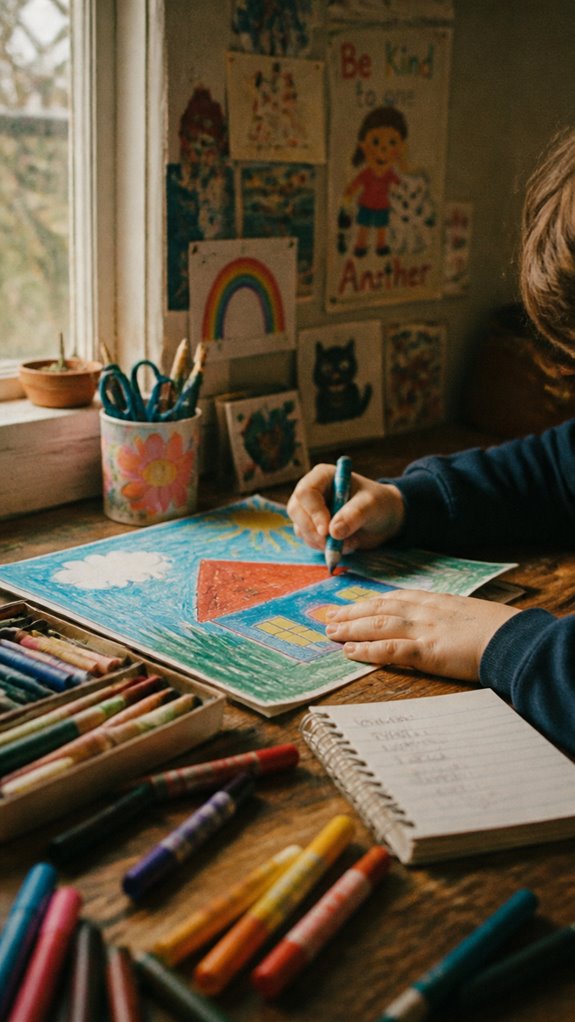
Creating a safe space for your child’s learning means providing an environment where they feel secure enough to explore, make mistakes, and grow.
When children face risk-taking opportunities, they learn resilience and develop emotional independence. It’s natural to worry about failure, but instead of protecting them from setbacks, see these moments as tools for growth.
Encourage a mindset that values effort over perfection, helping your child build confidence and independence over time. By consistently showing support and understanding, you create trust that mistakes are part of learning, not a reason to stop trying.
This stability arms your child with resilience, essential for steering through a future of constant change. Long-term, it nurtures adaptable, confident thinkers prepared to face whatever comes next. Through project-based learning, children apply these lessons in real-world contexts, deepening their understanding and building practical problem-solving skills.
Practical Ways to Reduce Anxiety and Normalize Mistakes
Have you ever noticed how anxiety about mistakes can stop a child from trying at all? When kids fear failure, they hold back, missing chances to grow.
To change this, help them develop risk awareness—understanding that mistakes are part of learning—and failure acceptance, seeing setbacks as feedback, not failure. Reassure them that everyone makes mistakes, including experts like athletes and entrepreneurs. Children who can read others’ emotions often develop greater empathy for themselves when they fail, recognizing that mistakes are universal human experiences.
Help children see mistakes as learning steps and setbacks as feedback, fostering confidence and resilience.
Encourage a mindset that views errors as opportunities, not threats. Over time, this builds resilience and confidence for the future.
It shifts the focus from avoiding failure to embracing it as a step toward mastery. By normalizing mistakes and fostering a healthy risk attitude, you create a safe space where your child feels capable of trying, failing, and ultimately thriving amid inevitable change.
Inspiring Confidence Through Social Support and Success Stories
When your child faces doubts about their abilities, sharing stories of others who’ve overcome challenges can build resilience and trust in their own potential.
Imaginary fears often make kids worry about failing without real cause, but stories of real successes remind them that setbacks are part of growth.
Peer influence plays a big role—seeing friends try and succeed encourages kids to take risks.
Instead of allowing fears to dominate, use positive examples to show how perseverance leads to achievement.
These stories help children reframe failure as a step in their journey, reinforcing that they can navigate uncertainty. Developing self-awareness in children enables them to recognize their emotions and strengths, which strengthens their ability to bounce back from setbacks with greater confidence.
Child Resilience Training Programs

Child resilience training programs offer practical, evidence-based approaches that help children develop the emotional strength needed to face today’s uncertainties.
These programs focus on building fear resilience and shifting the failure mindset. Instead of viewing failure as something to avoid, children learn that setbacks are part of growth. They develop the ability to handle frustration calmly and recover from difficulties faster. Research supports the effectiveness of these programs in enhancing resilience and emotional regulation. Programs like the Resilient Children and Families or RoutestoResilience teach children skills in emotional regulation, problem-solving, and social connection—all essential for facing challenges confidently.
Building fear resilience transforms setbacks into growth opportunities, helping children stay calm and recover stronger.
When children see failure as a stepping stone, they gain a sense of control and purpose. Learning to fix past digital errors also builds confidence by teaching kids that mistakes can be corrected and don’t define their online identity. This long-term approach prepares them to adapt, innovate, and thrive, even in unpredictable worlds.
Strategies for Emotional Resilience
Building emotional resilience is essential in a world that’s unpredictable and always changing. When children develop emotional intelligence and self-awareness, they learn to recognize and manage their feelings, even during setbacks. This creates a foundation for confidence and adaptation. Understanding the root causes of time struggles can also help children manage stress and build resilience when facing failure.
Here’s a simple way to see it:
| Focus Area | Practical Approach |
|---|---|
| Emotional Intelligence | Teach kids to identify emotions and express them safely. |
| Self-awareness | Help children understand their strengths and boundaries. |
| Resilience Practices | Encourage reflection, mindfulness, and mindset shifts. |
Fear Reduction Toolkit for Kids
Many parents feel anxious about helping their children face the fears that come with an uncertain future. It’s natural to worry about failure and risk-taking, but your goal should be fostering self-efficacy—the belief that they can handle challenges. This belief becomes a foundation for courage and resilience.
Show your child that failure isn’t the end; it’s part of learning and growth. Encourage small risks, like trying new hobbies or speaking up, to build confidence step by step. Focus on consistent patterns that reinforce their ability to adapt and succeed over time. Understanding time management challenges can also help children reduce anxiety about completing tasks and facing new experiences.
Recall, the aim isn’t perfection but developing a mindset that welcomes challenge as an opportunity. This approach liberates future potential, turning fear into a sense of control and capability.
Adaptive Mindset Development Exercises
Developing an adaptive mindset isn’t about quick fixes or boosting confidence overnight; it’s about embedding small, intentional exercises into your child’s daily routine that promote resilience and flexibility. One effective practice is regularly encouraging your child to face imaginary fears—like failing a test or speaking up—that stem from cultural influences or overstated worries. This helps them see challenges as opportunities, not threats. Use activities such as journaling about setbacks or discussing how to handle mistakes calmly. When children learn alongside family members, they benefit from family learning environments that reinforce these adaptive skills through shared experiences and collaborative problem-solving. Here’s a simple mind-shift you can foster:
| Challenge | Response |
|---|---|
| Fear of failure | View it as learning |
| Social pressure | Embrace individual opinions |
| Cultural norms | Question outdated beliefs |
| Imaginary fears | Practice with role-play |
| Failure stigma | Celebrate growth |
This steady pattern builds mental agility, freedom, and long-term confidence.
The Adaptive Atlas Anti-Fragile Child System
In a world full of uncertainty and rapid change, it’s natural to worry about whether children can handle setbacks or mood swings. The Adaptive Atlas Anti-Fragile Child System helps transform these fears into strength by focusing on emotional intelligence and stress management.
Transforming worries into strength through emotional intelligence and resilience for resilient, confident children.
Here’s what it does:
- Builds resilience so children can stay calm and centered amid chaos.
- Teaches them to manage their feelings, reducing overwhelm during tough times.
- Fosters adaptability, helping kids grow stronger from failure instead of shrinking away.
This system doesn’t aim for perfection but emphasizes long-term capability. It shows you how to guide your child toward confidence, independence, and a future where setbacks become stepping stones, not insurmountable barriers. By implementing anti-fragile principles, you equip your child with the tools to not just survive adversity but to use it as fuel for personal growth.
The Adaptive Atlas Framework
Five connected systems designed to help parents raise adaptable, future-ready children in a world shaped by AI, automation, and constant change.
| 🛡️ |
Anti-Fragile Child SystemBuilds resilience, adaptability, and the ability to handle uncertainty without shutting down. |
| 📚 |
Learning Stack ModelDevelops self-directed learning habits and continuous skill acquisition beyond school systems. |
| 🚀 |
Future Skill Stack SystemFocuses on high-value human skills that remain relevant in an AI-driven economy. |
| 🤖 |
AI Learning SystemTeaches children how to use AI as a thinking partner instead of becoming dependent on it. |
| 🧭 |
Child Type Navigator SystemPersonalizes learning and development based on each child’s strengths and personality. |
FAQ
How Can Parents Model Risk-Taking Without Feeling Anxious Themselves?
You can model vulnerability by sharing your own challenges openly and demonstrate resilience by embracing failures as growth opportunities. Your authentic actions empower children to take risks confidently, freeing them from the anxiety of imperfection.
What Are Effective Ways to Celebrate Effort Instead of Results?
Celebrate your child’s effort and progress, fostering intrinsic motivation and a growth mindset. Recognize perseverance, learning, and resilience, empowering them to value growth over results, freeing them from fear and encouraging continuous exploration and self-improvement.
How Do I Handle My Child’s Fear of Failure Without Accidentally Reinforcing It?
Did you know 85% of kids struggle with fear of failure? Focus on confidence building and anxiety management by praising effort, normalizing mistakes, and emphasizing learning over perfection, empowering your child to embrace challenges without fear.
What Tools Can I Use to Teach Self-Compassion After Mistakes?
You can use self-talk techniques to promote self-compassion after mistakes, fostering emotional resilience. Encourage your child to replace harsh thoughts with kind, empowering words, helping them see errors as growth opportunities and building inner strength.
How Do Peer Influences Impact a Child’s Attitude Toward Failure?
Peer pressure and social anxiety shape a child’s attitude toward failure, often fueling fear and avoidance. By fostering independence and resilience, you help your child resist negative influences, empowering them to see failure as growth rather than judgment.
References
- https://biglifejournal.com/blogs/blog/help-your-child-overcome-fear-of-failure
- https://greatergood.berkeley.edu/article/item/how_to_help_kids_overcome_fear_of_failure
- https://resilient-mind.com/parenting-and-the-fear-of-failure/
- https://www.youtube.com/watch?v=_cp_I9hmUbg
- https://www.ctd.northwestern.edu/blog/teaching-smart-kids-manage-fear-and-failure-and-achieve-great-things
- https://www.smartkidswithld.org/community/ask-the-experts/fear-of-failure/
- https://www.pdresources.org/product/building-resilience-in-children/
- https://resilientchildren.org/rcfp-program/
- https://good-grief.org/routes-to-resilience/
- https://bouncecoalition.org/building-resilience-together-a-look-at-bounce-coalitions-training-offerings/