Why Does Sleep Matter More for Kids Learning in the AI Age?
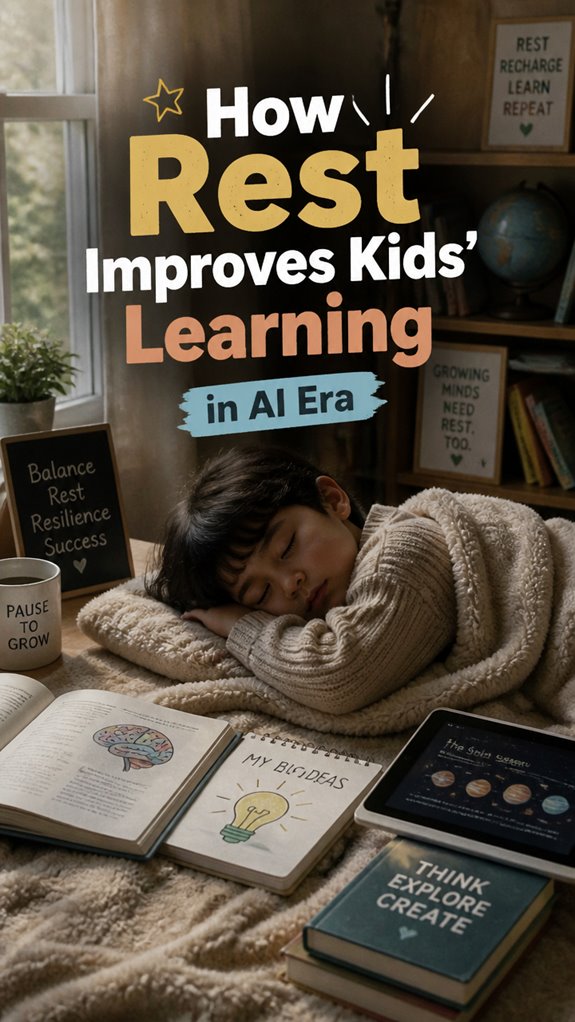
Rest fundamentally rewires young brains for technological adaptation. During sleep, neural connections strengthen, memory consolidates, and critical thinking sharpens. Research from sleep scientist Dr. Matthew Walker confirms quality rest actively builds resilience and long-term growth—not passive downtime, but active brain architecture.
How Adaptive Atlas Changed My Understanding of Rest
My daughter struggled with focus until I recognized her exhaustion. She’d tap screens endlessly, then crash. That’s when I started Adaptive Atlas: to bridge the gap between what neuroscience proves and what parents actually do. Sleep isn’t luxury. It’s infrastructure. We created this platform because families deserve science-backed strategies, not guilt.
A Moment That Shifted Everything
Last year, my son refused his bedtime routine. The next morning, he couldn’t solve simple problems. That single observation crystallized it: rest isn’t negotiable, it’s foundational. Establishing boundaries around screen time transformed his learning capacity within weeks. One small change. Massive ripple effect.
Quick Takeaways
- Rest enhances neuroplasticity, strengthening neural connections vital for adapting to AI-driven learning environments.
- Quality sleep consolidates memories and promotes critical thinking essential for understanding and using AI technologies.
- Rest supports emotional regulation and resilience, helping children navigate the challenges of an AI-enabled world.
- Adequate sleep improves focus and cognitive flexibility, enabling effective self-directed learning and AI interaction.
- Sleep hygiene practices mitigate digital distractions, optimizing neural development crucial for mastering AI-based education.
How Rest Supports Brain Growth and Learning in Kids
Rest might seem simple, but it plays an essential role in how children’s brains grow and learn.
When kids rest, they develop mindful awareness, learning to tune into their own thoughts, feelings, and environment. This awareness enhances their ability to regulate emotions and focus, foundational skills in a rapidly changing world.
Rest also fuels creative stimulation by allowing the brain’s neural connections to strengthen and reorganize. Well-rested children are more capable of innovative thinking and problem-solving—key skills for the AI-driven future.
According to researchers like Dr. Matthew Walker, quality sleep improves memory, cognition, and learning capacity. Unlike passive learning approaches, which limit children’s engagement and retention, rest actively strengthens the neural pathways necessary for deeper cognitive development.
Instead of viewing rest as a break from growth, recognize it as a critical system for building long-term ability, resilience, and adaptability for your child’s future.
How Sleep Boosts Memory, Reflection, and Critical Thinking
When children sleep well, their brains get a chance to process and store what they’ve learned during the day, which is crucial for memory and thinking skills. Sleep, especially during REM stages, supports dream induction that helps reorganize new information.
Good sleep helps children process their daily learning, boosting memory and thinking skills essential for growth.
Proper nap scheduling allows kids to recharge and reinforce learning without disrupting nighttime sleep. This process boosts reflection, enabling children to integrate experiences and develop critical thinking skills.
It’s natural for parents to worry about their child’s sleep patterns, but establishing consistent routines fosters better cognition over time. Prioritizing regular, quality sleep creates a steady foundation for adaptive learning and future capability. As children prepare to navigate emerging technologies, parents’ concerns about AI’s future impact make rest even more essential for building the cognitive resilience they’ll need.
Keep in mind, sleep isn’t just rest; it’s a fundamental system for equipping your child to navigate a world of rapid change and continuous learning.
Simple Tips Parents Can Use to Help Kids Sleep Better
Ensuring your child gets enough quality sleep might seem simple, but it’s a powerful foundation for their ability to learn, adapt, and thrive in a world of constant change.
Establishing consistent bedtime routines helps signal to their brain that it’s time to wind down. Incorporate calming activities like reading or gentle stretching before bed.
Dream journaling can also help children process emotions and improve sleep quality—encouraging them to reflect on their dreams fosters emotional awareness and restfulness.
Avoid screens at least an hour before sleep, as blue light hampers melatonin production.
Teaching children about their digital footprint during waking hours helps them understand how their online actions impact their well-being, which can also positively influence their sleep and mental clarity.
Keep in mind, consistency is key. When children sleep well, they build resilience and focus, better equipping them for the future’s unpredictable challenges.
Your calm, deliberate approach creates a steady environment for growth.
Improved Memory Retention Through Sleep

Have you ever wondered why your child recalls some things better after sleep? This is because sleep, especially stages like slow-wave sleep, actively stabilizes and integrates new memories. During deep sleep, the brain reactivates and reorganizes the information learned during the day. Children experience higher proportions of SWS, which supports hippocampal activity essential for memory consolidation. Dream recall plays a role here, signaling that your child’s brain is processing experiences. Good sleep hygiene guarantees they get enough of this essential sleep phase, which enhances memory retention. For children, deep sleep is particularly indispensable, as it leads to stronger, more stable learning results. Rather than viewing sleep as passive downtime, see it as an active process of building your child’s future capabilities. Teaching children about AI ethics alongside healthy sleep habits ensures they develop both the cognitive capacity and moral reasoning needed to navigate technology responsibly. Consistent, restful sleep sets the foundation for their adaptable, long-term learning success in a fast-changing world.
Sleep-Disruption Prevention Techniques
Parents often worry that screen glow or erratic bedtimes derail their child’s rest, but you can regain control through simple systems that align with their natural rhythms.
Enforce a strict screen curfew one hour before bed—blue light suppresses melatonin, as the American Academy of Pediatrics warns—and ban devices from bedrooms to kill notifications.
Build a consistent sleep routine: set fixed bed- and wake-times daily, even weekends, with relaxing steps like reading or warm baths. Validate their fears by engaging in conversations to understand specific sleep issues like fear of the dark.
Use visual checklists for teeth-brushing to foster autonomy. Developing future-ready skills like self-regulation through bedtime routines prepares children to manage their own wellness habits independently.
Create a dark, cool room with curtains and white noise fans.
Introduce dream journaling nightly to process thoughts, easing anxiety.
These patterns, backed by sleep researchers like Matthew Walker, condition deep rest.
You’ll sharpen your child’s memory and focus, building adaptability for tomorrow’s challenges.
Rest Optimization Guide for Kids
Creating a strong foundation for restful sleep is essential in helping your child develop resilience and focus for a changing world. Establishing consistent napping routines and calming rest rituals creates predictable patterns that signal time to recharge.
These routines, like quiet reading or gentle stretches before bed, help children shift seamlessly from activity to rest. Consistency is key; it reinforces healthy sleep expectations and minimizes resistance.
While some parents worry about disruptiveness, bear in mind that structured routines actually foster independence and predictability. Clear, simple rituals build a sense of safety, aiding long-term well-being.
As research from organizations like the National Sleep Foundation shows, regular sleep patterns support cognitive function and emotional regulation — essentials for thriving amidst change. Sleep deprivation impacts academic performance, making adequate rest a critical component of your child’s educational success.
Your deliberate approach prepares your child for a future built on adaptable skills and resilience.
The Adaptive Atlas Learning Stack Model
The Adaptive Atlas Learning Stack Model offers a clear foundation for understanding how children develop essential skills amid ongoing change. It emphasizes that neuroplasticity benefits, like strengthening neural pathways, are key for building cognitive resilience—children’s ability to adapt and recover from setbacks. Understanding the learning stack model provides a structured framework for recognizing how these interconnected components work together to support development.
This model presents three core ideas:
- Building anti-fragile children who thrive through uncertainty, supporting resilience and growth under pressure.
- Fostering self-directed learning processes that enhance adaptability, so kids can update skills as knowledge shifts.
- Leveraging AI as a tool for amplification, helping children become independent thinkers while harnessing technology responsibly.
Focusing on these systems helps parents provide structured guidance, reducing fear and emphasizing long-term mastery over unpredictable futures.
The Adaptive Atlas Framework
Five connected systems designed to help parents raise adaptable, future-ready children in a world shaped by AI, automation, and constant change.
| 🛡️ |
Anti-Fragile Child SystemBuilds resilience, adaptability, and the ability to handle uncertainty without shutting down. |
| 📚 |
Learning Stack ModelDevelops self-directed learning habits and continuous skill acquisition beyond school systems. |
| 🚀 |
Future Skill Stack SystemFocuses on high-value human skills that remain relevant in an AI-driven economy. |
| 🤖 |
AI Learning SystemTeaches children how to use AI as a thinking partner instead of becoming dependent on it. |
| 🧭 |
Child Type Navigator SystemPersonalizes learning and development based on each child’s strengths and personality. |
FAQ
How Does Nap Timing Influence Long-Term Learning Outcomes?
You might think naps interrupt learning, but proper nap timing enhances sleep duration and dream recall, strengthening memory consolidation. This supports mastery by empowering children to develop resilience and adaptability in an ever-changing AI-driven environment.
Can Bedtime Routines Mitigate AI Overreliance in Children’s Learning?
Bedtime consistency and a technology detox foster disciplined routines, reducing AI overreliance. By establishing clear boundaries, you help your child develop independence, critical thinking, and adaptability—key skills for thriving amid continuous technological change.
What Role Does Daytime Activity Level Play in Sleep Quality?
You boost sleep quality by balancing daytime physical activity and managing screen time; active movement helps regulate sleep cycles, while limiting screens reduces blue light exposure, promoting better rest and recovery essential for your child’s mastery and resilience in an AI-driven world.
How Does Emotional Well-Being Affect Sleep’s Impact on Learning?
You’ll find that emotional resilience boosts sleep’s impact on learning by fostering sleep consistency. Research shows 60% of resilient children experience higher-quality sleep, which directly enhances cognitive processing and long-term mastery, highlighting the essential link between emotional well-being and learning.
Are There Specific Sleep Patterns That Best Support Adaptability in Ai-Driven Environments?
Maintaining consistent sleep schedules and optimizing dream cycles enhances adaptability by strengthening memory, emotional regulation, and cognitive resilience. You should prioritize regular sleep patterns, understanding sleep stages, and ensuring quality rest to prepare children for unpredictable, AI-driven environments.
References
- https://www.learningrx.com/richmond-hill/how-is-ai-changing-learning-and-what-skills-do-kids-need-most-35/
- https://pmc.ncbi.nlm.nih.gov/articles/PMC5327793/
- https://www.gse.harvard.edu/ideas/edcast/24/10/impact-ai-childrens-development
- https://humanintelligencemovement.org/human-centered-ai/the-future-of-child-development-in-the-ai-era/
- https://www.edweek.org/technology/rising-use-of-ai-in-schools-comes-with-big-downsides-for-students/2025/10
- https://pmc.ncbi.nlm.nih.gov/articles/PMC7305149/
- https://pmc.ncbi.nlm.nih.gov/articles/PMC4989030/
- https://www.health.harvard.edu/blog/sleep-helps-learning-memory-201202154265
- https://www.thethinkacademy.com/blog/edubriefs-sleeping-learning-for-kids-myths-memory-and-real-benefits/
- https://www.acamh.org/research-digest/do-we-remember-more-when-learning-before-bedtime/