Wondering How to Boost Your Child’s Working Memory?
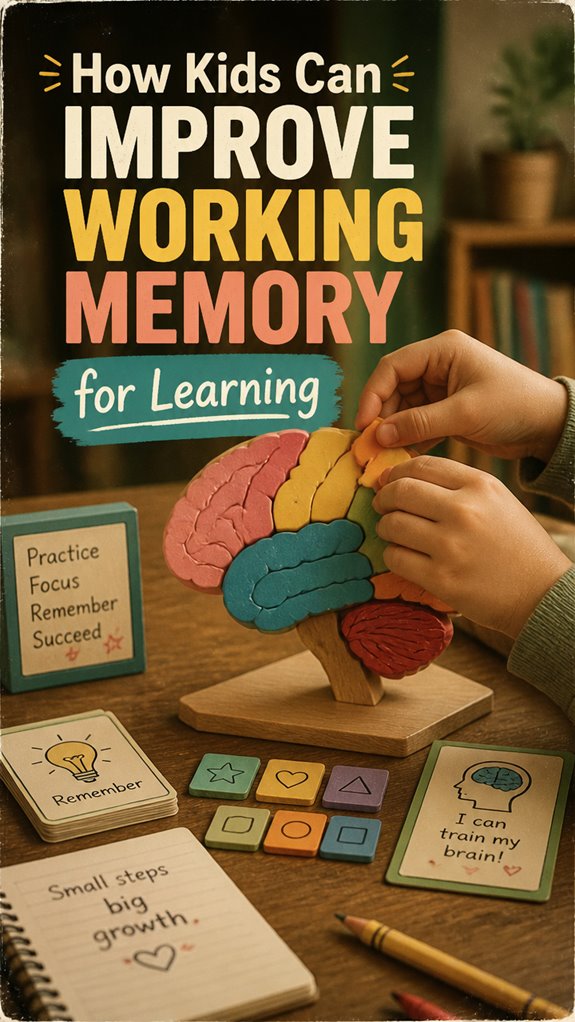
Want to know if your kid’s forgetfulness is fixable? Absolutely. Cognitive scientist Alan Baddeley’s research shows working memory improves through targeted practice, not genetics alone. Consistent routines, memory games, and chunked tasks rewire neural pathways fast.
My Journey Supporting Working Memory Growth
My son couldn’t retain multi-step instructions until I discovered Adaptive Atlas, an adaptive learning platform designed specifically for working memory development. Watching him suddenly execute three-part tasks without repeating myself felt miraculous. That’s exactly why we built this resource: to give parents evidence-based strategies that actually work, not just theoretical advice gathering dust online.
A Real Moment That Changed Everything
Last Tuesday, my daughter organized her desk independently after weeks of visual reminders. She placed color-coded folders in strategic zones. That single moment crystallized everything: external systems precede internal growth. She wasn’t magically remembering more. She engineered her environment so remembering became effortless.
Quick Takeaways
- Incorporate daily routines and memory games to strengthen neural pathways associated with working memory.
- Use visual aids, mental imagery, and chunking techniques to help children organize and retain information effectively.
- Design clutter-free, structured environments to reduce distractions and enhance focus during learning activities.
- Employ mnemonic devices and external tools like checklists to support memory retention and organization.
- Practice consistent, research-based activities that gradually challenge working memory to foster resilience and learning agility.
What Is Working Memory and Why Is It Important for Learning?
While it’s common to worry about your child’s academic success, focusing on their working memory can be a practical first step. Working memory is the mental workspace that holds and processes information needed for learning. Strong neural pathways form this workspace, making it easier for children to manage tasks and retain key details.
When working memory is developed, it bolsters a child’s cognitive resilience—the ability to adapt and recover from challenges. This system isn’t fixed; it can be strengthened through targeted activities, helping kids stay engaged longer and recover quickly from setbacks. Like other practical life skills, developing working memory requires consistent practice and real-world application to see meaningful results.
Building working memory sets the foundation for learning agility, preparing your child to navigate an uncertain future with confidence. It’s a fundamental skill that shapes their ability to think independently and grow continuously.
How Can You Support Your Child’s Working Memory at Home?
Supporting your child’s working memory at home isn’t about quick fixes; it’s about creating routines and environments that naturally strengthen their mental workspace.
Consistent practice with mnemonic devices can help children organize information, making it easier to recall. Encourage mental rehearsal—asking your child to visualize steps before completing a task can boost memory and confidence.
Regular use of mnemonic devices and mental visualization enhances children’s memory and self-assurance.
You can also develop routines that repeat key information, allowing your child to internalize it gradually. Incorporate simple activities like recounting stories or game-based challenges to improve memory retention. AI tools for creativity can provide interactive, engaging ways to strengthen memory skills through dynamic problem-solving and personalized learning experiences.
- Use mnemonic devices to encode complex information.
- Practice mental rehearsal before tasks to build confidence.
- Establish routines that reinforce key skills over time.
These strategies help your child develop resilience, preparing them for the long-term demands of learning and adaptability.
What Daily Activities and Techniques Boost Working Memory?
Have you ever wondered how small daily activities can considerably strengthen your child’s working memory? Simple techniques like mnemonic strategies help embed information by linking new ideas to familiar patterns. Visualization techniques invite your child to picture concepts vividly, making abstract ideas more concrete and easier to recall.
These skills are proven to enhance memory retention and support long-term learning, according to research from cognitive scientists like Dr. Alan Baddeley. By integrating these activities into daily routines—such as recalling steps in a task or creating mental images—your child develops adaptable thinking. Understanding working memory capacity helps you recognize why your child may struggle with multi-step instructions or complex information processing.
Instead of overwhelming them with info, you’re guiding their brain to build strong mental habits. Consistent practice creates a foundation for future learning capabilities—empowering your child to navigate change with confidence.
How to Create a Distraction-Free Environment for Better Focus?
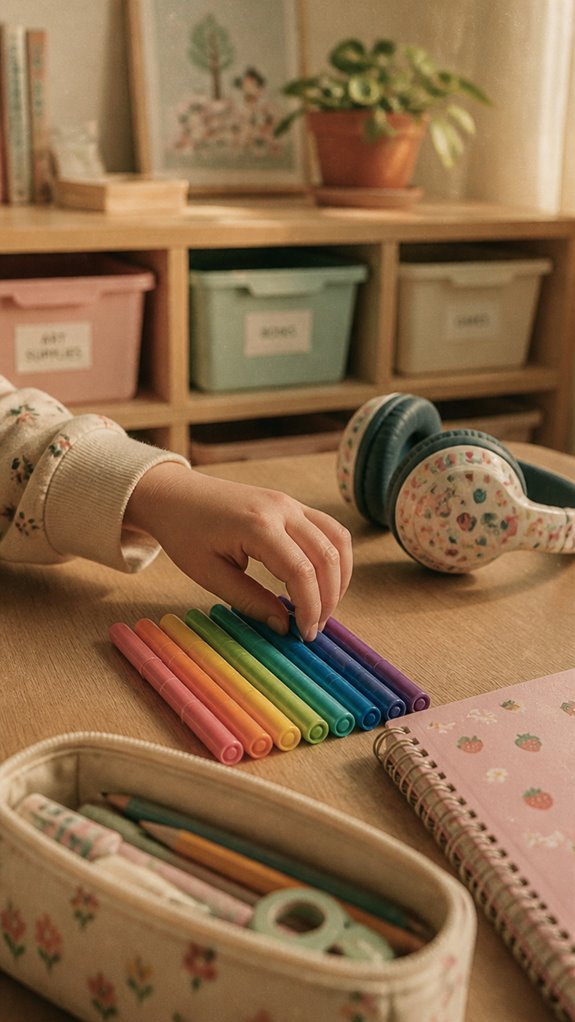
Creating a distraction-free environment doesn’t mean shutting out the world entirely, but rather designing a space that helps your child focus on what matters.
A distraction-free space supports focus without completely shutting out the world.
Multitasking distractions and sensory overload make it hard for kids to concentrate, so a calm, organized space is key. When strategically choosing which skills to develop, you can prioritize focus-enhancing practices that align with your child’s learning goals through skill development strategy.
- Keep the area tidy and clutter-free to reduce sensory overload.
- Limit outside noise by using soft background sounds or noise-canceling headphones during focused tasks.
- Create designated zones for different activities, so your child learns when it’s time to focus.
How Do Routines, External Aids, and Games Enhance Executive Skills?
Ever wonder how small habits can make a big difference in your child’s ability to stay focused and manage their own learning? Mindful routines create predictable patterns that strengthen executive skills, helping children develop self-control and planning. External memory tools, like checklists or calendars, reduce mental load, so kids don’t rely solely on their working memory. Incorporating games designed to enhance organization or problem-solving offers a fun way to practice these skills daily. Understanding your child’s natural strengths can help you select the most effective routines, tools, and games tailored to their unique learning style.
| Routine | External Aids | Games |
|---|---|---|
| Set consistent wake-up times | Use visual schedules | Puzzle or strategy games |
| Practice mindful transitions | Use timers to manage tasks | Memory matching games |
| Regular review of goals | Checklists for daily activities | Strategy card games |
| Create designated study spaces | Digital reminders | Collaborative problem-solving puzzles |
| End with reflection sessions | Journals or logs | Creative-building games |
Memory Games Boost Recall
Memory games are a simple yet effective way to strengthen your child’s recall skills in a practical way. They boost visual pattern recognition by asking kids to identify repeating images, colors, or shapes. These activities also enhance sequence memory exercises, helping children remember the order of cards or steps in a game. Through repeated practice, children develop better short-term memory and quicker recollection, which are essential for learning new skills and information. Developing early memory skills supports overall cognitive growth and helps children excel academically and socially. Guided practice with structured activities helps direct children’s hands and minds toward productive engagement with learning materials.
- Matching card games improve concentration and attention to detail
- Sequence games like “I Packed My Suitcase” enhance the ability to remember and add items mentally
- Strategic card and board games build long-term memory and planning skills
These games lay a foundation for mastering complex tasks and adapting to an ever-changing learning environment, giving your child real confidence for the future.
Troublesome Recall, Fixes Explored

When children struggle to recall information, it’s natural for parents to worry about their long-term learning. But this isn’t a sign of failure; it’s an opportunity to teach simple fixes.
Visualization strategies, like creating mental images or drawing quick pictures, help the brain link ideas through visual cues. This process activates visual memory and supports dual coding, making recall easier later. Supporting memory through visual cues can strengthen neural connections relating to the material.
Creating mental images or quick sketches enhances understanding and makes recalling information easier later.
Cognitive chunking involves breaking information into small, meaningful groups, so kids don’t feel overwhelmed. For example, dividing a phone number into segments makes it easier to remember. Building strong memory skills early also prepares children for networking opportunities that require quick recall and clear communication.
These techniques turn complex information into manageable pieces, strengthening memory pathways. By practicing visualization and chunking regularly, you’re helping your child build resilient recall skills—skills that will support their learning journey long into the future.
Memory Strength Training Kit for Kids
Building a strong memory isn’t about quick fixes—it’s about creating a system that helps your child develop steady, reliable skills they can rely on throughout life. A Memory Strength Training Kit can foster neurological development and expand your child’s attention span over time.
It offers structured activities designed to reinforce working memory and resilience against daily distractions. Understanding how working memory affects learning performance helps parents recognize why these training activities matter for their child’s academic success.
- Use games that challenge memory recall and sequence building, helping neurons strengthen connections.
- Incorporate routines that require sustained attention, improving focus for learning tasks.
- Engage in exercises that promote emotional regulation, supporting resilience and long-term retention.
Such a kit aligns with research from cognitive scientists like Dr. Emily Holmes, emphasizing consistency and targeted practice. It’s about building capabilities that grow, not quick fixes that fade.
The Adaptive Atlas Learning Stack Model
The Adaptive Atlas Learning Stack Model offers a clear way to understand how children develop the skills needed in a world that keeps changing. It relies on mental models—internal maps that help kids process new information—and cognitive scaffolding, which supports learning at every level.
Instead of focusing on memorization, this system builds resilience and adaptability. You can think of it as giving your child a set of mental tools to navigate uncertainty. By fostering self-directed learning and using AI as a partner, it helps children develop long-term capabilities, not just quick fixes. Research shows that effective learning tools at home significantly enhance children’s ability to retain and apply new knowledge across different subjects.
This approach shifts the focus from fixed knowledge to dynamic skills, empowering your child to remain confident, capable, and prepared for whatever the future holds.
The Adaptive Atlas Framework
Five connected systems designed to help parents raise adaptable, future-ready children in a world shaped by AI, automation, and constant change.
| 🛡️ |
Anti-Fragile Child SystemBuilds resilience, adaptability, and the ability to handle uncertainty without shutting down. |
| 📚 |
Learning Stack ModelDevelops self-directed learning habits and continuous skill acquisition beyond school systems. |
| 🚀 |
Future Skill Stack SystemFocuses on high-value human skills that remain relevant in an AI-driven economy. |
| 🤖 |
AI Learning SystemTeaches children how to use AI as a thinking partner instead of becoming dependent on it. |
| 🧭 |
Child Type Navigator SystemPersonalizes learning and development based on each child’s strengths and personality. |
FAQ
How Early Can Working Memory Improvements Positively Impact Academic Success?
Early intervention with cognitive enhancement strategies can substantially boost working memory, laying a foundation for academic success. You’re proactive in developing now, equipping children to adapt, learn efficiently, and master complex concepts as they grow, maximizing long-term educational outcomes.
Are There Specific Signs Indicating a Child’s Working Memory Needs Support?
If your child’s focus drifts or they struggle to recall instructions, consider working memory assessments. Memory enhancement techniques like chunking and visualization reveal signs. Recognizing these signals helps you proactively boost their learning mastery.
What Are Common Misconceptions About Improving Working Memory in Children?
You might believe the memory myth that training alone profoundly improves working memory, but it has limits. Mastery comes from understanding that enhancing working memory involves strategic, adaptive approaches, acknowledging it’s only one part of overall cognitive development.
Can Working Memory Training Cause Any Negative Effects?
Working memory training can cause memory overload and cognitive fatigue if pushed too hard or consistently over time. To master it, balance challenging exercises with rest, ensuring children develop skills without risking burnout or reduced cognitive resilience.
How Do Individual Differences Affect Working Memory Development Strategies?
You understand that individual variation influences how children develop working memory, so tailored interventions are essential. By customizing strategies to each child’s unique cognitive profile, you can optimize their learning potential and foster robust, adaptable memory skills.
References
- https://www.edutopia.org/article/boosting-working-memory-elementary-school/
- https://www.understood.org/en/articles/8-working-memory-boosters
- https://www.btbpsychology.com/blog/strategies-to-support-working-memory-in-children
- https://pmc.ncbi.nlm.nih.gov/articles/PMC6686208/
- https://chadd.org/wp-content/uploads/2018/06/ATTN_02_11_ImprovingMemory.pdf
- https://huntingtonhelps.com/blog/strategies-to-build-your-childs-working-memory/
- https://www.learningrx.com/alpharetta-johns-creek/10-activities-to-improve-memory-for-kids/
- https://ctl.stanford.edu/students/strategies-improving-working-memory
- https://mindnasium.com/memorization-games-and-activities-designed-for-kids-to-enhance-memory-skills/
- https://specialedresource.com/memory-activities-for-kids