What Learning Tools Actually Work for Kids in 2024?
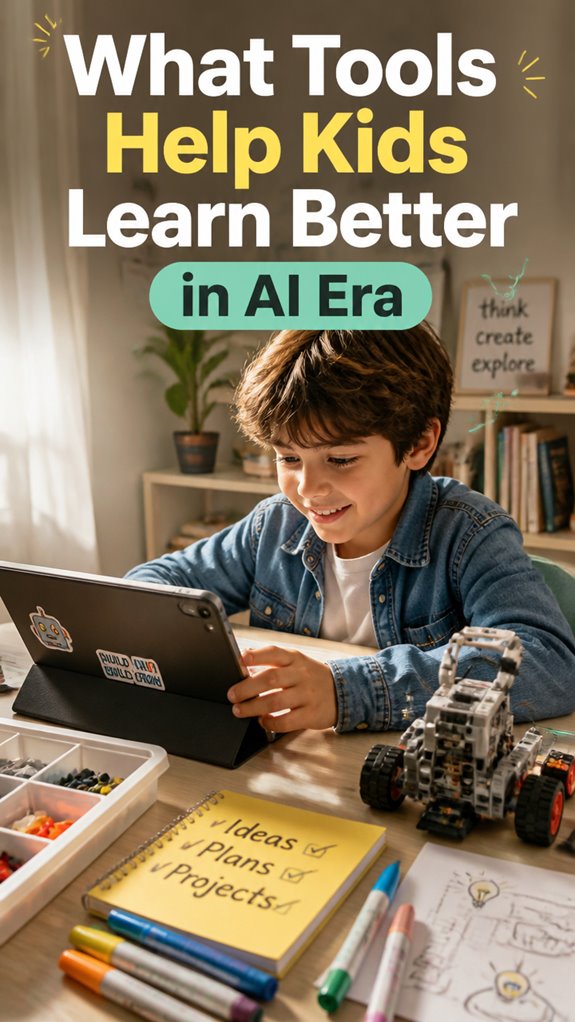
The answer is simpler than you’d think: tools that blend critical thinking with hands-on creativity beat passive screen time every single time. Your child needs platforms that prioritize safety, offer personalized tracking, and encourage exploration through real-world activities like building projects.
How One Student’s Breakthrough Changed Everything
My daughter was drowning in algorithm-driven content until we discovered Adaptive Atlas. She suddenly had a tool that actually adapted to her learning style instead of forcing her into a predetermined box. That’s precisely why we built it: because generic platforms waste potential. We wanted something that meets kids where they are, builds resilience through challenge, and doesn’t treat learning like a one-size-fits-all factory line.
The Day I Finally Got It
Last Tuesday, my son abandoned his tablet mid-lesson to sketch a physics concept he’d just learned. No prompting needed. He connected dots between digital instruction and tangible creation. That moment crystallized why adaptive learning matters: engagement happens when technology stops dictating and starts listening.
Quick Takeaways
- Utilize AI-powered educational platforms that offer personalized assessments and real-time progress monitoring.
- Choose tools with transparent privacy policies and built-in safeguards for safe digital engagement.
- Incorporate learning analytics to identify strengths, gaps, and guide adaptive learning strategies.
- Integrate hands-on activities and project-based exercises to foster critical thinking and practical skills.
- Promote metacognitive and resilience-building tools that develop self-awareness and adaptability for future challenges.
How to Create a Fun and Engaging Learning Environment at Home
Creating a fun and engaging learning environment at home might seem overwhelming, especially with the constant changes in how children absorb and process information today. But you can create this environment by using gamification strategies that transform learning into play. These strategies make learning feel like an adventure, boosting motivation and resilience.
Incorporate collaborative learning, where children work with family or friends, building communication skills and sharing ideas. This approach also fosters social-emotional growth and encourages them to see challenges as opportunities. Understanding how career preparation connects to their learning helps children see the relevance of skills they develop today.
Keep in mind, your role is to guide rather than control, helping your child develop confidence and independence.
Choosing Safe and Effective Digital Tools for Personalized Learning
Choosing the right digital tools for personalized learning can feel overwhelming, especially with so many options claiming to be “the best.” It’s natural to worry about safety, privacy, and whether these tools genuinely support your child’s growth.
Focus on digital safety by selecting platforms with clear privacy practices and data protection measures.
Prioritize platforms with transparent privacy policies and strong data security to ensure your child’s digital safety.
Tools that offer personalized assessments help identify your child’s strengths and gaps, guiding growth effectively. AI-powered learning progress monitoring systems can track your child’s development in real time, providing actionable insights for both parents and educators.
Look for solutions backed by research, like those recommended by organizations such as the EdTech industry body or credible educational researchers.
Keep in mind, effective tools are those that promote independence, critical thinking, and adaptability—core skills for the AI era.
Trust your ability to choose systems aligned with your child’s future, grounding technology use in a sustainable, long-term approach.
Incorporating Creative and Hands-On Activities to Reinforce Digital Learning
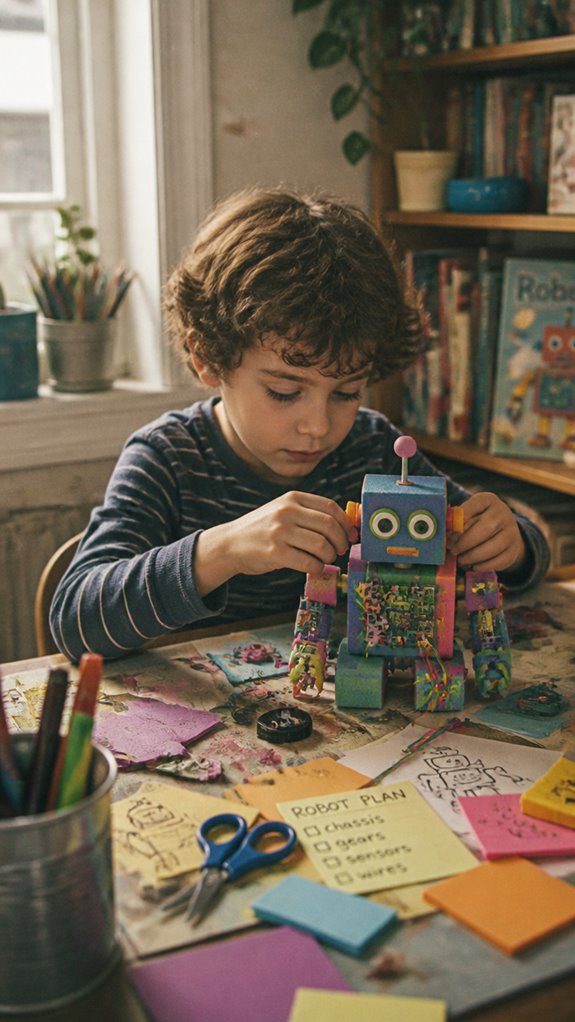
It’s natural to worry that digital learning might become too passive or disconnected from real-world skills, but incorporating creative and hands-on activities can bridge that gap. Tactile exploration and hands-on crafts actively engage your child’s mind and body, making their learning tangible.
Consider these strategies:
- Build physical models to visualize complex concepts, reinforcing understanding through tactile exploration.
- Create art projects inspired by digital content, linking creativity with technology.
- Use crafts to experiment with engineering or coding concepts in a practical way.
- Organize DIY experiments that foster problem-solving and curiosity.
These activities help develop skills like critical thinking, resilience, and adaptability—key for future success. When children work together on these projects, they build collaboration abilities that strengthen their teamwork and communication. By integrating them, you empower your child to stay connected, confident, and capable in our ever-changing world.
Establishing Routines and Parental Controls for a Balanced and Secure Home Learning Space
Establishing routines and setting parental controls might seem restrictive at first, but these practices give your child a strong foundation to navigate the digital world responsibly.
Managing screen time isn’t about limiting, but ensuring balance—so your child can learn, grow, and stay focused. Privacy concerns are real, so use controls to protect their personal data and teach healthy habits around sharing.
Clear routines help children develop predictable, reliable patterns that foster independence without overwhelming them. This structure reduces anxiety about the chaotic flow of information and AI tools, allowing them to focus on skills like critical thinking and problem-solving. Having open conversations about AI concerns and fears can help your child feel more confident and less anxious when encountering new technologies in their learning environment.
Future Skills for Digital Age

As technology continues to evolve rapidly, the skills your child needs most are also transforming. Instead of fearing constant change, focus on developing a strong future mindset and digital literacy. Independent learning empowers students to take ownership of their education and adapt to new tools and environments as they emerge.
Here are four key skills to nurture:
- Adaptability – teach your child to thrive amid uncertainty, adjusting strategies as new tools emerge.
- Critical Thinking – encourage questioning and analyzing information, not just memorizing facts.
- Creativity – foster innovative problem-solving, which will keep them relevant in a shifting economy.
- Collaboration with AI – show them how to use AI as a partner, amplifying their skills without dependency.
Building these skills today ensures they can navigate tomorrow’s environment confidently, with control over their growth and future.
Evidence on AI Educational Impacts
Many parents wonder if AI can truly improve their child’s learning experience. The answer is yes, when used thoughtfully.
AI effectiveness lies in personalized assessment—strategies that evaluate each child’s progress in real time. Instead of guessing which skills need focus, AI tools adapt content to fit their unique learning style, reducing frustration and boosting motivation.
Research from organizations like EdTech suggests that tailored feedback helps students identify strengths and areas for growth instantly, supporting long-term progress. The evidence base for these outcomes is growing, but most studies currently focus on short-term effects and specific subjects. These tools don’t replace teachers—they amplify their ability to guide and support. By relying on systems built for continuous adaptation, your child develops the skills necessary for future challenges.
This approach puts you in control, helping you lead your child’s learning toward meaningful, lasting growth. When AI tools are combined with active engagement and clear boundaries, they help prevent passive learning habits while keeping children motivated to participate in their own educational journey.
Addressing AI Misinformation Pitfalls
Children encounter AI misinformation daily through hallucinations, deepfakes, and algorithm-driven echo chambers that push sensational falsehoods—like ChatGPT’s false claim about the Great Wall being visible from space.
Children face daily AI misinformation via hallucinations, deepfakes, and echo chambers fueling falsehoods—like ChatGPT’s myth of the Great Wall visible from space.
You fear this erodes your child’s trust in knowledge, but reframe it: equip them with misinformation detection systems for lifelong leverage in an AI world. Limited background knowledge makes children especially vulnerable to accepting these plausible but false claims.
Master these four AI fact checking strategies to build their critical edge:
- Default skepticism: Treat AI output as suspect until multiple sources verify it, countering authority bias.
- Generate and debunk: Have them create fake content, then spot flaws—like Gemini’s invented “Battle of Westbrook.”
- Trace algorithms: Explain how TikTok’s feeds amplify conspiracies, teaching them to break echo chambers.
- Cross-check health claims: Verify AI wellness advice against BBC-verified facts, safeguarding body image.
This system turns pitfalls into power, ensuring your child’s decisions compound future advantages by helping them adapt their goals to navigate an information landscape that continues to evolve rapidly.
Learning Tools Selection Guide for Parents
Choosing the right learning tools for your child can feel overwhelming in a world full of options, especially as technology rapidly evolves. But with a clear approach, you gain confidence.
Focus on tools rooted in innovative pedagogy that promote active, self-directed learning. Use platforms that incorporate learning analytics to track progress, helping you understand your child’s strengths and growth areas. Consider tools that include memory strength training exercises to enhance your child’s cognitive capacity and working memory skills.
Instead of chasing every new trend, consider how tools support long-term adaptability and critical thinking. Keep in mind, it’s about building systems, not just quick fixes.
Reliable resources from reputable organizations like the Learning Agency or EdTech innovators can guide you. Prioritize tools that empower your child to learn independently, adapt constantly, and develop the capability to thrive amidst change.
This approach gives you control and ensures your child’s future skills are secure.
The Adaptive Atlas Learning Stack Model
The Adaptive Atlas Learning Stack Model offers a clear framework for understanding how children can develop the skills they need to thrive amid constant change. It focuses on key areas that empower your child today and into the future.
- Build metacognitive strategies, so they learn to think about their own thinking, boosting self-awareness and independence.
- Cultivate intrinsic motivation, encouraging children to find joy and purpose in learning rather than external rewards.
- Develop resilience through the Anti-Fragile Child System, helping them recover from setbacks and grow stronger.
- Integrate AI as a partner, teaching children to leverage technology without dependency, sharpening their decision-making.
This model shifts your focus from fixed knowledge to adaptable skills that create long-term capability, giving your child the tools to navigate tomorrow confidently. You can implement these principles through project-based learning at home, which encourages children to actively engage with real-world challenges and develop the critical thinking skills necessary for the AI era.
The Adaptive Atlas Framework
Five connected systems designed to help parents raise adaptable, future-ready children in a world shaped by AI, automation, and constant change.
| 🛡️ |
Anti-Fragile Child SystemBuilds resilience, adaptability, and the ability to handle uncertainty without shutting down. |
| 📚 |
Learning Stack ModelDevelops self-directed learning habits and continuous skill acquisition beyond school systems. |
| 🚀 |
Future Skill Stack SystemFocuses on high-value human skills that remain relevant in an AI-driven economy. |
| 🤖 |
AI Learning SystemTeaches children how to use AI as a thinking partner instead of becoming dependent on it. |
| 🧭 |
Child Type Navigator SystemPersonalizes learning and development based on each child’s strengths and personality. |
FAQ
How Can Parents Assess the Effectiveness of Educational AI Tools for Their Children?
You should evaluate AI tools based on data privacy protections and how actively you’re involved. Demand transparent understanding into privacy policies, monitor your child’s interactions, and guarantee the tool supports critical thinking, adaptability, and long-term skill development.
What Strategies Ensure Children Develop Critical Thinking Alongside Ai-Assisted Learning?
Like sharpening a blade, fostering critical evaluation alongside AI-assisted learning boosts skill development. Encourage independent questioning, challenge assumptions, and reflect deeply, empowering your child to wield AI as a tool for true understanding and strategic thinking.
How Do Adaptive Learning Platforms Cater to Children With Special Educational Needs?
You leverage adaptive learning platforms with personalized support and inclusive technology to empower children with special educational needs, ensuring tailored interventions, removing barriers, and maximizing their potential in an AI-driven world, giving them control over their learning journey.
What Are Best Practices for Balancing Screen Time With Offline Activities?
Like a skilled conductor balancing symphony and silence, you wield screen moderation and activity diversification to empower your child’s growth, structuring their day to harmonize digital exploration with rich, offline life, cultivating resilience and mastery in a dynamic world.
How Can Parents Encourage Creativity in an Increasingly Digital Learning Environment?
You empower your child by enrolling them in creativity workshops and encouraging artistic exploration, fostering innovation and independent thinking within the digital terrain. This approach cultivates powerful skills essential for future adaptability and limitless potential.
References
- https://www.theschoolhouse.org/post/best-ai-tools-students
- https://learn.modernagecoders.com/blog/safe-ai-tools-for-kids-homework-2025
- https://mybrightwheel.com/blog/top-5-ai-tools-for-early-childhood-educators
- https://www.littlelit.ai/post/forget-chatgpt-these-ai-tools-for-kids-will-blow-your-mind
- https://kubrio.com/blog/are-there-ai-learning-tools-for-kids
- https://www.thethinkacademy.com/blog/edubriefs-best-ai-learning-tools-for-k12-education-success/
- https://www.edutopia.org/article/ai-tools-teachers-try/
- https://scale.stanford.edu/research-in-action/understanding-evidence-base-ai-k12-education
- https://pmc.ncbi.nlm.nih.gov/articles/PMC11830699/
- https://www.discoveryeducation.com/blog/educational-leadership/ai-in-education/