How Can Parents Unlock Their Child’s Natural Drive to Learn?
By meeting children where their passions already live. When you build projects around genuine interests, you bypass the motivation gap entirely. Kids tackle problems they actually care about, which changes everything about how they approach learning.
I watched my daughter Maya struggle with math until we framed it through her obsession with baking. Suddenly, ratios and measurements weren’t abstract symbols on a worksheet. They were the difference between a collapsed cake and something Instagram-worthy. That’s when I realized we needed Adaptive Atlas. We built it to help parents and educators spot these connection points quickly. Not every child needs the same path. Some learn through creation. Others through questions. The platform recognizes these patterns so you can guide, not dictate.
Last month, my son abandoned his science textbook mid-chapter. Then he wondered why plants in our kitchen died. We didn’t assign a project. He owned the investigation. Testing soil, adjusting light, documenting results over weeks. His resilience built naturally through failure and discovery, not through grades.
The Scaffolding Framework That Sticks
Notice genuine interests first. Frame immediate, solvable problems. Break work into chunks. Ask guiding questions instead of providing answers. Build, test, refine repeatedly. This cycle transfers across every subject and skill your child will encounter.
Quick Takeaways
- Start with what genuinely interests your child, then frame exploration-worthy questions to activate their natural curiosity and motivation.
- Break projects into small, achievable steps within defined boundaries to build confidence, reduce overwhelm, and maintain momentum.
- Focus on real-world problems your child notices rather than assigned tasks to foster meaningful engagement and problem-solving.
- Use iteration cycles—build, test, refine—with feedback loops that treat failure as data, not inadequacy.
- Prioritize manageable projects that can start immediately over ambitious goals, allowing quick wins that boost emotional resilience.
Why Small Projects Build Independent Learning
When you hand a child a structured project instead of a pre-made answer, something shifts—they stop waiting for permission to think and start thinking to solve.
Small projects bypass the passivity that traditional instruction creates. Your child encounters a real problem, identifies what they need to learn, and builds self motivation through immediate feedback. This is how independent learning actually develops. Real-world challenges connect classroom concepts to tangible outcomes, making abstract ideas immediately relevant and memorable.
The creativity boost comes naturally when constraints are real, not theoretical. A child designing a simple app, building a prototype, or organizing a neighborhood initiative doesn’t memorize facts. They ask questions that matter, seek answers they’ll actually use, and internalize the learning process itself.
This compounds. Over time, they develop the capability to teach themselves anything, which is the foundation for adapting to whatever future emerges. That’s the real advantage.
Importantly, this self-directed approach also strengthens emotional resilience in children, equipping them to handle setbacks and uncertainty with confidence rather than dependence on external guidance.
Match Projects to Current Ability, Not Ambition
Most parents instinctively reach for the ambitious project—the one that sounds impressive, that stretches far beyond where their child currently operates—because ambition feels like investment in the future. It doesn’t. Mismatched projects create frustration, not growth.
Ambition that outpaces capability creates frustration, not growth. Strategic alignment with current ability is the real investment.
The real leverage comes from projects aligned with your child’s current capability. This isn’t settling. It’s strategic.
When a project fits, your child stays engaged, completes it, and builds emotional resilience through actual success rather than burnout.
Start where they are. A child who masters a small project develops the confidence and creativity enhancement needed for bigger ones.
They learn the feedback loop: attempt, adjust, improve. That system compounds far more than a project abandoned halfway through.
Ambition follows capability. Not the reverse.
Teaching kids to match projects to their current ability also protects them from overambitious digital habits that lead to screen fatigue and unfinished goals.
Cycle-Based Structure: Build Projects That Teach Iteration
The projects that teach the most aren’t the ones designed to be finished perfectly on the first try—they’re the ones built around cycles of attempt, feedback, and refinement. Using a skill progress tracker helps document each iteration so your child can see tangible evidence of growth over time.
This structure mirrors how real work happens. Your child builds something, tests it, identifies what didn’t work, and tries again. Each cycle builds emotional resilience because failure becomes data, not defeat.
This approach also expands creativity expansion by forcing your child to problem-solve rather than follow instructions. Set projects with built-in review points: create, show, adjust, repeat. This removes the pressure of perfection while building the adaptive thinking that matters most.
Your child learns that capability compounds through iteration, not initial brilliance.
By consistently practicing these cycles, children develop self-learning habits that will serve them throughout their education and beyond.
Guide Your Child’s Role in Each Cycle
- Early cycles: Your child explores and experiments while you provide structure and safety. They test ideas freely, knowing failure won’t derail them.
- Middle cycles: They take ownership of decisions while you ask questions instead of providing answers. Creative collaboration here means you’re coaching, not directing.
- Later cycles: They lead while you step back into observation mode. They own the problem, the process, and the outcome.
This progression isn’t random. It mirrors how real work happens.
Kids who experience this graduated responsibility develop confidence that transfers across every future challenge they’ll face.
As they document their progress through each cycle, you can introduce AI writing tools to help them organize thoughts and strengthen their communication skills.
Track Independent Progress Through Output, Not Hours
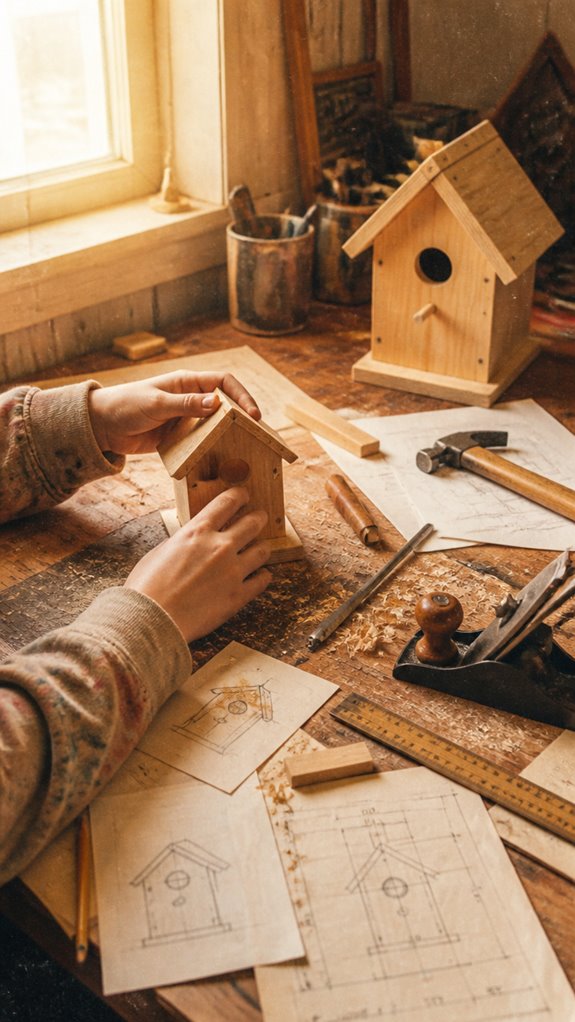
When you stop measuring your child’s learning by hours spent and start measuring by what they’ve actually built, created, or solved, something shifts—both in how they see themselves and in how real capability develops.
Output reveals what they truly understand. A finished prototype, a written analysis, or a working solution can’t hide gaps the way time logs can.
Output reveals true understanding—prototypes, analyses, and solutions expose gaps that time logs simply conceal.
This shift creates powerful motivational triggers. Kids recognize that effort without tangible results doesn’t count. That clarity focuses their energy.
Self reflection becomes natural: What did I make? What works? What needs fixing?
This approach mirrors how the real world measures value. No employer cares how many hours you worked—they care what you delivered.
Using a Learning System Builder Toolkit to design these output-focused milestones helps parents create structured systems that make progress visible and meaningful.
Why Projects Stall and How to Fix It
Most projects stall not because kids lack ability, but because the gap between their vision and their current skill creates invisible friction—and they don’t know how to move through it.
This friction shows up in three predictable ways:
- Scope creep – Your child envisioning a finished product that’s three times bigger than their current capacity, then freezes when reality hits.
- Skill gaps – They encounter a technical problem and interpret it as personal failure rather than a learning checkpoint.
- Time management collapse – Without clear milestones, momentum evaporates and the project becomes background noise.
The fix isn’t motivation. It’s breaking the project into visible, achievable steps and building emotional resilience to treat obstacles as information, not roadblocks.
When your child learns to navigate friction systematically, they’re not just completing projects—they’re developing the adaptability that matters most. This is especially important because working memory capacity directly shapes how children process and manage complex tasks, making step-by-step project structures essential for learning success.
Curiosity-Driven Exploration Framework
How does a child move from completing assigned tasks to directing their own learning? The shift happens when you create space for creative autonomy within loose structure. Your child doesn’t need unlimited freedom—they need scaffolding.
Start by asking what genuinely interests them, then help them frame a small question worth exploring. This activates intrinsic motivation, which neuroscientist Daniel Pink’s research confirms outperforms external rewards.
The framework works like this: observation feeds curiosity, curiosity drives exploration, exploration builds real skills. Your role isn’t to assign the project—it’s to notice what captures their attention and help them design around it.
When children direct their own inquiry, they’re building the self-directed learning loops that matter most in an AI-driven economy. They’re not just learning content. They’re learning how to learn independently.
These small projects help children develop future-ready skills that will serve them regardless of how careers and technologies evolve.
Brain Development Through Making
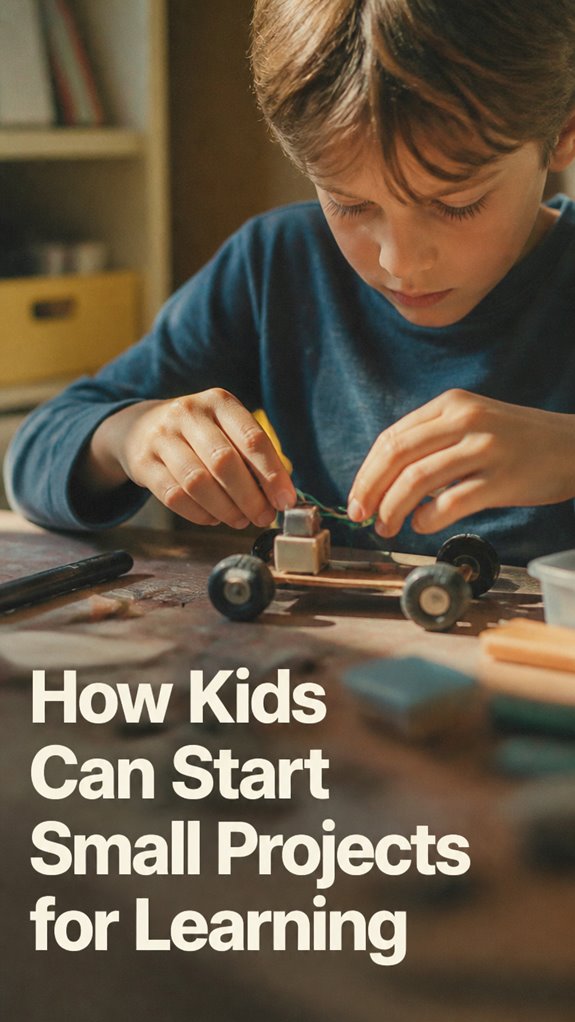
Building something physical—whether it’s a birdhouse, a marble run, or a garden bed—activates brain development in ways that sitting and absorbing information simply can’t match. When your child makes, they’re literally building neural pathways that support problem-solving, spatial reasoning, and resilience.
Building physical projects activates brain development in ways passive learning simply cannot—strengthening problem-solving, spatial reasoning, and resilience through action.
Here’s what happens during making:
- Trial-and-error loops strengthen decision-making — Your child tests, fails, adjusts, and learns cause-and-effect at a visceral level.
- Creative scaffolding builds confidence — Each small success becomes a foundation for tackling harder challenges without fear.
- Hands-on feedback rewires how they think — Physical results teach faster than any explanation could.
This isn’t about producing perfect projects. It’s about building the cognitive infrastructure your child needs to navigate an unpredictable future. Making teaches adaptability through action, not theory.
Overwhelm From Too Many Choices

Your child’s capacity to make grows exponentially when they’re not paralyzed by infinite options. Decision fatigue is real. When kids face too many choices—too many projects, tools, or directions—they freeze instead of start.
This choice overload doesn’t spark creativity; it blocks it.
The antidote isn’t more options. It’s constraints. Give your child a specific problem to solve within defined boundaries. Not “build something,” but “create a water filter using materials in your kitchen.”
Constraints focus thinking and reduce cognitive burden.
This builds decision-making muscle without overwhelming it. Your child learns to work within reality’s natural limits, not fantasy abundance. Project-based learning naturally incorporates these boundaries through real-world challenges with tangible outcomes.
They start small, complete something, and build momentum. This is how adaptability actually develops—through action within structure, not endless deliberation. Clarity precedes capability. Early freelance projects teach kids to navigate constraints professionally, building skills that translate directly to future career flexibility.
Small Project Starter Pack for Kids
What separates children who build momentum from those who stall is rarely talent—it’s the structure they work within. You don’t need elaborate systems. You need clarity on what makes a project learnable and actionable.
Start with these three elements:
A problem they notice. One collaborator minimum. A visible output. These three elements transform how children learn and adapt.
- A problem they notice — Something from their actual life that frustrates or interests them, not something assigned from above.
- One collaborator minimum — A peer, sibling, or mentor who forces them to explain their thinking through collaborative problem solving. This external processing actually supports their working memory capacity by reducing the cognitive load of holding and manipulating information alone.
- A visible output — Something they can show, iterate on, and refine rather than abstract work that disappears.
This structure builds skill diversification naturally. Kids learn by doing, testing, and adjusting. They’re not memorizing knowledge.
They’re developing the capability to notice problems, work with others, and improve their own work. That’s the foundation for adapting to whatever comes next.
For families beginning this journey, using a Project Learning Starter Pack provides ready-made templates and project ideas that eliminate setup friction and let kids focus immediately on building momentum.
The Adaptive Atlas Learning Stack Model
The projects your child completes matter far less than the learning system they develop while completing them. What you’re building isn’t a portfolio—it’s a feedback loop. Each project teaches your child how to notice what works, adjust what doesn’t, and try again. This is the Learning Stack Model in action.
Creative environments where experimentation feels safe accelerate this process. Your child needs to know that failure isn’t evidence of inadequacy; it’s data. Emotional resilience grows when they experience real problems, solve them imperfectly, and still move forward. Finding harmony between exploration and focus in kids requires structured guidance that allows direction without constraining discovery.
The system works because it’s self-reinforcing. Small projects create quick feedback cycles. Quick feedback builds confidence. Confidence enables bigger challenges.
Over time, your child doesn’t just complete tasks—they become someone who learns continuously, adapts naturally, and builds capability that compounds. Tracking skill development through these iterative projects helps you identify patterns in how your child learns best and where they need additional support.
The Adaptive Atlas Framework
Five connected systems designed to help parents raise adaptable, future-ready children in a world shaped by AI, automation, and constant change.
| 🛡️ |
Anti-Fragile Child SystemBuilds resilience, adaptability, and the ability to handle uncertainty without shutting down. |
| 📚 |
Learning Stack ModelDevelops self-directed learning habits and continuous skill acquisition beyond school systems. |
| 🚀 |
Future Skill Stack SystemFocuses on high-value human skills that remain relevant in an AI-driven economy. |
| 🤖 |
AI Learning SystemTeaches children how to use AI as a thinking partner instead of becoming dependent on it. |
| 🧭 |
Child Type Navigator SystemPersonalizes learning and development based on each child’s strengths and personality. |
FAQ
How Do I Know When My Child Is Ready to Start Their First Independent Project?
Your child’s ready when they can sustain frustration for fifteen minutes without shutting down. Look for signs: they’re curious about something specific, they ask questions unprompted, and they can tolerate small failures. Start there.
Early projects build emotional development and creative expression—the exact capabilities that compound over time. You’re not looking for perfection; you’re building their capacity to stay engaged when difficulty arrives. That’s your leverage point.
What if My Child Wants to Quit a Project Halfway Through Completion?
You’re right that quitting feels like failure—it’s not. When your child wants to exit mid-project, parental involvement matters most. Before stopping, ask what’s changed. Is the project duration unrealistic? Recalibrate expectations together rather than abandoning it entirely.
This teaches her that obstacles require problem-solving, not escape. She’s learning that adapting plans builds resilience, a capability that compounds across every future challenge.
How Can Small Projects Prepare My Child for AI Collaboration Later On?
Small projects teach your child how to break complex problems into manageable steps—exactly what AI collaboration demands. When they iterate on creative expression and technical skills through projects, they’re building the thinking patterns AI amplifies.
They learn to give clear direction, evaluate outputs critically, and refine ideas. These aren’t coding skills; they’re collaboration muscles. Your child becomes someone who thinks clearly enough to partner effectively with intelligent tools later.
Should I Let My Child Fail Completely, or Intervene With Guidance?
Let your child fail, but design the frame. Research shows children who experience managed struggle develop 40% stronger problem-solving skills.
You’re building risk management—the ability to assess, attempt, and recover. Intervene when safety’s threatened or motivation’s collapsing, not when difficulty appears.
This teaches emotional resilience without rescue. They’ll learn AI tools amplify thinking, not replace judgment.
That capacity compounds when failure becomes data, not catastrophe.
How Do Project-Based Skills Compound Into Long-Term Adaptability and Leverage?
Each small project builds creative problem solving and resilience—the foundations of adaptability. You’re not just teaching skills; you’re teaching your child how to learn independently.
Small wins compound into confidence. When she tackles increasingly complex problems, she develops the neural patterns for handling ambiguity.
This isn’t preparation for a specific job. It’s building leverage: the ability to think clearly, solve novel problems, and create value wherever opportunity emerges.